FREE! Click here to Join FunTrivia. Thousands of games, quizzes, and lots more!
Quiz about Popular Culture of the 1910s

Popular Culture of the 1910s Trivia Quiz


The 1910s saw Hollywood's rise, England embracing its own take on Vaudeville, and Australia creating rollercoasters. Ireland's theatre revival raged, while cheap reading materials attracted others, and it was all set to a syncopated soundtrack. Enjoy!

A photo quiz by JJHorner. Estimated time: 3 mins.
  1. Home
  2. »
  3. Quizzes
  4. »
  5. Entertainment Trivia
  6. »
  7. Entertainment by Decade

Author
JJHorner
Time
3 mins
Type
Photo Quiz
Quiz #
422,261
Updated
Dec 10 25
# Qns
10
Difficulty
Easy
Avg Score
9 / 10
Plays
213
Last 3 plays: OldTowneMal (7/10), Guest 121 (6/10), opsimath (8/10).
-
Question 1 of 10
1. Which rhythmic piano-based genre associated with syncopation and pioneered by Scott Joplin (pictured) in the 1890s, reached peak popularity in the 1910s and would later help pave the way for jazz styles? Hint


Question 2 of 10
2. What term was commonly used for early amusement parks built at the end of streetcar lines to encourage weekend travel? Hint


Question 3 of 10
3. Which of the following controversial film directors is most associated with molding early feature-length popular cinema in the 1910s, particularly in the United States with the release of "Birth of a Nation"? Hint


Question 4 of 10
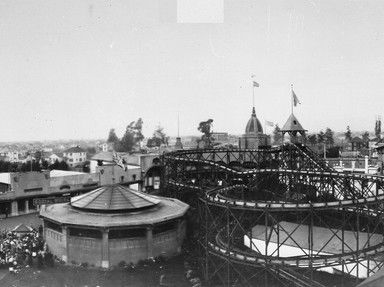
4. Shown here during construction, which Australian amusement park and long-time attraction was opened in 1912 in Victoria Province? Hint


Question 5 of 10
5. Which extremely popular actress and star of the 1915 silent film "A Fool There Was" helped popularize the screen image of the dangerous, seductive vamp character during the 1910s? Hint


Question 6 of 10
6. What inexpensive reading material became a staple of popular culture in the 1910s, especially among working-class and adolescent readers? Hint


Question 7 of 10
7. Which Irish theatre played a central role in modern English-language drama as the central arena for the Irish Literary Revival and for influencing the Little Theatre movement in the United States during the 1910s? Hint


Question 8 of 10
8. Which musical style, rooted in African American communities, began emerging as a distinct new genre in the late 1910s, especially in New Orleans? Hint


Question 9 of 10
9. Which kind of live entertainment venue was central to popular music culture in Britain during the 1910s? Hint


Question 10 of 10
10. Which silent film comedian was born in Britain, worked primarily in the United States, and became the most internationally famous movie star of the 1910s? Hint


(Optional) Create a Free FunTrivia ID to save the points you are about to earn:

arrow Select a User ID:
arrow Choose a Password:
arrow Your Email:


View Image Attributions for This Quiz

Most Recent Scores
Today : OldTowneMal: 7/10
Today : Guest 121: 6/10
Today : opsimath: 8/10
Today : alythman: 8/10
Today : Guest 66: 9/10
Today : Guest 207: 4/10
Dec 11 2025 : Guest 130: 8/10
Dec 11 2025 : mungojerry: 10/10
Dec 11 2025 : Guest 38: 8/10

Quiz Answer Key and Fun Facts
1. Which rhythmic piano-based genre associated with syncopation and pioneered by Scott Joplin (pictured) in the 1890s, reached peak popularity in the 1910s and would later help pave the way for jazz styles?

Answer: Ragtime

Ragtime reached its height of popularity in the late 1890s through the 1910s and became one of the first widely popular American music styles. It's known for its characteristic syncopated rhythms and was originally written primarily for solo piano. Later, the style appeared in band arrangements and recordings. Scott Joplin became its most famous composer, and pieces like "The Entertainer" and "Maple Leaf Rag" are recognizable more than a century later, even to people who could probably not name the song or even quite define what syncopation actually is.

While ragtime could never be considered a form of early jazz, it did play an important role in influencing later jazz phrasing, rhythm, and musical style. Without ragtime, jazz might have developed very differently... or at least taken a little longer before it annoyed early 20th century music critics.
2. What term was commonly used for early amusement parks built at the end of streetcar lines to encourage weekend travel?

Answer: Trolley parks

Trolley parks began to emerge in the late 19th and early 20th centuries when streetcar companies realized an intriguing business opportunity. During the workweek, people rolled around on streetcars for commuting purposes, but the weekends were inevitably slow. The solution? Build an attraction at the end of the line and give people a reason to ride on Saturdays and Sundays!

Many of these parks boasted picnic areas, dance pavilions, roller coasters, and bandstands. Before long they evolved into full amusement parks and became an important part of American leisure culture. At their peak in the 1900s through the mid-1910s, hundreds of trolley parks operated across the United States.

Most closed down as the automobile inevitably gained popularity, but a handful survived and continued to evolve, with Kennywood in Pennsylvania and Lake Compounce in Connecticut being just two examples.
3. Which of the following controversial film directors is most associated with molding early feature-length popular cinema in the 1910s, particularly in the United States with the release of "Birth of a Nation"?

Answer: D. W. Griffith

D. W. Griffith was one of the most influential and controversial figures in early cinema. His 1915 film "The Birth of a Nation" showed off techniques that helped establish modern filmmaking, popularizing such innovations as cross-cutting, large-scale battle staging, controlled lighting, and close-ups used for emotional emphasis.

While people generally acknowledge Griffith's technical contributions, they also recognize that the movie promoted racist ideology and glorified the Ku Klux Klan, which has permanently clouded how his work is discussed. You can't discuss early film without discussing "Birth of a Nation", and you can't discuss "Birth of a Nation" without acknowledging its abhorrent message.
4. Shown here during construction, which Australian amusement park and long-time attraction was opened in 1912 in Victoria Province?

Answer: Luna Park Melbourne

Luna Park Melbourne opened in 1912 and became one of the oldest continually operating amusement parks in the world. Its most famous attraction, the Scenic Railway roller coaster opened the same year. Interestingly (or frighteningly), it is one of the few coasters surviving to the modern age that requires a brakeman to stand in the middle of the train during operation.

This may sound slightly alarming today, but in 1912 it was considered cutting-edge safety technology, or at least certainly "good enough".
5. Which extremely popular actress and star of the 1915 silent film "A Fool There Was" helped popularize the screen image of the dangerous, seductive vamp character during the 1910s?

Answer: Theda Bara

Theda Bara became one of early cinema's biggest stars largely because of her role in "A Fool There Was" in 1915, where she portrayed a femme fatale known simply as The Vampire. The term vamp soon became shorthand for a seductive woman who used beauty and manipulation to destroy men socially, romantically, and often financially, figuratively sucking the life out of them.

Fox Film Corporation promoted Bara with elaborate publicity material suggesting she had exotic origins and mysterious upbringing, though she was, in reality, from Cincinnati, quite possibly the least exotic place in the world.

Although Theda Bara made more than forty films, only a small number survive today due to fires, poor archival practices, and the fragile nature of nitrate film. However, the vamp character she helped popularize paved the way for later femme fatales in noir films and beyond. Her dramatic eye makeup and dark styling also set fashion trends at the time... for better or worse.
6. What inexpensive reading material became a staple of popular culture in the 1910s, especially among working-class and adolescent readers?

Answer: Pulp magazines

Pulp magazines became widely popular in the 1910s, especially among teens and working-class readers who yearned for adventure, crime, romance, and science fiction but did not want to (or could not) spend much money on books. Printed on cheap wood-pulp paper, they were inexpensive, portable, and full of fast-paced storytelling. The writing was often sensational and sometimes perhaps of questionable quality, but that became part of the charm. They were for entertainment, not for literature.

Pulps gave rise to numerous major figures in genre fiction. Through them we met characters like Tarzan and later Zorro and The Shadow. While the magazines themselves were considered disposable at the time, surviving copies are now highly collectible and fetch a pretty good price if you've got one in nice condition.
7. Which Irish theatre played a central role in modern English-language drama as the central arena for the Irish Literary Revival and for influencing the Little Theatre movement in the United States during the 1910s?

Answer: The Abbey Theatre in Dublin

The Abbey Theatre in Dublin opened in 1904 and quickly became the heart of the Irish Literary Revival. Founded by figures like W. B. Yeats and Lady Gregory, the Abbey sought to create theatre rooted in Irish identity rather than relying on imported English plays. It became the first state-supported national theatre in the English-speaking world and helped launch the careers of writers such as J. M. Synge and later Sean O Casey.

Beyond Ireland, the Abbey Theatre influenced the Little Theatre movement of the 1910s in the United States. American theater-makers loved the Abbey's intimate productions, emphasis on new writers, and willingness to take creative risks rather than rely on commercial success (or more precisely, ONLY on commercial success). This approach helped inspire smaller regional theaters and community-based dramatists in the U.S.
8. Which musical style, rooted in African American communities, began emerging as a distinct new genre in the late 1910s, especially in New Orleans?

Answer: Jazz

Jazz began forming as a distinct musical genre in the late 1910s, centered largely in New Orleans, with shout-outs to Chicago and St. Louis as well. Its roots reach back earlier through blues, ragtime, and African American folk and performance styles, but it was during this period that jazz separated into its own recognizable form.

Early jazz featured improvisation, syncopation, and lively rhythms, making it energetic and unpredictable compared to the more predictable popular styles of the time. Many of the earliest known jazz recordings, including those by the Original Dixieland Jazz Band in 1917, helped define and spread the sound, although many of the true pioneers were African American musicians whose work was not widely recorded until the 1920s.
9. Which kind of live entertainment venue was central to popular music culture in Britain during the 1910s?

Answer: Music halls

Music halls were very popular in Britain during the 1910s and served as a major center (or centre) of entertainment and popular culture. These venues featured a variety of acts including singers, comedians, novelty performers, magicians, and sometimes acts that defied all attempts at an explanation. It was Britain's version of Vaudeville, and music halls catered to a broad audience, especially working-class patrons looking for affordable amusement after long hours in factories, offices, shops, and other British things.

Performers like Marie Lloyd, Vesta Tilley, and later George Formby and Gracie Fields all got their starts through music halls. It would be the rise of cinema, radio, and later television that reduced the prominence of music halls (and Vaudeville), but their influences would long be felt.
10. Which silent film comedian was born in Britain, worked primarily in the United States, and became the most internationally famous movie star of the 1910s?

Answer: Charlie Chaplin

Charlie Chaplin was not just a star in the silent era. He was THE star of silent film. Chaplin came from poverty in London and went on to become one of the most recognizable people on Earth by the mid-1910s with his iconic Tramp character, bowler hat, cane, and mustache... the latter of which has had very mixed reputational success in the days since. His films blended slapstick with real heart, and audiences adored him for it.

Chaplin didn't just act and fall down a lot. He wrote, directed, edited, and even composed music for many of his films. His career continued into the sound era, even though he initially resisted dialogue because he thought it would damage the "universality" of his comedy. Typical actor.
Source: Author JJHorner

This quiz was reviewed by FunTrivia editor kyleisalive before going online.
Any errors found in FunTrivia content are routinely corrected through our feedback system.
Related Quizzes
1. Popular Culture of the 1920s Easier
2. Fun in the... Average

12/12/2025, Copyright 2025 FunTrivia, Inc. - Report an Error / Contact Us