FREE! Click here to Join FunTrivia. Thousands of games, quizzes, and lots more!
Into the Woods Trivia Quiz
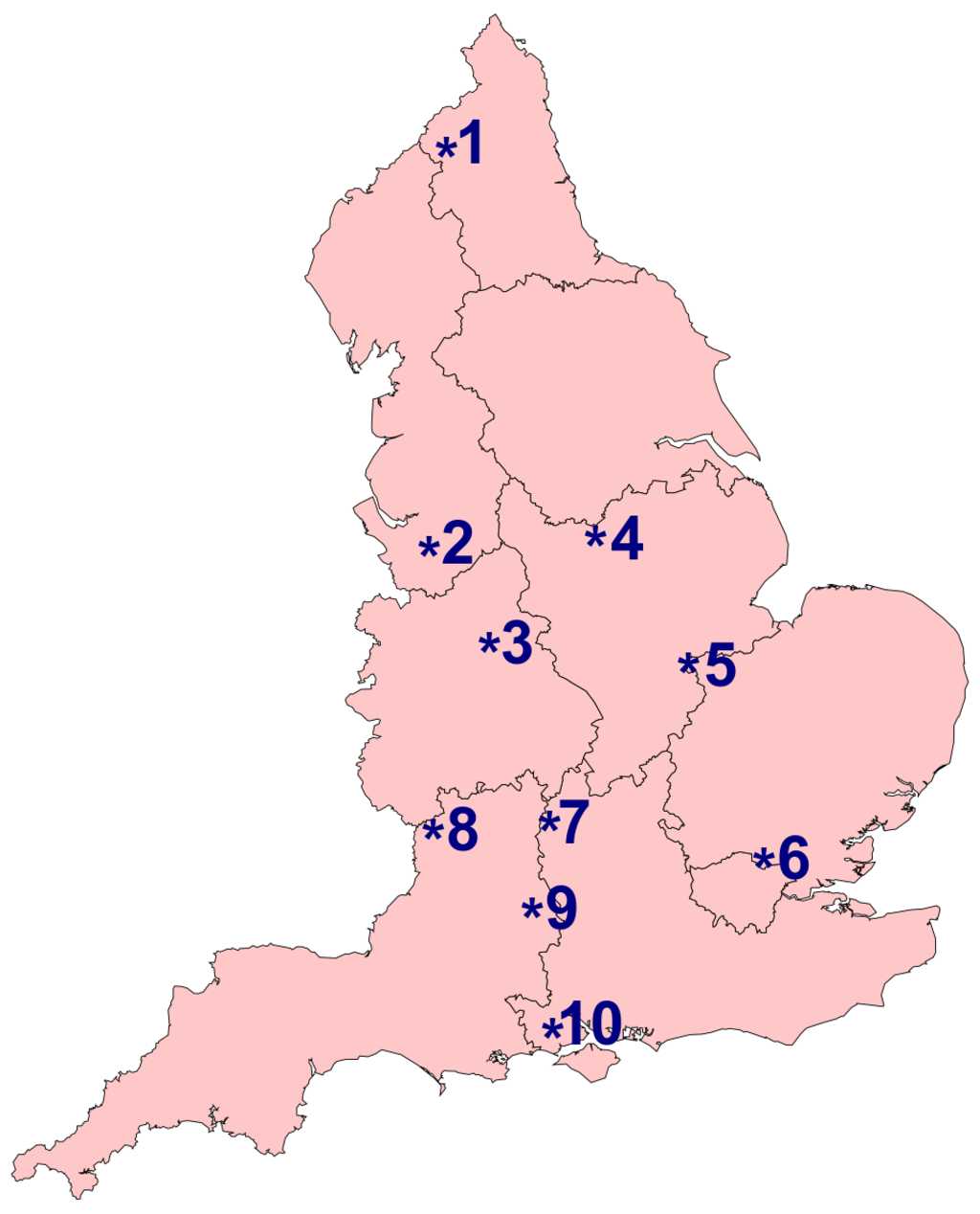
In England (and the rest of the UK), many historic "forests" are royal forests, ancient woodlands, or named woodland regions, and not always continuous dense forest. Can you find your way "Into the Woods" and locate these historical English forests?
Last 3 plays: rivenproctor (10/10), Kota06 (1/10), cardsfan_027 (10/10).
Click on image to zoom
Forest of DeanSavernake ForestDelamere ForestCannock ChaseNew ForestWychwood ForestRockingham ForestKielder ForestSherwood ForestEpping Forest* Drag / drop or click on the choices above to move them to the answer list. View Image Attributions for This Quiz
A planned forest of the 20th century, Kielder (in Northumberland in North East England) was established to address timber shortages revealed by wartime demand. Unlike ancient forests, it reflects modern forestry planning rather than medieval law. It has been managed by the Forestry Commission since its creation, remaining a working forest with public access and environmental stewardship.
2. Delamere Forest
Established as a royal forest after the Norman Conquest, Delamere (in Cheshire in North West England) was later reshaped by clearance and agricultural use. Though less prominent in literary tradition, it reflects the broader transformation of England's medieval forests. Large portions are now owned and managed by Forestry England (since 1924), functioning as a public forest park.
3. Cannock Chase
Historically a royal hunting chase, Cannock Chase later played an important role as a military training area, utilized during both World Wars. Though less central in literary tradition, it carries associations of national service and wartime history. It was designated an Area of Outstanding Natural Beauty in 1958, with large areas accessible for public recreation.
4. Sherwood Forest
Sherwood Forest (in Nottinghamshire in the East Midlands) was a medieval royal hunting forest governed by strict forest laws that reserved game for the Crown. It entered enduring legend as the setting of the Robin Hood stories, symbolizing resistance to authority and social justice in English folklore.
Its historic core was brought under public protection in stages, with Sherwood Forest Country Park established in 1975 and the most ancient woodland designated a National Nature Reserve in 2002.
5. Rockingham Forest
Once a major royal hunting forest, Rockingham (in Northamptonshire in the East Midlands) became associated with ironworking and charcoal production, illustrating its shift from royal preserve to industrial resource. Its historical significance lies in this economic transition.
It no longer exists as a single forest, surviving instead as dispersed woodlands, farmland, and estates under mixed private and public ownership.
6. Epping Forest
Once a royal forest stretching across eastern approaches to London, Epping Forest (in Essex and Greater London in the East of England) became central to 19th‑century protests against enclosure. The Epping Forest Act of 1878 secured it for public use under the stewardship of the City of London Corporation, marking a significant moment in the history of land preservation.
7. Wychwood Forest
Once a royal forest governed by medieval hunting laws, Wychwood (in Oxfordshire in South East England) declined following disafforestation in the early 19th century. It survives in literature and memory as part of England's lost forest landscapes. It does not exist as a single protected entity, instead persisting as a network of smaller privately owned woodlands and agricultural land.
8. Forest of Dean
An ancient forest tied to royal authority, the Forest of Dean (in Gloucestershire in South West England) became a vital source of timber and iron, supporting the Crown's industries. Its regional identity is reflected in folklore and working traditions.
Much of the forest remains under public ownership, managed by the Forestry Commission since the 20th century, with additional protections applied to key ecological areas.
9. Savernake Forest
Savernake (in Wiltshire in South West England) is one of England's oldest continuously wooded landscapes, historically held by aristocratic families rather than the Crown itself. Its ancient trees and long continuity have attracted writers and historians interested in England's deep past.
It has been privately 'owned' by the Ailesbury family since the 17th century, though public access is permitted across much of the forest.
10. New Forest
Established by William the Conqueror as a royal hunting ground after the Norman Conquest, the New Forest (in Hampshire in South East England) displaced earlier communities and enforced strict forest law. Over time, it developed a distinctive system of common rights that shaped local life and literature alike.
It was designated a National Park in 2005, preserving both its landscape and its long-standing customary practices.
This quiz was reviewed by FunTrivia editor agony before going online.
Any errors found in FunTrivia content are routinely corrected through our feedback system.