FREE! Click here to Join FunTrivia. Thousands of games, quizzes, and lots more!
Quiz about 28 July Moments That Matterd

28 July: Moments That Matterd Trivia Quiz


July 28th was a big day in history: World Wars, island discoveries, musical deaths, the American Civil War and Reconstruction, deadly earthquakes, the end of the road for one Mexican revolutionary, and more. Good luck!

A photo quiz by NeuralSpicy. Estimated time: 3 mins.
  1. Home
  2. »
  3. Quizzes
  4. »
  5. History Trivia
  6. »
  7. Famous Dates
  8. »
  9. July August September

Author
NeuralSpicy
Time
3 mins
Type
Photo Quiz
Quiz #
424,990
Updated
Jul 25 26
# Qns
10
Difficulty
Average
Avg Score
8 / 10
Plays
55
Last 3 plays: Guest 76 (9/10), Guest 104 (9/10), Guest 76 (6/10).
-
Question 1 of 10
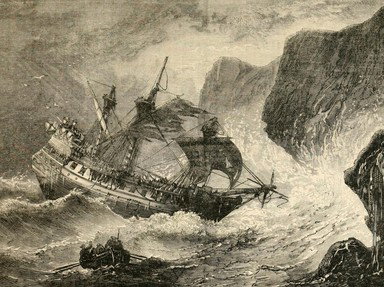
1. 28 July 1609
On this day, English Admiral Sir George Somers intentionally grounded the Sea Venture into a reef off St. George's island, part of what modern country?
Hint


Question 2 of 10
2. 28 July 1750
What beloved German Baroque composer, known for the Brandenburg Concertos, died in Leipzig at age 65 on this date?
Hint


Question 3 of 10
3. 28 July 1794
What French Revolutionary figure was guillotined in Paris on this day, effectively putting an end to the Reign of Terror?
Hint


Question 4 of 10
4. 28 July 1864
The Battle of Ezra Church was fought this day during the American Civil War. It pitted William T. Sherman's Army of the Tennessee against Confederate forces led by which general?
Hint


Question 5 of 10
5. 28 July 1866
What English author and illustrator, known for "The Tale of Peter Rabbit", was born on this day?
Hint


Question 6 of 10
6. 28 July 1868
The 14th Amendment to the United States Constitution was certified on this date. What did it NOT do?
Hint


Question 7 of 10
7. 28 July 1914
The Austro-Hungarian Empire declared war on which country on this date, marking the beginning of World War I?
Hint


Question 8 of 10
8. 28 July 1920
What Mexican revolutionary general surrendered to the Mexican provisional government, marking an end to his military role in the Mexican Revolution?
Hint


Question 9 of 10
9. 28 July 1976
The Tangshan Earthquake struck what country on this date, killing at least 300,000 people?
Hint


Question 10 of 10
10. 28 July 1984
The 1984 Summer Olympics opened on this date in which city?
Hint


(Optional) Create a Free FunTrivia ID to save the points you are about to earn:

arrow Select a User ID:
arrow Choose a Password:
arrow Your Email:


View Image Attributions for This Quiz

Most Recent Scores
Today : Guest 76: 9/10
Today : Guest 104: 9/10
Today : Guest 76: 6/10
Today : Guest 77: 7/10
Today : haydenspapa: 10/10
Today : Guest 86: 6/10
Today : Peachie13: 10/10
Today : Guest 98: 7/10
Today : Guest 24: 8/10

Quiz Answer Key and Fun Facts
1. 28 July 1609 On this day, English Admiral Sir George Somers intentionally grounded the Sea Venture into a reef off St. George's island, part of what modern country?

Answer: Bermuda

The Sea Venture was the flagship of a fleet on its way to Jamestown carrying new settlers and fresh supplies. The colony would have to wait. As it happened, the ship was caught in a hurricane in July 1609, and the ship began leaking badly. Admiral Sir George Somers was not especially interested in exploring the sea floor, and luckily for him he spotted land. He proceeded to intentionally steer the vessel onto a reef near St. George's Island. Everyone onboard survived, no small feat for an early 17th century shipwreck. At this time, the islands that we now call Bermuda were otherwise uninhabited.

The castaways spent about ten months in Bermuda, making the best of what must have been a surprisingly pleasant situation, all things considered. They scrounged supplies from the wreck and built two new ships of Bermuda cedar, naming them the Deliverance and the Patience. They recovered additional materials and finally finished their voyage to Jamestown in 1610. This event is believed to have inspired elements of Shakespeare's play "The Tempest", and not too surprisingly, England turned the islands into a colony shortly afterwards.
2. 28 July 1750 What beloved German Baroque composer, known for the Brandenburg Concertos, died in Leipzig at age 65 on this date?

Answer: Johann Sebastian Bach

Johann Sebastian Bach died on July 28, 1750, in Leipzig, Saxony, at the age of 65. By the time of his death, he had created a mountain of musical work that included the Brandenburg Concertos, the Mass in B minor, the Goldberg Variations, and virtually countless cantatas and works for the organ. Respected as he was, Bach was not really the biggest musical celebrity of his time.

His reputation grew larger than life only after his death, particularly during the 1800s, when musicians rediscovered his work and realized what everyone had been missing out on.
3. 28 July 1794 What French Revolutionary figure was guillotined in Paris on this day, effectively putting an end to the Reign of Terror?

Answer: Maximilien Robespierre

Maximilien Robespierre was guillotined in Paris on July 28, 1794, during the final phase of the French Revolution. Robespierre, who was one of the leading figures of the Committee of Public Safety, became the face of the Reign of Terror. This was a period when thousands of perceived enemies of the Revolution were executed. His downfall came after fellow revolutionaries turned against him during the events of the Thermidorian Reaction. The man who had sent so many others to the guillotine ended up meeting the same fate himself. It's a satisfying irony.

Robespierre's death did not instantly solve all of France's problems, because this isn't a Movies quiz. However, his execution marked a major shift away from the extreme policies of the Terror. The revolutionary government moved in a more moderate direction, at least until Napoleon decided that all of Europe should speak French.
4. 28 July 1864 The Battle of Ezra Church was fought this day during the American Civil War. It pitted William T. Sherman's Army of the Tennessee against Confederate forces led by which general?

Answer: John B. Hood

The Battle of Ezra Church took place on July 28, 1864. This was during the Atlanta Campaign of the American Civil War, with the Confederacy on its last legs. Union forces under Major General William T. Sherman were advancing toward Atlanta. Confederate General John Bell Hood attempted to strike Sherman's Army of the Tennessee as it moved west of the city. Hood's attack failed, and the Confederates suffered significant casualties while the Union army successfully blocked their route to the west. This was just one of several tough battles that led to Sherman taking Atlanta and, in so doing, gifting Lincoln a much more comfortable re-election.
5. 28 July 1866 What English author and illustrator, known for "The Tale of Peter Rabbit", was born on this day?

Answer: Beatrix Potter

Beatrix Potter was born on July 28, 1866, in Kensington, London, England. She became famous for writing and illustrating the beloved children's book "The Tale of Peter Rabbit". It was first published in 1902 and introduced generations of readers to the conniving little rabbit who sneaks into Mr. McGregor's garden. As adults, I think most of us sympathize with the antagonist more than we did as children. It was an instant classic of children's literature, with charming watercolor illustrations and delightful storytelling.

She was much more than a creator of cute woodland critters, though. She was also a naturalist, scientific illustrator, and later an important conservationist. When she died in 1943, she left much of her property to the National Trust, helping protect thousands of acres.
6. 28 July 1868 The 14th Amendment to the United States Constitution was certified on this date. What did it NOT do?

Answer: End slavery

The 14th Amendment was certified on July 28, 1868, completely transforming the legal system of the USA after the Civil War. For one, it established birthright citizenship, meaning that most people born in the USA are citizens regardless of their parents' citizenship status. It guaranteed that states could not deprive any person of life, liberty, or property without due process of law, and it also required equal protection under the law. It was one of the major Reconstruction-era amendments, but it did not end slavery. That job belonged to the 13th Amendment, which was ratified three years earlier.

The 14th Amendment was part of a trio of Reconstruction Amendments that greatly reshaped the USA after years of Civil War. The 13th ended slavery, the 14th addressed citizenship and civil rights, and the 15th prohibited denying the right to vote based on race. On paper.
7. 28 July 1914 The Austro-Hungarian Empire declared war on which country on this date, marking the beginning of World War I?

Answer: Serbia

The Austro-Hungarian Empire declared war on Serbia on July 28, 1914, exactly one month after the assassination of Archduke Franz Ferdinand of Austria in Sarajevo. The declaration was the climax of a prolonged diplomatic disaster known as the July Crisis. Austria-Hungary made demands on Serbia, which the empire believed was connected to the nationalist movement behind the assassination. They weren't wrong. The conflict between the two countries quickly expanded as the web of alliances brought more nations into the fighting, turning a regional dispute into the First World War.

The start of World War I was really a chain of dominoes that got way out of hand very quickly. Russia supported Serbia, Germany backed Austria-Hungary. France was with Russia and rather angry at Germany, and Britain became involved after Germany made clear its intention to invade neutral Belgium.
8. 28 July 1920 What Mexican revolutionary general surrendered to the Mexican provisional government, marking an end to his military role in the Mexican Revolution?

Answer: Pancho Villa

Pancho Villa surrendered to the Mexican provisional government on July 28, 1920, ending his days as a beloved military leader during the Mexican Revolution. Born Doroteo Arango, he became one of the most famous people of the revolution. He commanded the powerful División del Norte, defeating the forces of dictator Victoriano Huerta.

After years of fighting, shifting alliances, political upheaval, etc., he accepted an amnesty agreement with President Adolfo de la Huerta's government and retired to a ranch in Chihuahua.

He was assassinated in 1923 while traveling in Parral, Chihuahua, and the mystery surrounding the motives behind his killing is still keeping historians busy.
9. 28 July 1976 The Tangshan Earthquake struck what country on this date, killing at least 300,000 people?

Answer: China

The Tangshan Earthquake hit China on July 28, 1976, destroying much of the industrial city in Hebei Province. The magnitude 7.5 earthquake hit in the early morning hours while many people slept, causing massive destruction and making it one of the deadliest earthquakes in recorded history. The official death toll reported by the Chinese government was about 242,000, although experts generally agree that the number exceeds 300,000. The scale of the destruction was enormous, with hundreds of thousands more people injured and much of the city reduced to rubble.

Rescue efforts were complicated by the destruction of roads, buildings, and communication systems. Still, survivors and emergency workers carried out vast recovery efforts. Tangshan was later rebuilt, and the disaster led to increased attention on earthquake preparedness and urban planning in China.
10. 28 July 1984 The 1984 Summer Olympics opened on this date in which city?

Answer: Los Angeles

The 1984 Summer Olympics officially opened on July 28, 1984, in Los Angeles, California. The opening ceremony took place at the Los Angeles Memorial Coliseum (pictured here). The Coliseum had previously hosted the ceremonies at the 1932 Olympics, making it the first stadium in modern Olympic history to host opening ceremonies for two different Summer Games. President Ronald Reagan officially declared the Games open, and athletes from 140 nations participated in the event.

The Games featured stand-out performances from the likes of Carl Lewis and gymnast Mary Lou Retton. John Williams provided the now-famous "Olympic Fanfare and Theme". There was some political drama too, as the Soviet Union and several Eastern Bloc nations boycotted the Games in response to the US-led boycott of the 1980 Moscow Olympics.
Source: Author NeuralSpicy

This quiz was reviewed by FunTrivia editor gtho4 before going online.
Any errors found in FunTrivia content are routinely corrected through our feedback system.
7/26/2026, Copyright 2026 FunTrivia, Inc. - Report an Error / Contact Us