FREE! Click here to Join FunTrivia. Thousands of games, quizzes, and lots more!
Quiz about 20 July Moments That Mattered Quiz

20 July: Moments That Mattered Quiz


A botched assassination, a new Canadian province, a strategic city occupied, a pea-obsessed monk, and two guys taking a stroll on the Moon. All this and more happened on July 20th. Have fun!

A multiple-choice quiz by NeuralSpicy. Estimated time: 3 mins.
  1. Home
  2. »
  3. Quizzes
  4. »
  5. History Trivia
  6. »
  7. Famous Dates
  8. »
  9. July August September

Author
NeuralSpicy
Time
3 mins
Type
Multiple Choice
Quiz #
424,937
Updated
Jul 20 26
# Qns
10
Difficulty
Easy
Avg Score
8 / 10
Plays
101
Last 3 plays: harley74 (6/10), grompit (7/10), Kabdanis (8/10).
- -
Question 1 of 10
1. 20 July 1592
On this day during the Imjin War, Japanese forces seized the city that is now North Korea's capital. Which city was captured?
Hint


Question 2 of 10
2. 20 July 1807
On this day Napoleon Bonaparte granted a patent to Nicéphore and Claude Niépce for the world's first what?
Hint


Question 3 of 10
3. 20 July 1810
Which South American nation, then known as New Granada, declared its independence from Spain on this date?
Hint


Question 4 of 10
4. 20 July 1822
A child born in Austria on this date would become an Augustinian monk and the geneticist who discovered the basic laws of heredity. Who was he?
Hint


Question 5 of 10
5. 20 July 1848
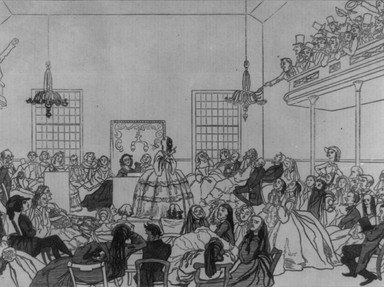
The first Women's Rights Convention concluded on this date in which New York town?
Hint


Question 6 of 10
6. 20 July 1871
Which Pacific coast Crown colony joined the Canadian Confederation on this date?
Hint


Question 7 of 10
7. 20 July 1917
The Corfu Declaration, signed on this date during World War I, called for the creation of which kingdom?
Hint


Question 8 of 10
8. 20 July 1944
Which world leader survived an assassination attempt carried out by members of his own military on this date?
Hint


Question 9 of 10
9. 20 July 1969
American Neil Armstrong and Buzz Aldrin walked on the Moon on this date, landing in which dark lunar mare?
Hint


Question 10 of 10
10. 20 July 1999
On this date, the Chinese Communist Party began a state sponsored campaign to persecute which religious group?
Hint


(Optional) Create a Free FunTrivia ID to save the points you are about to earn:

arrow Select a User ID:
arrow Choose a Password:
arrow Your Email:


Most Recent Scores
Today : harley74: 6/10
Today : grompit: 7/10
Today : Kabdanis: 8/10
Today : cardsfan_027: 10/10
Today : Guest 47: 8/10
Today : shadygenea: 5/10
Today : FlicksBuff: 9/10
Today : kickaha49: 7/10
Today : Guest 146: 8/10

Quiz Answer Key and Fun Facts
1. 20 July 1592 On this day during the Imjin War, Japanese forces seized the city that is now North Korea's capital. Which city was captured?

Answer: Pyongyang

Pyongyang was a big turning point in the early days of the Imjin War, the Japanese invasions of Korea that ran from 1592 to 1598. After the Japanese forces under commanders Konishi Yukinaga and Kuroda Nagamasa advanced to the north, the Korean forces fled Pyongyang. This allowed Japanese troops to enter the city unopposed on 20 July 1592. The capture gave Japan control of a strategic location in northern Korea and brought the invading army closer to the Ming Chinese border.

That hardly meant victory for the Japanese, though. Their army had pushed deep into Korea at impressive speed. Holding that territory would be an entirely different beast. Supply lines grew taut, Korean resistance increased, and then Ming China decided to enter the conflict. Pyongyang would be retaken within a year, and eventually the Japanese were forced to abandon Korea.
2. 20 July 1807 On this day Napoleon Bonaparte granted a patent to Nicéphore and Claude Niépce for the world's first what?

Answer: Internal combustion engine

The Niépce brothers' invention was called the "Pyréolophore". It was an early prototype of the internal combustion engine that used small, controlled explosions to create mechanical power. Neat trick. That's basically how your car works.

Napoleon granted the brothers a patent in 1807 after they demonstrated the device. It's the earliest internal combustion engine, although it was very different from the gasoline and diesel engines that would later take over the world. The machine used heated air and fuel combustion to generate pressure to move a piston. Its early experiments included attempts to power a small boat. Tiny engine, but big things lay ahead for the concept.

Nicéphore Niépce is better remembered, though, for another breakthrough: he created the earliest surviving permanent photograph in the 1820s.
3. 20 July 1810 Which South American nation, then known as New Granada, declared its independence from Spain on this date?

Answer: Colombia

The events of 20 July 1810 in Bogotá are the beginning of Colombia's independence movement. Back then, the region was part of the Spanish colony known as the Viceroyalty of New Granada. The day became famous as the "Grito de Independencia". To make a long, strange story short, two Colombians staged a dispute with a Spanish vendor, who refused to lend them a flower vase. That led to a staged riot by the "insulted" Creoles. An emergency council was called, and the Act of Independence of Santafé was signed that evening.

If you think that's absurd, remember that not all revolutions are the result of disputes over tea. Today, Colombia celebrates its independence on July 20th, and the original vase is on display at the Flower Vase House (Casa del Florero) in Bogotá.
4. 20 July 1822 A child born in Austria on this date would become an Augustinian monk and the geneticist who discovered the basic laws of heredity. Who was he?

Answer: Gregor Mendel

Gregor Mendel was that child born on 20 July 1822 in Heinzendorf, then part of the Austrian Empire (now Hynèice in the Czech Republic). As an Augustinian monk, he spent years breeding pea plants in the monastery garden. Over the years, he tracked various traits of the pea plants such as flower color, seed shape, and pod color through generation after generation. I don't know much about Augustinian monks, but apparently they have that kind of time.

His experiments led him to create the basic laws of inheritance. His work showed that traits are passed from parents to offspring through units now known as genes. At the time, though, nobody noticed and nobody cared. Mendel published his findings in 1866, and they remained mostly ignored until around 1900. After several botanists independently arrived at similar conclusions, his work was suddenly rediscovered, and Mendel became the Father of Modern Genetics.
5. 20 July 1848 The first Women's Rights Convention concluded on this date in which New York town?

Answer: Seneca Falls

Seneca Falls was the town hosting the first Women's Rights Convention on July 19 and 20, 1848. This event would become a major milestone in the fight for women's rights in the United States. It was primarily organized by Elizabeth Cady Stanton and Lucretia Mott.

Their convention drew about 300 attendees and produced the "Declaration of Sentiments", a document that was modeled on the Declaration of Independence. The document took the outrageous view that "all men and women are created equal" and listed grievances regarding the legal and social inequalities faced by women. It was a bold statement at a time when many people thought the idea of women voting sat comfortably between unrealistic and absurd.
6. 20 July 1871 Which Pacific coast Crown colony joined the Canadian Confederation on this date?

Answer: British Columbia

British Columbia became the sixth province of Canada on 20 July 1871. It entered the Confederation after several months of negotiations with the new Dominion. At the time it was a British Crown colony, and times were tough. It was facing financial difficulties and complete geographic isolation.

One of the main incentives for joining Canada was the promise of a transcontinental railway linking the Pacific coast with the rest of the country within a decade. That pledge sounded wildly ambitious. It was. It took that long just to begin the main construction. However, once they got started, it took about four and a half years before the last spike was driven in at Craigellachie, BC.
7. 20 July 1917 The Corfu Declaration, signed on this date during World War I, called for the creation of which kingdom?

Answer: Kingdom of Serbs, Croats, and Slovenes

The Corfu Declaration was signed on 20 July 1917 by representatives of the Serbian government and the Yugoslav Committee. Both were in exile on the Greek island of Corfu at the time, because World War I wasn't going so well for the Serbs.

The Corfu Declaration outlined plans for a single constitutional monarchy that would unite the South Slavic peoples of Austria-Hungary with the Kingdom of Serbia, which was then occupied by forces of the Central Powers. In other words, they were optimists. The proposed state would be called the Kingdom of Serbs, Croats, and Slovenes. The country would eventually become the Kingdom of Yugoslavia.
8. 20 July 1944 Which world leader survived an assassination attempt carried out by members of his own military on this date?

Answer: Adolf Hitler

The failed assassination plot on Adolf Hitler's life on 20 July 1944 is commonly known as the July Plot or Operation Valkyrie. The conspiracy was led by one Colonel Claus von Stauffenberg and involved German military officers and civilian officials who thought the mustachioed fascist was leading the country to ruin.

Stauffenberg planted a bomb in a briefcase during a military conference at the Wolf's Lair headquarters in East Prussia. The bomb went off. The explosion killed four people. Adolf Hitler survived relatively unharmed. What went wrong? The briefcase with the explosives was moved behind a thick table leg, which deflected much of the blast meant for Hitler.
9. 20 July 1969 American Neil Armstrong and Buzz Aldrin walked on the Moon on this date, landing in which dark lunar mare?

Answer: Sea of Tranquility

Apollo 11 touched down in the Sea of Tranquility (Mare Tranquillitatis) on 20 July 1969. It carried Neil Armstrong and Buzz Aldrin to the surface of the Moon. Years before Michael Jackson's first moonwalk, Armstrong stepped onto the lunar surface a few hours after landing, famously describing it as 'one small step for' a man, 'one giant leap for mankind.'

Aldrin soon joined him outside the Lunar Module Eagle, while Michael Collins remained in lunar orbit aboard the command module Columbia. This landing site was chosen because it offered smooth terrain (for the Moon), though it still gave Armstrong a few tense moments as he manually steered the craft away from a boulder field with fuel at a premium.
10. 20 July 1999 On this date, the Chinese Communist Party began a state sponsored campaign to persecute which religious group?

Answer: Falun Gong

On 20 July 1999, the Chinese Communist Party launched a nationwide campaign against Falun Gong. It's a spiritual movement that combines meditation with moral teachings revolving around the principles of truthfulness, compassion, and forbearance. Chinese authorities had tolerated the practice, which rapidly grew during the 1990s.

It was this growing popularity that pushed authorities to change course on July 20th. Beginning on that day, large numbers of practitioners were detained and tortured, the organization was officially banned, and a massive campaign of censorship and propaganda was put into effect.
The crackdown continues.
Source: Author NeuralSpicy

This quiz was reviewed by FunTrivia editor ponycargirl before going online.
Any errors found in FunTrivia content are routinely corrected through our feedback system.
7/20/2026, Copyright 2026 FunTrivia, Inc. - Report an Error / Contact Us