FREE! Click here to Join FunTrivia. Thousands of games, quizzes, and lots more!
Quiz about The Carolingian Empire 800887

The Carolingian Empire (800-887) Quiz


How are your medieval history chops? From Clovis and Charles Martel to the "Emperor of the Romans" and raids from the north, see how well you know the rise and chaotic fall of the powerful, if brief, Frankish Carolingian dynasty. And please, have fun!

A photo quiz by NeuralSpicy. Estimated time: 3 mins.
  1. Home
  2. »
  3. Quizzes
  4. »
  5. History Trivia
  6. »
  7. European
  8. »
  9. Medieval History

Author
NeuralSpicy
Time
3 mins
Type
Photo Quiz
Quiz #
425,282
Updated
Aug 14 26
# Qns
10
Difficulty
New Game
Avg Score
8 / 10
Plays
15
Last 3 plays: PhNurse (5/10), ertrum (8/10), Guest 99 (5/10).
-
Question 1 of 10
1. What Frankish dynasty was in power before the rise of the Carolingians? Hint


photo quiz
Question 2 of 10
2. What battle of 732 helped halt Muslim expansion into Frankish territory and elevated the influence of the Carolingian family? Hint


photo quiz
Question 3 of 10
3. Who was crowned emperor in Rome on Christmas Day in the year 800, marking the beginning of the short-lived Carolingian Empire? Hint


photo quiz
Question 4 of 10
4. Which script developed under Carolingian rule became important for medieval manuscript copying because of its clarity? Hint


photo quiz
Question 5 of 10
5. What group repeatedly raided Carolingian territories from the north during the ninth century? Hint


photo quiz
Question 6 of 10
6. After the death of Louis the Pious in 840, which of his sons claimed imperial authority and helped trigger the Carolingian civil war? Hint


photo quiz
Question 7 of 10
7. What major battle in 841 resulted in a decisive defeat for Lothair I? Hint


photo quiz
Question 8 of 10
8. What treaty divided the Carolingian Empire into three kingdoms in 843? Hint


photo quiz
Question 9 of 10
9. Which count famously helped defend Paris during the Viking siege of 885-886 and later became king of West Francia? Hint


photo quiz
Question 10 of 10
10. Which illegitimate nephew of the deposed emperor became king in East Francia after the collapse of the unified Carolingian Empire in 887? Hint


photo quiz

(Optional) Create a Free FunTrivia ID to save the points you are about to earn:

arrow Select a User ID:
arrow Choose a Password:
arrow Your Email:


View Image Attributions for This Quiz

Most Recent Scores
Today : PhNurse: 5/10
Today : ertrum: 8/10
Today : Guest 99: 5/10
Today : Guest 75: 5/10
Today : Guest 174: 10/10
Today : Guest 82: 5/10
Today : Reamar42: 8/10
Today : Guest 174: 5/10
Today : Guest 136: 8/10

Quiz Answer Key and Fun Facts
1. What Frankish dynasty was in power before the rise of the Carolingians?

Answer: Merovingian

The Merovingians were the ruling dynasty of the Franks before the Carolingians took over in the 8th century. They had been around since the 400s, back when Europe was still trying to figure out "What next?" after the collapse of the Western Roman Empire. Their most famous king was probably Clovis I, who united many of the Frankish tribes and converted to Christianity.

By the time the Carolingians showed up, the later Merovingian kings had developed a reputation as the "do-nothing kings" by their critics, particularly the Carolingians. Real power had shifted to palace officials called Mayors of the Palace, especially this one ambitious family that eventually produced Charles Martel and his grandson Charlemagne. The Carolingians didn't ask politely for the throne. Pepin the Short had the last Merovingian king removed in 751 and became king himself. But I'm getting ahead of myself.
2. What battle of 732 helped halt Muslim expansion into Frankish territory and elevated the influence of the Carolingian family?

Answer: Battle of Tours

The Battle of Tours is also called the Battle of Poitiers by some historians. The branding confusion comes because the battle was fought somewhere between the two cities (closer to Poitiers). It took place in 732 between Frankish forces led by Charles Martel and an Umayyad army advancing north from the Iberian Peninsula. The Franks won, and Charles Martel's reputation got a big boost afterward. His nickname, "Martel", means "The Hammer", which is either wonderfully intimidating or makes him sound like a professional WWE wrestler. Probably both. The victory didn't instantly stop all Muslim raids into Europe, but it became a big moment in medieval history that helped establish Frankish power in Western Europe.

The battle also boosted the standing of the Carolingian family, important since Charles Martel was the grandfather of Charlemagne. Before this, the Carolingians were powerful nobles serving under Merovingian kings. At least on paper. After Tours they looked a lot more like the people actually running the kingdom.
3. Who was crowned emperor in Rome on Christmas Day in the year 800, marking the beginning of the short-lived Carolingian Empire?

Answer: Charlemagne

Charlemagne was crowned Emperor of the Romans by Pope Leo III on Christmas Day in the year 800 at St. Peter's Basilica in Rome. Historians still argue about whether Charlemagne knew the pope was going to put a crown on his head during the ceremony or whether he got ambushed by the big event. According to one account by his contemporary biographer Einhard, Charlemagne claimed he would've skipped church that day if he had known what was coming. Skeptics argue that most people get some notice before being told they're going to rule a new empire in central Europe. It's a good argument.

The coronation was a big political moment because it brought back the idea of a Western Roman Empire centuries after the original one had decided it wasn't going to exist anymore. It also tied the Carolingian rulers closely to the papacy, which both sides found useful. The pope got a powerful protector, and Charlemagne got divine legitimacy, at least in theory.

The empire didn't last long after his kids got a hold of it, but in the meantime, schools improved, manuscripts were copied, and administration became much more organized. Medieval Europe seemed almost functional.
4. Which script developed under Carolingian rule became important for medieval manuscript copying because of its clarity?

Answer: Carolingian minuscule

Carolingian minuscule was the innovation of the Middle Ages that today makes it so much easier to be a historian. While the kings and popes made all the headlines, scribes were out there inventing readable handwriting so that the privileged few could actually read the headlines. Developed during the reign of Charlemagne and promoted across his empire in the late 8th and 9th centuries, Carolingian minuscule used clear lowercase letters, spaces between words, and standardized punctuation. If that doesn't impress you much, poke around the web and see medieval scripts prior to its adoption. Or take my word for it and save yourself from the horrors you'll find.

The script became crucial because it made copying texts faster and much more accurate. Monks and scribes were able to use it to preserve countless classical Roman and Christian works that might otherwise have been lost.
5. What group repeatedly raided Carolingian territories from the north during the ninth century?

Answer: Vikings

The Vikings were the never-ending headache of the Carolingian Empire during the ninth century. Sailing from Scandinavia in their longships, the Vikings raided monasteries, towns, trading centers, and pretty much anything that looked tempting and/or poorly defended. Rivers were their highways. The Seine, Loire, Rhine, and the other usual suspects all abetted the Viking raiders as they pushed deep into Frankish territory with numbing speed.

At first the raids were mostly smash-and-grab types of operations. Over time, though, some Viking groups settled permanently in parts of Europe. One famous example was the region that became Normandy, named after the "Northmen". Carolingian rulers had trouble responding because the empire itself was fracturing after Charlemagne's death. The Vikings were more than happy to take advantage of the situation.
6. After the death of Louis the Pious in 840, which of his sons claimed imperial authority and helped trigger the Carolingian civil war?

Answer: Lothair I

Lothair I was the eldest surviving son of Louis the Pious. After Dad's death in in 840, he claimed supreme imperial authority. Succession rules in the Carolingian empire were tricky with kingdoms often divided among sons instead of passed to one heir. Lothair believed that as emperor he should outrank his brothers Louis the German and Charles the Bald, a rude sobriquet if ever there was one.

Well, Lothair's brothers disagreed with his big idea, and civil war broke out.
7. What major battle in 841 resulted in a decisive defeat for Lothair I?

Answer: Battle of Fontenoy

The Battle of Fontenoy-at least THIS battle of Fontenoy-was fought in 841 and was one of the bloodiest clashes of the Carolingian civil war. In one corner, there was Lothair I, who wanted to dominate the empire after the death of his father, Louis the Pious. In the other corner were the allied forces of his brothers Charles the Bald and Louis the German.

It was a very bad day for big brother Lothair.

After their victory, his brothers strengthened their alliance with the Oaths of Strasbourg in 842, one of the earliest documents written in both an early form of French and an early Germanic language. A year later came the Treaty of Verdun, which formally split the empire into three kingdoms.
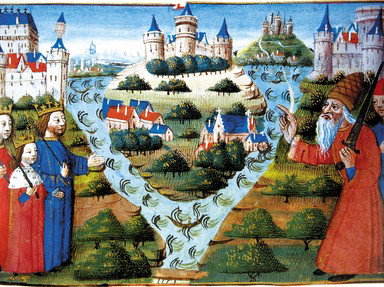
8. What treaty divided the Carolingian Empire into three kingdoms in 843?

Answer: Treaty of Verdun

The Treaty of Verdun was signed in 843. It ended the years of fighting among the grandsons of Charlemagne in the Carolingian Civil War. The treaty split up the empire into western, eastern, and middle realms. Simplified, the document read like most medieval treaties: "Fine, you take that chunk, I'll take this chunk, and let's all stop setting everything on fire."

The division was enormously consequential for Europe's future. West Francia, ruled by Charles the Bald, eventually evolved into France. Meanwhile, East Francia under Louis the German became the basic layout for later Germany. Lothair's kingdom was the awkward middle child geographically and politically, stretching from the Low Countries through northern Italy.
9. Which count famously helped defend Paris during the Viking siege of 885-886 and later became king of West Francia?

Answer: Odo

Odo, Count of Paris, became one of the great heroes of the Viking siege of 885-886. At that time, Paris was strategically important because it controlled passage along the Seine River. Vikings loved the Seine River because it made for a toll-free highway for their invasions.

When a massive Viking force arrived demanding passage and tribute, Odo refused. The siege slogged on for months, with repeated attacks, brutal fighting, disease, and starvation. Paris held out anyway, mostly through stubbornness and sheer refusal to collapse on schedule.

Meanwhile, Emperor Charles the Fat eventually showed up with an army. Annnnnd then negotiated payment to the Vikings instead of punishing them mercilessly as everybody wanted. That went over about as well as you'd expect with the defenders who'd spent months fighting on the walls.

Odo's reputation soared because he'd actually defended the city. Charles looked weak and indecisive. A couple of years later, Odo was elected king of West Francia in 888. Carolingian authority was falling apart.
10. Which illegitimate nephew of the deposed emperor became king in East Francia after the collapse of the unified Carolingian Empire in 887?

Answer: Arnulf of Carinthia

Arnulf of Carinthia became king of East Francia in 887 after a coup against his uncle, Emperor Charles the Fat. Arnulf was technically an illegitimate son of Carloman of Bavaria, which in medieval politics usually meant complications. However, Arnulf's competence and military support outweighed awkward familial questions at a time when the kingdom was falling apart. Charles the Fat had briefly reunited much of the Carolingian Empire, but his weak response to the siege of Paris and general inability to keep the nobility happy ended his rule.

Arnulf proved to be a much stronger ruler than his uncle. He fought off Vikings, dealt with rebellious nobles, and later became Holy Roman Emperor in 896. Still, the old unified empire of Charlemagne was effectively finished by this point.
Source: Author NeuralSpicy

This quiz was reviewed by FunTrivia editor trident before going online.
Any errors found in FunTrivia content are routinely corrected through our feedback system.
8/14/2026, Copyright 2026 FunTrivia, Inc. - Report an Error / Contact Us