FREE! Click here to Join FunTrivia. Thousands of games, quizzes, and lots more!
Quiz about Tango at Your Table

Tango at Your Table Trivia Quiz

Dining in Buenos Aires

Although Buenos Aires may be best known as the birthplace of tango, it is surely no slouch in terms of culinary traditions. Let's explore what the capital of Argentina has to offer to the discerning foodie!

by LadyNym. Estimated time: 4 mins.
  1. Home
  2. »
  3. Quizzes
  4. »
  5. Hobbies Trivia
  6. »
  7. Food & Drink
  8. »
  9. International Cuisine

Author
LadyNym
Time
4 mins
Type
Quiz #
424,417
Updated
Jun 10 26
# Qns
15
Difficulty
New Game
Plays
6
Last 3 plays: Dizart (15/15), Guest 104 (6/15), Guest 76 (11/15).
A cosmopolitan metropolis with a fascinating history, Buenos Aires is renowned for its food culture, boasting a tantalizing blend of influences coming from all over the world and a wide range of establishments for every taste and purse.

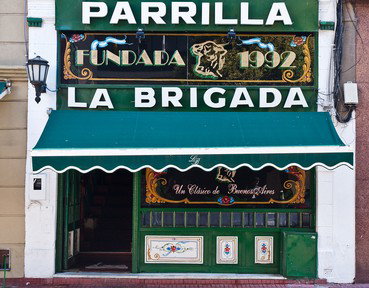
Much of Argentina's culinary fame rests on its top-notch meats, especially beef. Partaking of an authentic Argentine-style in a traditional grill, or parrilla, is a must for any carnivore. This lavish spread of grilled meats, which always includes various kinds of steak, or , is accompanied by a zingy, herb-based sauce known as . This sauce, which is very easy to make at home, also tops one of the city's most beloved street foods, a grilled sausage sandwich called .

Argentine cuisine, in particular that of Buenos Aires, has been heavily influenced by the cuisines of various Italian regions. Some popular Italian dishes have found a permanent home in the Argentine culinary tradition. Among these dishes there are , a breaded cutlet similar to wiener schnitzel, , cold sliced veal topped by a creamy, tuna-based sauce, and of course different types of pasta. Argentine ravioli, filled with ham and mozzarella and usually served with tomato or meat sauce, are named after the coastal town south of Naples.

Since it was introduced by Italian immigrants in the 19th century, pizza has become one of Buenos Aires' culinary icons. The city teems with pizzerias that specialize in Argentine-style pizza, made with a thick, high-rising dough and baked in a pan. Thin, crispy pizza baked in a stone oven is known as . A unique Buenos Aires pizza topping is , a thin pancake made of chickpea flour that has its origins in the Genoese farinata.

With its countless bakeries, Buenos Aires is heaven for lovers of bread, cakes and pastries. Another iconic Argentine dish, this time of Spanish origin, are , savoury filled pastries with a characteristic decorative edge. Available everywhere in Buenos Aires, they are a quintessential picnic and party food. On the other hand, are crescent-shaped pastries made with a rich, buttery dough, often glazed with sugar syrup. Ubiquitous in the city, they are usually eaten for breakfast or as a snack with coffee, usually - that is, espresso served with a splash of milk.

Many Argentine desserts feature known as , an utterly delectable concoction of caramelized milk, which is the traditional filling for the sandwich shortbread cookies known as . Argentines are also quite partial to ice cream, another Italian import, which is called and comes in a huge range of flavours.
Your Options
[chimichurri] [choripan] [cortado] [alfajores] [sorrentinos] [a la piedra] [asado] [dulce de leche] [vitel tone] [milanesa] [medialunas] [faina] [bife] [empanadas] [helado]

Click or drag the options above to the spaces in the text.


Most Recent Scores
Today : Dizart: 15/15
Today : Guest 104: 6/15
Today : Guest 76: 11/15
Today : bernie73: 0/15
Today : FrappMaster: 13/15
Today : Matthew_07: 15/15

Quiz Answer Key and Fun Facts
Answer:

Founded in 1563, Buenos Aires is home to over 3 million people of many different ethnic origins. In the 19th and 20th century, the city welcomed millions of immigrants from every corner of the world who brought their own cultural traditions with them, contributing to its unique culture. Food is a primary component of Buenos Aires' atmosphere, its myriad restaurants and cafés reflecting the rich cultural heritage of its diverse population.

In Latin America, parrilla refers both to the grill where meats are cooked over a wood fire or hot coals and restaurants specializing in grilled meats - called asado ("roasted") in Spanish. Parrillas are very common in Buenos Aires and the rest of Argentina - not surprisingly, since Argentines are the world's biggest red meat eaters. Argentine-style asado usually includes sausages (chorizos) and organ meats (achuras), as well as pork, chicken and blood sausage (morcilla); bife refers to beef steak cuts.

Chimichurri, the traditional accompaniment of asado, is an uncooked sauce of finely chopped parsley, minced garlic, dried oregano, red wine vinegar or lemon juice, chili pepper and olive oil. Both the sauce and its name are believed to be of Basque origin. This sauce, which in recent years has become popular in the US, is traditionally spooned over a grilled sausage served on a crusty bread roll - a combination known as choripán, the South American answer to hot dogs.

As its name suggests, milanesa is the Argentine take on cotoletta alla milanese, a thin veal cutlet that is breaded and deep-fried. in Argentina, however, the dish is usually made with a lean, boneless piece of beef, though other meats or even fish can also be used. Variations on this very popular short-order dish are milanesa napolitana, a Buenos Aires favourite topped with tomato sauce, ham and cheese, milanesa a caballo, topped with a fried egg, and the milanesa sandwich. Vitel toné, on the other hand, is a dish of Piedmontese origin, traditionally eaten in Argentina for Christmas - which falls during the summer, when chilled dishes are more welcome than hot ones. The sauce that tops slices of cold, poached veal is a kind of mayonnaise blended with canned tuna, capers and other seasonings.

Sorrentinos are believed to have been created by an Italian immigrant from Sorrento - hence their name. Round-shaped and lacking Italian ravioli's distinctive fluted edge, they are made with an egg dough filled with mozzarella and York ham, though other fillings (such as ricotta and spinach or various vegetables) also exist. Many other types of pasta, filled and unfilled, are widely consumed in Argentina.

Argentina has embraced pizza with unbridled enthusiasm. Pizzerias can be found in every corner of the vast country, including the remote regions of Patagonia. Buenos Aires holds the world record in terms of pizza consumption and numbers of pizzerias. The traditional Argentine style is called pizza al molde (pan pizza), whose thick, spongy base is reminiscent of focaccia, while thin-crusted pizza a la piedra, baked directly on the surface of a stone oven, is more similar to true Italian pizza. While a huge variety of toppings is available, eating pizza with fainá, or chickpea pancake, is a unique Buenos Aires tradition brought to the city by Genoese immigrants. This interesting dish is called pizza a caballo ("on horseback").

Empanadas ("bread-coated") have their origins in medieval Spain, very likely in the northwestern region of Galicia. From there they spread all over the Spanish-speaking world and beyond. In Buenos Aires, these savoury, hand-held pies with a wide range of fillings that include meat, fish and seafood, cheese and vegetables are regarded as a national treasure. The technique of sealing empanadas with a decorative braided edge bears the name of "repulgue": it is often used as a means of identifying empanadas by their filling when they are prepared in large amounts.

Like Italian cornetti, medialunas ("half-moons") resemble French croissants but are sweeter and denser. They can be found plain or with a variety of fillings such as jam, quince paste, pastry cream or dulce de leche. Cortado ("cut" in Spanish) is espresso with steamed milk, whose mild taste reduces the acidity of the coffee. It is similar to the Italian caffé macchiato, though the milk is not steamed until frothy as it usually is in Italy.

Dulce de leche, whose name means "milk sweet", is the signature ingredient of Argentina's rich array of decadent desserts. It is made by simmering milk and sugar for several hours until the mixture turns a rich golden-brown colour; a quicker method involves boiling a can of condensed milk. Though this confection is widely enjoyed in all of Latin America (though it very probably originated in Asia), it is so popular in Argentina that it was suggested for designation as intangible cultural heritage and also has its own holiday (11 October).

Helado, like the Italian gelato, means "frozen". Argentine helado is famous for its creamy, smooth texture, obtained by following a very similar recipe to its Italian counterpart (an egg custard base) and using top-quality milk and cream. Among the variety of flavours offered by heladerías (ice cream shops) in Buenos Aires and elsewhere, dulce de leche - either plain or with the addition of nuts, chocolate chips or other goodies - is a firm favourite.
Source: Author LadyNym

This quiz was reviewed by FunTrivia editor Bruyere before going online.
Any errors found in FunTrivia content are routinely corrected through our feedback system.
6/10/2026, Copyright 2026 FunTrivia, Inc. - Report an Error / Contact Us