FREE! Click here to Join FunTrivia. Thousands of games, quizzes, and lots more!
Brave New Words Trivia Quiz
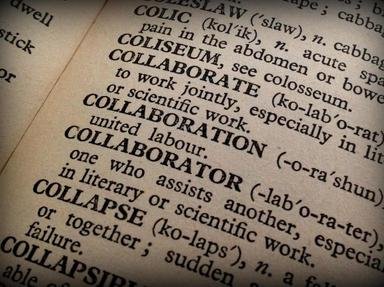
New Additions to the Merriam-Webster Dictionary
In September 2026 the Merriam-Webster website announced the addition of 1,400 new words to the iconic dictionary. Can you pick out these trendy newcomers from this list, which also includes words that were all the rage a few decades ago?
A collection quiz
by LadyNym.
Estimated time: 3 mins.
Select the 12 words added to the Merriam-Webster dictionary in 2026 from this list of 18.
There are 12 correct entries. Get 3 incorrect and the game ends.
crashout whack-a-mole glow-up parasocial vibe coding couch potato bodacious cuffing season cake pop copiumchill pill neckbeard trash pandalooksmaxxing yuppie snail mail grody uncanny valley
Left click to select the correct answers. Right click if using a keyboard to cross out things you know are incorrect to help you narrow things down.
Based on the original dictionaries published by Noah Webster in the 19th century, the Merriam-Webster dictionary is an invaluable resource for anyone interested in the evolution of the English language. According to its website, words are added when they are used by many people who agree on their meaning. Behind each new addition there is a painstaking process that involves actively searching for and collecting evidence of widespread use.
The 1,400 new additions announced in the autumn of 2026 reflect the growing influence of technology and social media on everyday language. Some of the words listed here may be more familiar to the younger generations, while others have established a presence beyond the Internet.
Vibe coding (also spelled as one word or hyphenated) and uncanny valley spotlight the impact of artificial intelligence systems on society. The former denotes the practice of using AI to generate code in a given computer language. The latter, on the other hand, conveys the feelings of unease or revulsion engendered by the lifelike quality of something artificial - such as a doll, a robot or an AI-generated image.
One of several compound words that feature "maxxing" (i.e. maximizing), looksmaxxing refers to the adoption (usually by younger men) of often extreme or dangerous practices - such as very strict diets or physical alterations - to increase one's attractiveness.
A glow-up also refers to a dramatic enhancement of one's appearance that, however, relies on less drastic methods. The term, which has its origins in African American English, can also be used for improvements to things such as homes or other spaces.
Though also related to appearance - in this case, wearing a beard that covers not only the chin but also part of the throat - neckbeard usually describes someone who belongs to a subculture in which this beard style is reputedly common. This may apply to hipster or nerdy types, or - in a more disparaging sense - to bigoted and misogynistic Internet trolls.
The adjective cuffing denotes a romantic relationship in African American English, especially in rap and hip-hop culture. Cuffing season thus describes the time of the year when people who are not in a steady relationship start looking for a short-term romantic partner with whom they can spend the colder months of the year.
Parasocial also describes a kind of emotional involvement, though one-sided and with somebody one does not know in person - often a celebrity, or even a fictional character. Though the word was coined in the mid-1950s, it has become particularly relevant now with the rise of influencers and other online personalities with large numbers of devoted followers.
Copium is a rather intriguing portmanteau word that combines the verb cope with opium, comparing avoidance or denial of an unpleasant reality with an addictive narcotic. The implication of this word is that one would resort to minimizing or rationalizing something negative rather than accepting it.
Derived from the phrasal verb to crash out, the noun crashout may denote (quite literally) a vehicular collision. In the 2020s, however, it often refers to losing control of one's emotions and lashing out in anger or frustration. This meaning, which originated in African American English, has been popularized by hip-hop and social media.
Sounding like a delectable avocado-based dip, whack-a-mole is derived from a Japanese arcade game in which players hit targets (usually toy moles) as they pop up from holes. In its figurative sense, this noun (though there also are instances of its use as an adjective) denotes a situation in which new problems keep popping up as soon as older ones have been addressed.
The last two words on this list are a bit on the light-hearted side. Trash panda is a recent (first attested in 2015), humorous term for a raccoon, an animal with which most people in North America are quite familiar. This word is self-explanatory, given the animal's distinctive black-and-white facial markings and its affinity with urban waste. In fact, raccoons are related to pandas, albeit distantly.
A cake pop, on the other hand, is the latest of a long list of trendy desserts popular with children and adults. As its name suggests, it is a kind of lollipop made of cake crumbs mixed with icing, rolled into balls and chilled before being dipped into chocolate or other sugary coating and decorated.
The six wrong options are all words that either originated or became trendy in the 1980s, and are thus strongly associated with that decade.
This quiz was reviewed by FunTrivia editor looney_tunes before going online.
Any errors found in FunTrivia content are routinely corrected through our feedback system.