FREE! Click here to Join FunTrivia. Thousands of games, quizzes, and lots more!
Madness, Death, and Art Trivia Quiz
Sometimes the idea of death drives us to madness, and sometimes madness brings upon us (or others) an early death. Identify the artists of these 12 famous masterpieces that knew just that. Warning: Contains gruesome scenes.
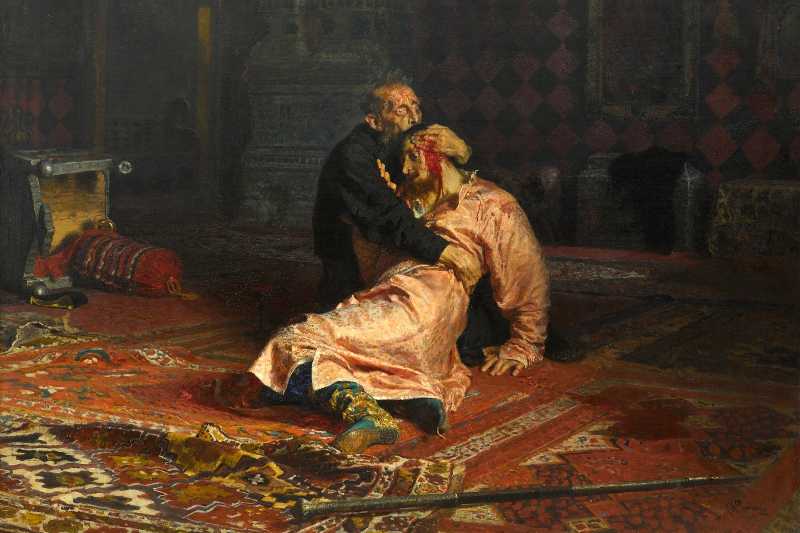
Ilya Repin's "Ivan the Terrible and His Son Ivan" (1885) shows the aftermath of the reported killing of Tsar Ivan IV's son in 1581, so the painting was made about 304 years after the event it depicts. Repin was influenced in part by the political violence of his own time, especially the shock that followed the assassination of Tsar Alexander II in 1881.
It also faced official censorship: soon after it was exhibited in 1885, Tsar Alexander III's government banned public display of it for a time, making it the first painting formally censored in the Russian Empire. The work remained controversial because many viewers objected to its harsh image of a Russian ruler, and it was damaged twice: in 1913, a man slashed it with a knife, and in 2018, another attacker struck its protective glass and canvas with a metal bar, causing major damage that required restoration.
2. Francisco de Goya
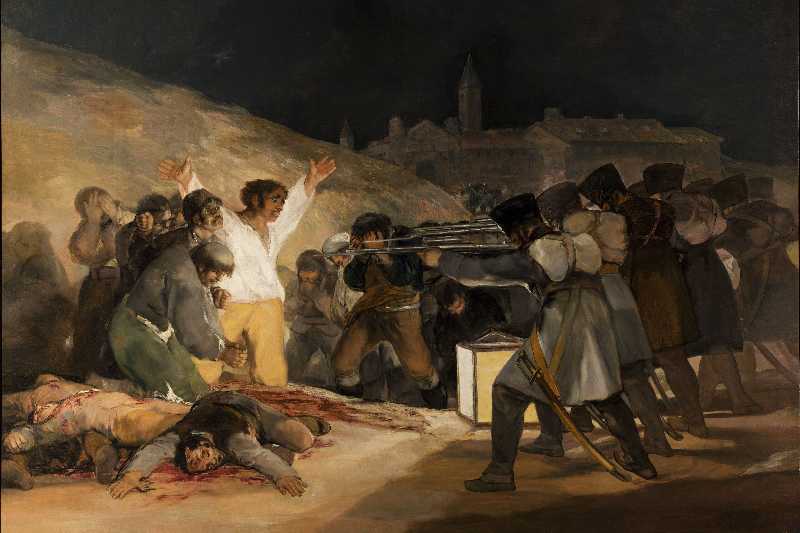
"The Third of May 1808" by Francisco Goya (1814) was based on the French occupation of Spain during the Peninsular War. It shows the execution of Spanish civilians by French troops after the uprising in Madrid on May 2, 1808, when Spaniards resisted Napoleon's control over Spain. The French soldiers can be identified by their shakos, the tall military hats worn by many units in Napoleon's army.
Instead of celebrating commanders or military success, Goya focused on the execution of ordinary Spaniards, and this treatment became an important model for later anti-war painting: Manet reused the execution scene, while Picasso later echoed its focus on civilian suffering and political violence in works such as "Massacre in Korea" and "Guernica."
3. John Everett Millais
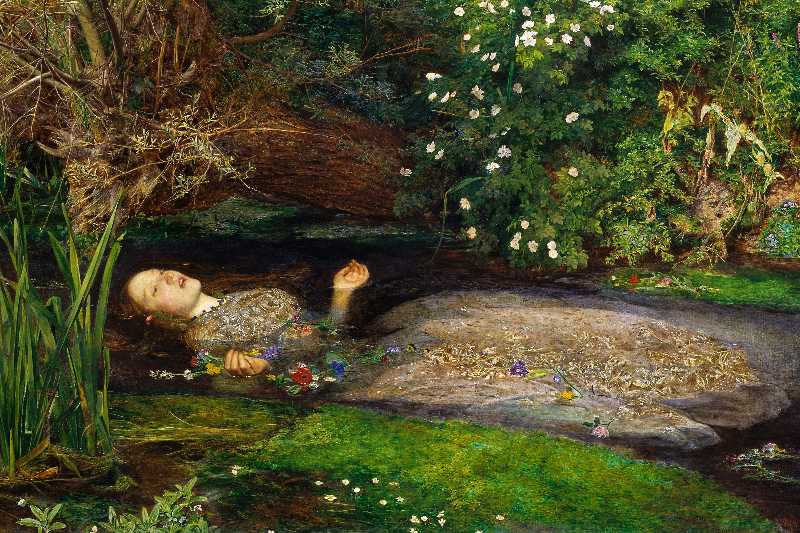
"Ophelia" (1851-52) by British artist John Everett Millais illustrates a scene from Shakespeare's "Hamlet," specifically Queen Gertrude's description of Ophelia floating in the water and singing just before she drowns in Act IV, Scene VII. To paint the figure, Millais used Elizabeth Siddal as his model and had her lie fully clothed in a bathtub in his London studio while he worked.
When the painting was first exhibited in 1852, it was not fully admired; one critic in "The Times" dismissed it as Ophelia in a "weedy ditch." Since then, however, the painting has become Millais's best-known and most popular work, one of the most recognized images associated with Pre-Raphaelite art.
4. Arnold Bocklin
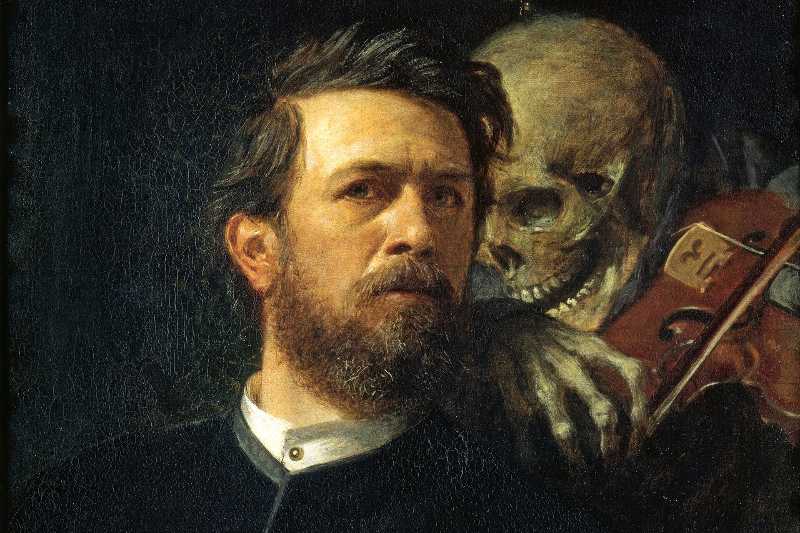
"Self-Portrait with Death Playing the Fiddle" (1872) reflects a broader nineteenth-century interest in death and mortality, themes that also appear in other works by Böcklin, especially "Isle of the Dead," his best-known painting. In this self-portrait, death appears as a skeleton behind the artist.
A possible influence is the "Portrait of Sir Brian Tuke" associated with Hans Holbein the Younger, in which Death stands behind the sitter as a reminder of human mortality. The painting also has an interesting link to Gustav Mahler: according to his wife, it helped inspire the scherzo of his Fourth Symphony, a movement associated with "Freund Hein," a folkloric figure of death.
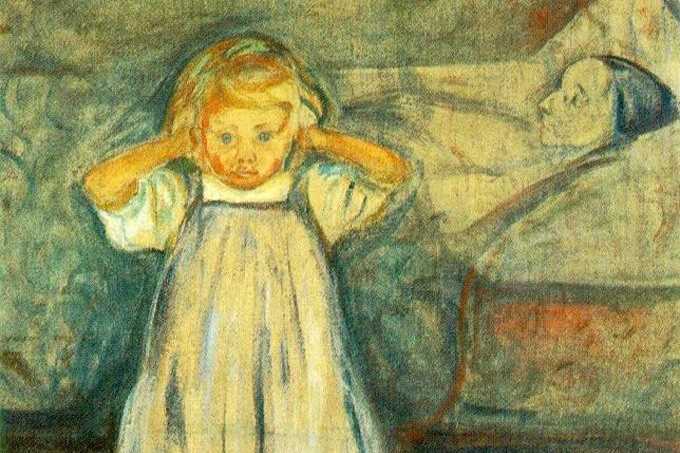
5. Edvard Munch
Edvard Munch's "Death and the Child" (1889) is believed to reflect the personal losses that shaped much of his art. When Munch was five, his mother died of tuberculosis, and that early experience of illness and death became a lasting source for works like this one.
In the painting, a young girl stands in the foreground while the mother's body lies behind her, and the mother almost fades into the bed and wall, making her seem visually absorbed into the background. The girl's raised hands beside her head echo the pose Munch later used in "The Scream."
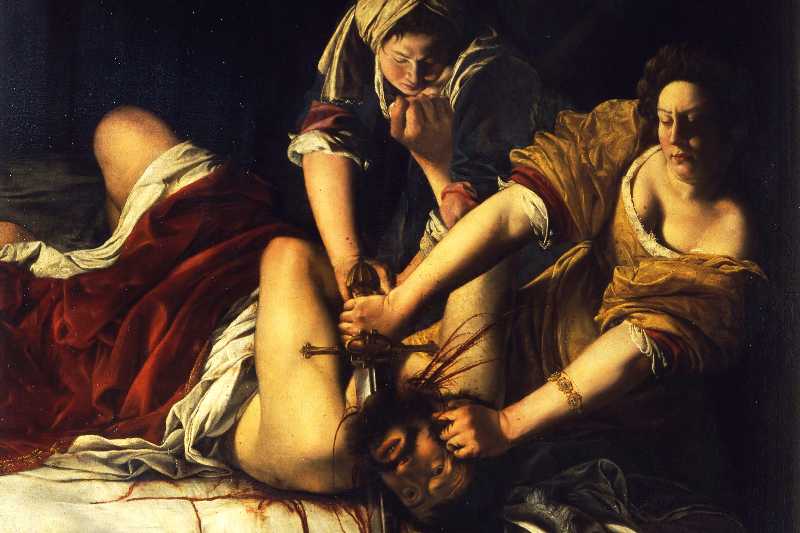
6. Artemisia Gentileschi
"Judith Beheading Holofernes" (c. 1620) by Artemisia Gentileschi depicts the biblical story of Judith, the widow who saves her people by entering the tent of the Assyrian general Holofernes and beheading him after he falls asleep drunk. Gentileschi had already painted an earlier version of the same subject around 1612-13, and scholars generally believe that Grand Duke Cosimo II de' Medici had seen that earlier work before commissioning or requesting this later version for Florence.
In the late eighteenth century, the painting offended a grand duchess, who considered it too disturbing and had it moved to a remote corner of the Uffizi. Today, however, it is displayed prominently in the museum's Caravaggio and Artemisia rooms.
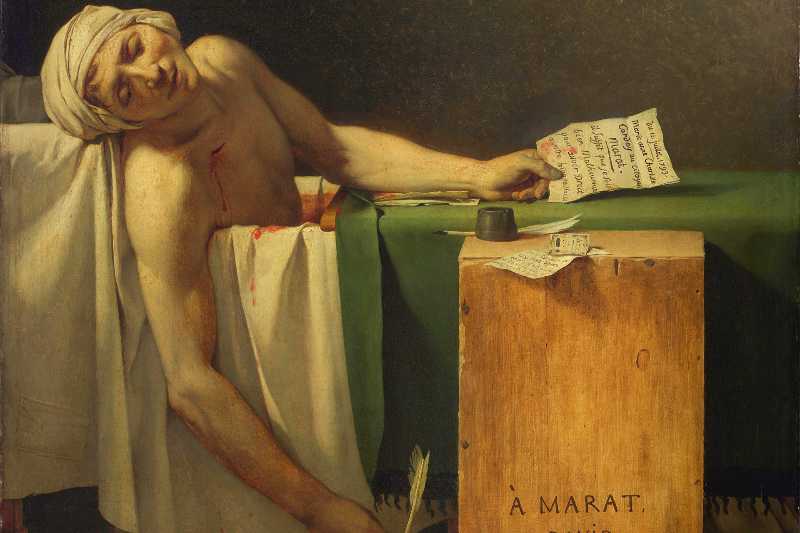
7. Jacques-Louis David
In "The Death of Marat" (1793) by Jacques-Louis David, we are given a view of the murder of the French revolutionary Jean-Paul Marat. He was stabbed in his bath on July 13, 1793, by Charlotte Corday, a political opponent associated with the Girondins. David had close ties to Marat: the two men were allies in the Revolution, and David, a Jacobin deputy, presented Marat as a martyr of the republican cause after his death.
Interestingly, Marat is shown in a bathtub because he suffered from a painful skin disease that led him to spend long periods bathing while he worked and wrote.
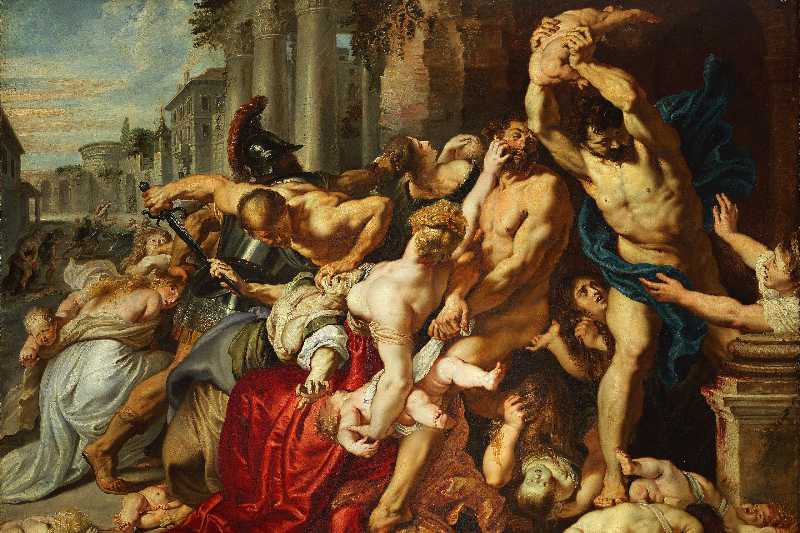
8. Peter Paul Rubens
Peter Paul Rubens's "Massacre of the Innocents" (c.1610) depicts the biblical story from the Gospel of Matthew in which King Herod orders the killing of young boys in Bethlehem in an attempt to destroy the infant Jesus. When Rubens painted the work, that subject would also have had a contemporary meaning for viewers in Antwerp.
The city had lived through the violence of the Dutch Revolt and the wider war between Spain and the Dutch Republic. This included large-scale killings such as the Spanish Fury of 1576, so massacres were not remote history but part of local memory.
9. Edouard Manet
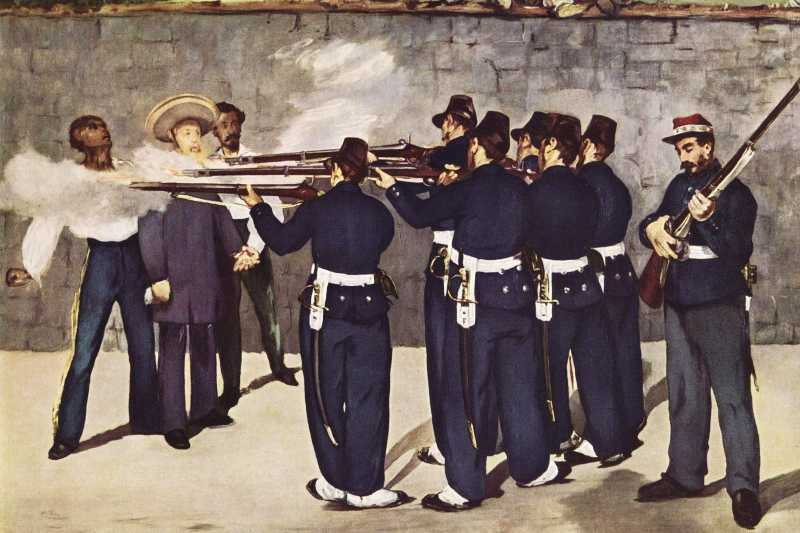
In Édouard Manet's "The Execution of Emperor Maximilian" (1868-69), we are shown the death of Maximilian, the Austrian archduke whom Napoleon III had backed as emperor of Mexico during the French intervention. After French military support was withdrawn, Maximilian's regime collapsed; he was captured by forces loyal to Benito Juárez and executed by firing squad in 1867.
Manet was not present at the execution, so he built the image from reports that reached Paris, including newspaper accounts, photographs, and other published descriptions of the event. The painting was also shaped by art history: its composition clearly recalls Goya's "The Third of May 1808", another firing-squad scene included in this quiz.
10. Caravaggio
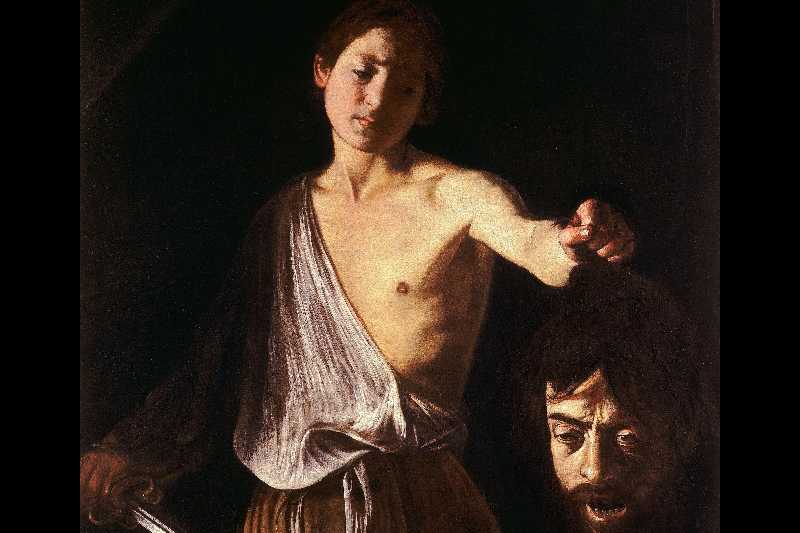
Caravaggio's "David with the Head of Goliath" (1609-1610) depicts the biblical story from 1 Samuel in which the young David kills the Philistine giant Goliath and presents his severed head as proof of victory. Scholars have long identified Goliath's head in this particular work as a self-portrait of Caravaggio.
The painting is closely tied to Cardinal Scipione Borghese, the powerful nephew of Pope Paul V. It was likely sent to the cardinal as part of Caravaggio's effort to win a papal pardon after he killed Ranuccio Tomassoni in a brawl and fled Rome.
11. Hieronymus Bosch
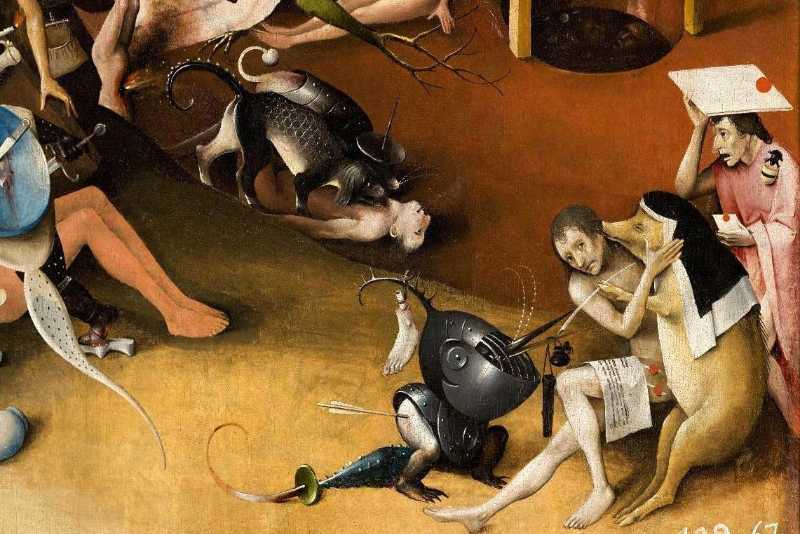
"The Garden of Earthly Delights" by Hieronymus Bosch (believed to be painted between 1490 and 1510) ends with a right-hand panel usually called Hell, where punishment comes in a series of strange scenes. In this panel, Bosch includes a bird-headed monster swallowing human figures, oversized musical instruments used to torment the damned, a pair of severed ears pierced by a blade, and the so-called "tree-man," a hollow-bodied figure that has become one of the best-known images in the triptych.
In the lower right of the Hell panel (which was included in this quiz), a pig dressed as a nun leans over a man and appears to urge him to sign a document.
This scene is often interpreted as a satirical comment on clerical greed and religious hypocrisy.
12. Gustav Klimt
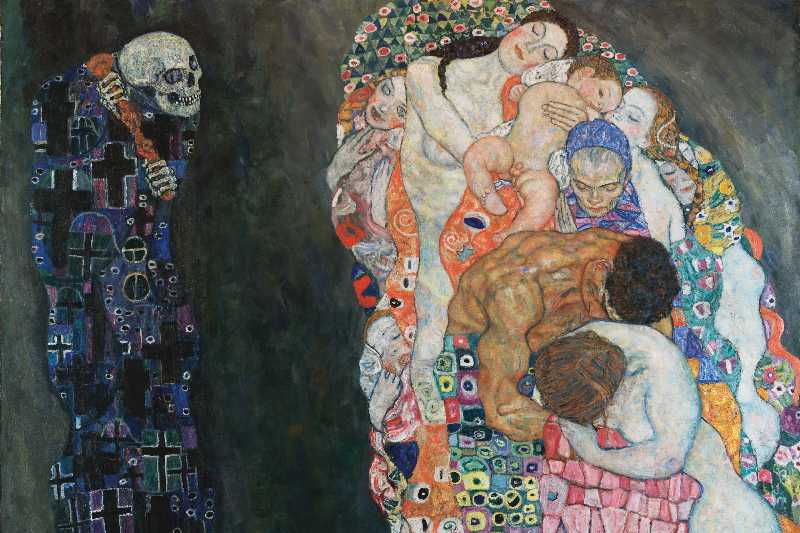
"Death and Life" (1910-15) by Gustav Klimt treats death and human survival as opposing forces, with Death facing a tightly packed group of living figures that includes children, adults, and an elderly woman. In the section representing life, the figures cling closely to one another, which has often been interpreted by art scholars to represent protection and human continuity in the face of death.
After the painting had already been exhibited several times and had won a prize in Rome in 1911, Klimt reworked it in 1915, changing the background from gold to a grayish tone and adding more decorative patterning to parts of the composition. Even world famous artists sometimes can't resist the urge to leave well enough alone!
This quiz was reviewed by FunTrivia editor looney_tunes before going online.
Any errors found in FunTrivia content are routinely corrected through our feedback system.