FREE! Click here to Join FunTrivia. Thousands of games, quizzes, and lots more!
The Art of Jesus of Nazareth Trivia Quiz
The biblical figure of Jesus is quite possibly the most represented figure in art. Here are twelve (cropped) representations of him from famous artists throughout history. (Click the images for a closer look!)
Diego VelazquezCaravaggioMichelangeloEl GrecoLeonardo da VinciJan van EyckHans Holbein the YoungerPaul GauguinTitianRaphaelEdouard ManetRembrandt van Rijn
Jun 06 2026
:
ozzz2002: 10/12
May 15 2026
:
Guest 23: 3/12
Quiz Answer Key and Fun Facts
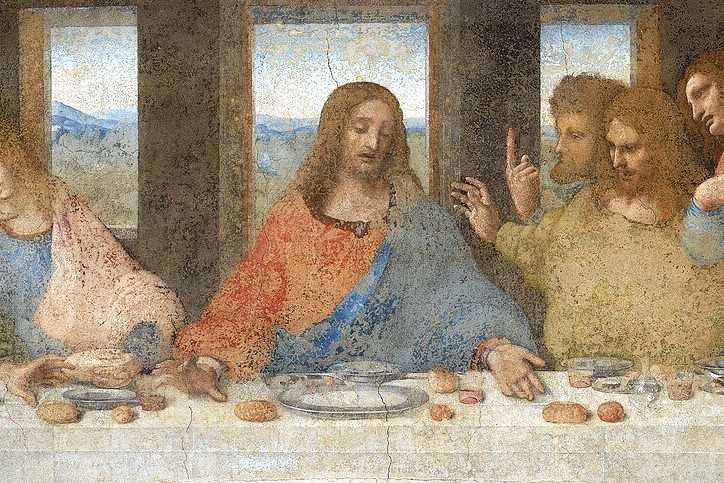
1. Leonardo da Vinci
Painted by Leonardo da Vinci between 1495 and 1498, "The Last Supper" is one of the most famous works of the Italian Renaissance. It is located in the Convent of Santa Maria delle Grazie in Milan, Italy. The scene shows the tense moment just after Jesus tells his disciples that one of them will betray him. Around the table, the apostles react with shock, confusion, and agitation, while Jesus remains calm at the center.
A window behind his head creates a halo-like effect, and da Vinci's careful use of perspective and light draws the viewer's eye directly to him.
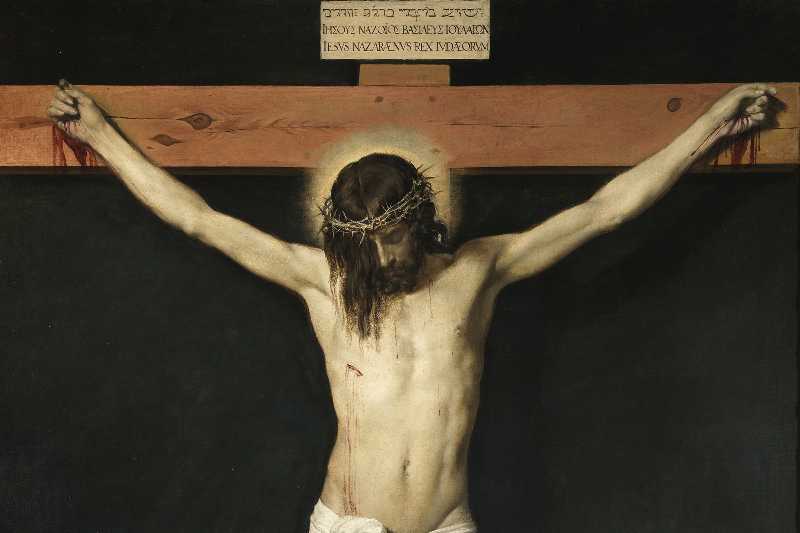
2. Diego Velazquez
Diego Velazquez painted "Christ Crucified" in 1632, giving the crucifixion scene an unusually quiet intensity. Jesus is shown nailed to the cross, his head bowed and his body leaning slightly to one side. There are no mourners or background details to distract from the central figure. Against the dark background, light falls softly across Christ's body, which can be interpreted as both his physical suffering and his dignity.
The result is restrained and solemn.
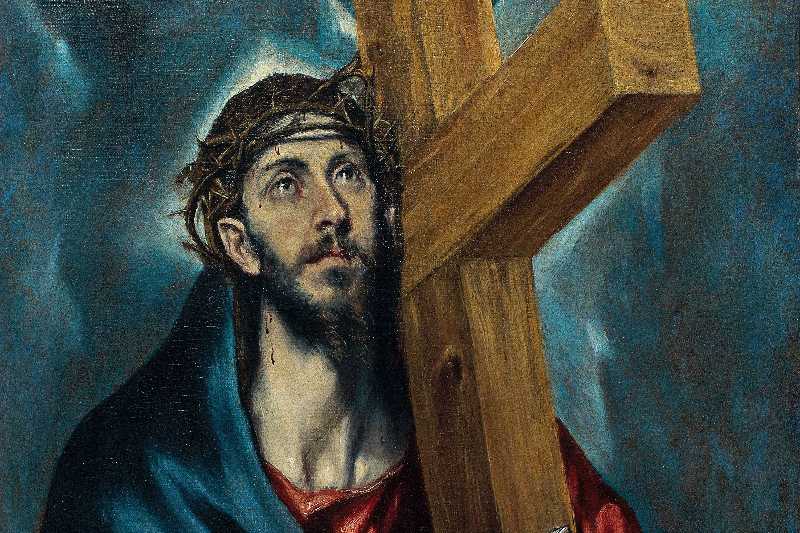
3. El Greco
In "Christ Carrying the Cross" (1590-1595), El Greco presents Jesus on the way to Golgotha after his condemnation. The cross rests on Jesus' shoulder, but the painting does not dwell on the noisy violence of the journey through Jerusalem. Instead, El Greco brings attention to Jesus' face, where calmness and suffering seem to exist together.
The upward gaze and elongated form give the scene a quiet emotional charge.
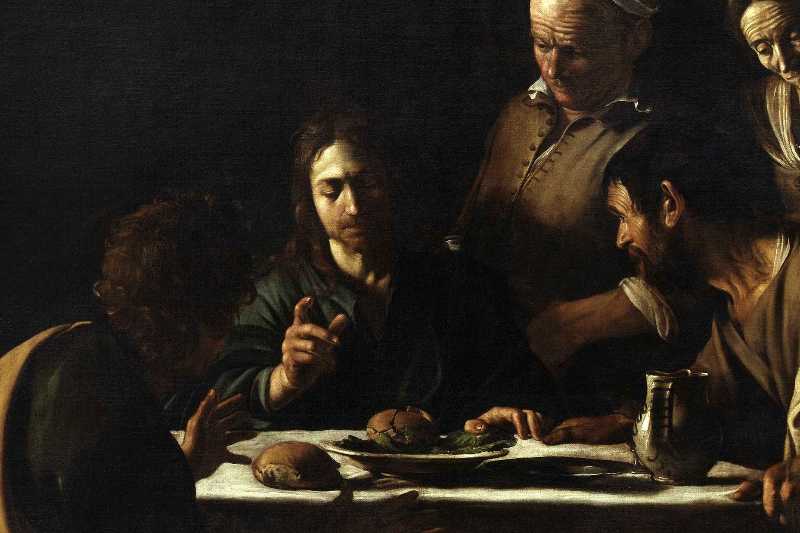
4. Caravaggio
Caravaggio's "Supper at Emmaus," painted around 1601, turns a New Testament recognition scene into a dramatic, almost theatrical moment. The resurrected Jesus sits at a meal with two disciples in the village of Emmaus, but they do not know who he is at first.
When he breaks the bread, they suddenly recognize him. Caravaggio uses the Baroque contrast of light and shadow to heighten that instant of revelation, making the ordinary table scene feel urgent and sacred.
5. Paul Gauguin
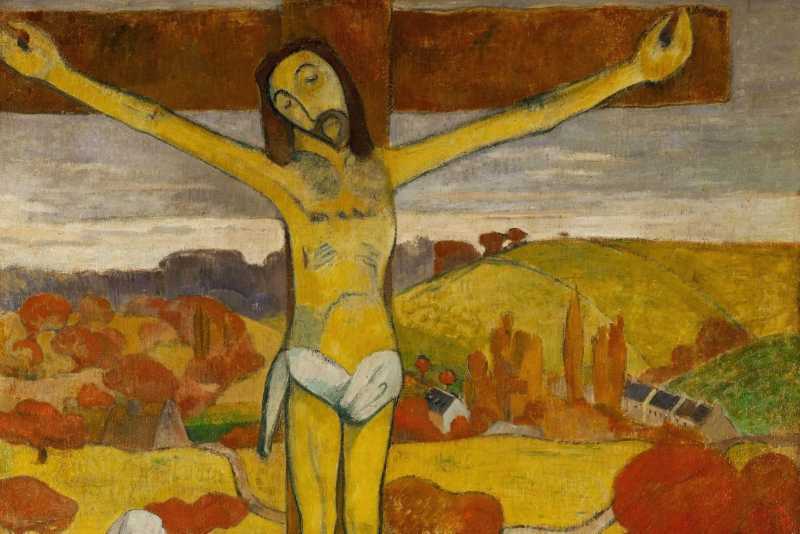
"The Yellow Christ," painted by Paul Gauguin in 1889, places the crucifixion in the rural Brittany region of France rather than ancient Jerusalem. That choice gives the biblical scene a local, village-like quality. Jesus appears on the cross in vivid yellow, while Breton women occupy the surrounding landscape.
The painting belongs to Post-Impressionism, with strong color and simplified forms used for symbolic effect rather than realistic detail. Gauguin blends Christian imagery with the everyday world of 19th-century rural France.
6. Hans Holbein the Younger
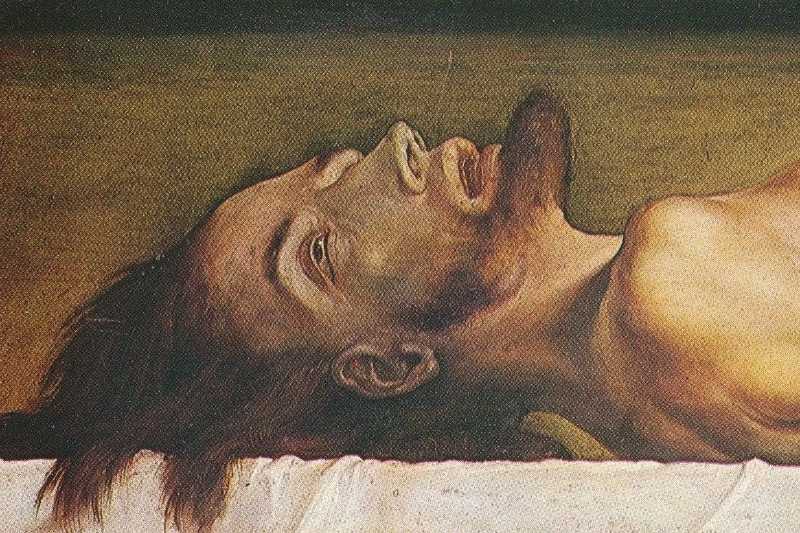
Hans Holbein the Younger's "The Body of the Dead Christ in the Tomb," painted around 1521-1522, is one of the starkest images of Christ's death in Northern Renaissance art. Christ lies stretched out in a narrow stone coffin, his body thin and unmistakably lifeless. Holbein does not soften the scene with heavenly light or idealized beauty.
The painting is famous for its direct treatment of death and the physical reality of suffering. Created shortly before the Reformation reshaped Europe, it is often understood against the religious tension of its time.
7. Jan van Eyck
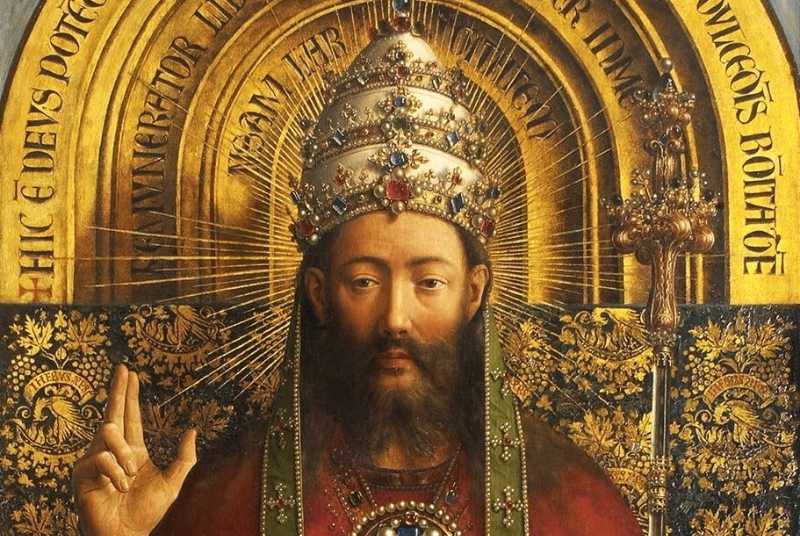
Completed in 1432 by Jan van Eyck and his brother Hubert, "The Ghent Altarpiece," also called "The Adoration of the Mystic Lamb," is a major achievement of Early Netherlandish art. One panel shows "Christ the King" or "God the Father" seated in majesty, crowned and dressed in richly ornamented robes.
The figure suggests divine authority. Across its many panels, the altarpiece includes saints, angels, biblical scenes, and elaborate religious symbolism. Its history is almost as dramatic as its imagery, since it has been hidden, stolen, and recovered several times, including during the Napoleonic Wars and World War II.
8. Raphael
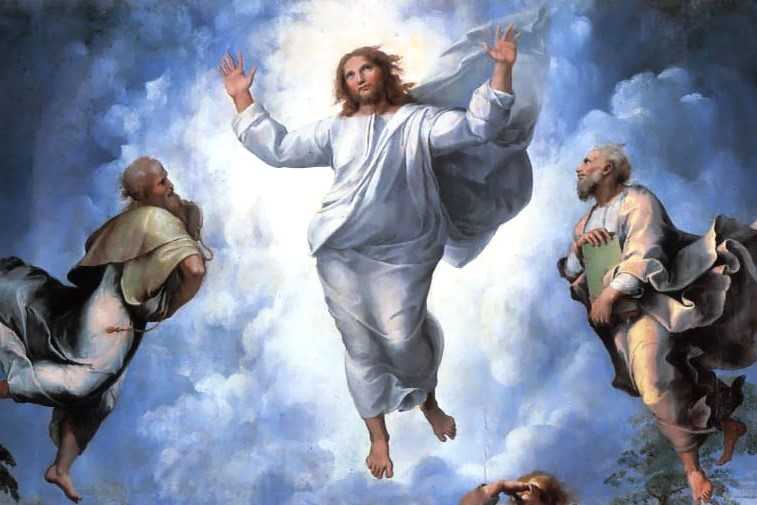
Raphael's "The Transfiguration," completed in 1520 with help from his assistants, combines two contrasting New Testament scenes in one ambitious composition. Above, Jesus appears radiant and elevated on Mount Tabor, with Moses and Elijah beside him as symbols of the law and the prophets. Below, the apostles struggle to heal a possessed boy.
The painting was commissioned for the French Cardinal Giulio de' Medici and intended as an altarpiece for Narbonne Cathedral in France. As a High Renaissance work, it shows Raphael's command of balance and spiritual clarity.
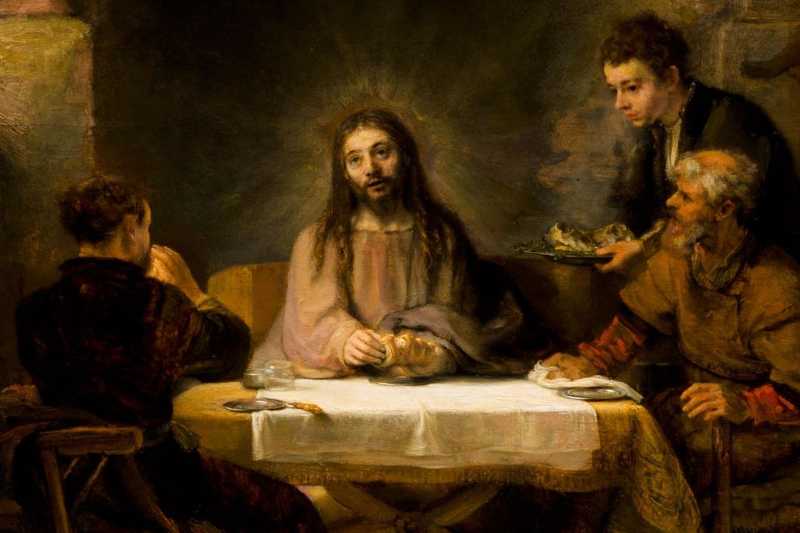
9. Rembrandt van Rijn
Rembrandt van Rijn painted "The Supper at Emmaus" in 1648, returning to the same biblical episode that Caravaggio had treated decades earlier. In the scene, the resurrected Jesus reveals himself to two disciples during a meal in Emmaus. The decisive moment comes as he breaks the bread, and recognition replaces uncertainty. Rather than emphasizing spectacle, Rembrandt gives the scene a more contemplative tone.
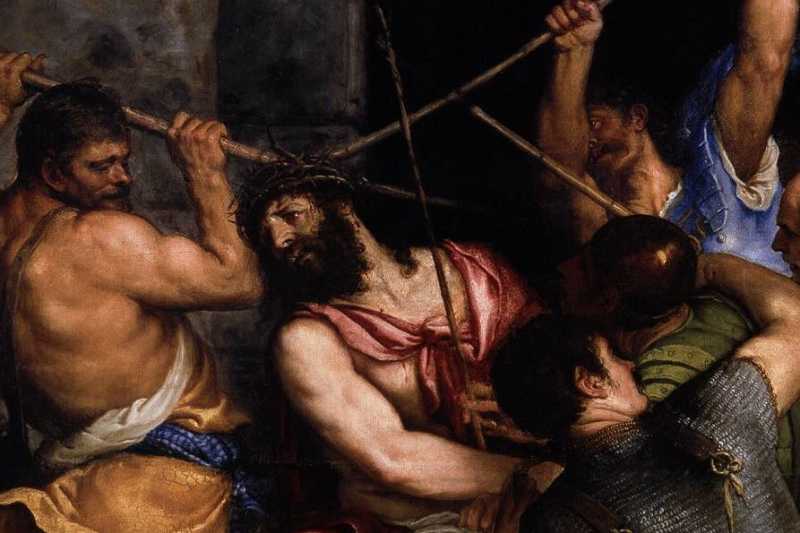
10. Titian
Titian's "Crowning with Thorns" (1542-1543) shows a brutal episode from the Passion of Christ. Roman soldiers mock Jesus as "King of the Jews" and force a crown of thorns onto his head. The figures press in tightly, creating a sense of violence and humiliation. Jesus endures the abuse at the center of the composition, surrounded by the soldiers' aggression. Painted when Titian was at the height of his career, the work combines High Renaissance technique with intense physical drama.
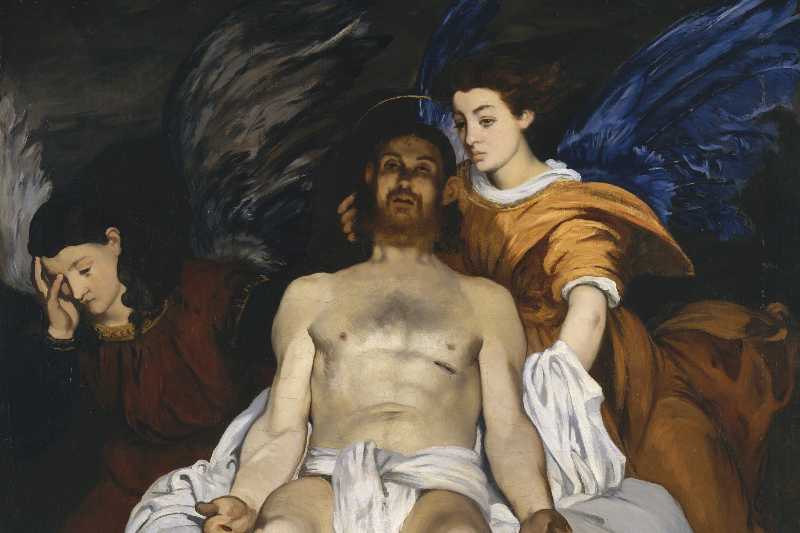
11. Edouard Manet
Created in 1864, Edouard Manet's "The Dead Christ with Angels" treats a traditional religious subject in a noticeably modern way. Christ lies dead after the crucifixion, with two angels beside him: one mournful, the other more reflective. Instead of presenting an idealized, distant sacred body, Manet paints Christ with a directness closer to Realism. That approach unsettled some viewers when the work appeared at the Paris Salon of 1864.
The controversy came partly from its naturalistic depiction of Christ and partly from Manet's refusal to follow older religious conventions.
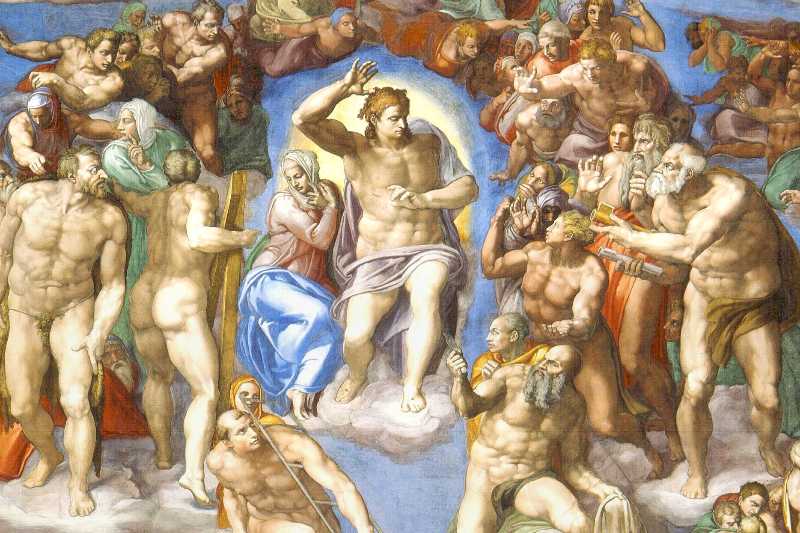
12. Michelangelo
Michelangelo's "The Last Judgment," painted between 1536 and 1541, covers the entire altar wall of the Sistine Chapel in Vatican City. The fresco shows Christ returning at the end of time to judge all humanity. At the center, a powerful Christ raises his arm in a gesture that suggests both salvation and condemnation. Around him, saints, angels, and the resurrected dead fill the scene, while some souls rise toward heaven and others are pulled toward hell.
The fresco became controversial because of its extensive nudity. Decades later, parts of the work were altered with painted drapery.
This quiz was reviewed by FunTrivia editor looney_tunes before going online.
Any errors found in FunTrivia content are routinely corrected through our feedback system.