FREE! Click here to Join FunTrivia. Thousands of games, quizzes, and lots more!
Quiz about Village People

Village People Trivia Quiz


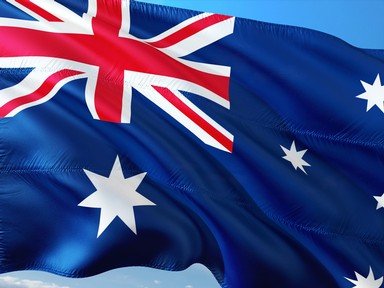
Recently, my wife and I traveled 13,000 kilometres across Australia and passed through more than 260 towns, from tiny outback locations to large cities. No matter how small the place, there stood some significant people within their histories..

A matching quiz by pollucci19. Estimated time: 3 mins.
  1. Home
  2. »
  3. Quizzes
  4. »
  5. People Trivia
  6. »
  7. People by Country
  8. »
  9. Australians

Author
pollucci19
Time
3 mins
Type
Match Quiz
Quiz #
425,366
Updated
Aug 26 26
# Qns
10
Difficulty
Very Easy
Avg Score
9 / 10
Plays
25
Last 3 plays: FlicksBuff (6/10), cardsfan_027 (10/10), Dizart (10/10).
(a) Drag-and-drop from the right to the left, or (b) click on a right side answer box and then on a left side box to move it.
Match the clue on the left with the appropriate individual on the right. The interesting information that follows the question will also include the place that we visited along the way and the tie-in that individual had to the place.
QuestionsChoices
1. Australian hockey international  
  Albert Facey
2. Author of "A Fortunate Life"  
  Daisy Bates
3. Artist, painted "Scudding Swans" (1959)  
  C.Y. O'Connor
4. Member of 2004 Seattle Storm WNBL Championship team  
  Dr. Roy Woodall
5. Created the fictional detective Napoleon "Bony" Bonaparte  
  Brian Glencross
6. Prospector and expert marksman  
  John Perceval
7. Star of "Mystery Road: Origin" (TV Series began 2022)  
  Arthur Upfield
8. Civil engineer, designed Fremantle Harbour  
  Mark Coles Smith
9. Geologist, known as the "Father of Kambalda"  
  Richard Greaves
10. Anthropologist, wrote the 1938 memoir "The Passing of the Aborigines"  
  Tully Bevilaqua


Select each answer

1. Australian hockey international
2. Author of "A Fortunate Life"
3. Artist, painted "Scudding Swans" (1959)
4. Member of 2004 Seattle Storm WNBL Championship team
5. Created the fictional detective Napoleon "Bony" Bonaparte
6. Prospector and expert marksman
7. Star of "Mystery Road: Origin" (TV Series began 2022)
8. Civil engineer, designed Fremantle Harbour
9. Geologist, known as the "Father of Kambalda"
10. Anthropologist, wrote the 1938 memoir "The Passing of the Aborigines"

Most Recent Scores
Today : FlicksBuff: 6/10
Today : cardsfan_027: 10/10
Today : Dizart: 10/10
Today : DeepHistory: 10/10
Today : linkan: 10/10
Today : Changeling_de: 10/10
Today : griller: 10/10
Today : james1947: 10/10
Today : rivenproctor: 10/10

Quiz Answer Key and Fun Facts
1. Australian hockey international

Answer: Brian Glencross

Our first stop on the journey across Australia was the town of Narrogin, 192 kilometres (119 miles) southeast of Perth, with a population of approximately 3,700 people (Census 2021). This is where Brian Glencross was born in 1941.

Brian's key attributes as a hockey player were his toughness and his precision, both of which served him well through his 93 international matches for Australia. Participating in three Olympic campaigns, as a player, Brian would help his country secure a bronze medal in Tokyo (1964) and a silver medal in Mexico City (1968). He took charge of the Australian women's team in 1980 and instilled into them a level of discipline and tactical clarity that would elevate them to a level of dominance on the world stage. This culminated in a gold medal victory at the Seoul Olympics in 1988.

Glencross has been honoured with his induction into the Australian Sporting Hall of Fame in 1991 and, in the same year, was presented with the Order of Australia Medal (OAM). Inducted into the Western Australian Hall of Champions in 1996, he was also elevated to Legend status by Hockey Australia's Hall of Fame in 2008.
2. Author of "A Fortunate Life"

Answer: Albert Facey

Albert Facey's autobiography "A Fortunate Life" (1981) is considered to be a classic of Australian literature.

Born in Victoria in 1894, he was two when his father died on the goldfields of Kalgoorlie. A year later, he moved in with his grandparents when his mother trekked across the country to look after her other children who'd accompanied their father out west. When his grandfather died a year later, he also moved west and began his working life at the age of eight. From this point, he hardly lived with his family again. Having had no formal schooling, he taught himself to read and write.

By fourteen years of age, Facey was an experienced farm labourer and an expert bushman. At twenty he became a boxer but that career was short-lived as World War I broke out and Facey enlisted. He served, initially, in Egypt before becoming a part of the Gallipoli campaign where he was wounded a number of times. Invalided home, he married, worked as a tram driver in Perth for six years and then began farming in Wickepin, an operation that lasted 13 years. He returned to Perth where he ran successful pig and poultry farms until his retirement in 1958. During this time he was also president of the Tramways Union for five years, served as a Justice of the Peace, was a member of the Perth Roads Board for twenty years and also served as a member in local government.

We passed through Wickepin, a wheatbelt centre situated 214 kilometres (133 miles) south-east of Perth, with a population of 380 (2021 census). One of our stops here was the Albert Facey homestead, which had been moved into the centre of town and is now a major tourist attraction.
3. Artist, painted "Scudding Swans" (1959)

Answer: John Perceval

Bruce Rock, 243 kilometres (151 miles) east of Perth in Western Australia's Wheatbelt, was home to 564 people in 2021 and, in 1923, it was the birthplace of notable Australian artist John Perceval.

When he was 15 years old, Perceval contracted polio but, rather than the disease being a hindrance, the period of convalescence gave him the opportunity to hone his drawing skills. He enlisted in the army in 1941 and it was here that he met and struck up a friendship with Arthur Boyd, who'd become one of Australia's leading artists. The pair became a part of the "Angry Penguins" who, along with the likes of John Reed, Joy Hester, Sidney Nolan, and Albert Tucker, rebelled against conservatism and sought to introduce avant-garde ideas into Australian art and literature.

Perceval painted landscapes with a vibrancy and great expression that enabled him to win the prestigious Wynne Prize in 1960. His legacy is also blessed with a celebrated series of ceramic sculptures of angels. John did have a problem with alcoholism, and this would see him installed into a psychiatric ward during the 1980s. He passed away in 2000 but not before he was able to see one of his most famous works, the "Scudding Swans" sell for $552,500, a record for a living Australian painter at the time.
4. Member of 2004 Seattle Storm WNBL Championship team

Answer: Tully Bevilaqua

We would spend the second night of our journey across Australia at Merredin, a town 256 km (159 miles) east of Perth, roughly midway between Perth and the gold mining town of Kalgoorlie. It was here that Tully Bevilaqua was born in 1972.

Listed as being 5' 7" on her WNBL (Women's National Basketball League) biography, Tully possessed a style that was both energetic and disruptive. This made her a valuable asset in the backcourt, and she would often finish high on the list for steals. In the 2005 regular season, she topped that list. The highlight of Tully's WNBL career came in 2004 when she was a part of Seattle Storm's championship winning team. In 2007 she would win the Kim Perrot Sportsmanship Award and, when her career in the League finished in 2012, she was one of only four players who'd achieved the double of 800 career assists and 500 career steals.

Tully would also be a member of the Australian women's basketball team that would win a silver medal at the 2008 Olympic Games in Beijing, having previously won gold at the 2006 World Championships in Brazil and the 2006 Commonwealth Games in Melbourne.
5. Created the fictional detective Napoleon "Bony" Bonaparte

Answer: Arthur Upfield

Born in Hampshire, England in 1890, Upfield moved to Australia as a 20 year old and enlisted with the Australian Army in 1914 at the outbreak of World War I. He would sail to Egypt as a member of the Australian 1st Light Horse Brigade and then became part of the Gallipoli campaign. In France he would marry Ann Douglass, an Australian nurse, and their only child would be born on the return voyage to home.

For the next 20 years Upfield roamed the Australian outback in various roles of employment. The travel gave him a deep appreciation of the Aboriginal culture and way of life, trends that he was able to imbue into his literary character, Napoleon "Bony" Bonaparte. Bony is a biracial Aboriginal Australian detective, who possesses a university degree and has a reputation for solving difficult cases. He first appears in " The Barrakee Mystery" (1929). Twenty nine of Upfield's thirty eight works would feature the detective and they were, by far, the most popular of his publications. In 1943, he would become the first non-American to gain full membership to the Mystery Writers of America.

We passed through Burracoppin, 283 km (176 miles) east of Perth, population 114, on our third day and found out that Upfield was based there while he was a labourer working on the rabbit proof fence. He would also use the town as the setting for his 1937 novel "Mr. Jelly's Business".
6. Prospector and expert marksman

Answer: Richard Greaves

We passed through Southern Cross, 371 km (231 miles) east of Perth, population 523, on our way to Kalgoorlie. The town was named after the constellation, but it was founded by an Australian "shooting" star, Richard "Dick" Greaves.

Greaves was born in Melbourne in the early 1850s and joined the Victorian Permanent Artillery, one of the first paid forces in the colony, in 1873. He would shift to the New South Wales Artillery unit, where his abilities with the rifle were nurtured and he soon became the unit's best marksman. He would represent New South Wales, Victoria and, later, Western Australia (WA) in various competitions and recorded in excess of 300 victories.

He moved to WA to begin gold prospecting and, along with Ted Payne, found gold in the Yilgarn region (which includes the area now known as Southern Cross) in 1887. This would trigger the first of the major gold rushes in Western Australia.
7. Star of "Mystery Road: Origin" (TV Series began 2022)

Answer: Mark Coles Smith

"Mystery Road: Origin" is a spin-off of the 2013 telemovie "Mystery Road" and it features Mark Coles Smith playing the younger version of Aaron Pederson's Jay Swan, an Aboriginal homicide detective, and a quiet loner, dedicated to his work. The link to Coolgardie, a mining town with a population of 760 people situated 558 kilometres (347 miles ) east north east of Perth, is that the town was the filming location for the fictional town of Jardine in season one of the series.

For Mark Coles Smith, an Aboriginal Australian actor, the series was almost a homecoming. He was born a short distance up the road in Kalgoorlie in 1987. He has also made a name for himself as a sound designer, field recordist, writer and composer under the name Kalaji, the Nyikina word for "Whirlwind".

He made his television debut on a children's show at the age of fourteen, then received critical acclaim for his performance as the Aboriginal drifter named Tilly in the film "Last Cab to Darwin" (2015). It was a role that would earn him the FCCA (Film Critics Circle Award) for Best Actor in a Supporting Role. In 2021 he released the electro-pop album "Kalaji", with a sound described as being reminiscent of Icelandic band Sigur Ros. The role of Jay Swan in the "Mystery Road" series would see Smith become the first Aboriginal to be nominated for the Gold Logie, awarded to the Most Popular Personality on Australian Television and earn him the AACTA (Australian Academy of Cinema and Television Arts) Award for Best Actor in a Series.
8. Civil engineer, designed Fremantle Harbour

Answer: C.Y. O'Connor

When Paddy Hannan discovered gold at Mount Charlotte in, what is now, Kalgoorlie, it triggered one of the biggest gold rushes in Western Australia's history. It also led to the discovery of the "Golden Mile", one of the richest gold deposits in the world. The population exploded but, there was a major issue... Kalgoorlie was in the outback and water was scarce. There was not enough to support the population. Enter Charles Yelverton O'Connor.

Irish born O'Connor was a brilliant civil engineer and, as Western Australia's Engineer-in-Chief, he helped to transform the state's infrastructure. He began by improving the transport network, in particular the railway system which was having issues navigating the Darling Range, an ancient granite escarpment that follows Perth's coastal plain. In the face of expert skepticism, he removed a dangerous limestone bar at the mouth of the Swan River which, in turn, opened the door to the development of Fremantle Inner Harbour. The Inner Harbour, which opened in 1897, ranks as one of Australia's engineering marvels.

However, his crowning achievement was the creation of the 530 kilometre (330 mile)"Golden Pipeline", which pumped water from the Mundaring Weir, near Perth, to the Kalgoorlie goldfields. Despite his visionary work, O'Connor, along with a mountain of political pressure, was constantly hounded by the newspapers who questioned the viability and the cost of the pipeline and went so far as to accuse him of corruption. This wounded him severely and, only days before the pipeline was successfully tested, O'Connor took his own life.

Today, Kalgoorlie, which is situated 595 kilometres (370 miles) east of Perth, is a thriving city with a population in excess of 29,000 and to think that it may not have been possible without the tragic genius that was C.Y. O'Connor.
9. Geologist, known as the "Father of Kambalda"

Answer: Dr. Roy Woodall

To understand the reason behind the Roy Woodall's sobriquet, the "Father of Kambalda", you would need to know a little about the town as well. Gold was discovered there in 1896 and the settlement that arose was gazetted the following year with the establishment of the Red Hill Gold Mine. The gold ran out, the mine closed in 1907, and the settlement became a ghost town.

In 1954 a sample of what was believed to be uranium was delivered to the assayer's office, but it proved to be nickel and not in any profitable proportion. When it was passed on to Woodall, the Chief Geologist for the Western Mining Corporation, he saw something else and decided that it warranted further investigation. Fortunately, Woodall had made a name for himself with his work in the Kalgoorlie goldfields and his discovery of talc at Three Springs as he was met with a wall of skepticism and rejection. His persistence paid off and, in 1965, he was granted a small budget of £22,000 ($44,000) to continue drilling. He discovered a rich vein of komatiite-hosted nickel sulfide, the first of its kind and, in the process, started Australia's first nickel mine, triggering a massive nickel boom in the state.

Kambalda is situated 616 kilometres (383 miles) from Perth. The town is split into two localities four kilometres apart and are known as Kambalda East (established 1967) and Kambalda West (1969). In 2021 its population was recorded as 2,468, however, that number is now dwindling due to most of the workers operating on a FIFO (Fly In Fly Out) basis. Dr. Woodall's work would lead him to finding other minerals that were viewed as the first of their type. Among these were calcrete-hosted uranium (Yeelirrie, 1972) and breccia-hosted Fe-oxide copper gold (Olympic Dam, 1975).
10. Anthropologist, wrote the 1938 memoir "The Passing of the Aborigines"

Answer: Daisy Bates

The last town on the Nullarbor Plain, before the Western Australian/South Australian border is Eucla. Technically a village with a (2021) population of 37, it is situated 1,434 kilometres (891 miles) east of Perth. It is here that Daisy Bates was appointed as an Honorary Protector of Aborigines for the Eucla district in 1912. She worked for two years with the Mirning community before moving to the Yalata region in South Australia.

Daisy Bates, born in Ireland in 1859, ironically, found her way to Australia under a immigration scheme for "Catholic girls of good character" by lying about her age, worked as a governess, married twice, the second being a (possible) bigamous arrangement and then returned to England in 1894 where she worked for a spell as a journalist.

Bates set sail for Western Australia in 1899 with enough money to buy a cattle station in the Pilbara region of the state. On the boat trip she met a Roman Catholic priest who gave her an insight into the Aboriginal people and their plight. She leased out the station, returned to Perth and, in 1904, commenced her anthropological work for the state government, studying the Aboriginal customs and languages and providing welfare for them. This entailed years of living in the harsh conditions in desert camps. Such was her care and attention that she would be blessed with the name Kabbarli by them, which, affectionately, means grandmother.

Daisy had written numerous articles and notes about her work but very little was published due to the cost, however, this changed in in the 1930s with the help of The Advertiser (newspaper) in Adelaide. As her eyesight and memory were failing at this time she was assisted by Ernestine Hill, which culminated in a series of 21 articles titled "My Natives and I" in 1936. Her book "The Passing of the Aborigines" (1938) would see her recognized internationally as an expert on Aboriginal people.
Source: Author pollucci19

This quiz was reviewed by FunTrivia editor gtho4 before going online.
Any errors found in FunTrivia content are routinely corrected through our feedback system.
8/26/2026, Copyright 2026 FunTrivia, Inc. - Report an Error / Contact Us