FREE! Click here to Join FunTrivia. Thousands of games, quizzes, and lots more!
Quiz about Old Order Amish or Old Order Mennonite

Old Order Amish or Old Order Mennonite? Quiz

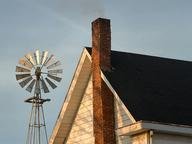
Communities in Lancaster County, Pennsylvania

I adopted this quiz at the same time I saw a streaming documentary about a murder in an Amish and Mennonite community. So I looked into the differences between the Old Order groups of each religion.
This is a renovated/adopted version of an old quiz by author Amishman87

A classification quiz by stephgm67. Estimated time: 3 mins.
  1. Home
  2. »
  3. Quizzes
  4. »
  5. Religion Trivia
  6. »
  7. Christianity
  8. »
  9. Non-Conformist Denominations

Author
stephgm67
Time
3 mins
Type
Classify Quiz
Quiz #
18,956
Updated
Nov 01 26
# Qns
10
Difficulty
Average
Avg Score
6 / 10
Plays
75
Last 3 plays: Guest 195 (8/10), Xanadont (10/10), DizWiz (10/10).
For each of the ten characteristics listed, determine if it is unique to the Old Order Amish or the Old Order Mennonite.
Old Order Amish
Old Order Mennonites

Dedicated meetinghouses for worship No direct connection to the public utility grid Social avoidance rather than shunning Gray buggies No dedicated worship buildings Black buggies Allow use of electricity but no TV Meets for church weekly No mustaches for men Meets for church every two weeks

* Drag / drop or click on the choices above to move them to the correct categories.


Most Recent Scores
Today : Guest 195: 8/10
Today : Xanadont: 10/10
Nov 01 2026 : DizWiz: 10/10
Nov 01 2026 : Guest 142: 6/10
Nov 01 2026 : lethisen250582: 10/10
Nov 01 2026 : Guest 72: 4/10
Nov 01 2026 : Guest 24: 8/10
Nov 01 2026 : neon000: 0/10
Nov 01 2026 : lancer1972: 8/10

Quiz Answer Key and Fun Facts
1. Gray buggies

Answer: Old Order Amish

The Old Order Amish of Lancaster County, Pennsylvania, and its neighboring settlements are instantly recognizable by their traditional gray-topped buggies. This specific gray color is determined by the community's Ordnung (church rules) to serve as a symbol of humility and group identity, helping members instantly recognize one another.

While many Amish groups across North America use black buggies, the Lancaster County community transitioned from yellow to gray covers in the late 19th and early 20th centuries. Today, these distinct gray buggies stand in clear contrast to the black, square-roofed buggies driven by the region's Old Order Mennonites.
2. Meets for church every two weeks

Answer: Old Order Amish

Old Order Amish congregations hold church services every two weeks because they host multi-hour services directly inside members' homes rather than in dedicated church buildings. A biweekly schedule gives host families time to clear out rooms, transport and set up the heavy wooden bench wagon, prepare a full fellowship meal for 100 to 150 neighbors, and clean up afterward without exhausting the community. Additionally, having every other Sunday without church obligation allows for more family and restful Sabbath time.

Instead of a single minister, each church district is served by a team of unpaid lay leaders chosen from within the congregation by secret ballot and the drawing of lots. These typically consist of a bishop (Bischof), two or three ministers (Diener zum Buch), and a deacon (Diener zum Armen) who take turns preaching the short and long sermons during the service.
3. No mustaches for men

Answer: Old Order Amish

Old Order Amish men do not allow mustaches because they are a historical symbol of the military and war. During the 18th and 19th centuries in Europe, soldiers and high-ranking officers commonly wore prominent mustaches. Because the Amish are strict pacifists who completely oppose violence and military service, they shaved their upper lips to reject martial pride and separate themselves from a culture of warfare.

Today, keeping the upper lip clean-shaven remains a powerful tradition of peace, humility, and simplicity, distinguishing them from the outside world while married men still grow a full beard to symbolize maturity.
4. No dedicated worship buildings

Answer: Old Order Amish

Old Order Amish do not build dedicated church buildings because they believe the church is the body of believers (Gemeinde) rather than a physical structure, keeping their focus entirely on faith and community rather than material property. This practice connects back to their early European history, when persecution forced Anabaptists to worship in secret, as well as the interpretation of New Testament scriptures teaching that God does not live in temples made by human hands.

Meeting in rotating member homes reinforces their core values of humility, equality, and close-knit family bonds, avoiding the financial expense, pride, and upkeep of constructing separate meetinghouses. By opening their homes and barns to host the congregation every few weeks, families practice direct Christian hospitality, ensuring that daily home life and spiritual life remain completely interconnected.
5. No direct connection to the public utility grid

Answer: Old Order Amish

Old Order Amish refrain from connecting their homes directly to the public electrical grid primarily to protect their family structure and church community from modern worldly influence. In 1919, Amish leaders collectively decided that public utility lines represented a physical and cultural pipeline bringing the outside world, with its material temptations, entertainment, and modern conveniences, directly into the home.

Refusing grid power forces families to rely on localized, off-grid energy sources like compressed air, propane, solar panels, and battery power. This intentional boundary keeps household labor cooperative, preserves a slower pace of family life, and prevents reliance on modern consumer technology that could weaken community interdependence and spiritual humility.
6. Black buggies

Answer: Old Order Mennonites

The Old Order Mennonites of Lancaster County, Pennsylvania, are known for driving traditional black-topped buggies with sharp, squared roofs. This black color and rigid frame satisfy the community's strict standards for modesty and nonconformity to the modern world, cleanly differentiating them from the curved, gray-topped buggies of their Amish neighbors.

Despite their antique appearance, many of these buggies are outfitted with hidden modern batteries. These power high-visibility LED lights and turn signals to ensure safety on shared public highways.
7. Allow use of electricity but no TV

Answer: Old Order Mennonites

Old Order Mennonites distinguish between technology that serves practical labor and technology that invites worldly culture into the home. They permit electricity because they view power itself as a neutral, practical tool that improves farm efficiency, refrigeration, home lighting, and small-business productivity.

However, they draw a strict line at television (and mass entertainment streaming) because broadcast media acts as an unvetted pipeline for commercialism, violence, secular morality, and modern slang. By accepting grid power for utility while forbidding television, Old Order Mennonites maintain a quiet home life centered on family, work, and faith without compromising on essential modern tools.
8. Dedicated meetinghouses for worship

Answer: Old Order Mennonites

Old Order Mennonites use dedicated meetinghouses rather than private homes for worship because their historical tradition views a simple, shared building as the most practical and orderly way to gather the entire community. Unlike the Amish, who split from main-line Anabaptists in 1693 over stricter home-based fellowship practices, Mennonites maintained the long European tradition of plain meetinghouses built without altars, stained glass, steeples, or musical instruments.

For Old Order Mennonites, these plain wooden meetinghouses are strictly functional gathering spaces (not holy monuments) ensuring that worship remains focused on the Word and community without compromising their commitment to humility and simplicity.
9. Social avoidance rather than shunning

Answer: Old Order Mennonites

A major distinction between how the two groups discipline members comes down to the historic 1693 schism between Jakob Ammann and the main Anabaptist body. Ammann broke away specifically because he insisted on a rigid, severe form of shunning. Under Amish practice, a member who leaves or is excommunicated is subjected to banning such that relatives cannot sit at the same dinner table, eat meals together, or conduct business with them until they repent.

Old Order Mennonites follow the traditional Dutch and Swiss Anabaptist view of discipline, which applies spiritual avoidance rather than daily household social ostracization. For Mennonites, excommunication primarily restricts a disciplined individual from taking Holy Communion, voting in church business meetings, and holding leadership roles. While members maintain a respectful spiritual boundary, they do not sever normal family relationships, cut off shared household meals, or refuse to speak with or conduct business with loved ones.
10. Meets for church weekly

Answer: Old Order Mennonites

Old Order Mennonites hold worship services weekly and gather in permanent, dedicated meetinghouses rather than rotating through private homes. These weekly services create no physical burden on individual households. Also, meeting every Sunday provides consistent weekly spiritual structure and maintains community unity across the entire church district.

Each Old Order Mennonite congregation is served by a local leadership team chosen directly from among the laymen of the congregation. This leadership team typically includes a bishop, two or three ministers, and a deacon. All ministers and leaders serve for life without receiving a salary, continuing their regular weekday farming or trade jobs alongside their spiritual duties.
Source: Author stephgm67

This quiz was reviewed by FunTrivia editor looney_tunes before going online.
Any errors found in FunTrivia content are routinely corrected through our feedback system.
11/2/2026, Copyright 2026 FunTrivia, Inc. - Report an Error / Contact Us