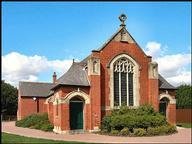
The early history of the Congregational church is primarily the story of English Pilgrims and
in the 16th and 17th centuries. Their
belief was that each local group of believers, bound by a voluntary "covenant," should be an
church, free from bishops or magistrates. This led to them
from the Church of England. Many of them fled their homeland and settled in the
Bay area of the New World. Eventually, the shared religious practice of both groups became
as Congregationalism throughout New England.
In all Congregational churches, members held
power, all of them responsible to each other under the covenant that formed the basis of their life together. In fact,
first became church members before they could be chosen and ordained by the church. In the 1700s, these members experienced significant shifts due to three main forces: the Great
, the American
, and the Enlightenment which emphasized reason and
.
In the 1800s, Congregationalists spearheaded numerous national
associations to address social and religious needs as the country grew. Also, many prominent Congregationalists were zealous
and formed organizations that combined anti-slavery sentiments with educational commitments. Finally, they were founders of elite
such as Harvard and Yale. By the mid 1900s, they had evolved into three denominations with the majority joining the
Church of Christ.
Across time, almost all of the Congregational churches still share several key principles. They believe that
is the sole head of the church and the local congregation is responsible to respond to His guidance. The
as the inspired Word of God is a guide for faith, with members having "full liberty of conscience" in its
. They practice two sacraments: Baptism and Holy
. Ultimately, the defining characteristic is the
of each local assembly.