FREE! Click here to Join FunTrivia. Thousands of games, quizzes, and lots more!
Quiz about A Reel in the Years

A Reel in the Years Trivia Quiz

The Mayan Calendar

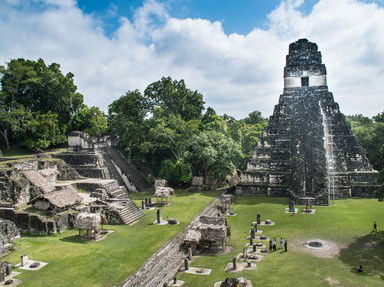
The Maya civilization's dance through time was performed on their cyclical calendar. Make that calendars - like any dance, choreography was key. Mesoamericians didn't share a language, religion, or central government, but they all used the Mayan calendar

by etymonlego. Estimated time: 4 mins.
  1. Home
  2. »
  3. Quizzes
  4. »
  5. Science Trivia
  6. »
  7. Miscellaneous Science
  8. »
  9. Time and Distance Measurements

Author
etymonlego
Time
4 mins
Type
Quiz #
422,272
Updated
Jan 17 26
# Qns
15
Difficulty
New Game
Plays
7
Last 3 plays: GoodwinPD (15/15), xchasbox (3/15), Rizeeve (12/15).
The Maya calendar can be thought of as two interlocking reels. The first "reel" was the Sacred Calendar, called the tzol'kin, with a duration of , possibly to estimate the length of a human pregnancy. Each date on the tzol'kin was associated with powerful omens. The longer , or haab, is so named because it's just shy of a full solar year, and includes that aren't considered part of any month. These were known as the wayeb, or . The haab consisted of eighteen months, each with - the same number as their vigesimal number system.

The remarkable thing about having two calendars is how they coordinate, like a film projector. A was a complete rotation of these two reels, and ran for about total. A complete revolution of the haab could only align with four of the twenty days of the tzol'kin, and they align in sequence. Thus, the system, divisions of the solar calendar, were named based on the day they began (as if we called 2001 "Monday").

In cases where they wanted to mark dates further back, the Maya employed the . Like our own calendar, it was and never reset. Time was not reckoned in years, but rather days, known as . 360 of these formed a , just shy of a solar year. The longest period of time commonly used was the , which amounts to . Ominously, the Maya reckoned that, since the start of creation, of these units would have passed on December 21, 2012... and If you haven't checked the news, the doomsday prophecies for that day were quite a let-down.
Your Options
[Long Count] [sequential] [twenty days] [144,000 days] [thirteen] [b'aktun] [52 years] [Calendar Round] [Year Bearer] [Vague Year] [tun] [nameless days] [five days] [260 days] [k'in]

Click or drag the options above to the spaces in the text.


Most Recent Scores
Today : GoodwinPD: 15/15
Today : xchasbox: 3/15
Today : Rizeeve: 12/15
Today : Guest 159: 0/15
Today : Guest 77: 15/15
Today : gracemercy1: 15/15
Today : Guest 49: 0/15

Quiz Answer Key and Fun Facts
Answer:

Both the Sacred Calendar and the Vague Year originated with the Olmecs and spread to the rest of Mesoamerica. As the Maya were the most advanced civilization until the Aztecs, no one else matched their zeal for timekeeping.

Within the 52-year Calendar Round, each date could be uniquely referred to, and every date across five decades (most of a lifetime in those days) would have the same degree of association we have with, say, February the 2nd. In some early cultures, children were literally named for the date they were born. The five-day wayeb, being "out of sequence," was a particularly ugly omen, and being born then was a dire prophecy. The end of each Calendar Round was a time for, you guessed it, sacrifices and tributes to the gods to ward off the bad omens.

The Maya calendar was ingenious, but without the Long Count, it's only really good for tracking the passage of planting-time and harvest-time. Despite some shady historians who'll tell you the Maya were priestly astronomers, all Mesoamerican groups that we know of routinely engaged in conquest. What's a Maya king to do when he wins a great battle? Why, brag about the date it happened, of course!

The beautiful ornamental stelae we see depicting the accomplishments of kings always included Long Count dates. Because the use of Long Count itself was itself a marker of status, the date recorded itself was ornamented in inscriptions. A half-dozen or more "supplemental" characters could be added, giving the names of kings, moon phases, "Lords of the Night" (a set of nine gods), and so forth. Not so impressed with your Excel spreadsheet anymore, are you?

And similarly, Mayan myths were tied to dates. The current, "Fourth Creation" (previous incarnations are told in Mayan legends like the Popol Vuh) began on August 14th, 3114 B.C. Thirteen b'aktun, or 1,872,000 days later, happens to fall on December 21st, 2012, a date that will live in infamy as the subject of that terrible Roland Emmerich film. If there was a reason this date was picked, it probably was an astronomical one, but I'm not convinced there was a reason despite the intriguing efforts of John Major Jenkins (see his "How and Why of the Mayan End Date").

To clarify, the Maya didn't necessarily think that 12/21/2012 would bring Armageddon. Given the Maya's overall cyclical conception of time (contrasting our linear, sequential conception), many scholars think this date would be treated as an anniversary of creation. They might not necessarily have celebrated it, given what they thought of the wayeb and the Calendar Round, but saying they "predicted" any particular calamity is misleading.

To this day, the modern descendants of the Maya, who live in Guatemala, use a modified version of the original Mesoamerican calendar, performing rituals during the wayeb. You can even buy printed versions of the tzolk'in. The last page of each calendar prophesizes that the enraged Vision Serpent will rain flaming tar on the earth on December 31st, adding to the trend of shameless clickbait calendars... just kidding. I imagine the print tzolk'ins end with a reminder to order your calendar for next tun.
Source: Author etymonlego

This quiz was reviewed by FunTrivia editor rossian before going online.
Any errors found in FunTrivia content are routinely corrected through our feedback system.
Related Quizzes
1. The Fahrenheit Scale Average
2. Calendars, Time and Distance Very Difficult
3. SI Units Average
4. Metric and Imperial Measurements Average
5. Which Way Is Up Average
6. Too Close For Comfort Average
7. Scientific Measurement Units Average
8. A Long History in Measuring Time Average
9. British Measurements Average
10. A Timely Quiz Very Difficult
11. Some Really, Really, Really Big Numbers Average
12. Scientific Scales Very Difficult

1/17/2026, Copyright 2026 FunTrivia, Inc. - Report an Error / Contact Us