FREE! Click here to Join FunTrivia. Thousands of games, quizzes, and lots more!
Mixed Sites in Europe Quizzes, Trivia and Puzzles
Mixed Sites in Europe Quizzes, Trivia

Mixed Sites in Europe Trivia

Mixed Sites in Europe Trivia Quizzes

  1. Home
  2. »
  3. Quizzes
  4. »
  5. World Trivia
  6. »
  7. World Sites

Fun Trivia
Any traveler in Europe would enjoy taking in these incredible sites. See what you know about them!
77 quizzes and 1,078 trivia questions.
Sub-Categories:
1.
  Get It Right: Nordic Cities    
Classification Quiz
 15 Qns
Think you know the Nordic region? Match 15 cities to the correct country across Denmark, Norway, Sweden, and Finland. A clean, straightforward test of Northern European geography.
Easier, 15 Qns, Ovaldas, Dec 05 25
Easier
Ovaldas gold member
Dec 05 25
90 plays
2.
A Trek Around Europe
  A Trek Around Europe   best quiz  
Classification Quiz
 15 Qns
Visiting World Heritage Sites
My grandson and I spend a lot of time looking at pictures from around the world and dreaming about sites that we want to visit together. See if you can sort these UNESCO World Heritage sites according to their locations in Europe.
Very Easy, 15 Qns, ponycargirl, Oct 09 24
Very Easy
ponycargirl editor
Oct 09 24
565 plays
3.
Photo Tour Landmarks of Greece
  Photo Tour: Landmarks of Greece   best quiz  
Photo Match
 12 Qns
Greece is home to numerous ancient structures, while its more modern counterparts are nothing to shy away from. Come take a tour of these incredible Greek landmarks! (Click the images to get a closer look!)
Average, 12 Qns, trident, Dec 17 23
Average
trident editor
Dec 17 23
283 plays
4.
Italy France or Spain
  Italy, France or Spain   best quiz  
Photo Match
 10 Qns
These three countries are so full of monuments that reflect their histories, their cultures and their people.
Easier, 10 Qns, pollucci19, Jan 24 25
Easier
pollucci19 gold member
Jan 24 25
596 plays
5.
  A Visit to St Petersburg   top quiz  
Collection Quiz
 13 Qns
St Petersburg has a lot to offer, and most of the sites listed in this quiz are located there. Be careful, though, because some are not. Good luck with recognising the correct places while avoiding the (very) red herrings.
Average, 13 Qns, rossian, Dec 08 24
Average
rossian editor
Dec 08 24
314 plays
6.
What I Saw On My Holidays
  What I Saw On My Holidays    
Photo Quiz
 10 Qns
I had a lot of fun on my recent holidays. Let's see if you can identify where and what I saw.
Average, 10 Qns, darksplash, May 30 25
Average
darksplash
May 30 25
315 plays
7.
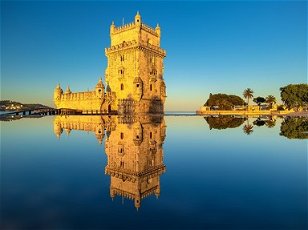
The Architecture of Lisbon
  The Architecture of Lisbon    
Photo Match
 10 Qns
Immerse yourself in the charm of Lisbon through its iconic structures. Match the picture with the name of one of the city's architectural wonders!
Average, 10 Qns, wellenbrecher, Jan 28 24
Average
wellenbrecher gold member
Jan 28 24
83 plays
8.
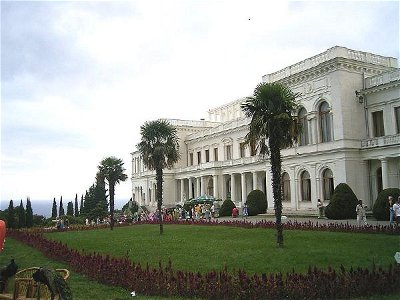
Piznai Ukrainu Discover Ukraine
  Piznai Ukrainu! (Discover Ukraine!)   best quiz  
Photo Quiz
 10 Qns
The 2007 project 'Piznai Ukrainu!' (Discover Ukraine!) gave Ukrainians a chance to vote on the Seven Wonders of Ukraine, to which three additions were made by the government. Let's have a look at these sites of national significance.
Easier, 10 Qns, looney_tunes, Sep 24 18
Easier
looney_tunes editor
3854 plays
9.
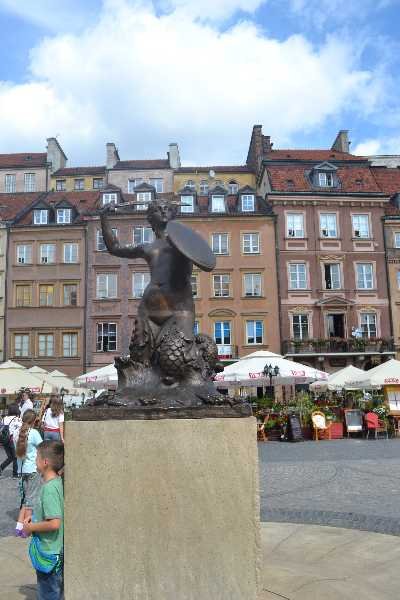
I Recommend a Trip to Poland
  I Recommend a Trip to Poland   best quiz  
Photo Quiz
 10 Qns
A holiday to this lovely country took me by surprise. While it may not be as popular as some of the other European countries, Poland has a lot to offer visitors and is definitely well worth a visit.
Easier, 10 Qns, zorba_scank, Sep 24 18
Easier
zorba_scank gold member
2558 plays
10.
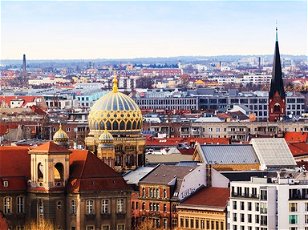
Photo Tour Landmarks of Germany
  Photo Tour: Landmarks of Germany   best quiz  
Photo Match
 12 Qns
Germany is home to many incredible world sites. Enjoy these twelve breathtaking landmarks. (Click the images to get a closer look!)
Easier, 12 Qns, trident, Aug 04 23
Easier
trident editor
Aug 04 23
332 plays
trivia question Quick Question
Which former walled capital of Castile, just outside Madrid, was the residence of the famous Mannerist painter El Greco?

From Quiz "The Spanish Connection"


11.
  Centuries in the Making   top quiz  
Label Quiz
 10 Qns
Each of the edifices in this quiz took longer than 100 years before it was considered 'finished' in the history books, and one of them is still under construction. You've heard their names, but do you know where they are located?
Easier, 10 Qns, reedy, Jan 29 22
Easier
reedy gold member
Jan 29 22
1032 plays
12.
  20 Famous Landmarks of Europe Questions   best quiz  
Multiple Choice
 20 Qns
This is a quiz on some of Europe's most famous landmarks.
Average, 20 Qns, wyattsheff, Aug 12 24
Average
wyattsheff
Aug 12 24
7222 plays
13.
Interesting European Heritage Sites
  Interesting European Heritage Sites   great trivia quiz  
Label Quiz
 15 Qns
See if you can locate 15 European UNESCO World Heritage sites. Any one of these sites would be an incredible adventure. I see a bucket list forming... Enjoy!
Average, 15 Qns, BigTriviaDawg, Dec 13 22
Average
BigTriviaDawg gold member
Dec 13 22
259 plays
14.
Amsterdam and Paris Two Plane Cities
  Amsterdam and Paris: Two 'Plane' Cities    
Photo Quiz
 10 Qns
Here's a quiz based off a business trip I took to both Amsterdam and Paris. The purpose of the trip was to tour the airports of each city, since I work for a major airline. Despite being there only two days, I was able to do a little sightseeing.
Average, 10 Qns, RedHook13, Apr 07 25
Average
RedHook13 gold member
Apr 07 25
262 plays
15.
  Tom True Tours the World   great trivia quiz  
Multiple Choice
 10 Qns
Tom and Tilly True are touring the United Kingdom and Europe. The following are excerpts from Tilly's postcards to her mom, proving that true travel never goes smooth...
Easier, 10 Qns, beergirllaura, Sep 24 18
Easier
beergirllaura
1623 plays
16.
  German UNESCO World Heritage Sites   top quiz  
Match Quiz
 10 Qns
UNESCO World Heritage Sites represent the cultural and/or natural sites most worthy of conservation. Germany has over 50 of those sites. Match ten of them to their Bundesland (federated state).
Average, 10 Qns, JanIQ, Nov 22 21
Average
JanIQ gold member
Nov 22 21
187 plays
17.
  Dutch Windmills    
Multiple Choice
 10 Qns
Windmills are a symbol of Dutch culture and history. They have been used for various purposes.
Average, 10 Qns, piet, Dec 22 24
Average
piet gold member
Dec 22 24
163 plays
18.
  To Your Right, You'll See ...    
Multiple Choice
 10 Qns
What is on your left on the way back. No kidding: this quiz is about ten European cities and their tourist attractions. Have fun!
Average, 10 Qns, JanIQ, Sep 24 18
Average
JanIQ gold member
629 plays
19.
  Test yourself! Famous Landmarks of Europe Quiz    
Multiple Choice
 10 Qns
If you have travelled in Western Europe you shouldn't find this quiz too hard. Just identify where these famous landmarks are.
Average, 10 Qns, carolinebee999, Oct 18 18
Average
carolinebee999
2908 plays
20.
  Come Sail With Me - But Not By Sea    
Multiple Choice
 10 Qns
We will sail along three of Europe's major rivers - the Rhine, the Main and the Danube - enjoying the intimacy of a small river ship. Along the way we will see medieval villages, half-timbered towns, and bustling cities.
Average, 10 Qns, Whitney37, Sep 24 18
Average
Whitney37 gold member
387 plays
21.
  Help Me Label My Photos!    
Multiple Choice
 10 Qns
I took a trip to Europe in the summer of 2001. While there, I saw so many sites and took many pictures. Unfortunately, when I had my photos developed the pictures were all mixed up. See if you can help me label my photos with the correct city.
Tough, 10 Qns, ladymacb29, Sep 24 18
Tough
ladymacb29 editor
2317 plays
22.
  Dublin's Historic Buildings and Monuments   popular trivia quiz  
Multiple Choice
 10 Qns
Dublin city has many beautiful buildings, most dating back to the British period.
Average, 10 Qns, noelm14, Sep 24 18
Average
noelm14
280 plays
23.
  Stone Circles of Britain and Ireland    
Match Quiz
 10 Qns
Obviously all ancient sites were built long before transport became industrialized so half of these sites were even harder to complete as the locations are offshore.
Average, 10 Qns, comark2000, Jan 29 22
Average
comark2000
Jan 29 22
183 plays
24.
  Catalhoyuk Exploring The Lost City    
Multiple Choice
 10 Qns
We cannot all be archaelogists, but we can take a tour of the lost city of Catalhoyuk and discover its wonders for ourselves.
Tough, 10 Qns, LindaC007, Sep 24 18
Tough
LindaC007
379 plays
25.
  Ancient Greek Architecture    
Multiple Choice
 10 Qns
Ancient Greek monuments, some of which still stand today in all their glory, are truly awesome! How much do you know about these monuments and the people who created them?
Very Difficult, 10 Qns, Engadine, Sep 24 18
Very Difficult
Engadine
1391 plays
Related Topics
  European History [History] (848 quizzes)

  European Cultures [World] (32 quizzes)

  European Geography [Geography] (1351 quizzes)

  European Football [Sports] (274 quizzes)

  European Animal [Animals] (13 quizzes)

  Europe - Alphabetical [Geography] (19 quizzes)

  Europe - Cities [Geography] (67 quizzes)

  European Geography for Kids [For Children] (30 quizzes)

  European Overseas Empires [History] (26 quizzes)

  European Union [World] (22 quizzes)

  European War [History] (164 quizzes)

  Mixed Europe [General] (15 quizzes)


Mixed Sites in Europe Trivia Questions

1. When did the use of windmills in the Netherlands start?

From Quiz
Dutch Windmills

Answer: 13th century

The use of windmills in the Netherlands started in the 13th century, when they were used primarily for draining swamps and marshes. This was necessary because much of the land in the Netherlands was below sea level and prone to flooding. The windmills were able to pump water out of the low-lying areas and create more arable land for farming. The first windmill in the Netherlands was probably a post mill, which is a type of windmill that has a wooden body mounted on a vertical post. The body can be turned around the post to face the wind direction. Post mills were simple and cheap to build, but they had some disadvantages, such as being unstable and vulnerable to strong winds. Later, other types of windmills were developed, such as tower mills and smock mills.

2. The Canal du Midi connects which French city to the Mediterranean Sea?

From Quiz UNESCO World Heritage Sites in France

Answer: Toulouse

To answer this question correctly, it is best to picture the map of France in your head. First of all, you'll notice that Marseilles is a harbour city on the Mediterranean Sea, so Marseilles doesn't need a canal towards the Mediterranean. Secondly, Paris is quite too far from the Mediterranean to connect with one single canal. The usual shipping route from Paris to the Mediterranean is via the river Seine and the Atlantic Ocean, around Spain and Portugal. Lyon lies on the confluence of the rivers Saone and Rhône, and thus has a direct navigable access to the Mediterranean: just follow the river Rhône downstream and you'll reach the Mediterranean near Marseilles. Toulouse is a large inland city about 100 km north of the Pyrenees, best known as headquarters of Airbus and the European aeronautics. The Canal du Midi ends at Sète (near Montpellier), about 220 km (140 miles) to the southeast. The first ideas of building a canal from Toulouse to the Mediterranean date back to the first Roman Emperors. But one of the major problems was that in between Toulouse and the Mediterranean, lies a mountain ridge that exceeds the Toulouse altitude with 70m (about 76 yards). It took until 1662 before the tax collector Pierre-Paul Riquet came up with a viable solution. King Louis XIV then ordered the construction of the canal, and it was opened in 1681. All works were done by hand, as no machines were yet available. The Canal du Midi was the main transport method between Toulouse and the Mediterranean for almost 200 years. In 1857 a railroad was opened on more or less the same trajectory, and in the twentieth century road traffic became an important source of competition. The Canal du Midi was inscribed on the UNESCO World Heritage Sites in 1996.

3. The subject of many gorgeous photos, this site of incredible natural and artistic beauty located south of Siena (Tuscany) was added to the list in 2004. What is its name?

From Quiz Italian World Heritage Sites... With a Twist

Answer: Val d'Orcia

If you have ever seen calendars or postcards depicting stunning Tuscan landscapes, with rolling hills and stately cypress rows, chances are those photos were taken in Val d'Orcia, a region in the southern part of the province of Siena that also includes picturesque towns such as Pienza (also inscribed in the World Heritage list as a separate site), Montepulciano and Montalcino. Before the advent of photography, the Val d'Orcia landscape was depicted in the works of many Renaissance and later artists. The area is also famous for its wines (such as the highly prized Brunello di Montalcino and Vino Nobile di Montepulciano), and its historic 19th-century railway line. Not surprisingly for such a photogenic site, the Val d'Orcia has often been used as a movie set: parts of Anthony Minghella's Oscar-winning "The English Patient" (1996) were shot near Pienza. The three incorrect choices are also World Heritage sites: San Gimignano and the Medici Villas are also in Tuscany, while the Cinque Terre are in Liguria.

4. What is the name of Milan's famed opera house that opened on August 3, 1778, with a performance of Salieri's "Europa riconosciuta"?

From Quiz Milanese Sites

Answer: La Scala

La Scala Opera House opened in 1778 and was a replacement for the previous opera house that burned down two years before. La Scala was originally called Nuovo Regio Ducale Teatro alla Scala before it was renamed Teatro alla Scala or just La Scala for short. The opera house's main architect was Giuseppe Piermarini who also built the Royal Palace of Milan. In addition to being an opera house, La Scala once served as a casino and is now home to a ballet theater as well.

5. Which Moorish palace located in Granada gets its name from Arabic and means "the red castle"?

From Quiz The Sites of Spain

Answer: Alhambra

Construction of the Alhambra was started by the Moors in 1238 on ruins of a late 9th-century fort. Its name was taken from the reddish earth used to create its outer walls, which hid the spectacular, yet in some ways simple, beauty of the interior. The location made it extremely difficult for enemies to gain access to what was started as a military enclave. The Alhambra sits on the banks of the Darro River atop a rocky hill, the top of which is not easily reached. The Alhambra is considered one of the most beautiful examples of Islamic art in the world. Filled with stunning rooms, courtyards and fountains, the Catholic monarchs Ferdinand and Isabella took the palace from the last of the Moors in 1492 and made it their official royal residence. The Alhambra was named a UNESCO World Heritage Site in 1984. (Question and info by goodreporter)

6. The Ponte Vecchio, complete with its characteristic shops, spans which Italian river?

From Quiz In the Shadow of the Ponte Vecchio

Answer: Arno

The Ponte Vecchio is one of the few surviving examples of a medieval bridge whose structure includes a row of shops - the others include the Rialto Bridge in Venice and Pulteney Bridge in Bath. It spans the River Arno, the main river that flows through the city of Florence. The Arno rises in the Apennine mountain range in central Italy and flows generally westwards through Tuscany to its mouth on the Ligurian Sea (part of the Mediterranean).

7. This ancient man-made landmark lies about eight miles north of the city of Salisbury. What is it?

From Quiz This is Yesterday

Answer: Stonehenge

Stonehenge is a ring of standing stones that was assembled probably sometime between 3000 and 2000 BC. Each stone is about 13 feet tall and 7 feet wide and weighs about 25 tons. Under the care of the English Heritage Trust, Stonehenge was named a UNESCO World Heritage Site in 1986. Many questions abound about how people with a Neolithic level of technology were able to construct Stonehenge. There are also many questions about the purpose of Stonehenge.

8. Once a royal residence and now a museum, this famous Parisian tourist attraction is located in the centre of the city and is visited by millions of people, both tourists and residents, every year. What is its name?

From Quiz Famous Buildings And Landmarks In Paris

Answer: The Louvre

The Louvre Museum is located in the 1st Arrondissement of Paris, on the Right Bank of the River Seine. It contains over 38,000 art objects, and the art collections are divided into 8 curatorial departments, which are as follows: Egyptian Antiquities, Near Eastern Antiquities, Greek, Etruscan and Roman Antiquities, Islamic Art, Sculpture, Decorative Arts and Paintings, Prints and Drawings. The Louvre Museum is located in the Louvre Palace.

9. What is the name of the national art museum in Madrid regarded as the pre-eminent museum of classical Western art in Spain, and one of the great museums of the entire world?

From Quiz The Spanish Connection

Answer: The Prado

All of the answers are great national European art museums, with the Prado being Spain's. Each of these museums contains many masterpieces. Highlights inside the Prado include "Las Meninas" by Velazquez, "The Garden of Earthly Delights" by Hieronymus Bosch, and "The Third of May" by Goya. The Louvre is France's national art museum, the Hermitage is Russia's, and the National Gallery is the United Kingdom's.

10. Áras an Uachtaráin is the home of the Irish President. But what was the original name of Áras an Uachtaráin?

From Quiz Dublin's Historic Buildings and Monuments

Answer: Viceregal Lodge

Áras an Uachtaráin is the home of the Irish Presidents, but originally was the home to the British Viceroys. Building began in 1780 and was deigned by Nathaniel Clements. In 1911 saw the construction of the West Wing for the visit for King George V and Queen Mary of Great Britain. Douglas Hyde was the first President of Ireland and first presidential occupant to move into the house in 1937.

11. Which stone circle, near Land's End in Cornwall, is said to be a group of young ladies who ignored the Sabbath and were turned to stone for their sin?

From Quiz Legends of the Standing Stones

Answer: The Merry Maidens

The Merry Maidens is said to represent nineteen young women who, when on their way to Sunday Service, were distracted by the music of some pipers. Instead of continuing to Church they danced in the field and for this sin were struck by a thunderbolt which turned them to stone. The pipers were also turned to stone and can be seen as two tall standing stones approximately a quarter of a mile away.

12. Which house was a gift from a grateful Queen and Nation to a military commander?

From Quiz The Stately Homes of England

Answer: Blenheim Palace

Following his success against the French in the Wars of the Spanish Succession Queen Anne and the Nation granted the First Duke of Marlborough the Manor of Woodstock and the promise of sufficient funds to build a house. Vanbrugh was the architect, and it is reported that he had several arguments with Sarah, Duchess of Marlborough, which led to his eventual resignation. The Palace was the birthplace of Sir Winston Churchill, who is buried at the parish church in nearby Bladon, next to his wife. Blenheim Palace is now a World Heritage Site.

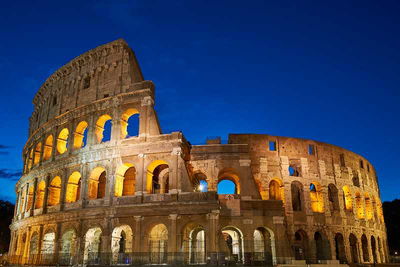
13. Which famous Roman landmark is more properly known as the Flavian Amphitheatre?

From Quiz Famous Landmarks of Europe

Answer: Colosseum

The Colosseum was built around 70 A.D by the orders of the Roman Emperor Vespasian. It was used mainly for wild animal hunts, sea battle re-enactments and of course gladiatorial battles. The base of the Colosseum covers an area of 6 acres and it stands 48 metres high.

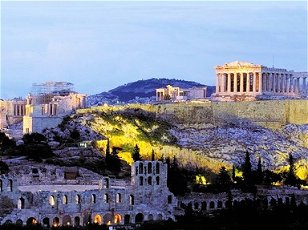
14. In what city would you be able to look up and see the famous "Acropolis"?

From Quiz Famous Landmarks of Europe

Answer: Athens

The Acropolis is a complex of buildings, the most recognised is the white, columned Temple to Athena called the Parthenon.

15. The Cerne Abbas Giant is an ancient, and very rude, chalk hill figure, but many historians and archaeologists claim this is the odd monument out in this list, dating from a post-Roman period. When is it most frequently dated from?

From Quiz Greatest British Ancient Monuments

Answer: 1650s

Said to have been created to celebrate the end of Puritan rule in England, this priapic figure has been the cause of much sniggering ever since.

16. What was the first windmill in the Netherlands used for?

From Quiz Dutch Windmills

Answer: Grinding grains

The first windmill in the Netherlands was built in the village of Alkmaar in the year 1221. It was a post mill, which is a type of windmill that has a wooden body mounted on a vertical post. The body can be turned around the post to face the wind direction. It was used for grinding grains.

17. Which world leader lived in Avignon during the period 1309-1376? There were multiple persons, but one sole title.

From Quiz UNESCO World Heritage Sites in France

Answer: The Pope

When Pope Benedict XI (an Italian living in Rome) died in 1305, his successor was a French Archbishop. He took the papal name Clement V, but refused to move to Rome as the previous Popes did. Clement V installed himself at Avignon, and a few years later all of the papal administration was established in Avignon. Clement V and his successors John XXII, Benedict XII, Clement VI, Innocent VI, Urban V and Gregory XI were all French clerics who remained in Avignon for most of their papacy. In 1376 Gregory XI finally returned to Rome, and his court followed. The Pope naturally needed a building to live in, as well as a large church to hold the mass. The Papal palace was built in 1252 (then as seat of the bishop of Avignon), and rebuilt in Gothic style between 1335 and 1352. The Basilique Notre-Dame des Doms d'Avignon was built in Romanesque style about 1150 and completed in 1425, with the reconstruction of the bell tower that collapsed in 1405. Both the Papal palace and the basilica were situated in the historic centre of Avignon, a walled city of which the ramparts are still preserved. The main access road to this inner city was via the Pont Saint-Benezet, a large stone bridge built in 1234. But as this bridge over the river Rhône was built at a passage where the river flow can reach tremendous forces, the bridge was abandoned in the Seventeenth Century and almost 80% of the bridge collapsed. Only four of the initially 22 arches remain. UNESCO classified the Papal palace, the basilica and the Pont Saint-Benezet as World Heritage Site in 1995.
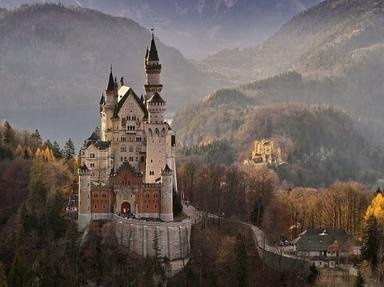

18. Maybe surprisingly for some, one of the most recent Italian entries in the World Heritage List was chosen as an example of a modern industrial city. What is this fascinating urban centre in Piedmont?

From Quiz Italian World Heritage Sites... With a Twist

Answer: Ivrea

Founded in Roman times, the city of Ivrea (part of the Turin Metropolitan area) has a long and distinguished history, witnessed by a wealth of medieval, Renaissance and Baroque buildings. However, it owes its 2018 addition to the World Heritage List as "Industrial City of the 20th Century" to the architectural complex designed by some of Italy's leading architects and urban planners between the 1930s and the 1960s on behalf of the Olivetti company, Italy's leading manufacturer of typewriters, calculators and office computers. The complex is now an open-air museum, Ferrara and Mantua were added to the list as examples of Renaissance architecture and urban planning, while Caserta is present because of its 18th-century Royal Palace.

19. The crowning glory of Spain's most famous architect was started in 1882. What is the name of this Barcelona basilica, consecrated in 2010 by Pope Benedict XVI, even though its construction was not then complete?

From Quiz The Sites of Spain

Answer: Sagrada Familia

According to Sagrada Familia's website, the 18 towers of the basilica each "has a special significance". The central tower stands for Jesus. The four towers immediately surrounding that stand for the four Gospels. Above the apse stands a tower, which the website refers to as being "crowned by a star", that represents the Virgin Mary. And the other twelve towers stand for Jesus's twelve disciples. Architect Antoni Gaudí, who was deeply religious, sought to combine the elements of light and nature into the design of his buildings, most of which are in Barcelona and come from the Art Nouveau period of the late 19th and early 20th centuries. When Gaudí died in 1926, only 25 percent of the work on the basilica had been done. Other architects have taken on the project over the years, sticking with Gaudí's vision of what the building should be. And as the construction continued, masses were regularly held for the general public in the unfinished building. (Question and info by goodreporter)

20. In addition to being a particularly grand museum, the Palazzo Vecchio also serves which other civic function?

From Quiz In the Shadow of the Ponte Vecchio

Answer: Town hall

The Palazzo Vecchio is a large structure overlooking the Piazza della Signoria in central Florence. Construction on it began around 1300 and its design reflects its dual purpose of being a grand symbol of the city's power and a defensive stronghold in case of attack. In the 16th century it became the powerbase of the Medici family and it was also the home of the newly unified Italy's provisional government in the mid-19th century. In modern times it continues to serve as a town hall and base for the local council as well as being a museum that hosts countless treasures, which are equally eye-catching as the Palazzo's amazing rooms and decoration.

21. Walls often serve to separate. Which Roman Emperor commissioned a wall in AD 122 in what is now northern England to control the influx of outsiders into Roman Britain?

From Quiz This is Yesterday

Answer: Hadrian

Hadrian's Wall stretched 73 miles from the North Sea to the Irish Sea. Depending on which part of the wall you are viewing, it stood between 11 and 20 feet high and between 10 and 20 feet wide. With fortifications spaced slightly less than five miles apart, the wall may have served economic purposes with the collection of customs at the gates. Large portions of the wall still stand today. The wall was declared a UNESCO World Heritage site in 1987.

22. Legends, some of questionable provenance, surround many older ruins. Which castle in Cornwall was reputed to be the place of the conception of King Arthur?

From Quiz Ruins of the British Isles

Answer: Tintagel Castle

Knowledge of British geography eliminates most of the candidates. Kelso is in Scotland near the English border. Cornwall Castle is fictitious. Arundel is in south-eastern Britain, whereas Cornwall is in the south-west. Arundel is also one of the most noteworthy estate homes and definitely not a ruin. Tintagel Castle was constructed in 1233 by the Earl of Cornwall. However, his successors had little interest in it, and it later was used by the Sheriff of Cornwall as a prison before falling into disrepair. By legend Merlin appeared to Arthur's mother in the image of her husband, Uther Pendragon, and impregnated her at the castle.

23. This famous monument is located on Champs-Elysees at the Place Charles De Gaulle, and was built in the 19th century. Which monument is this?

From Quiz Famous Buildings And Landmarks In Paris

Answer: The Arc De Triomphe

The Arc de Triomphe is a major landmark of Paris, in the form of a Triumphal Arch. Its construction began in 1806 and it was formally inaugurated in 1836. The Arc de Triomphe became a rallying point for French troops parading after successful military campaigns and it is also significant for its use on July 14 every year during the Bastille Day Military Parade which has been held every year since 1880.

24. What palace and fortress in Granada is famous for its fountains, gardens, and Islamic-style architecture?

From Quiz The Spanish Connection

Answer: the Alhambra

The Alhambra was the royal palace of the Sultans of Granada, who ruled the Emirate of Granada from 1238-1492. This was the last country ruled by Muslims in continental Europe, and so it accumulated a lot of Arabic and Islamic art in the process. The Catholic monarchs Ferdinand and Isabella conquered Granada in 1492 in their mission to rid the Iberian peninsula of non-Christian kingdoms. By the early 1600s, all Muslims had been evicted from Spain or forcibly converted to Christianity. The Alhambra itself is famous for its beautiful inscriptions and architecture. The Courtyard of the Lions features a fountain supported by twelve lions carved from white marble.

25. Bremetennacum was a Roman fort and vicus located in what is now the village of Ribchester in Lancashire. The fort provided accommodation for the Roman army and a base from which to control the surrounding area, but what was the purpose of the vicus?

From Quiz Losing the Race Against Time

Answer: A civilian settlement

Various definitions exist for a Roman vicus. It can refer to a Roman neighbourhood; an administrative division of a Roman town or city; or a civilian settlement attached to an official Roman site, such as a fort. The Roman fort at Ribchester was established around 70AD and was in use until the 4th century. Archaeological evidence suggests that the associated vicus was a residential area mixed with key industries needed for supporting an army, particularly metal and leather working. The vicus also contained temples and a bath house. The condition of a burial area associated with the fort was the reason given for its inclusion on the 'at risk' register in 2013.

26. The Wellington Obelisk is the second tallest obelisk in the world after the Washington Monument and the tallest in Europe. But who was the Wellington Testimonial a testimonial to?

From Quiz Dublin's Historic Buildings and Monuments

Answer: Arthur Wellesley, 1st Duke of Wellington

Arthur Wellesley was born in Co. Dublin and won the Battle of Waterloo which defeated Napoleon in June 1815. A Dublin legend say that a banquet was held in an underground vault under the Wellington Testimonial in the 1820s to raise money to finish the project. After the dinner the vault was sealed, and one week later the butler, who had not been seen since then, was found in the vault after falling unconscious after drinking too much wine. The Obelisk would have been taller but funds had run out.

27. Standing in Oxfordshire, not far from the Gloucestershire border, is a stone circle which legend states is a transformed King and his knights. Which stone circle is this?

From Quiz Legends of the Standing Stones

Answer: The Rollright Stones

The legend says that a King and his knights were riding to make war on the King of England. A prophecy stated that if they came within sight of the village of Long Compton they would be successful. Just before they reached a point where they could see the village a magician appeared and turned them into stones. It is also said that it is impossible to count these stones. A local baker is said to have tried by putting a loaf on each stone, but even this ruse did not work.

28. Which house, in Wiltshire, boasts a magnificent double cube room dominated by two Van Dyke portraits of Charles I?

From Quiz The Stately Homes of England

Answer: Wilton House

Wilton House stands on the site of a twelfth century Benedictine abbey. During the Dissolution of the Monasteries Henry Vlll gave the abbey and its surrounding lands to William Herbert, who was the husband of Anne Parr, sister of Henry's wife Katherine Parr. In 1555 William was created Earl of Pembroke, and the house has been home to all subsequent Earls of Pembroke. The double cube room is unique. Its height is exactly twice its length and width. Entry to it is via an equally architecturally impressive single cube room. Two massive Van Dyke portraits of Charles l flank the fireplace, and these, coupled with the ornate white and gold decorations, make this room one of the finest to be found in England.

29. The Atomium was built for the World Fair of 1958 and is a representation of a unit cell of a iron crystal, magnified 165 billion times. In which capital city would you find the Atomium?

From Quiz Famous Landmarks of Europe

Answer: Brussels

Standing 103 metres tall, the Atomium is known as the Eiffel Tower of Brussels. It has nine steel spheres which are connected by long tubes containing escalators. It also has a lift taking you directly to the top sphere for a panoramic view of Brussels.

30. In what Italian city can you see a column which marks the end of the Roman route called "The Appian Way"?

From Quiz Famous Landmarks of Europe

Answer: Brindisi

The Appian Way was a marvel of Roman engineering and the modern road still follows much of the same route. I have heard it said that part of the modern road still sits on the Roman foundations, the original road was made so well.

This is category 22998
Last Updated Dec 06 2025 5:51 AM
play trivia = Top 5% Rated Quiz, take trivia quiz Top 10% Rated Quiz, test trivia quiz Top 20% Rated Quiz, popular trivia A Well Rated Quiz
new quizzes = added recently, editor pick = Editor's Pick editor = FunTrivia Editor gold = Gold Member

Teachers / educators: FunTrivia welcomes the use of our website and quizzes in the classroom as a teaching aid or for preparing and testing students. See our education section. Our quizzes are printable and may be used as question sheets by k-12 teachers, parents, and home schoolers.

 ·  All questions, answers, and quiz content on this website is copyright FunTrivia, Inc and may not be reproduced without permission. Any images from TV shows and movies are copyright their studios, and are being used under "fair use" for commentary and education.