FREE! Click here to Join FunTrivia. Thousands of games, quizzes, and lots more!
Quiz about Exempli Gratia Id Est Et Cetera

Exempli Gratia, Id Est, Et Cetera Quiz

Looney Tunes teaches Taxonomy

In this quiz, try to identify some real animals by their Latin taxonomic names (also known as binomial nomenclature). These animals were chosen to represent ten prominent "Looney Tunes" characters.

by RedHook13. Estimated time: 3 mins.
  1. Home
  2. »
  3. Quizzes
  4. »
  5. Animal Trivia
  6. »
  7. Miscellaneous Animal Trivia
  8. »
  9. Taxonomy and Scientific Names

Author
RedHook13
Time
3 mins
Type
Quiz #
421,589
Updated
Jan 17 26
# Qns
10
Difficulty
Easy
Avg Score
8 / 10
Plays
18
Last 3 plays: Rizeeve (10/10), Guest 205 (4/10), steg (5/10).
Place the taxonomic name into the box depicting the animal it belongs to.
Drag-Drop or Click from Right
Options
Canis latrans mearnsi Felis catus Melanitta americana Sylvilagus transitionalis Sus scrofa domesticus Serinus canaria Peromyscus yucatanicus Geococcyx californianus Sarcophilus harrisii Gallus gallus domesticus


 View Image Attributions for This Quiz

Most Recent Scores
Today : Rizeeve: 10/10
Today : Guest 205: 4/10
Today : steg: 5/10
Today : Guest 172: 5/10
Today : Ampelos: 10/10
Today : jeremygilbert: 5/10
Today : Brooklyn1447: 5/10
Today : etymonlego: 8/10
Today : spanishliz: 5/10

Quiz Answer Key and Fun Facts
1. Canis latrans mearnsi

Representing Wile E. Coyote is Canis latrans mearnsi, which is the taxonomic name for the Mearns' coyote. Mearns' coyotes are a subspecies of coyote that can be found in the southwestern region of the United States and northwestern region of Mexico, which is where most of the Wile E. Coyote cartoons seem to take place.

There have been several American local law enforcement jurisdictions in the region that have comically posted signs warning residents of wild coyote encounters, advising them to report suspicious activity such as coyotes carrying "ACME" containers or explosives.

Based on the photograph, the fur of the Mearns' coyote looks to be greyer than Wile E.'s fur, which is normally colored all brown. Also, the Mearns' coyote is one of the smaller species of coyote, about the size of a Shiba Inu.
2. Geococcyx californianus

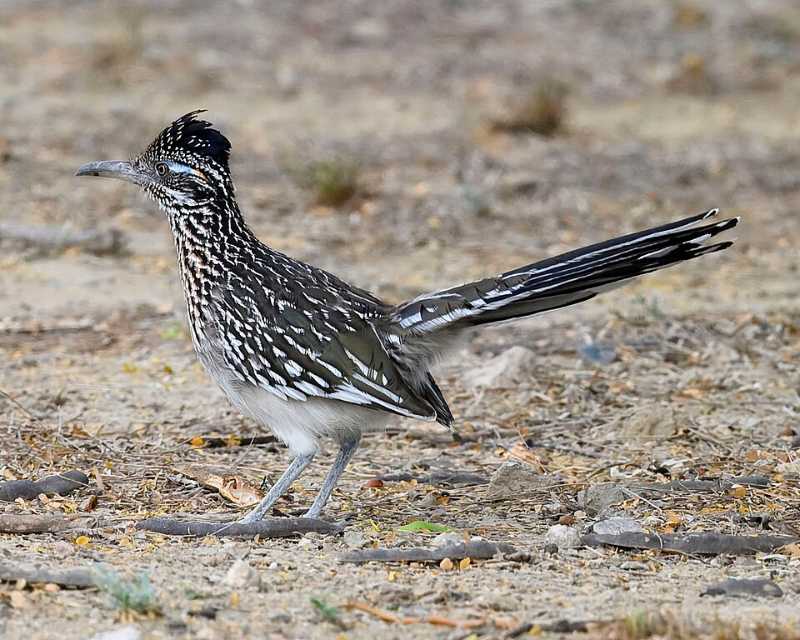
Representing Road Runner is the Geococcyx californianus, which is the taxonomic name for the greater roadrunner. The greater roadrunner, in the photograph at least, looks to be a lot smaller and its color scheme differs significantly from its animated namesake.

Like the Mearns' coyote, the greater roadrunner can be found in southwestern United States and northwestern Mexico and was chosen to be the state bird of New Mexico. The greater roadrunner does not shout "beep-beep" like the cartoon character, but instead sounds more like a dove.

In reality, while fast, the greater roadrunner would unfortunately be outpaced by a Mearns' coyote. However, its small size means it can change direction more quickly than the coyote, meaning it can potentially escape. Also, the real roadrunner could be considered to be even more vicious than the coyote, as it is carnivorous and has been known to kill its prey (including rattlesnakes) by picking it up with its beak and smashing its head on a rock.
3. Sylvilagus transitionalis

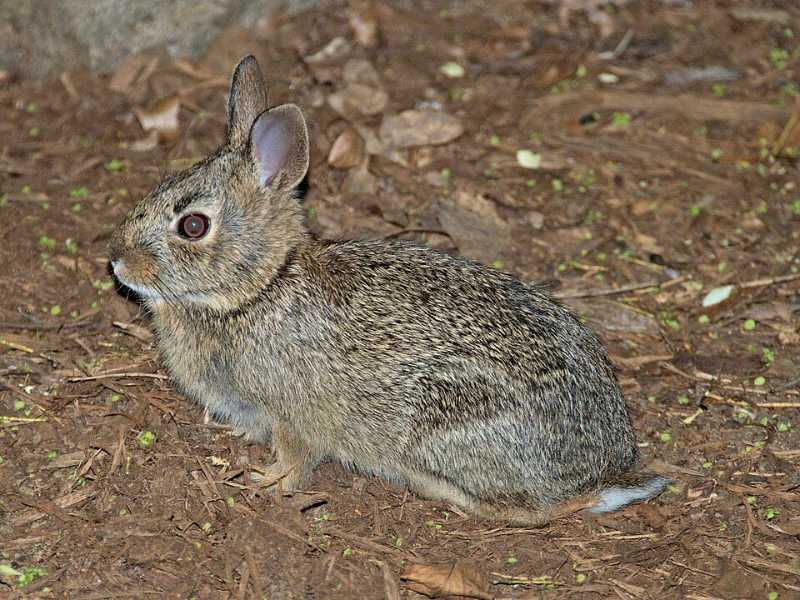
Representing Bugs Bunny is Sylvilagus transitionalis, which is more commonly known as the New England cottontail rabbit. Bugs Bunny has been depicted in several cartoons as having been born in Brooklyn and the character normally has a northeastern accent, which makes the New England cottontail a good choice for Bugs as they can be seen in forests surrounding New York City.

Another possible species for Bugs is the eastern cottontail (Sylvilagus floridanus), but their fur tends to have more brown in it, though neither species completely match Bugs' distinct grey fur color.

It can also be argued that Bugs Bunny is actually considered to be a hare and not a rabbit, though he seems to be more like a hybrid of both. The most likely candidate in this instance would be the snowshoe hare (Lepus americanus), but its fur changes from brown to white depending on the season and is usually found in mountainous areas like the Catskills in upstate New York.
4. Melanitta americana

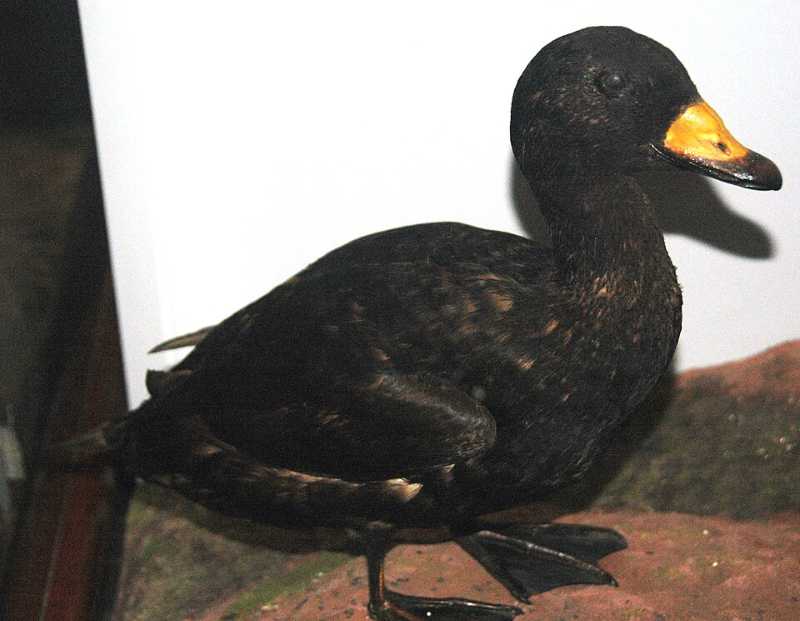
Representing Daffy Duck is Melanitta americana, the black scoter, which is classified as a diving sea duck. These ducks live near open water, such as oceans and large bays, and dive into the water in search of prey.

The plumage of the male black scoter looks to most closely match that of Daffy's, with many of these ducks featuring all black feathers and an orange/yellow beak. The black scoter can be found in northern Canada, Alaska and far eastern Russia and can migrate down to coastal areas in the United States.

Daffy also has design aspects, such as the white ring around his neck, that come from the American black duck (Anas rubripes) and other similar species. The American black duck is classified as a dabbling duck (ducks that can be found in shallow waters inland), which is why the two species are in separate genera.
5. Sarcophilus harrisii

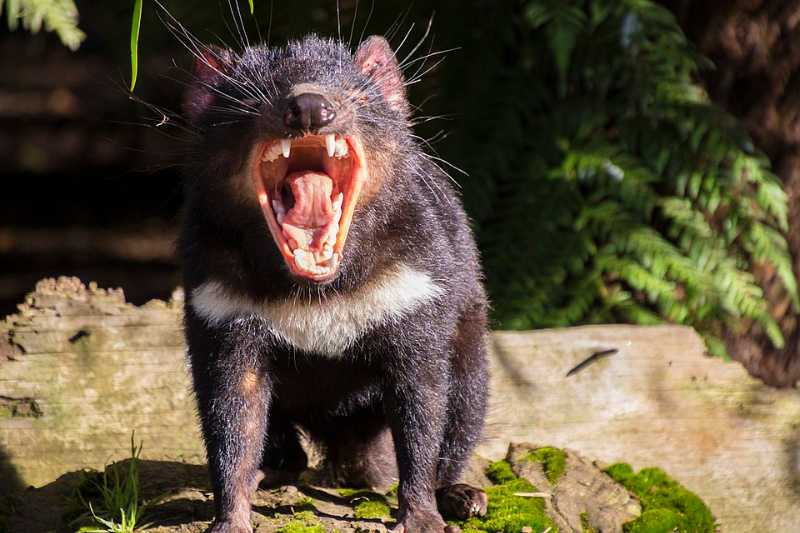
Sarcophilus harrisii is more commonly known as the Tasmanian devil, which represents the cartoon character of the same name. As its name implies, the animal lives exclusively on the island of Tasmania in southern Australia.

The real life Tasmanian devil is classified as a marsupial and it is known for having the strongest jaws of any animal of its size. Despite being the size of a small dog, a real Tasmanian devil could crush human bone if it were to bite someone.

The Tasmanian Devil cartoon character (called Taz) is often depicted as a brown, unhinged, voracious beast of an animal that eats everything in its path. The Tasmanian devil in real life has black fur and, while it is a carnivorous scavenger, is less voracious and much more timid than its cartoon counterpart. However, it is known for scarfing down its meal (bones included) when it does eat, so not totally different from Taz.
6. Felis catus

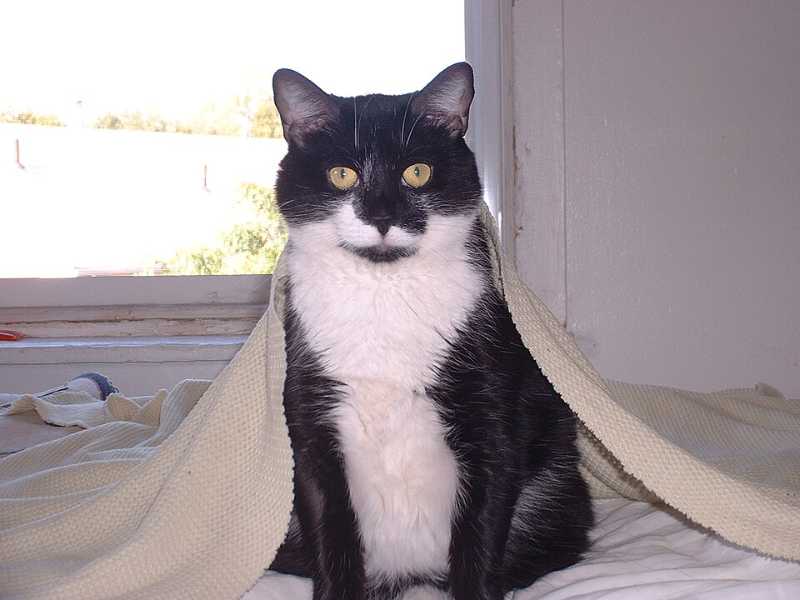
Representing Sylvester is Felis catus, which is the taxonomic name for any domestic cat. This includes the tuxedo cat, which Sylvester seems to be based upon. The tuxedo cat is not considered to be a separate pure bred cat, but simply a coat pattern that is common to several breeds.

There is no separate taxonomic names for a specific breed of cat as breeds were unnaturally developed by humans over time. This means an American short-hair, a Maine coon or a Siamese cat are all considered to be part of the Felis catus species.

One of the evolutionary ancestors of domestic cats is believed to be the Near Eastern wildcat, or African wildcat (Felis lybica). It is currently surmised that cats may have been domesticated as early as the Neolithic age based on evidence unearthed from the Mesopotamian region, as well as the island of Cyprus where some of the earliest evidence was found.
7. Gallus gallus domesticus

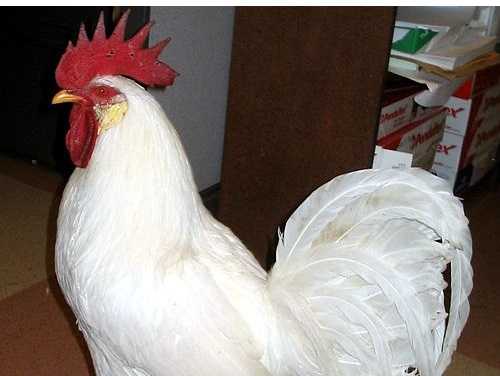
Representing Foghorn Leghorn is Gallus gallus domesticus, which is the taxonomic name for any domestic breed of chicken. The Gallus gallus domesticus species is believed to have descended from the Gallus gallus (red junglefowl), a wild chicken species that is native to southeast Asia.

Foghorn Leghorn, as his name implies, seems to be heavily inspired by the Leghorn breed of chicken, specifically ones that feature all white/cream colored plumage and a red crest.

Despite the cartoon character having a southern American accent, the Leghorn breed is believed to have originated in the Tuscany region of Italy. Also the real chicken has a white tail that matches its body and not a red one like the cartoon character. The Leghorn chicken can also be found in other colors.
8. Peromyscus yucatanicus

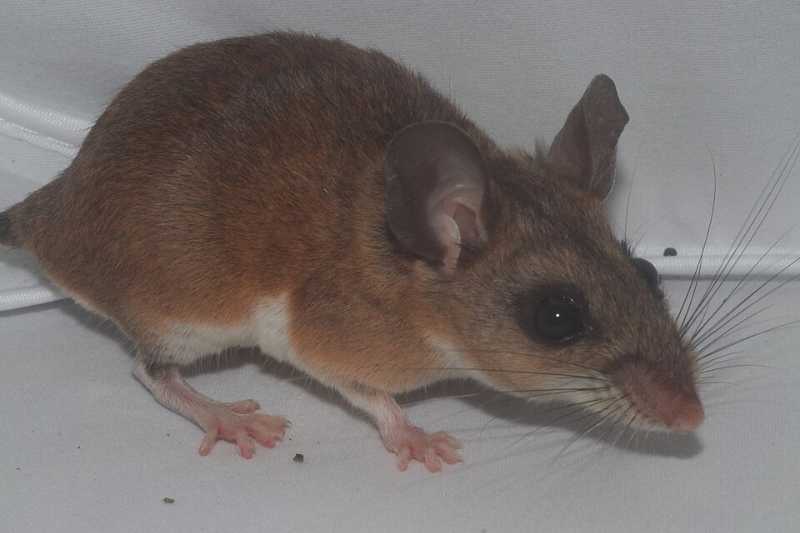
Representing Speedy Gonzales is the Peromyscus yucatanicus, or the Yucatan deer mouse, which are native to southern Mexico, Guatemala and Belize. While they are no where near as fast as Speedy, the Yucatan deer mouse, is known to be fairly quick and agile.

There are several other species of mice native to Mexico, that may also be a good (possibly even better) candidate to represent Speedy, such as the closely related Peromyscus mexicanus (Mexican deer mouse).

However, the Yucatan deer mouse was selected instead of the Mexican deer mouse simply because it had a photo I could legally use for the quiz.
9. Serinus canaria

Representing Tweety Bird is Serinus canaria (the Atlantic canary). As its name implies, the Atlantic canary can be found on the Canary Islands, an archipelago, located off the coast of Morocco, that belongs to Spain. It can also be found the Portuguese owned islands of Madeira and the Azores.

The Atlantic canary would eventually become domesticated during the Age of Exploration, when Spanish and Portuguese conquistadors first colonized the islands for their respective countries and adopted the birds as pets. Today, the domesticated canary has a modified taxonomic name (Serinus canaria forma domestica).

The Atlantic canary in the wild is not as yellow as its domestic counterpart. The bright yellow plumage that can be seen on some domesticated canaries (and Tweety) is the result of centuries of breeding.
10. Sus scrofa domesticus

Representing Porky Pig is Sus scrofa domesticus or, simply, the domestic pig. Domestic pigs are the evolutionary descendant of Sus scrofa (Eurasian wild pig) and are believed to have been domesticated by humans since the Neolithic Age.

Domestic pigs originated in Eurasia and North Africa and were eventually brought over to the Americas during the Age of Exploration. Throughout history, farmers continuously bred domestic pigs so that successive generations and breeds would have little to no hair on their skin, which helped farmers maintain their health and hygiene.

Speaking of hygiene, the domestic pig is considered to be one of the filthiest domesticated animals in the world as they are known to wallow in their own waste and consume almost anything fed to them. Consuming food containing pork is forbidden for Jews, Muslims and even several Christian denominations as it's considered to be unclean to do so.
Source: Author RedHook13

This quiz was reviewed by FunTrivia editor rossian before going online.
Any errors found in FunTrivia content are routinely corrected through our feedback system.
1/17/2026, Copyright 2026 FunTrivia, Inc. - Report an Error / Contact Us