FREE! Click here to Join FunTrivia. Thousands of games, quizzes, and lots more!
Quiz about No Worries Team Our Native Fauna

No Worries Team: Our Native Fauna Quiz


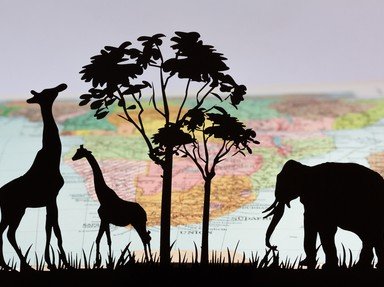
For this quiz, the "No Worries" team decided to get out, touch grass, and take a look at some of their local fauna. From Utah to France, Czechia to Australia, and more, we'll take a look at some of the animals in our respective neighborhoods.

A multiple-choice quiz by Team No Worries!. Estimated time: 3 mins.
  1. Home
  2. »
  3. Quizzes
  4. »
  5. Animal Trivia
  6. »
  7. Mixed Animal Trivia

Author
NeuralSpicy
Time
3 mins
Type
Multiple Choice
Quiz #
426,465
Updated
Nov 18 26
# Qns
10
Difficulty
New Game
Plays
12
Last 3 plays: mjgrimsey (3/10), Guest 46 (3/10), jazh2 (5/10).
-
Question 1 of 10
1. The Chihuahua was originally bred in Mexico, but local fauna begins at home. Which ancient civilization is believed to have kept ancestors of the Chihuahua, known as Techichi? Hint


Question 2 of 10
2. The mule deer, common in Utah and much of western North America, has amazing ears, but like most deer lack gallbladders and what other features? Hint


Question 3 of 10
3. Sometimes called the "world's happiest animal", Setonix brachyurus is so cute that influencers visit it to take selfies and videos. It is a pity that it lives on a remote island off Australia. What is the common name of this very lovable animal? Hint


Question 4 of 10
4. Lanza's alpine salamander, a toxic amphibian found in southern France and northern Italy, has a longer gestation period than an African bush elephant. How long does it carry its young before giving birth? Hint


Question 5 of 10
5. Picture yourself in the forest near a clearing somewhere in Central Europe at nightfall. The show begins. First there is the male proudly bearing his broad and shovel-shaped antlers. He is surrounded by females and some fawns. Their usual coat is chestnut with white spots. The tail is light with a black stripe. Don't move and don't you even think about taking a photograph, for they are very shy and quick. What's it called? Hint


Question 6 of 10
6. Once common across the arid and semi-arid areas of Australia, the bilby is now threatened. Which large mainland state contains much of its remaining range? Hint


Question 7 of 10
7. The stone marten is a large member of the weasel family. Called "fouine" in French, it is the bane of many French car owners for which of the following reasons? Hint


Question 8 of 10
8. This vulture, once nearly wiped out in Serbia, can now be found in just a few locations, including the Uvac River Canyon and the Tresnjica River Canyon. What is it called? Hint


Question 9 of 10
9. The eastern coyote is larger than the western species and has distinct behaviours, such as hunting in packs. What is the primary reason for this? Hint


Question 10 of 10
10. What unlikely species, tied to early Mormon pioneer history, is the state bird of Utah? Hint


(Optional) Create a Free FunTrivia ID to save the points you are about to earn:

arrow Select a User ID:
arrow Choose a Password:
arrow Your Email:


Most Recent Scores
Today : mjgrimsey: 3/10
Today : Guest 46: 3/10
Today : jazh2: 5/10
Today : Guest 38: 2/10
Today : Alcoholic63: 3/10
Today : dellastreet: 9/10
Today : Guest 187: 4/10
Today : Guest 174: 10/10
Today : bernie73: 7/10

Quiz Answer Key and Fun Facts
1. The Chihuahua was originally bred in Mexico, but local fauna begins at home. Which ancient civilization is believed to have kept ancestors of the Chihuahua, known as Techichi?

Answer: Toltec

Chihuahuas are the world's smallest breed, weighing 2-6 pounds(1 - 3 kg), and standing 6-9 inches (15 - 23 cm) tall. They also have one of the largest brain-to-body size ratios of any dog breed. They typically live around 14 to 17 years, although some make it to 20 or beyond! This was my dog for 16 years - so to me it's local fauna!!

Question contributed by Fifiscot
2. The mule deer, common in Utah and much of western North America, has amazing ears, but like most deer lack gallbladders and what other features?

Answer: Upper incisors

Like other deer, mule deer have no upper incisors. Instead, they have a tough pad on the upper jaw that works food against their lower incisors. It sounds awkward, but it works if you spend all day nibbling on plants. While mule deer look photogenic in the images I've seen online, the herd I saw one weekend in Draper, Utah, was anything but. Big radar ears, unusual forked antlers, and awkward - if impressive - jumping movements called stotting (or pronking). Bambi they're not.

Question by the notoriously neurotic NeuralSpicy.
3. Sometimes called the "world's happiest animal", Setonix brachyurus is so cute that influencers visit it to take selfies and videos. It is a pity that it lives on a remote island off Australia. What is the common name of this very lovable animal?

Answer: Quokka

You see the quokka all over the internet, but it is actually classified as vulnerable. It lives mainly on small Rottnest Island with a small population on the West Australian mainland. Dutch explorer Willem de Vlamingh originally mistook the quokka for a large rat and named the island 't Eylandt 't Rottenest, meaning Rats' Nest Island. How rude! It is indeed a cute animal, which appears to smile at the camera.

The quokkas on Rottnest Island have become quite accustomed to tourists, particularly those around the settlements. They're still primarily nocturnal, though, so you'll have a better chance of seeing them active in the early morning or evening.

This question was contributed by the effervescent and ethereal em1958.
4. Lanza's alpine salamander, a toxic amphibian found in southern France and northern Italy, has a longer gestation period than an African bush elephant. How long does it carry its young before giving birth?

Answer: 24 to 48 months

The gestation period for Lanza's alpine salamanders averages two to three years but can extend to four years in some populations. This is longer than the gestation periods of 12 days for opossums, 12 to 14 months for camels, and 22 months for African bush elephants. They are among the few viviparous salamanders, bearing their young alive, fully formed and ready to fend for themselves. Most salamanders are oviparous, laying eggs in water or moist soil. A few are ovoviviparous, carrying the eggs inside until they hatch as larvae.

Lanza's alpine salamanders are shiny black and toxic. When frightened, they secrete toxins from their parotoid glands.

This question was the brainchild of the perky pitegny.
5. Picture yourself in the forest near a clearing somewhere in Central Europe at nightfall. The show begins. First there is the male proudly bearing his broad and shovel-shaped antlers. He is surrounded by females and some fawns. Their usual coat is chestnut with white spots. The tail is light with a black stripe. Don't move and don't you even think about taking a photograph, for they are very shy and quick. What's it called?

Answer: European fallow deer

The European fallow deer is not only found in Central Europe. Historically, they're native to Turkey and parts of the Mediterranean into the Balkans. However, it's been introduced throughout much of Europe and can now be found on all continents except Antarctica. If you are interested in languages, in Czech the buck is called "dan?k" and the doe is "dan?la".

This question is by the cheeky Czech, our very own Jolana.
6. Once common across the arid and semi-arid areas of Australia, the bilby is now threatened. Which large mainland state contains much of its remaining range?

Answer: Western Australia

The bilby is a small marsupial that builds spiral-shaped tunnels to live in. These provide shelter from the heat and predators. If something tries to dig one out, the bilby can furiously extend its burrow in another direction. Unfortunately, this hasn't been enough to protect it from introduced predators such as cats and foxes.

In 1993, Australian children's author Jeni Bright wrote a story called "Burra Nimu, the Easter Bilby". It tells how Burra decides to save the land from the feral rabbits and foxes who are ruining it. The story helped to popularize the sale of chocolate bilbies at Easter, with some of the proceeds going to conservation organisations to help protect these lovely little creatures. There was hope that these would replace Easter bunnies, but the idea never caught on nationally.

This question was contributed by the efficient em1958.
7. The stone marten is a large member of the weasel family. Called "fouine" in French, it is the bane of many French car owners for which of the following reasons?

Answer: They destroy car cables, hoses, and insulation.

Stone martens belong to the Mustelidae family, which also includes weasels, sea otters, and wolverines. Long and sleek, they measure up to 90 cm (35 inches) in length and are distinguished by a pale pink nose and a white chest spot. In the summer and autumn, they feed primarily on fruits, berries, and nuts. In the winter and spring, their diet includes small rodents, birds, and worms. They will also eat dead animals and human garbage.

They sometimes take shelter in attics and car engine compartments, where they can damage insulation. Their habit of chewing cables and hoses in cars is often the result of their hard-wired territorial behavior, particularly when they encounter the scent of another marten. Stone martens are widespread across much of Europe, extending eastward into central Asia and parts of the Middle East. German insurance statistics estimated that stone martens caused approximately 128 million in vehicle damage in 2023 alone.

This question was provided by playful pitegny.
8. This vulture, once nearly wiped out in Serbia, can now be found in just a few locations, including the Uvac River Canyon and the Tresnjica River Canyon. What is it called?

Answer: Griffon vulture

The griffon vulture, known to Serbs as the beloglavi sup or white-headed vulture, has a wingspan that stretches nearly nine feet (about 3 m). It was once widespread throughout the Balkans, but its numbers plummeted in Serbia during the twentieth century due to poisoning and habitat change. By the 1990s, Serbia had only ten breeding pairs left. Today, their numbers are recovering thanks to conservation efforts, particularly in the protected Uvac and Tresnjica river canyons.

Question supplied by our fearless team leader, the sage Serb, the Balkan basher, the zlestiest Zlaj of them all, the one and only zlajamilivojev!
9. The eastern coyote is larger than the western species and has distinct behaviours, such as hunting in packs. What is the primary reason for this?

Answer: Interbreeding with wolves and domestic dogs.

The eastern coyote is smaller than the grey wolf, but it has longer ears as well as a thinner face and muzzle. The animals are social and generally monogamous, often sticking with the same partner for several years. They get lots of exercise, walking as much as 12-25 miles (19-40 km) per day. If that wasn't enough, they're great swimmers as well!

The ever-charming and always personable Fifiscot contributed the question.
10. What unlikely species, tied to early Mormon pioneer history, is the state bird of Utah?

Answer: California gull

When you think of Utah, you probably don't think of beautiful sunny days and moderate temperatures. And you sure don't think about pristine beaches and seagulls. The history of this goes back to 1848 and the "Miracle of the Gulls".

So, the story goes that a year after the Mormon pioneers arrived in the Salt Lake Valley, their crops were being devastated by swarms of Mormon crickets. A Mormon cricket is actually a katydid and, religiously speaking, is unaffiliated as far as I know. The food supply was in danger, the pioneers were frantic, and then... and then... then came the gulls! Large flocks of the hungry birds descended on the area and began feasting on secular katydids. Utah was saved.

We still get the large meaty insects coming around en masse every year to explore the insides of our lawn mowers. The majestic California gulls with their annoying cries still come and feast on them, so not much has changed over the years.

NeuralSpicy wrote this one. He says, "Hi."
Source: Author NeuralSpicy

This quiz was reviewed by FunTrivia editor rossian before going online.
Any errors found in FunTrivia content are routinely corrected through our feedback system.
11/18/2026, Copyright 2026 FunTrivia, Inc. - Report an Error / Contact Us