FREE! Click here to Join FunTrivia. Thousands of games, quizzes, and lots more!
Quiz about The Amaizing Corn Snake

The A-maiz-ing Corn Snake Trivia Quiz

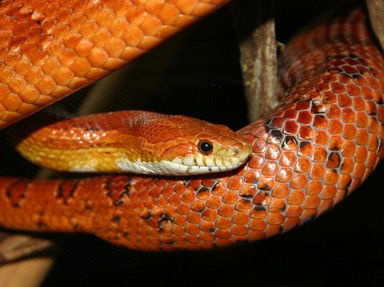
Pantherophis guttatus

Just how much do you know about everyone's favorite giant red noodle, the mighty corn snake? Here are ten questions about habits, habitats, and disfigured dead things. Enjoy!
This is a renovated/adopted version of an old quiz by author Cornsnakeman

A multiple-choice quiz by JJHorner. Estimated time: 2 mins.
  1. Home
  2. »
  3. Quizzes
  4. »
  5. Animal Trivia
  6. »
  7. Reptiles and Amphibians
  8. »
  9. Snakes

Author
JJHorner
Time
2 mins
Type
Multiple Choice
Quiz #
90,435
Updated
Feb 28 26
# Qns
10
Difficulty
Easy
Avg Score
8 / 10
Plays
47
Last 3 plays: Guest 143 (3/10), Guest 73 (6/10), coltpython (5/10).
- -
Question 1 of 10
1. How do corn snakes typically kill their prey? Hint


Question 2 of 10
2. Corn snakes are responsible for more human deaths in Australia than crocodiles.


Question 3 of 10
3. What type of habitat do corn snakes most commonly prefer? Hint


Question 4 of 10
4. Corn snakes are native to what region? Hint


Question 5 of 10
5. What shape are the pupils of corn snakes? Hint


Question 6 of 10
6. What is NOT a common defensive behavior of corn snakes when threatened? Hint


Question 7 of 10
7. What is the primary diet of a corn snake in the wild? Hint


Question 8 of 10
8. Corn snakes are considered a kind of what? Hint


Question 9 of 10
9. Which of these activity patterns best describes corn snakes in the wild? Hint


Question 10 of 10
10. Do corn snakes make good pets for snake lovers?


(Optional) Create a Free FunTrivia ID to save the points you are about to earn:

arrow Select a User ID:
arrow Choose a Password:
arrow Your Email:


Most Recent Scores
Today : Guest 143: 3/10
Today : Guest 73: 6/10
Today : coltpython: 5/10
Today : Guest 98: 2/10
Today : Guest 172: 2/10
Today : Guest 174: 10/10
Today : croghaneer: 10/10
Today : james1947: 10/10
Today : Guest 66: 9/10

Quiz Answer Key and Fun Facts
1. How do corn snakes typically kill their prey?

Answer: By constriction

Corn snakes don't bother with venom or dramatic tail weaponry. They are constrictors, meaning they grab their prey, typically a mouse or other small rodent, and coil around it. Each time the prey exhales, the snake tightens just a bit more. It is less about crushing bones and more about cutting off circulation and breathing. Efficient. Quiet. No dramatic killing blow necessary.

Once the dastardly deed is done, the corn snake swallows its new meal whole, jaws stretching in a way that looks kind of like a magic trick but more feral. As members of the rat snake group, they are nonvenomous and rely entirely on muscles and calmly waiting for their prey to give up the ghost.
2. Corn snakes are responsible for more human deaths in Australia than crocodiles.

Answer: False

Corn snakes are most assuredly not responsible for more human deaths in Australia than crocodiles. In fact, they are responsible for exactly zero. Corn snakes are native to the southeastern United States and are nonvenomous constrictors. The snakes are not native to the country, although they are getting some attention as an illegally introduced species. But their Australian body count stands at a resounding nada.

Meanwhile, crocodiles in Australia, particularly the saltwater variety, are very real and occasionally very lethal, killing an average of one or two people annually. Our formidable predator, known to nerds as Crocodylus porosus, is large, territorial, and not particularly interested in hearing about how you were just passing by. Compared to them, a corn snake is basically a somewhat shy, colorful noodle.
3. What type of habitat do corn snakes most commonly prefer?

Answer: Woodlands, fields, and areas near farms

Corn snakes are proud residents of the understory and the hedgerow. That is to say, they like woodlands, overgrown fields, forest edges, and any agricultural areas where rodents are plentiful and hiding spots abound. Old barns, fallen logs, brush piles, and the like all get five stars. If there are mice around and a cozy place to coil in peace, they're more than happy to call it home.

Our corny friends are especially associated with pine forests and farmland. The name 'corn snake' likely comes from their habit of hanging around corn storage areas, although they never personally acquired the taste. They're there for the buffet of rodents these areas attract. Oceans, alpine peaks, and desert dunes are just not on their bucket list.
4. Corn snakes are native to what region?

Answer: Southeast United States

Corn snakes are native to the southeastern United States, where they slither around pine forests, hardwood hammocks, and old farm buildings while speaking with the familiar southern twang common in the region. Their range stretches from states like New Jersey down through Florida and west toward Louisiana and parts of Kentucky. Warm climate. Plenty of cover. Endless mice. Everybody's happy.

I didn't mean the mice.

They are not native to Tasmania, mainland Australia, or southern India. In fact, spotting a corn snake in those places would likely mean someone lost a pet. Hanging around on their home field, though, they are a familiar and welcome sight for those who recognize it for what it is.

I know, I know. Some of you would be less welcoming than others...
5. What shape are the pupils of corn snakes?

Answer: Circle

Corn snakes have round pupils. Perfect little circles. You remember geometry: C = 2πr. This is typical of many nonvenomous snakes in North America and generally contrasts with the vertical slit pupils seen in many venomous species like vipers.

This author, FunTrivia, its advertisers, owners, and staff do not endorse going eyeball to eyeball with an unknown snake to determine if it is venomous.

Which is to say that it's not a foolproof way to identify danger, but it does make for a handy identifier when paired with other giveaways.
6. What is NOT a common defensive behavior of corn snakes when threatened?

Answer: Spitting venom

Yeah, and like playing fetch for those of you doing the full quiz, spitting venom is just not in the corn snake's big bag of tricks. They're nonvenomous constrictors, so there's really nothing much to spit in the first place. No fangs designed for injection. No toxic payload.

When threatened, a corn snake may coil into an S shape, ready to strike if things escalate. And yup, it will often vibrate its tail rapidly against dry leaves, producing a buzzing sound that can make you briefly reconsider your choices. They may also flatten their bodies to appear larger, because sometimes looking intimidating is half the battle. Although honestly, they have a good head start at looking intimidating... I mean, they ARE snakes.
7. What is the primary diet of a corn snake in the wild?

Answer: Rodents

Rodents. It's what's for dinner. Mice, rats, and other small mammals make up the bulk of a wild corn snake's diet. They are sneaky little specialists, slipping and slithering through fields and along barn walls in a hungry attempt to meet the following goals:

1. Find the squeak.
2. Stop the squeak.
3. Enjoy the quiet.

Young corn snakes may occasionally snack on small lizards or tree frogs, but adulthood brings a firm commitment to furrier feasts.

A furrier feast, indeed. But they're not taking down the mighty beaver. Nor are they living on a steady diet of insects or patrolling streams for fish. A corn snake is built for constricting small, cute warm prey and swallowing its brutally murdered corpse whole in one ambitious gulp. Farmers have historically enjoyed this arrangement. Everyone wins.

Again, I didn't mean the mice.
8. Corn snakes are considered a kind of what?

Answer: Rat snake

Corn snakes are a type of rat snake. And no, they didn't cross the mafia. Rat snakes get their name from their primary diet, which includes rats, mice, and other rodents. The name is not exactly subtle, but it is accurate.

Taxonomically, they belong to the species Pantherophis guttatus and are part of the larger rat snake group found across North America and beyond. Rat snakes are all nonvenomous constrictors known for their climbing ability.
9. Which of these activity patterns best describes corn snakes in the wild?

Answer: Crepuscular

The corn snake is crepuscular in the wild, and that is definitely the sweet spot. These guys tend to be most active around dawn and dusk, those in-between hours when the light is low, the air is cooling or warming, and small mammals are scurrying around, running small-mammal errands oblivious to their fate.

It's a practical schedule. Not too hot. Not too exposed. Just enough shadow to whisper like a rumor through the grass. Ssssss.

Poetic digressions aside, nature does not hand out such rigid timecards. In hotter months, corn snakes may lean more toward nocturnal to avoid overheating. In cooler weather, they might bask during the day to warm up their little reptilian engines. They are cold-blooded ("ectothermic" if you want to show off), so their daily rhythm is less about personal preference and more about metabolism. Body temperature is crucial, but they are crepuscular by nature.
10. Do corn snakes make good pets for snake lovers?

Answer: Yes

Yes, indeed. Corn snakes are basically the golden retrievers of the snake world. Minus the retrieving part. (Always aiming to bring you the highest quality and most thoroughly fact-checked content--and not being a particularly clever man--I just performed an internet search: "can snakes play fetch".)

They make good pets because they are generally calm, nonvenomous, and tolerant of handling. A socialized corn snake will usually glide from hand to hand with mild curiosity rather than with the murderous drama that ophidiophobics might expect. They rarely bite unless startled (or mistake you for a mouse), and even then, it is more of a surprise than a hospital visit. It's definitely more of a paper cut than the next slasher film.

In captivity, their needs are straightforward. A firm enclosure is non-negotiable because they are escape artists with the determination of Houdini. Give them proper heating with a warm side and a cooler side so they can thermoregulate like the sensible ectotherms they are. Add a couple of hides, some substrate for burrowing, a water dish large enough for a nice soak, and the occasional frozen mouse (after thawing). That's it. You're in business.

On a personal note, I did know that you could buy a frozen mouse, and I wish I still didn't know that you could buy a frozen mouse.

They also live a long time for a pet, so it's not a goldfish your kid wins at the fair that'll be... well, swimming with the fishes in a few days. Fifteen to twenty years is common with proper care, so be prepared for a commitment that lasts longer than your first marriage.
Source: Author JJHorner

This quiz was reviewed by FunTrivia editor rossian before going online.
Any errors found in FunTrivia content are routinely corrected through our feedback system.
2/28/2026, Copyright 2026 FunTrivia, Inc. - Report an Error / Contact Us