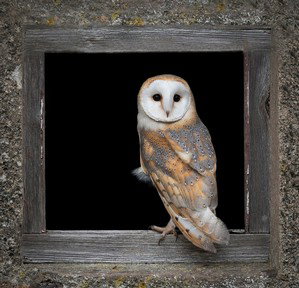
Quiz Answer Key and Fun Facts
1. Barred owls are aptly named for their plumage. Is the name "barn owl" fitting, or a misnomer?
2. Barn owls are the only North American members of the genus Tytonidae, and they stand out from their cousins in the Strigidae in a number of ways. What makes their nesting habits interesting?
3. Because they often take prey bigger than themselves, barn owls have the strongest grip of any owls.
4. Barn and barred owls have something in common besides the name: their eyes are a dark, almost black color. What color are the eyes of most other owls?
5. The Cornell Lab of Ornithology says that the barn owl's "ability to locate prey by (blank) alone is the best of any animal ever tested." What sense of theirs is exemplary?
6. While barred owls give a deep and loud series of hoots, barn owls can scarcely be called "hooters" at all. What do they actually sound like?
7. Distributed to every corner of the world, scientists agree that all barn owls (family Tytonidae) comprise a single species.
8. When a baby barn owl is born, how long will it be until it can hunt on its own?
9. Silent flight comes with its disadvantages. Which of the following is most likely to keep a barn owl in its roost?
10. Barn owls make for great pest control, but we don't repay the favor so nicely. Which of the following presents a major threat to barn owls?
Source: Author
etymonlego
This quiz was reviewed by FunTrivia editor
rossian before going online.
Any errors found in FunTrivia content are routinely corrected through our feedback system.