FREE! Click here to Join FunTrivia. Thousands of games, quizzes, and lots more!
Quiz about Eye Candy Wordwise Pictorial Reboot

Eye Candy: Wordwise Pictorial Reboot Quiz


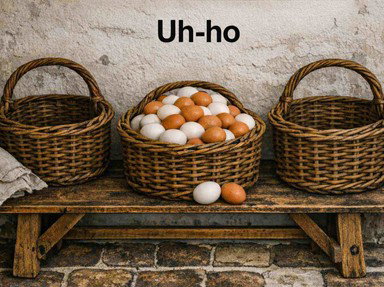
Building on the great work minch created with Wordwise quizzes, we now have the ability to add pictures and create a whole new environment for Wordwise quizzes. Each pictorial answer is a common phrase or cliche.
This is a renovated/adopted version of an old quiz by author minch

A photo quiz by 1nn1. Estimated time: 5 mins.
  1. Home
  2. »
  3. Quizzes
  4. »
  5. Brain Teasers Trivia
  6. »
  7. Wordwise

Author
1nn1
Time
5 mins
Type
Photo Quiz
Quiz #
9,489
Updated
Apr 26 26
# Qns
10
Difficulty
Average
Avg Score
8 / 10
Plays
32
Last 3 plays: MickeyDGod (9/10), opsimath (8/10), Guest 2 (10/10).
Author's Note: Each picture depicts a popular idiomatic phrase that was either once in Wordwise format or has been added to be solved in the same manner. Each image has been drawn by AI tools, and any resemblance to any person is unintentional. Use the hints as guidance to determine the exact wording.
Question 1 of 10
1. What is the common phrase or idiom that fits this picture?

Answer: (Five words. If this scene was in a movie, Freddie might have sung the soundtrack)
Question 2 of 10
2. Finish the idiom: The man in the picture is not too worried as he appears to be taking...?

Answer: (Five words: EDAIC)
Question 3 of 10
3. The picture depicts an entire idiom, but we are only interested in the creature in the foreground, which is?

Answer: (Five Words: (1,4,2,3,4))
Question 4 of 10
4. Sometimes when you are trying to trouble-shoot a complex problem you might need to go ... ?

Answer: (Three words (b,t,b - 4,2,6))
Question 5 of 10
5. When some event recurs periodically and persistently, even monotonously over a long period, we often says it occurs ... ?

Answer: (Four Words; no comma necessary)
Question 6 of 10
6. Ever met someone who takes too long to tell a tale, or do you grow impatient when a novel is too long? Then you, my friend, like brevity, which you practise daily. You are fond of saying "Cutting a ....?

Answer: (L...S....S.... (4,5,5))
Question 7 of 10
7. When you are early or finish something before it is due, it could be said you are ____?

Answer: (AOT (5,2,4))
Question 8 of 10
8. It's not enough to talk the talk; you have to walk the walk as well because....?

Answer: (Five words (ASLTW))
Question 9 of 10
9. There is one word that means both angry and insane. In this picture, it's the former, but according to Alice, it usually means the latter. What is this idiomatic phrase?

Answer: (Four Words MAAH (Mercury anyone?))
Question 10 of 10
10. With a rudimentary knowledge of homophones, you might be able to bring this quiz to a satisfactory, even joyful conclusion. What sort of conclusion are we looking for?

Answer: (Two words: American spelling (9,6))

(Optional) Create a Free FunTrivia ID to save the points you are about to earn:

arrow Select a User ID:
arrow Choose a Password:
arrow Your Email:


View Image Attributions for This Quiz

Most Recent Scores
Today : MickeyDGod: 9/10
Today : opsimath: 8/10
Today : Guest 2: 10/10
Today : Scottie2306: 8/10
Today : PHILVV: 0/10
Today : Strike121: 1/10
Today : Guest 110: 9/10
Today : James25: 9/10
Today : cardsfan_027: 10/10

Quiz Answer Key and Fun Facts
1. What is the common phrase or idiom that fits this picture?

Answer: Another One Bites The Dust

Another one bites the dust is an 18th-century idiom meaning to die in battle, and has been used often in fiction to describe soldiers falling face-first into the ground. In modern society, the phrase is used to signify that someone or something is not viable anymore.

It was popularised by a 1980 Queen song with the same title, which was written by the group's bass player, John Deacon.
2. Finish the idiom: The man in the picture is not too worried as he appears to be taking...?

Answer: Each day as it comes

"Taking each day as it comes" is an idiom that means dealing with problems and challenges at the time they happen, rather than worrying about them or planning too far into the future. The phrase encourages staying grounded in the present, which is preferable to being overwhelmed by future uncertainties.

The phrase's origins are unclear, but the phrase was popularised by Dorothy Dix (pen name for Elizabeth Meriwether Gilmer), a US nationally syndicated advice columnist:
"I have learned to live each day as it comes, and not to borrow trouble by dreading tomorrow. It is the dark menace of the future that makes cowards of us."

The phrase, "Taking it day by day", has a similar meaning.
3. The picture depicts an entire idiom, but we are only interested in the creature in the foreground, which is?

Answer: A bird in the hand

The full saying is: "A bird in the hand is worth two in the bush", which means be grateful for what you have, rather than wishing for more, as this might amount to nothing. The allusion may be to falconry, where a bird in the hand (or more correctly, on the arm) is better than two falcons in the wild.

This is one of the oldest proverbs in English literature. It is mentioned in John Capgrave's "The Life of St Katharine of Alexandria" (1450).

In contemporary society, "A bird in the hand" has a broader meaning which emphasises both caution and practicality, which advises that a smaller, certain benefit is often more valuable than a risky chase for greater rewards.

The image depicts the magnificent Australian magpie, Gymnorhina tibicen, which is a different species from both the European and North American genera. The only common feature of these three genera is the colouration.
4. Sometimes when you are trying to trouble-shoot a complex problem you might need to go ... ?

Answer: Back to basics

The term "back to basics" became popular in the 1970s as a means of offering an alternative to complicated and abstract approaches to resolving common predicaments.

It was popularised in a 1993 speech by the then UK Prime Minister, John Major, who stated in a speech:
"It is time to get back to basics: to self-discipline and respect for the law... to accepting responsibility for you and your family", though it was used in a more narrow concept by the New York Times in 1975. In modern society, this phrase is in common usage.
5. When some event recurs periodically and persistently, even monotonously over a long period, we often says it occurs ... ?

Answer: Year in year out

The phrase "year in, year out" means an event that occurs consistently and/or continuously over a long period, with no significant change or interruption.

The idiom likely evolved in the 19th century. Its first documented usage appeared in literary works, particularly the novel "Little Women" by Louisa May Alcott (1868). It emphasises the continuity and regularity of actions and events, often implying routine and/or monotony.
6. Ever met someone who takes too long to tell a tale, or do you grow impatient when a novel is too long? Then you, my friend, like brevity, which you practise daily. You are fond of saying "Cutting a ....?

Answer: long story short

While this is thought to be a late 20th-century idiom, it is mentioned by Henry David Thoreau in his 1857 book on quotes, "Not that the story need be long, but it will take a long while to make it short".

The phrase urges the need to be brief in explanations, giving only the basic facts instead of a full explanation and getting to the point quickly. The phrase "To cut a long story short" has a similar meaning.
7. When you are early or finish something before it is due, it could be said you are ____?

Answer: ahead of time

Interestingly, "ahead of time" is not idiomatic; it is a term that has become popular in the late twentieth century, especially in the construction industry and project management space. It simply means "before the deadline" or "not due yet". It also has a meaning in preparation when acting early, to prevent future issues, or to be ready for a particular event.
8. It's not enough to talk the talk; you have to walk the walk as well because....?

Answer: Actions speak louder than words

"Actions speak louder than words" is a proverb that translates as a person's actual deeds are more important and reveal that person's true character, intentions, or feelings far more than what they say. It emphasises that behaviour carries more weight than talk. It has the same meaning as "Walk the talk", "Put your money where your mouth is", and "Practice what you preach".

The first recorded occasion of this phrase was in the English parliament in 1628. Hansard records: "A word spoken in season is like an Apple of Gold set in Pictures of Silver,' and actions are more precious than words."
9. There is one word that means both angry and insane. In this picture, it's the former, but according to Alice, it usually means the latter. What is this idiomatic phrase?

Answer: Mad as a hatter

Mad, meaning insane, precedes Lewis Carroll placing the Mad Hatter in "Alice's Adventures in Wonderland". Its first recorded use was in 1829, in "Blackwood's Edinburgh Magazine", in an excerpt called "Noctes Ambrocianae. No. XLIV", where a fictional conversation was taking place:
Tickler "He's raving".
Shepherd "Dementit".
Odoherty "Mad as a hatter. Hand me a [cigar]"

There is evidence that 19th-century milliners (hatters) who used mercury in the manufacture of hats suffered from mercury toxicity. Symptoms include aggressiveness, mood swings, and antisocial behaviour. Mercury poisoning is still called Mad Hatter's Disease.

In the picture, the hatter, who, with his big hat, looks not unlike Carroll's mad hatter, is angry-mad, possibly as no one is stopping to visit his millinery store.
10. With a rudimentary knowledge of homophones, you might be able to bring this quiz to a satisfactory, even joyful conclusion. What sort of conclusion are we looking for?

Answer: fairytale ending

A fairy-tale ending means a joyful and/or simplistic, often perfect ending to any story, like those found in fairy tales.

Metaphorical uses of fairy tale outside of stories that don't include fairies date back to 1635 when John Swan stated in "Speculum Mundi":
"And as for the Fayrie tales of the Lamiæ, they nothing belong to this creature: neither be those common reports of Sphinx his riddle, any other then fables."

However, it took over 150 years before the phrase was used again metaphorically when Charles Dickens, in 1854, in his weekly magazine, "Household Words", stated:
"I should not have been sorry to have had the old fairy-tale ending affixed to this true story, 'And they lived together very happily for ever after. ' This usage inextricably links "fairy-tale ending" with "happily ever after".

With the image, one had a bit of work to do to make the connection between a "fairy with a tail" to fairy-tale.
Source: Author 1nn1

This quiz was reviewed by FunTrivia editor spanishliz before going online.
Any errors found in FunTrivia content are routinely corrected through our feedback system.
4/27/2026, Copyright 2026 FunTrivia, Inc. - Report an Error / Contact Us