FREE! Click here to Join FunTrivia. Thousands of games, quizzes, and lots more!
Facial Piercing Selection Trivia Quiz
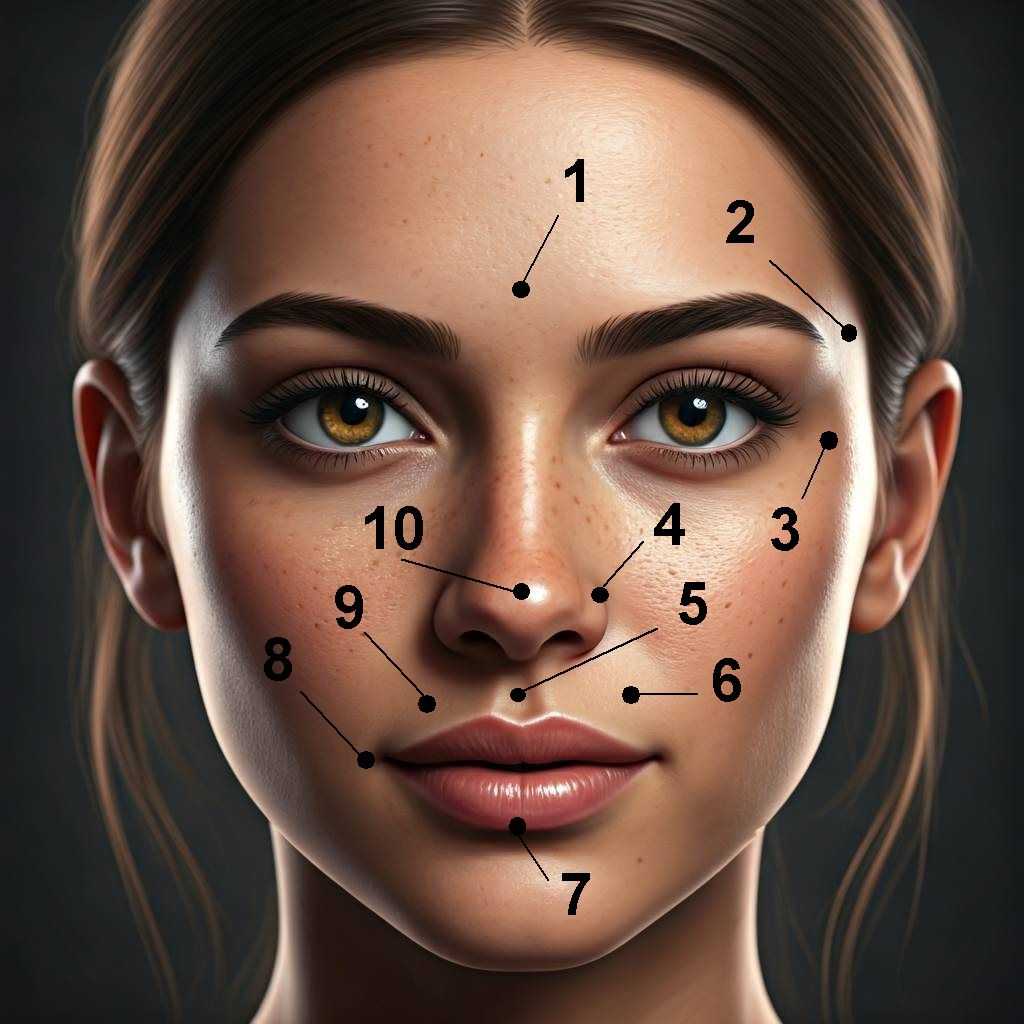
Body piercing has a long history although the archaeological record is a bit thin due to the organic nature of anchor points. This quiz is about matching the names to a small selection of facial piercings whose rough locations are shown on the image.
Last 3 plays: cardsfan_027 (10/10), i-a-n (4/10), KittieKat33 (8/10).
Click on image to zoom
LabretNasallangDahlia bitesTeardropMedusaThird eyeMonroeMadonnaCrow's feetRhino* Drag / drop or click on the choices above to move them to the answer list. View Image Attributions for This Quiz
The third eye piercing has a vertical orientation and is made at the chakra location known as the third eye. Humans don't have a parietal or physical third eye, unlike some reptiles, so there is no structure at risk at the skin surface. The piercing is also known as the forehead dermal piercing, the unicorn piercing and the medusa third eye piercing.
2. Crow's feet
Crow's feet is another piercing named after a physical location on the face. Crow's feet are fine lines or wrinkles that appear at the outer corners of the eyes as part of the ageing process. Smiling and sun exposure can contribute, some skin treatments may disguise it and the piercing may need to take the creasing into account.
3. Teardrop
The teardrop piercing is also at the outer side of the eye, although tears can emerge elsewhere from the eye. There are risks associated with piercing including bacterial or viral infections, so some thought needs to be given to piercing location. It also not unknown to have allergic reactions to the metal in piercing jewellery, particularly nickel.
4. Nasallang
The location of the nasallang is hinted at by the name, namely the nose. There are various piercings that use the nose as an anchor point. In this case, the piercing goes through both nostrils and the septum with a single barbell. It is more complex than single nostril or septum piercings and typically takes several months to heal.
5. Medusa
A philtrum or medusa piercing is located on the upper lip. It is placed directly on the philtrum below the septum of the nose. A labret stud is typically used, with just one end being visible. A variation is known as the jestrum (or vertical medusa) with the bottom end of a curved barbell being visible on the underside of the upper lip.
6. Monroe
As you have no doubt guessed, this piercing is named after the actress Marylin Monroe and echoes the beauty spot that she had on her left cheek. The piercing is usually placed on the left upper lip rather than the cheek. A labret barbell is typically placed in the piercing. The barbell is often shortened after healing, with healing usually faster than in other piercings.
7. Labret
The labret is a lip piercing, the name being derived from labrum (the Latin for 'lip'). In piercings, it usually is one made between the chin and bottom lip. It is also called the mao. There are a number of variations such as vertical labrets (using a curved barbell) and dual piercings such as snake bites or spider bites.
8. Dahlia bites
The dahlia bites consists of two lip piercings, one at either corner of the mouth. Being so close to the mouth, it needs care when placed as well as after-care to minimise the risk of infection. It has some similarities with the joker piercing (after the comic character). The name is said to come from the Black Dahlia murder of 1947.
9. Madonna
In the same way that the Monroe piercing imitates the placement of a beauty spot on the actress, the Madonna piercing takes its name after the singer Madonna. This one is placed off-centre to the right side of the upper lip and usually involves a single puncture. The angel bites piercings could be seen as a combination of Madonna and Monroe piercings.
10. Rhino
The rhino takes its name after the rhinoceros and in particular its main horn. Not so slick off the tongue but perhaps more accurate, it can also be described as a vertical nasal tip piercing. It is considered painful to put in and may require 6 to 12 months of aftercare. Being a wearer of glasses or needing to wear a tight-fitting mask at work may be problematic.
This quiz was reviewed by FunTrivia editor kyleisalive before going online.
Any errors found in FunTrivia content are routinely corrected through our feedback system.