FREE! Click here to Join FunTrivia. Thousands of games, quizzes, and lots more!
Birds You Might See in the British Isles Quiz
Here we have ten birds that you can see in the UK. Many of these birds you will find in your garden. The challenge for you is to match the name of the bird to the picture. Good luck and have fun.
Digby
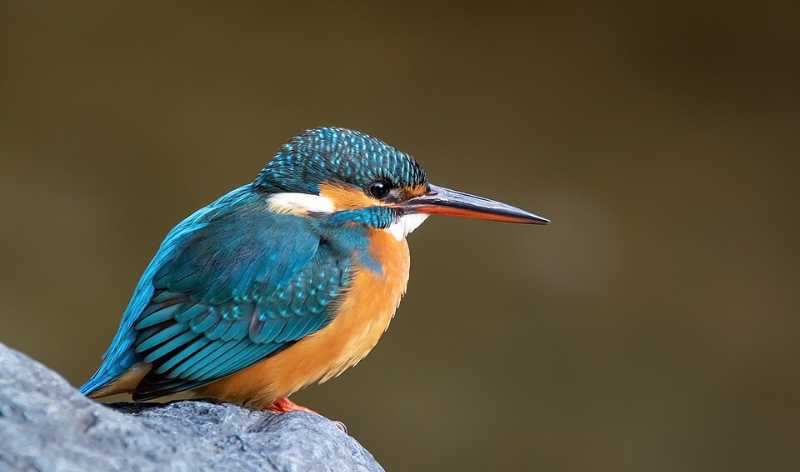
There are many kinds or species of kingfishers and not just as we know them in the UK. They can be small to medium and have long beaks, short legs and quite a large head for its size. The kingfisher can be found near ponds, small rivers and in the forest. In the UK the kingfisher eats small fish, shrimps, and tadpoles. This brightly coloured bird nests in holes in the riverbank which can be quite long.
Kingfishers in the UK display vivid cobalt-blue and turquoise colours on their backs, wings, and heads, complemented by a bright orange-copper chest and white markings on their necks.
2. Chaffinch
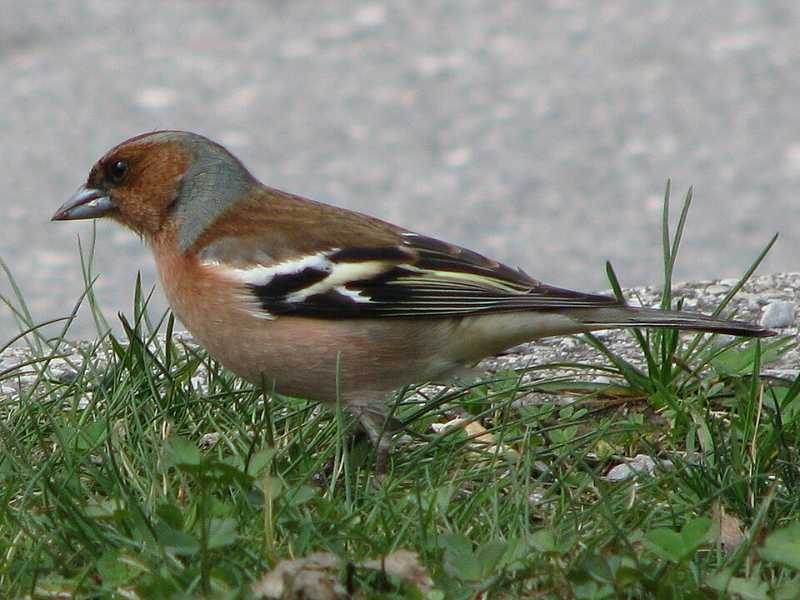
The chaffinch can be found in your garden and woodlands. Males and females are different in colour, with the male being brightly coloured with a slate-blue cap and nape, a rich pinkish-orange breast and cheeks, and a warm chestnut-brown back, while the female is much drabber and more camouflaged, with dull grey-brown to olive-brown upper parts and pale greyish-brown underparts.
In the winter the chaffinch will eat seeds, fruits and mixed seeds from your bird feeder. In the summer it can be found to eat spiders and several types of invertebrates.
3. Hawfinch
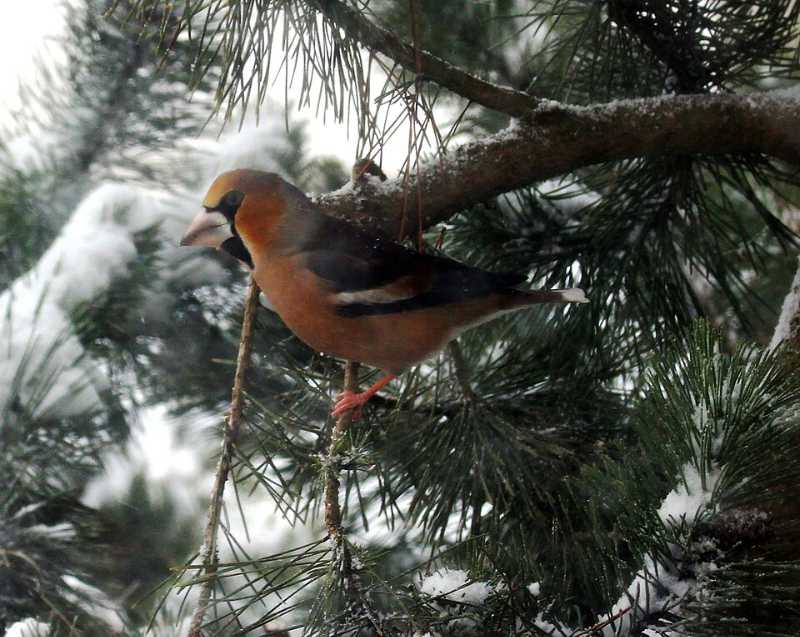
The hawfinch is the largest of all the finches that comes to the UK. This bird is known for its large bill which is very strong to crack open hard seeds. It has a stocky body with a thick neck. The male has an orange-brown head with a black band encircling its eyes and a black spot beneath its chin.
When a hawfinch is in flight, the white bands on its wings and the white tip of its tail are clearly visible. Male and female hawfinches have a very similar appearance.
4. Jackdaw
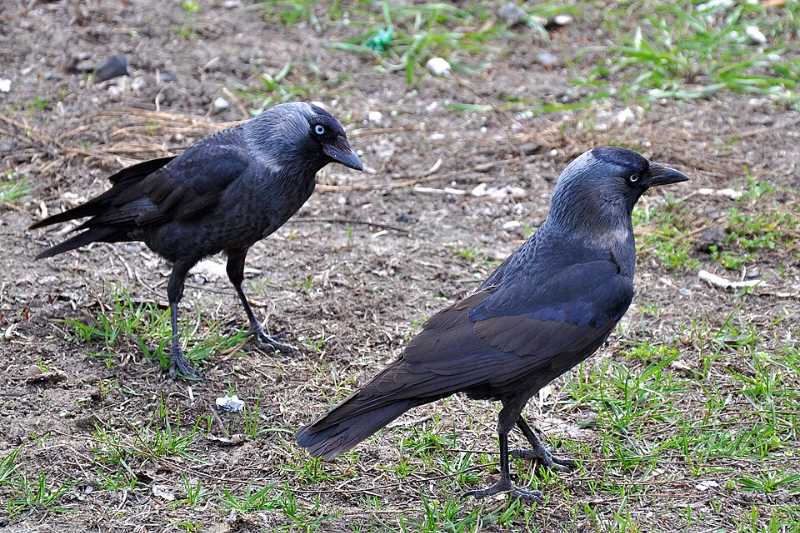
The jackdaw belongs to the crow family. It has black feathers with grey around the back of its head, and its eyes are a pale blue-grey colour. The top of its head is black. Although it is part of the crow family, it is smaller than both the rook and the crow. Males and females look very similar, while the younger birds have browner feathers and darker eyes.
You are more likely to spot jackdaws in villages and small towns, especially in areas with woodlands, farms, parks, and gardens, where they search for food. When hungry, they eat fruit, seeds, insects, and occasionally small young birds..
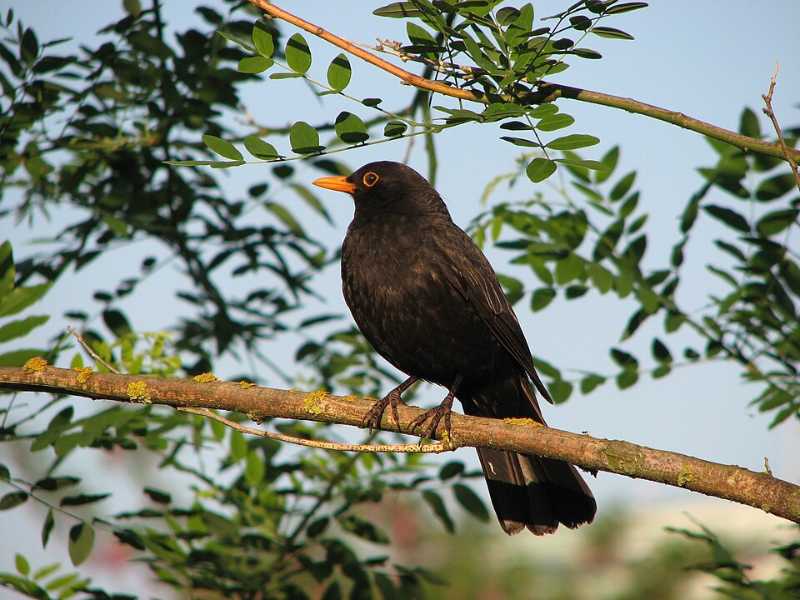
5. Blackbird
Male blackbirds, as the name suggests, are all black apart from their orange/yellow beak and yellow eye ring. The females and juveniles are brown and sometimes can be seen with a mottled effect on their chests. The beak can be brown or yellow.
This bird is among the most frequently seen in gardens. You can also spot it in parks, fields, and hedgerows. Its variety of unique songs makes it easy to identify as a blackbird. The blackbird eats insects and worms and, depending on what time of the year it is, will eat fruit and berries.
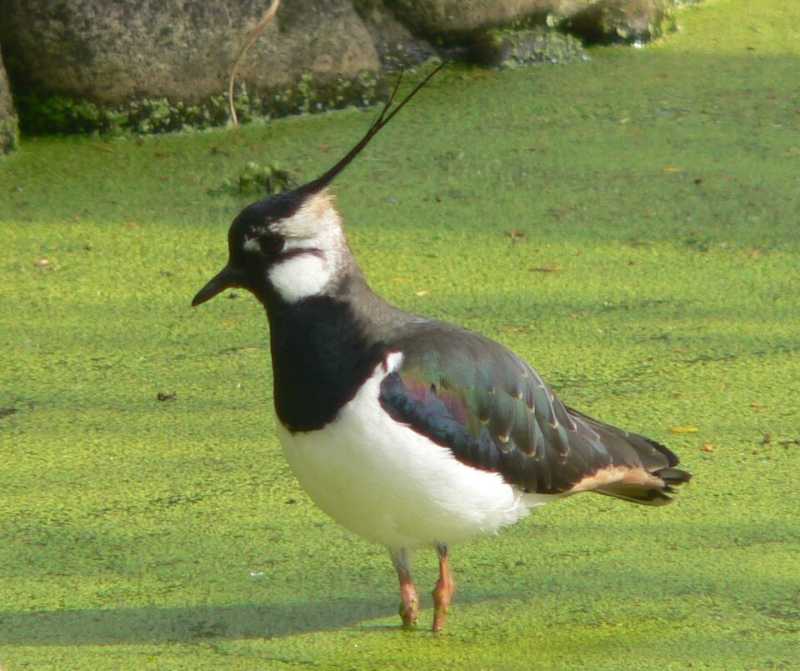
6. Lapwing
Did you know that the lapwing is also called the "Peewit" due to the sound of its call? When a lapwing calls, it sounds like "pee-wit". As you can see from the picture, the lapwing has a long crest on the top of its head. The feathers are a mixture of brown, grey, orange, green, black and white.
The lapwing eats worms and insects. You will find this bird near farmlands, grasslands, and wetlands. Sadly, the lapwing numbers have fallen over the last 50-odd years due to the way farms operate. They like to nest in short grassland areas or arable land, so the RSPB is working with farmers on areas that are suitable for the birds to breed.
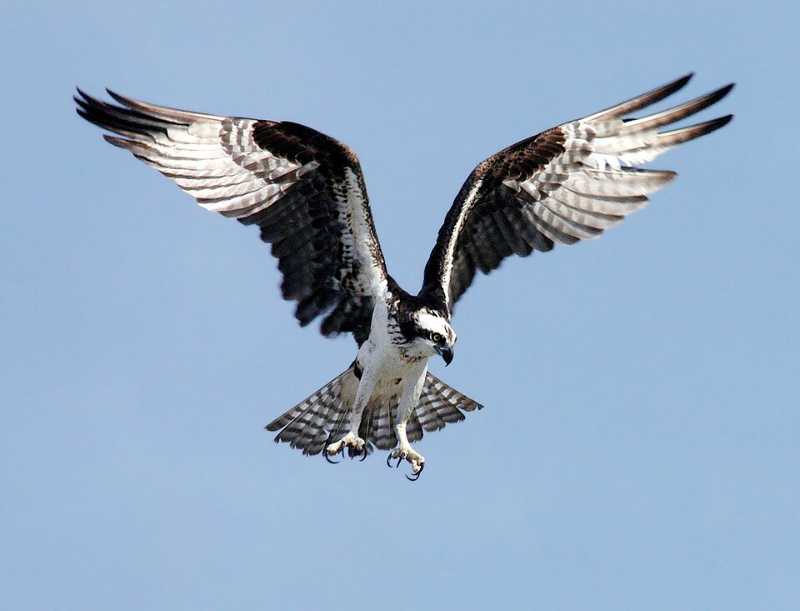
7. Osprey
The osprey is quite a large bird weighing between 3 and 4.4 pounds (1.4 to 2 kilograms). The male and the female look more or less the same, except the female is usually a bit larger. Adult birds are brown and white with a black beak, although the female sometimes has a brown ring around her chest.
Both the female and male eat fish. They dive in headfirst to catch their prey with their talons but will also fly close to the surface of the water and try and catch fish swimming close to the surface. The osprey has an extra eyelid; this helps them when they dive into the water or when swimming under the water.
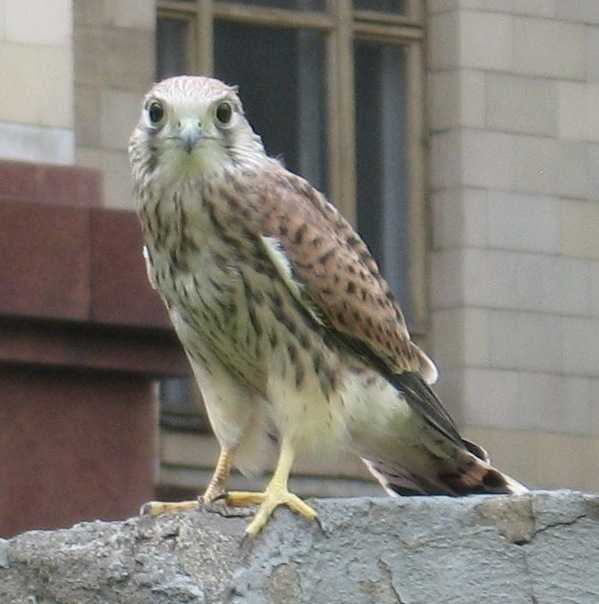
8. Kestrel
The kestrel, in my opinion, is one of the prettiest in the falcon family. You will often see this bird while in a car hovering over the verges and farmland. The feathers on this bird are a mixture of cream/buff, grey, red, orange, brown and black. The beak is yellow and black. Males have a slate-grey head and upper tail, marked by a single black band at the tip. Females are generally browner and have bars running along the entire upper tail. Both sexes display dark "tear" marks that stretch below each eye.
You can see this bird in several locations, including farmland, grasslands and heathlands. The diet of a kestrel consists of worms, insects, small mammals and sometimes small birds.
9. Partridge
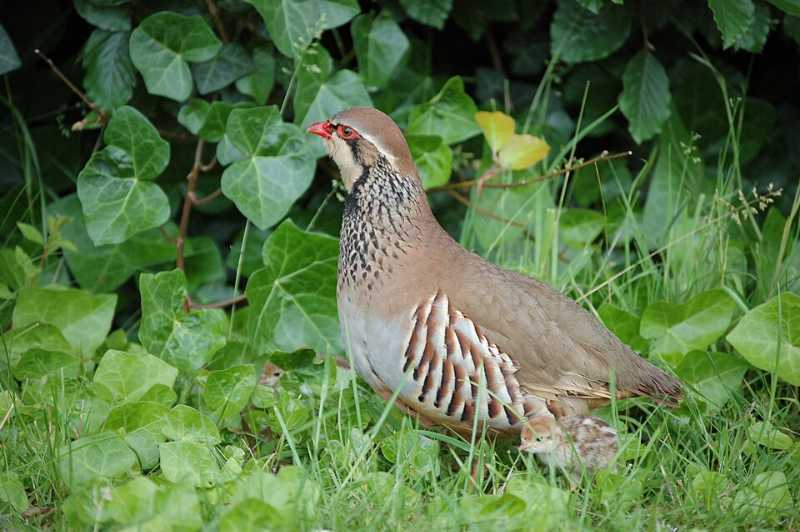
The photo is a red-legged partridge. This partridge is a little bigger than the grey partridge, which is also very common in the UK. You will find this bird in most parts of England and a few parts of Scotland and Wales. The red partridge can be seen in farmland, heathland, grasslands, and urban and suburban areas.
Generally speaking, they eat seeds, roots, insects and grasses. Being a game bird, the partridge is often hunted for sport or for food. From September 1st to February 1st, both the red-legged partridge and the grey partridge can be hunted.
10. Pheasant
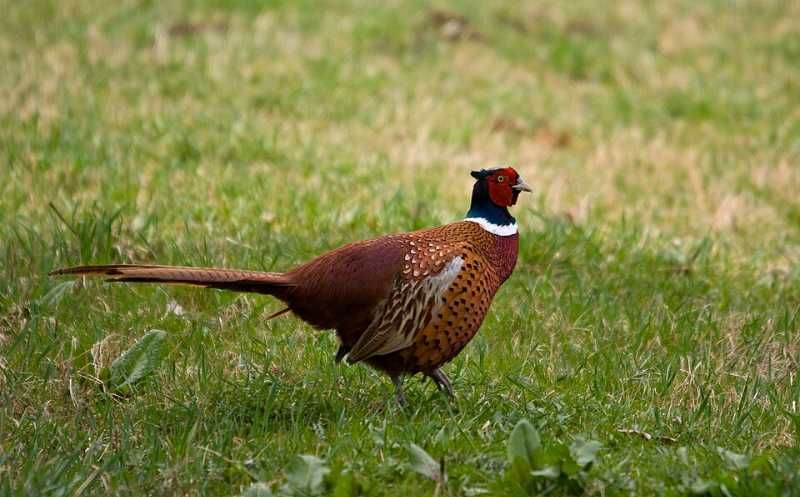
The common pheasant can be found just about all over Great Britain. The males display vibrant chestnut, golden-brown, and black patterns on their bodies and tails, along with a dark green head and red facial wattles. In contrast, females have a mottled appearance with lighter brown and black colours.
In the summer months the pheasant will eat worms, snails, insects, and juicy green shoots, while in the winter they tend to eat seeds, grains, roots, and berries. It's very easy to spot pheasants, as they are found on farmland, grassland, and wooded areas, and their calling sound is very distinctive and quite harsh; they also have a tendency to flap their wings.
On a sad note, pheasants are the most hunted bird in Great Britain, not just for eating but also for sport. Some birds are specially bred for hunting and are released in the wild.
This quiz was reviewed by FunTrivia editor looney_tunes before going online.
Any errors found in FunTrivia content are routinely corrected through our feedback system.