FREE! Click here to Join FunTrivia. Thousands of games, quizzes, and lots more!
Quiz about No Time for Stalin

No Time for Stalin Trivia Quiz

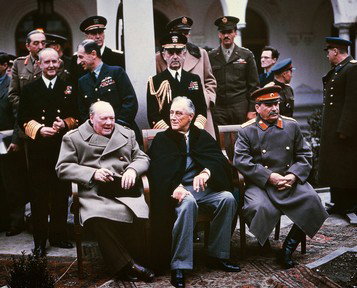
The Dynamics of the Yalta Conference of 1945

I just finished watching a streaming documentary of Franklin Roosevelt and the Yalta Conference, so the timing was perfect to grab the Author's Challenge of this title. Here's a quiz about that fascinating historical meeting.

A multiple-choice quiz by stephgm67. Estimated time: 4 mins.
  1. Home
  2. »
  3. Quizzes
  4. »
  5. History Trivia
  6. »
  7. World War II
  8. »
  9. WW2 People

Author
stephgm67
Time
4 mins
Type
Multiple Choice
Quiz #
424,647
Updated
Jun 29 26
# Qns
10
Difficulty
Average
Avg Score
8 / 10
Plays
26
Last 3 plays: james1947 (10/10), kvanhoy (9/10), mjgrimsey (1/10).
- -
Question 1 of 10
1. During a heated debate at the conference, Stalin and Churchill argued over the outcome of one of the Soviet Union's neighboring countries. Stalin felt it should be controlled by Russia and Churchill felt it should be independent, especially since Britain had entered the war to defend it. What is the country? Hint


Question 2 of 10
2. Hoping to break through Stalin's paranoia and to prove that the US and Britain were not ganging up on Russia, Roosevelt distanced himself from Churchill. What did Roosevelt specifically do during the meetings that finally caused Stalin to break his cold exterior and burst into loud laughter? Hint


Question 3 of 10
3. Roosevelt viewed the creation of a new international peacekeeping body as his ultimate life's legacy and the only way to prevent a third World War. At the conference, Stalin exploited this and used his willingness to join it as a massive bargaining chip. What global organization was Roosevelt so desperate to form in 1945? Hint


Question 4 of 10
4. During the intense negotiations, the bitter arguments were offset at night by lavish state dinners. At one famous banquet, at least 45 separate vodka and wine toasts were made, including a surprising moment where Stalin praised someone as the man with the greatest courage in the world. Who was he toasting? Hint


Question 5 of 10
5. Roosevelt's physical condition at Yalta is one of the significant aspects of the conference. He was literally a dying man relying entirely on his immense willpower and political instincts. What severe, terminal condition was Roosevelt secretly battling during the conference? Hint


Question 6 of 10
6. As a major sign of personal respect and deference to Roosevelt's failing health and physical paralysis, Stalin broke strict diplomatic protocol at the conference. Instead of rotating the location of the meetings among the three leaders' residences, Stalin insisted that all official sessions take place exclusively at which location? Hint


Question 7 of 10
7. Feeling profoundly isolated and sidelined at the Yalta Conference, Churchill lamented Great Britain's sudden decline to what he saw as a "junior partner" status. He famously described his helpless position between the massive power of the United States and the Soviet Union as himself being a donkey sitting between what two animals? Hint


Question 8 of 10
8. To gain a massive strategic and psychological advantage during the conference, Stalin used a hidden network of microphones that were throughout the various sites. This entire eavesdropping operation was organized and overseen by which notorious state organization and its chief, ensuring that every private word spoken by Roosevelt and Churchill was funneled directly back to Stalin? Hint


Question 9 of 10
9. During secret, bilateral negotiations at Yalta that excluded Churchill, Roosevelt agreed to hand over a strategically vital chain of volcanic islands to the Soviet Union in exchange for Stalin's promise to enter the war against Japan. What were these islands? Hint


Question 10 of 10
10. Ultimately, did the agreements signed at the Yalta Conference succeed in their primary goal of guaranteeing a democratic and cooperative post war Europe?


(Optional) Create a Free FunTrivia ID to save the points you are about to earn:

arrow Select a User ID:
arrow Choose a Password:
arrow Your Email:


Most Recent Scores
Today : james1947: 10/10
Today : kvanhoy: 9/10
Today : mjgrimsey: 1/10
Today : PurpleComet: 4/10
Today : Guest 73: 6/10
Today : Reamar42: 8/10
Today : Kalibre: 9/10
Today : ClydeToHudson: 6/10
Today : Guest 107: 7/10

Quiz Answer Key and Fun Facts
1. During a heated debate at the conference, Stalin and Churchill argued over the outcome of one of the Soviet Union's neighboring countries. Stalin felt it should be controlled by Russia and Churchill felt it should be independent, especially since Britain had entered the war to defend it. What is the country?

Answer: Poland

Poland was a hot topic at the Yalta conference and was the subject of a heated debate between Stalin and Churchill. Stalin felt that Poland was the flat, open gateway into the heart of Russia and should be controlled by the USSR as a matter of vital security. He also held up the fact that Russia had lost countless lives in the attempt to drive Nazis out of Poland. Finally, he stated the land rightfully belonged to his country because (decades earlier) Poland had pushed past the Curzon boundary line.

Churchill, however, felt an obligation to Poland as Britain had originally entered the war to defend the country. He argued that letting Stalin swallow Poland would mean Britain had failed the very nation it went to war to protect. He also argued that the Polish people themselves had fought bravely against the Nazis and earned the right to be independent. Finally, Churchill recognized the democratic Polish government in exile, which had been operating out of London since 1940, and not the puppet regime Stalin proposed.
2. Hoping to break through Stalin's paranoia and to prove that the US and Britain were not ganging up on Russia, Roosevelt distanced himself from Churchill. What did Roosevelt specifically do during the meetings that finally caused Stalin to break his cold exterior and burst into loud laughter?

Answer: Teasing and mocking of Churchill

Roosevelt knew that Stalin was deeply, pathologically paranoid. Stalin was convinced that the capitalist Western democracies of the US and Britain were a unified front secretly plotting to dismantle the Soviet Union the moment Hitler was defeated. Roosevelt decided to visually and politically separate himself from Churchill, even staying at a different compound. He also decided to use Churchill as a butt of jokes to break through Stalin's exterior.

Whenever Churchill launched into an impassioned, romantic speech about the British Empire or Western values, Roosevelt would subtly roll his eyes, interrupt with a joke, or make a sharp remark. Finally, after teasing Churchill about his cigars, his habits, and his overall Britishness, Stalin erupted with laughter. This came at a high price, though. Churchill was deeply hurt and felt abandoned and a close friendship was very damaged.
3. Roosevelt viewed the creation of a new international peacekeeping body as his ultimate life's legacy and the only way to prevent a third World War. At the conference, Stalin exploited this and used his willingness to join it as a massive bargaining chip. What global organization was Roosevelt so desperate to form in 1945?

Answer: United Nations

Roosevelt firmly believed that the only way to prevent a World War III was to bind the United States, Great Britain, and the Soviet Union into a permanent global alliance, and this was his top priority at the Yalta conference. Roosevelt reasoned that even if Stalin behaved poorly now, a functioning United Nations (UN) would eventually smooth out geopolitical conflicts in the future. Stalin, however, saw this obsession of Roosevelt as a weak point.

Stalin used the UN as a bargaining chip, essentially holding his cooperation hostage until Roosevelt granted him concessions. Stalin got such things as veto power, extra seats on the UN Council, and control over bordering countries such as Poland and Romania. He gave Roosevelt the diplomatic victory he craved on paper, and in return, he got the actual physical buffer zone he wanted in Europe.
4. During the intense negotiations, the bitter arguments were offset at night by lavish state dinners. At one famous banquet, at least 45 separate vodka and wine toasts were made, including a surprising moment where Stalin praised someone as the man with the greatest courage in the world. Who was he toasting?

Answer: Winston Churchill

In Soviet political culture, a banquet was not just a social break but it was also an extension of the negotiating table. Stalin used heavy drinking to soften his guests, observe their behavior when uninhibited, and manipulate the mood of the room. At the main state dinners, it was customary for every single dignitary to stand up and propose a formal toast to someone else at the table. At one legendary Yalta dinner, records show there were at least 45 separate toasts proposed over the course of the evening, almost all accompanied by shots of fine Russian vodka or sweet wine.

Churchill and Stalin had spent years despising each other's political ideologies. Stalin knew Churchill was feeling increasingly cornered and bitter about Britain's declining power. By suddenly raising a glass to Churchill and praising his unique courage in 1940 (when Britain stood entirely alone against Hitler) Stalin wasn't just being nice, he was disarming his fiercest critic. The toast worked beautifully and Churchill was visibly moved by the compliment from the Soviet dictator.
5. Roosevelt's physical condition at Yalta is one of the significant aspects of the conference. He was literally a dying man relying entirely on his immense willpower and political instincts. What severe, terminal condition was Roosevelt secretly battling during the conference?

Answer: Congestive heart failure

Roosevelt was suffering from advanced, uncontrolled hypertension (high blood pressure) and acute congestive heart failure. In an era before modern cardiac medications existed, his heart was severely enlarged and struggling to pump blood. During the difficult 7,000 mile (11,265 km) journey and the intense negotiation sessions, his blood pressure spiked to life threatening levels, often exceeding 220/120.

He was pale, gaunt, frequently short of breath, and suffered from oxygen deprivation. Despite his body failing him, Roosevelt relied entirely on his internal willpower and refused to let his illness sideline him because he genuinely believed he was the only bridge that could keep the Western alliance and the Soviet Union from tearing each other apart.
6. As a major sign of personal respect and deference to Roosevelt's failing health and physical paralysis, Stalin broke strict diplomatic protocol at the conference. Instead of rotating the location of the meetings among the three leaders' residences, Stalin insisted that all official sessions take place exclusively at which location?

Answer: The Livadia Palace

Stalin harbored a deep, genuine respect for Roosevelt that he never extended to Churchill. Stalin appreciated Roosevelt's directness and political acumen and respected Roosevelt's accomplishments in the war. He viewed him as a formidable equal. As such, Stalin made an unprecedented diplomatic concession specifically out of this respect for Roosevelt.

The Yalta sessions were originally supposed to rotate between the three leaders' palaces. Realizing how grueling it was for a wheelchair bound and ill Roosevelt to be moved across the rough roads, Stalin ordered that all official sessions take place at Roosevelt's residence which was the Livadia Palace. Stalin and Churchill traveled miles back and forth every single day so that Roosevelt would never have to leave his own palace. It was a massive, highly unusual sign of deference from Stalin.
7. Feeling profoundly isolated and sidelined at the Yalta Conference, Churchill lamented Great Britain's sudden decline to what he saw as a "junior partner" status. He famously described his helpless position between the massive power of the United States and the Soviet Union as himself being a donkey sitting between what two animals?

Answer: Buffalo and bear

Churchill arrived at Yalta with a profound sense of melancholy. He realized that the centuries long era of British global dominance was over. Great Britain was financially bankrupt from years of total war, and its military strength was now eclipsed by the two emerging titans of the United States and the Soviet Union. He believed the destiny of Europe was now in their hands.

Churchill famously said, "There I sat with the great Russian bear on one side of me with paws outstretched, and, on the other side, the great American buffalo. Between the two sat the poor little English donkey, who was the only one who knew the right way home". He believed Britain (the donkey) had the most experience and political insight, but was rapidly losing geopolitical leverage to the other two superpowers at the conference.
8. To gain a massive strategic and psychological advantage during the conference, Stalin used a hidden network of microphones that were throughout the various sites. This entire eavesdropping operation was organized and overseen by which notorious state organization and its chief, ensuring that every private word spoken by Roosevelt and Churchill was funneled directly back to Stalin?

Answer: The NKVD (Soviet Secret Police) / Lavrentiy Beria

When Churchill and Roosevelt reluctantly agreed to travel to the Crimea for the conference, they were entering an environment meticulously engineered by Lavrentiy Beria, the ruthless head of the NKVD (the Soviet secret police). Beria personally oversaw the preparation of the palaces, which included a massive, hidden intelligence operation.

Microphones were hidden in every room, especially the bedrooms. Many of the servants were actually Soviet spies told to listen carefully to the conversations. These audio transcripts were being translated and funneled directly to Stalin around the clock. This gave him an unbelievable advantage at the negotiating table.
9. During secret, bilateral negotiations at Yalta that excluded Churchill, Roosevelt agreed to hand over a strategically vital chain of volcanic islands to the Soviet Union in exchange for Stalin's promise to enter the war against Japan. What were these islands?

Answer: The Kurile Islands

Roosevelt's backroom dealing with Stalin regarding the Pacific War is one of the most controversial subjects of Yalta. American military planners overestimated Japan's remaining strength, fearing a mainland invasion of Japan could cost over a million Allied casualties. Desperate to prevent this, one of Roosevelt's top priorities was to get the Soviet Army to open a massive second front in Asia.

Stalin knew how desperate Roosevelt was and named a steep price. In private, two way meetings Roosevelt promised Stalin that in exchange for fighting Japan, the USSR would receive the Kurile Islands with their strategic location, the southern half of Sakhalin Island, a lease on Port Arthur as a Soviet naval base, and control over the Manchurian railroads When Churchill was finally brought in to sign off on the finished agreement, he was deeply frustrated but felt he had no choice.
10. Ultimately, did the agreements signed at the Yalta Conference succeed in their primary goal of guaranteeing a democratic and cooperative post war Europe?

Answer: No

The spirit of the conference turned out to be an illusion. Within weeks of the Western leaders departing, the Soviet Red Army and the Soviet secret police systematically crushed local democratic movements, arrested political dissidents, and forcibly installed oppressive communist puppet regimes in Poland, Romania, and Bulgaria. Instead of ushering in an era of global cooperation, the violation of the Yalta accords shattered the trust between the Western Allies and the Soviet Union, igniting the Cold War.

This tragic outcome was further highlighted by the exits of the Western leaders who had fought so hard at the negotiating table at Yalta. A frail Roosevelt, already dying during the summit, passed away just two months later on April 12, 1945, never living to see the final Allied victory or the ultimate betrayal of his United Nations vision. Meanwhile, Churchill was shockingly voted out of office by the British public in July 1945, right in the middle of the post war Potsdam Conference. Stalin was left as the sole remaining member of the Big Three of Yalta.
Source: Author stephgm67

This quiz was reviewed by FunTrivia editor ponycargirl before going online.
Any errors found in FunTrivia content are routinely corrected through our feedback system.
6/29/2026, Copyright 2026 FunTrivia, Inc. - Report an Error / Contact Us