FREE! Click here to Join FunTrivia. Thousands of games, quizzes, and lots more!
Quiz about Romania in the 20th Century

Romania in the 20th Century Trivia Quiz

A Timeline

From monarchy to democracy, and a whole lot of ugliness in between, Romania went through a lot in the 20th century. Here are ten events in Romanian history for you to sort into the correct order. Enjoy!

An ordering quiz by JJHorner. Estimated time: 3 mins.
  1. Home
  2. »
  3. Quizzes
  4. »
  5. History Trivia
  6. »
  7. European
  8. »
  9. Romanian

Author
JJHorner
Time
3 mins
Type
Order Quiz
Quiz #
423,668
Updated
Apr 06 26
# Qns
10
Difficulty
New Game
Avg Score
9 / 10
Plays
15
Last 3 plays: aliceinw (7/10), bernie73 (10/10), Reamar42 (10/10).
Mobile instructions: Press on an answer on the right. Then, press on the question it matches on the left.
(a) Drag-and-drop from the right to the left, or (b) click on a right side answer, and then click on its destination box to move it.
What's the Correct Order?Choices
1.   
Romania Joins the Warsaw Pact
2.   
Initial version of the Constitution of Romania approved by referendum
3.   
(1938)
Romania joins the Entente in World War I
4.   
Romanian People's Republic is formed
5.   
Nicolae Ceaușescu becomes leader
6.   
(1947)
Romania joins the Allies in World War II
7.   
King Carol II establishes a royal dictatorship
8.   
King Carol I dies
9.   
(1989)
Romanian Revolution begins
10.   
Romania joins the Axis in World War II


Most Recent Scores
Today : aliceinw: 7/10
Today : bernie73: 10/10
Today : Reamar42: 10/10
Today : cowalsh: 9/10
Today : javelpaul143: 9/10
Today : Aph1976: 10/10
Today : zob79: 10/10
Today : xchasbox: 7/10
Today : Zippy826: 10/10

Quiz Answer Key and Fun Facts
1. King Carol I dies

Carol I of Romania didn't go out in a blaze of glory or shouting "FREEDOM" with his last breath like Mel Gibson's apocryphal version of William Wallace. He died on October 10, 1914, at Peleș Castle, worn down by age and stress at 75.

And there was plenty to be stressed about in 1914. Europe had just accidentally stumbled into World War I, and Carol was in a rough spot. He had secretly committed Romania to an alliance with Germany and Austria-Hungary decades earlier, but his new country? It was much less enthusiastic.

So, here we have poor Carol, an old German-born king watching his adopted nation turn against his fatherland. Romania remained neutral at the time, and he was not happy about it. To demonstrate his frustration, he died in the ultimate show of passive aggressive behavior.

Before that, though, he had a long and surprisingly effective run. Carol came from the House of Hohenzollern-Sigmaringen (which I can totally pronounce). He showed up in Romania in 1866, and basically spent the next half-century turning a loosely organized principality into a respectable kingdom.

Under his leadership, Romania fought in the Russo-Turkish War, which helped secure independence from the Ottoman Empire. He became king in 1881, wearing a crown forged from the steel of an Ottoman cannon, which earned him extra prestige points for style.

He pushed for railroads, a modern army, and state institutions that actually functioned... well, at least on most days. Not perfect, not democratic by modern standards, but compared to where Romania started, it was definitely a serious upgrade. Go King Carol!
2. Romania joins the Entente in World War I

For two years, Romania had stayed neutral while the Entente Powers and the Central Powers took turns reducing each other's population of young men. A big reason for that hesitation was Carol I, who had quietly leaned toward Germany and Austria-Hungary thanks to family ties and old alliances. Then he died in 1914, right as the war kicked off. Timing is everything.

Enter Ferdinand I, Carol's successor, who had a different vibe entirely. Despite being born into the same German royal family, Ferdinand was more open to siding with the Entente, especially because they dangled a very tempting prize: Transylvania. You might think of unspeakable gothic horrors upon reading that word, but Transylvania was a part of Austria-Hungary that had a large ethnic Romanian population. Reclaiming it was basically a national obsession. So in August 1916, Romania finally jumped in on the Entente side, declaring war on Austria-Hungary with big hopes and far too much optimism.

Things got messy. Romania's initial push into Transylvania started strong, but the Central Powers hit back hard. Within months, they pushed Romanian forces out and marched straight into Bucharest. Whoops! Definitely not the triumphant campaign people had imagined. However, if you're a glass-half-full kind of person, Romania's move wasn't completely pointless. It forced the Central Powers to divert troops and stretched their resources thinner, which was important in the bigger picture of World War I.
3. King Carol II establishes a royal dictatorship

By 1938, Carol II had had enough of democracy, thank you. For what it's worth, Romania's political scene was pretty much a circus. There were dozens of political parties, constant infighting, and the occasional extremist group trying to grab the wheel. The loudest of those was the Iron Guard, which mixed ultranationalism with a kind of creepy religious zeal. Carol, who wasn't keen on sharing power to begin with, watched things spiral out of control. It didn't help his mood any. So instead of fixing the system, he decided to... well, replace it.

In February 1938, he pulled the constitutional rug out from under the country. The old system was totally scrapped, a new constitution arrived on the scene, and suddenly the king had sweeping authority. Political parties were dissolved, which is one way to end political arguments, I guess.

He set up a single party called the National Renaissance Front, and surprise! It was loyal to him. Parliament still existed in the most technical sense, but it had about as much independence as a wilting houseplant. This was Romania's version of a royal dictatorship. It was dressed up in official language, but it wasn't really fooling anyone who was paying attention.

Interestingly, Carol wasn't just reacting to chaos, he was also trying to stay ahead of it. Europe in the late 1930s was tilting hard toward authoritarian rule, with figures like Adolf Hitler getting a little restless just down the block a ways. Carol wanted control before someone else took it from him, especially with the Iron Guard lurking around and gaining popularity. Still, his grip didn't last long. By 1940, under pressure from both internal unrest and external threats, he abdicated and Romania veered into an even harsher regime. Things were about to get a whole lot worse.
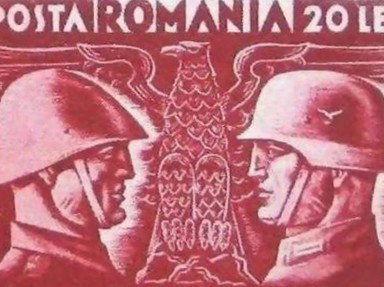
4. Romania joins the Axis in World War II

Romania was drifting toward the Axis Powers by 1941, which kind of tells you how things were going. The man driving the bus into the inferno was Ion Antonescu, who'd grabbed control after helping to force Carol II to abdicate in 1940. Antonescu was pretty adamant about where he stood. He believed cooperation with Adolf Hitler and Germany would stabilize Romania and, probably more importantly, help recover lost territory.

So in June 1941, Romania jumped into Operation Barbarossa, marching alongside German forces against the Soviet Union. The promise? A chance to retake Bessarabia and Northern Bukovina, which the Soviets had annexed in 1940.

Now, if you've ever invaded Russia-and I hope that you haven't-you probably didn't have a very good time. But enough about you. Romania committed huge numbers of troops, far more than most people realize, and initially the campaign looked like a grim kind of success. Territory was reclaimed, and Antonescu got to pretend he'd reversed a national humiliation. Go Antonescu?

But again, they invaded Russia. The inevitable ugliness was coming. That's called foreshadowing in the biz.

Romanian forces kept pushing beyond the reclaimed territory, deep into Soviet land, and when things got messy, they got messy fast. The Romanian forces participated in the siege of Odessa and later fought in the brutal mess around Stalingrad. Those battles chewed up men and equipment at an alarming rate. The longer the war dragged on, the more obvious it became that aligning with the Axis wasn't delivering the long-term security they had been looking for. By 1944, Romania had had quite enough.
5. Romania joins the Allies in World War II

In 1944, Romania got sick of losing and flipped the Monopoly board over. Their alliance with the Axis Powers looked more and more like a slow-motion disaster. The Eastern Front was collapsing, Soviet forces were pushing west, and suddenly all those earlier "victories" didn't seem so triumphant anymore. Inside the country, frustration was at the boiling point. War fatigue, heavy losses, and an increasingly real threat of invasion tend to sharpen people's thinking real quick.

Then came August 23, 1944, and things flipped almost overnight. Driven by a coalition of opposition politicians and military leaders, Michael I led a coup against Ion Antonescu. Go Michael!

Antonescu was arrested, Romania pulled out of the Axis, and without further ado, it switched sides to join the Allied Powers. No trial period. No easing into things. Just a hard pivot while the war was still raging. Romanian troops went from fighting the Soviet Union to fighting alongside it, although the Soviets regarded them as a defeated Axis power. I'm guessing it was a deeply confusing week for everyone involved.

Romania's defection opened the door for Soviet forces to move deeper into southeastern Europe faster, and it cut off a key source of oil for Germany. However, it didn't earn the Romanian people a happily ever after.
6. Romanian People's Republic is formed

After the end of World War II, Romania had all kinds of new problems. Yeah, it had switched sides in 1944 and helped the Allied Powers, but it was very much occupied by the Soviet Union.

And the Soviets weren't the pack-up-and-leave type. They stuck around and quite effectively reshaped Romania's political system. At first, it looked like a coalition government situation, but that was more of a show than a real balance of power.

Bit by bit, the communists tightened their grip. The Romanian Communist Party, which had been off in the margins before the war, suddenly had backing from Moscow, which will give anyone in Eastern Europe a whole lot more confidence. Opposition parties were sidelined, pressured, or just... well, removed from relevance. Elections in 1946 were technically held, but... let's just say the results came out exactly how the communists wanted. Meanwhile, key institutions like the police and military were brought firmly under their control.

Then came the final act in December 1947. Michael I was forced to abdicate, which ended the monarchy just like that. There wasn't a big ceremony or anything. Just a lot of pressure, a signed abdication, and a pat on the head.

In its place, Romania was declared the Romanian People's Republic. From there, it moved fully into the Soviet orbit, adopting a communist system with centralized control over politics, the economy, basically everything.
7. Romania Joins the Warsaw Pact

In 1955, Romania was firmly planted in the Soviet camp with no room to wiggle. So when the Warsaw Pact was formed, Romania didn't exactly hesitate or debate it over a glass of socată. It was the Cold War, and the Eastern bloc wasn't politely asked its opinion.

The Pact itself was basically the Eastern Bloc's answer to NATO, created after West Germany joined NATO and everyone collectively decided things weren't tense enough already.

Signing on meant Romania was now part of a formal military alliance led by the Soviet Union, alongside countries like Poland, Hungary, and East Germany. On paper, it was about mutual defense. In practice, it also helped Moscow keep its tight grip on its sphere of influence. Troops, planning, command structures... it all leaned heavily in the Soviets' favor. Romania's military became a part of this larger system.
8. Nicolae Ceaușescu becomes leader

In 1965, Nicolae Ceaușescu stepped into power in Romania, taking over after the death of Gheorghe Gheorghiu-Dej. Again, I can pronounce all of these names flawlessly.

At first, Ceaușescu didn't look like the kind of guy who'd end with his face plastered on giant portraits everywhere. Early on, he actually was big on foreign policy, which made him stand out within the Warsaw Pact. Rhetorically, he pushed back against Soviet dominance, and people both inside and outside Romania thought, "huh, maybe this will be different."

That reputation grew. In 1968, when the Soviet tanks rolled into Czechoslovakia to politely discuss the matter of the Prague Spring, Ceaușescu publicly condemned the invasion. That was a bold move, one that could have been very hazardous to his health. It earned him praise from the West and boosted his image at home. Romania started forging diplomatic ties with countries outside the Soviet bloc, and for a while, it looked like Ceaușescu had found a way to balance communist rule with a bit of independence. Maybe it wasn't freedom, but at least a slightly looser leash.

If you've made it this far, you're probably waiting for a "but". It's coming.

On the foreign policy front, things were looking independent, but (told you) things inside the country were tightening up quite a bit. The government still controlled the press, the economy stayed centralized, and the secret police (the Securitate) kept a close eye on everyone. By the end of the 1960s, Ceaușescu's rule was already sliding into a personality cult, even if it hadn't reached full intensity yet.
9. Romanian Revolution begins

Years of austerity, food shortages, and the all-seeing eye of the Securitate had worn people raw. Nicolae Ceaușescu was still trying to retain total control, but the rest of Eastern Europe was already falling away from Communism and Soviet dominance. Romania was a little late, but when the party finally started, the music was turned up LOUD.

Things kicked off in the city of Timișoara in December 1989, after protests broke out over the attempted removal of a dissident pastor. The demonstrations spread fast, and the government's response (surprise) involved force.

But instead of shutting things down, this force just poured gasoline on the fire. Within days, unrest had spread across the country, including the capital, Bucharest. Ceaușescu even tried to hold a big public rally to show he still had support. It went sideways almost immediately. The crowd started booing him, on live television no less, which is the kind of moment you can't really walk back. The broadcast was cut very abruptly.

From there, everything started falling apart quickly. Meanwhile, a pimply high-school computer nerd and future FunTrivia quiz-writer extraordinaire, jaded by all the turmoil of 1989, looked at the television and said, "Again?!"

The army turned against Ceaușescu, protests grew into a full-blown uprising. Within days he and his wife were captured while trying to flee. On December 25, after a rapid show trial, they were executed. Just like that, one of the most rigid regimes in the Eastern Bloc collapsed. The Romanian Revolution ended communist rule in Romania, but it was definitely the nastiest break... at least so far (I'm looking at you, Yugoslavia).
10. Initial version of the Constitution of Romania approved by referendum

So after the Romanian Revolution wrapped up and Nicolae Ceaușescu abruptly went from feared dictator to a Christmassy corpse, Romania had a bit of a problem. You know... what now?

The old communist constitution wasn't exactly built for democracy, unless your definition of democracy involves one party and no disagreement. So the country hit the big reset button and tried to figure out a new rulebook while everything still smelled faintly like tear gas and gunfire.

Enter the Constitution of Romania, adopted in December 1991 after a national referendum. It tried to do all the big, important things at once. Separation of powers? Yep. Multi-party system? You bet. Human rights protections? Oh yeah.

It set up a semi-presidential system, meaning there's both a president and a prime minister, which sounds nifty until you realize that can sometimes turn ugly. Still, compared to what came before, it was bliss. Suddenly you had guarantees like freedom of speech and private property. You go, Romania!

It wasn't perfect. The early 90s in Romania were messy, both politically and economically. The constitution itself got revised later in 2003 to smooth out some rough edges, especially with an eye toward joining the EU. But the 1991 version was the big turning point, the moment Romania formally decided that kings and dictators were dumb.
Source: Author JJHorner

This quiz was reviewed by FunTrivia editor ponycargirl before going online.
Any errors found in FunTrivia content are routinely corrected through our feedback system.
4/6/2026, Copyright 2026 FunTrivia, Inc. - Report an Error / Contact Us