FREE! Click here to Join FunTrivia. Thousands of games, quizzes, and lots more!
Quiz about The Alpine Front

The Alpine Front Trivia Quiz

The Great War

You probably know a thing or two about the Western Front in the Great War. Maybe you've even heard of places like Tannenberg and Galicia. But what about the Alpine Front, where the Italians battled their former allies? Enjoy!

A photo quiz by JJHorner. Estimated time: 3 mins.
  1. Home
  2. »
  3. Quizzes
  4. »
  5. History Trivia
  6. »
  7. War History
  8. »
  9. World War I

Author
JJHorner
Time
3 mins
Type
Photo Quiz
Quiz #
423,202
Updated
Feb 25 26
# Qns
10
Difficulty
Average
Avg Score
7 / 10
Plays
21
Last 3 plays: sarryman (5/10), JanIQ (3/10), LukerOaks (3/10).
-
Question 1 of 10
1. Which Austro-Hungarian chief of staff strongly supported a prewar preventative offensive against Italy and Russia as early as 1906? Hint


Question 2 of 10
2. Which treaty persuaded Italy to join the war against Austria-Hungary in April 1915 in exchange for lands? Hint


Question 3 of 10
3. What was a major problem with Italy's strategy during the early Isonzo battles? Hint


Question 4 of 10
4. Which Italian general commanded most of Italy's forces during the early years of the Alpine Front and was known for leading a dozen offensives along the Isonzo? Hint


Question 5 of 10
5. Which elite Italian mountain troops specialized in high-altitude warfare? Hint


Question 6 of 10
6. Which 1916 Austro-Hungarian offensive aimed to punish Italy and break through from the Trentino region? Hint


Question 7 of 10
7. What infiltration tactic helped the Central Powers succeed at Caporetto? Hint


Question 8 of 10
8. Which Austro-Hungarian commander led the successful 1917 offensive at Caporetto? Hint


Question 9 of 10
9. What 1918 Austro-Hungarian offensive near Venice failed and severely weakened the empire? Hint


Question 10 of 10
10. Which 1918 battle marked Italy's decisive victory shattered the Habsburg armies and largely contributed to the collapse of Austria-Hungary? Hint


(Optional) Create a Free FunTrivia ID to save the points you are about to earn:

arrow Select a User ID:
arrow Choose a Password:
arrow Your Email:


View Image Attributions for This Quiz

Most Recent Scores
Today : sarryman: 5/10
Today : JanIQ: 3/10
Today : LukerOaks: 3/10
Today : xchasbox: 10/10
Today : Guest 146: 4/10
Today : Kota06: 2/10
Today : spanishliz: 6/10
Today : Baldfroggie: 4/10
Today : 1ziggy: 3/10

Quiz Answer Key and Fun Facts
1. Which Austro-Hungarian chief of staff strongly supported a prewar preventative offensive against Italy and Russia as early as 1906?

Answer: Franz Conrad von Hötzendorf

That handsome fellow is Franz Conrad von Hötzendorf. By 1906, our friend was already looking at Europe like a Monopoly board that needed to be flipped over. Appointed Chief of the General Staff that year, he argued to anyone who would listen for a preventive war, particularly against Italy and Serbia, while he viewed Russia as an unavoidable future enemy. He believed the Habsburg Empire's best chance at survival was to strike its rivals before said rivals grew stronger. This wasn't a passing thought, mind you. He pushed for war like a carnival barker in the years before 1914, often to the annoyance of more cautious leaders in Vienna.

Hötzendorf's hawkishness was not a healthy pastime. It was a downright obsession. He proposed offensive action against Italy even while Italy was a formally allied to Austria-Hungary in the Triple Alliance. Niccolò Machiavelli would be proud.

Russia, with its vast manpower and its expanding military reforms, loomed large in his calculations. In his view, delay meant decay. When World War I finally exploded in 1914, many of the strategic assumptions he had argued for years earlier were suddenly being put to the test, with varied and sometimes grim results for the empire.
2. Which treaty persuaded Italy to join the war against Austria-Hungary in April 1915 in exchange for lands?

Answer: The Treaty of London

Italy had technically been allied with Austria-Hungary and Germany before World War I. But... well, ya know. Alliances are fickle things, especially when your best friend picks a fight with an entire football team without so much as asking you if you were willing to back him up.

They remained quiet in July and August 1914 as Austria-Hungary declared war on Serbia, Germany declared war on Russia, France, and Belgium, Britain declared war on Germany, Montenegro for some reason declared war on Austria-Hungary, Austria-Hungary declared war on Russia, Japan declared war on Germany, and Russia, Britain, and France declared war on the Ottoman Empire.

And most of that was just in the first two weeks. Italy sat on the couch watching the soap opera unfold. And then the Entente started talking to them about land.

In April 1915, the Treaty of London was signed in secret between Italy and the Entente. In exchange for declaring war on Austria-Hungary, Italy was promised a veritable buffet of territory, including South Tyrol, Trentino, Istria, and parts of the Dalmatian coast, one of which I've actually heard of.

A few weeks after the treaty was signed, in May 1915, Italy declared war on Austria-Hungary and opened up a new and nasty front in and around the Alps.
3. What was a major problem with Italy's strategy during the early Isonzo battles?

Answer: Costly frontal assaults

So, Italy entered the war in 1915 in search of the promised land, or rather land promised them by the Entente. At the time, its commander, General Luigi Cadorna, had a plan. I hear you saying, "Great! What was it?" Well, I'll tell you. It mostly involved throwing infantry straight at well-fortified Austro-Hungarian positions.

Yeah, not so great.

The Italian army launched repeated frontal assaults across the Isonzo River including against enemies dug into high ground along the Carso Plateau. Machine guns, barbed wire, and artillery made those attacks brutally expensive. The landscape itself was rocky but very exposed, providing little cover for the attacks. Courage was abundant. Results were somewhat predictable, at least if you were paying attention to the Western Front.

The early Isonzo battles demonstrated serious weaknesses in coordination and flexibility for the Italians. Units would attack in rigid formations, and the communication between infantry and the artillery was often questionable at best. Italy did possess artillery, but it wasn't always used effectively, at least if you didn't want your infantrymen to have many small holes shot through them as they advanced. The result was a pattern of attack, heavy casualties, and no territorial gain.

Between 1915 and 1917, there were twelve Battles of the Isonzo. Twelve. Ypres can't hold a candle to that number. Most followed the same pattern: intense bombardment, massed infantry attacks, steep slopes, and devastating losses for modest gains measured in yards. I said it was a front that most people don't talk about; I didn't say it was going to be DIFFERENT.

The Austro-Hungarian army, though stretched thin, benefited from defensive positions in mountain terrain that just dared attackers to try their luck. The twelfth battle, better known as Caporetto, would finally break the pattern in dramatic fashion, but not in Italy's favor.
4. Which Italian general commanded most of Italy's forces during the early years of the Alpine Front and was known for leading a dozen offensives along the Isonzo?

Answer: Luigi Cadorna

So, who was the idiot who launched all those futile offensives along the Isonzo River against Austria-Hungary? Well, you're looking at him. He's the one on the left. Cadorna became Chief of the General Staff in 1914 and quickly set about seeing if he could destroy the army. From 1915 to 1917, he directed all the Italian offensives along the Isonzo River against Austro-Hungarian positions. Twelve attempts to crack the same hard nut. Each one involved massive infantry assaults against fortified high ground. Each one produced appalling casualties. The gains were usually measured in a few ridge lines or destroyed villages as well as the blood of hundreds of thousands of his troops.

Robert E. Lee only needed to attack the Union center once at Gettysburg to understand it was a very, very bad idea. Cadorna attacked those fortified positions twelve times.

Cadorna was a strict disciplinarian to put it gently. He believed deeply in offensive spirit ("élan" as the French called it) and harsh enforcement of discipline. After the inevitable setbacks, he preferred to blame his troops rather than his own strategies. Following the disaster at Caporetto in 1917, he was replaced by Armando Diaz, who adopted a more defensive and sensible approach. By then, though, the Isonzo front had already carved its place into Italian military history, and Cadorna's name was all over it.

He is generally not remembered well and often considered one of the worst generals of the war.
5. Which elite Italian mountain troops specialized in high-altitude warfare?

Answer: The Alpini

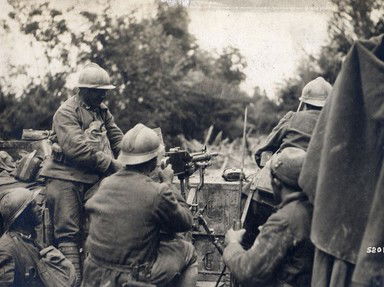
The Alpini were built for the mountains long before World War I turned the Alps into a rocky battlefield. While this guy may look like a hiker taking a fun photograph of the mountain terrain (or a very lost tourist), he's actually a lookout for the world's first specialized mountain infantry founded in Italy back in 1872. By the time Italy entered the war in 1915, these troops were already experts at climbing sheer rock faces, hauling artillery up impossible slopes, and surviving at altitudes where oxygen and common sense are both pretty rare.

On the Alpine Front, the war was more vertical at times than most units preferred. Soldiers tunneled into glaciers, blasted positions into cliffs, and fought at altitudes where frostbite could kill you almost as fast as enemy artillery. While I cannot imagine a more miserable skill I'd like to master, the Alpini became legendary for their endurance and stubborn defense of icy peaks along the Austro-Hungarian frontier.

To end on a fashion note, they absolutely did wear felt hats with a single feather, which is probably second only to the early-war spiked helmets of the Germans, who despite their many glaring flaws, always seem to know how to dress for war.
6. Which 1916 Austro-Hungarian offensive aimed to punish Italy and break through from the Trentino region?

Answer: The Asiago Offensive

In the spring of 1916, Austria-Hungary decided it had endured quite enough of Italian pressure along the Isonzo, thank you very much. So, it pivoted, seeking a decisive blow (stop me if you've heard this before). The Asiago Offensive, sometimes called the Trentino Offensive, South Tyrol Offensive, or "Strafexpedition" depending on who you ask, began in May 1916 from the Trentino region. The goal was bold enough: smash through the Italian lines in the Trentino Alps, descend onto the Venetian plain, and knock Italy out of the war. A little lesson from the Austrians, delivered with love (and heavy artillery).

The offensive did initially make significant gains, pushing the Italians back and generating real panic in Rome, not unlike a certain Carthaginian general two millennia prior. However, success required speed and sustained momentum. Neither really materialized. Austro-Hungarian forces became stretched thin, and the Russian Brusilov Offensive soon demanded reinforcements on the Eastern Front. The offensive stalled. The grand punishment turned into another mountain struggle, another non-result, and another roughly quarter million casualties.

Italy, battered but still upright, remained in the war.
7. What infiltration tactic helped the Central Powers succeed at Caporetto?

Answer: Small, fast-moving units bypassing strongholds

Caporetto was the Central Powers' time to shine on the Isonzo front. They broke through the lines in October 1917, largely thanks to a change of tactics. It felt almost modern compared to the endless, blood-letting assaults of previous years. German forces used specially trained stormtrooper units to infiltrate Italian lines with support from the Austro-Hungarian forces. No hammering away at the strongest points. Instead, small, fast-moving units slipped through weak spots, bypassed fortified positions, and disrupted command posts as well as artillery batteries and supply routes. In short, they opted to pick the lock instead of ramming the door down. The result was chaos in the Italian rear and a front line that unraveled with alarming speed, at least if you were an Italian.

The Central Powers combined this infiltration method with short, intense artillery bombardments, including poison gas. The goal was to disorient defenders before the infantry moved. Coordination was tighter. Objectives were flexible. Junior officers had more freedom to exploit opportunities as they appeared. Compared to earlier offensives on the Isonzo, it was a sharp pivot away from predictable frontal slaughter and a move toward mobility and shock.

On the Italian side... well, if you've been following along with the quiz, you know about Luigi Cadorna. Under his command, rigid offensives and strict discipline were everything, and defensive depth was limited. Positions were often organized in dense forward lines without sufficient reserves layered behind them. Oops.

When the infiltrating units punched through, there was little wiggle room to absorb the hit. Communication broke down. Units retreated in confusion, sometimes without clear orders. What had held together in static trench warfare proved very costly against these more fluid penetration tactics.

The Battle of Caporetto is known in Italian memory as a national disaster. Cadorna was replaced by Armando Diaz, who reorganized the army with a stronger defensive system and improved morale.
8. Which Austro-Hungarian commander led the successful 1917 offensive at Caporetto?

Answer: Svetozar Boroević

The 1917 breakthrough at Caporetto was a joint Austro-Hungarian and German operation. On the Austro-Hungarian side, the offensive was led by Svetozar Boroević, commander of the Isonzo Front. Known as the "Lion of the Isonzo" for his stubborn defense in the-sigh-eleven prior battles along the river, Boroević now found himself on the offense. With German reinforcements and some revised tactics, the Central Powers finally achieved a breakthrough on the Alpine front.

Boroević had spent much of the war absorbing Italy's repeated attacks along the Isonzo. At Caporetto, the roles were stunningly reversed. The combined forces broke through the Italian Second Army and led to an Italian retreat that carried troops all the way to the Piave River. German General Otto von Below commanded the overall Fourteenth Army spearheading the assault.

The victory at Caporetto remains one of the most dramatic collapses of a front line during World War I.
9. What 1918 Austro-Hungarian offensive near Venice failed and severely weakened the empire?

Answer: The Second Battle of the Piave River

In spite of the victory at Caporetto the previous autumn, by June 1918, Austria-Hungary was pretty much running on fumes. In defiance of this fact (or because of it), the empire gambled on one last major offensive along the Piave River, aiming to break through toward Venice and force Italy out of the war before the empire itself collapsed. Enter the Second Battle of the Piave River.

Unfortunately for the Austro-Hungarian Empire, it wasn't meant to be. Heavy rains flooded the Piave and wrecked pontoon bridges. Austro-Hungarian troops became isolated. Italian forces, reorganized under Armando Diaz, Duca della Vittoria (Duke of Victory), and reinforced by his allies, held firm.

As the Austrians would say, 'Ach!' What had once been an army capable of bold mountain offensives now struggled with shortages of food, equipment, morale, and general sogginess. The attack stalled, then collapsed. Then came the retreat.
10. Which 1918 battle marked Italy's decisive victory shattered the Habsburg armies and largely contributed to the collapse of Austria-Hungary?

Answer: The Battle of Vittorio Veneto

As the calendar moved to October 1918, Austria-Hungary was less a functioning empire and more a group of people on a sinking ship pretending that everything was fine. The army was exhausted after the failed June offensive on the Piave. They were short on food and ammunition, and morale was somewhere below the earth's mantle.

Meanwhile on the home front, shortages turned basic survival into scavenger hunts. Politically, the empire was almost done. Czechs, South Slavs, and others were openly pushing for independence, thanks in part to U.S. President Woodrow Wilson's talk of self-determination. The Dual Monarchy still existed on paper, but in practice, things were pretty grim.

Then came Vittorio Veneto. If you have a feeling things are about to get worse, trust your feelings! Italian forces launched a carefully prepared offensive beginning along the Piave River. This time, the momentum was all theirs. The Austro-Hungarian lines were thwacked mightily and torn apart under sustained pressure and internal collapse.

Vittorio Veneto unfolded against an Austro-Hungarian force whose internal cohesion was dissolving if not completely dissolved. Entire units surrendered. Others simply drifted away as news spread of various groups within the empire declaring independence. Military defeat and political collapse began feeding each other in a big loop. By early November, Austria-Hungary sought an armistice. The Habsburg monarchy, which had endured for centuries, effectively ceased to exist in the wake of this final blow.

It was the closing act of the Alpine Front and a decisive shove that sent a multiethnic empire over the edge. Soon, shiny new countries like Czechoslovakia and what would eventually be called Yugoslavia would be formed with great promise. (Don't ruin it for me. I haven't read the sequels.)
Source: Author JJHorner

This quiz was reviewed by FunTrivia editor ponycargirl before going online.
Any errors found in FunTrivia content are routinely corrected through our feedback system.
2/25/2026, Copyright 2026 FunTrivia, Inc. - Report an Error / Contact Us