FREE! Click here to Join FunTrivia. Thousands of games, quizzes, and lots more!
Quiz about National Dishes From Around The World

National Dishes From Around The World! Quiz


A national dish is a food item that is strongly associated with a particular country. It can be a staple meal, a food that has a strong cultural heritage, or one made with local ingredients. Some countries even promote foods as national dishes.

A label quiz by ponycargirl. Estimated time: 3 mins.
  1. Home
  2. »
  3. Quizzes
  4. »
  5. Hobbies Trivia
  6. »
  7. Food & Drink
  8. »
  9. International Cuisine

Author
ponycargirl
Time
3 mins
Type
Label Quiz
Quiz #
424,645
Updated
Jul 30 26
# Qns
10
Difficulty
Easy
Avg Score
9 / 10
Plays
21
Last 3 plays: Guest 24 (10/10), ken kramer (8/10), sarryman (5/10).
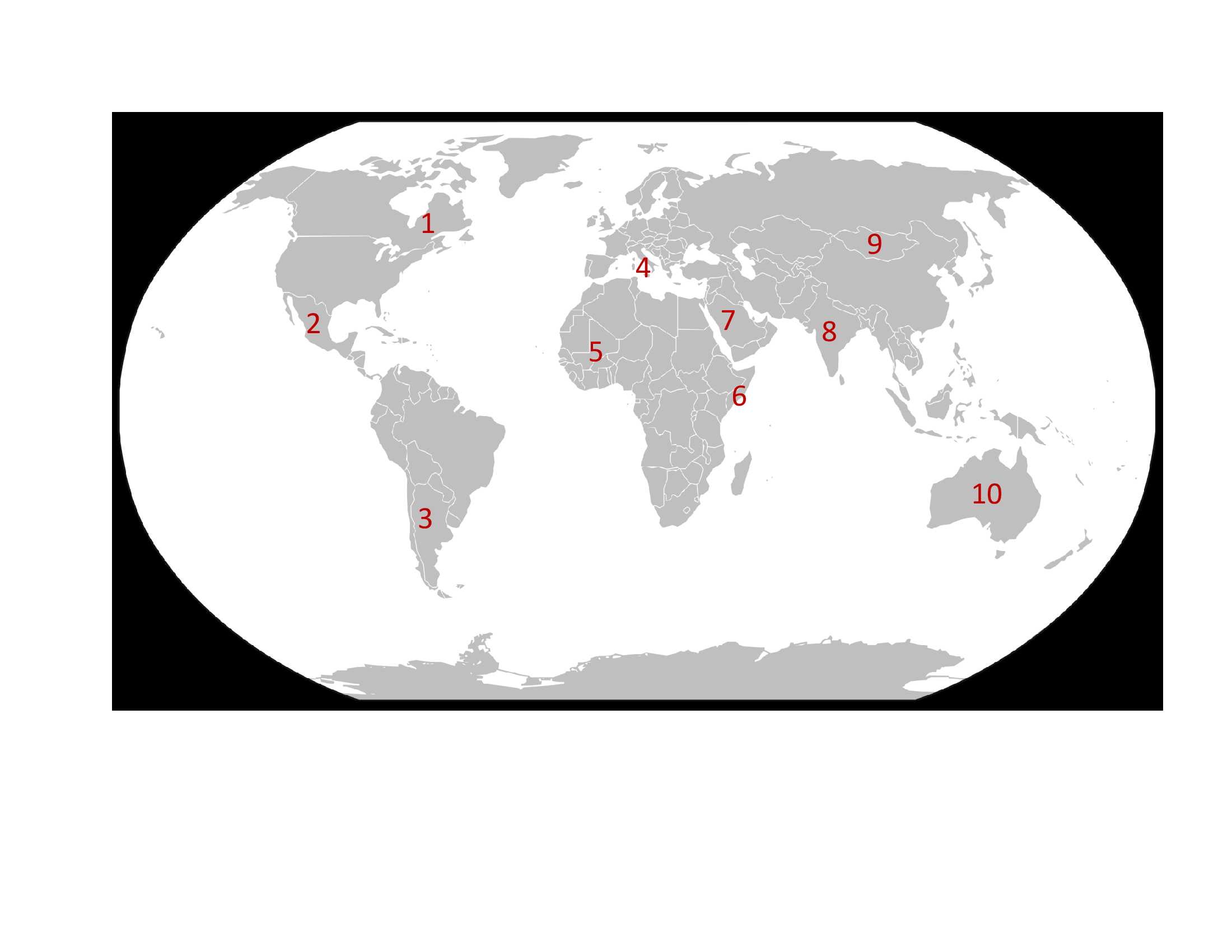
Other countries may list more than one national dish. Your task in this quiz is to place each national dish with the correct country that is labeled on the world map. Bon Appetite!
Click on image to zoom
Kabsa Doro wat with Injera Pizza Matambre Poutine Chaat Tiguadege Na Buuz Vegemite Tacos
* Drag / drop or click on the choices above to move them to the answer list.
View Image Attributions for This Quiz
1.   
2.   
3.   
4.   
5.   
6.   
7.   
8.   
9.   
10.   

Most Recent Scores
Today : Guest 24: 10/10
Today : ken kramer: 8/10
Today : sarryman: 5/10
Today : magijoh1: 10/10
Today : Isipingo: 8/10
Today : Peachie13: 8/10
Today : Nicobutch: 10/10
Today : xchasbox: 10/10
Today : bernie73: 5/10

Quiz Answer Key and Fun Facts
1. Poutine

Poutine is a Canadian dish made with French fries, fresh squeaky cheese curds, and brown gravy. Fresh squeaky cheese curds are small pieces of cheddar cheese that has not been aged. They squeak when when they are bitten, but only for a short time. Typically, the gravy, which is also called "sauce brune" or brown sauce, is homemade from either beef or chicken stock (or both!) and is poured over the fries and cheese when it is still hot. This is done to help soften the cheese curds around the edges while keeping the cheese mostly intact.

There are two different towns that claim to be the origin of the comfort food, however, it is known that poutine originated in the 1950s in the Centre-du-Québec region of Quebec, Canada. One story is that Fernand Lachance first made a dish with curds and fries at a customer's request. He responded that it would make a "maudite poutine", or damned mess. Later he added gravy to the dish. Jean-Paul Roy holds an official trademark from the Canadian Intellectual Property Office on the dish; he claimed to have first served it in 1964.

Sources also list donar, butter tarts, Nanaimo bars, and tourtière as national dishes of Canada.
2. Tacos

Tacos are small tortillas made of flour or corn, which are then garnished with a variety of fillings. Meat, chicken, vegetables, seafood, beans, and cheese are all fillings that are found on this popular Mexican street food. But don't forget the yummy condiments before folding the tortilla over the filling. These may include sour cream, lettuce, guacamole, or salsa. The taste is worth the sloppy mess that it may create!

There is quite a bit of discussion regarding the origin of tacos in Mexico. Were they eaten before the Spanish conquest? There is evidence that some people enjoyed them filled with small fish. One of the conquistadors, Bernal Díaz del Castillo, wrote that Cortez arranged a taco meal for his captains when they were stationed near Mexico City. The term taco, however, was first mentioned in a cookbook in 1836, and there are some who believe the dish was invented by silver miners in the 1700s. Part of the problem in assigning an exact date as to when tacos first appeared is that in different areas, they had different names; for example, in the Yucatan area they were called "codzito".

Mole poblano and chiles en nogada are also said to be national dishes of Mexico.
3. Matambre

Matambre is a portmanteau word that means hunger killer; it is a thin cut of beef that can be cooked very fast over hot coals. In the 1800s, as cattle ranching became important in Argentina, it was a staple food for both gauchos and workers in meat processing plants. The meat came from a thin muscle found between the skin and the ribs, and was considered to be too inferior to sell to customers. It was fed to workers for quick meals during the day and also used as part of their wages.

Today it is still eaten that way, but it is also used to make matambre meat rolls called matambre arrollado. The meat is laid out, and vegetables, eggs, and seasonings are placed on top. Then the steak and ingredients are rolled together and either boiled in milk or water or baked in the oven. There is a version called matambre a la pizza, which replaces the normally used pizza dough with the thin meat that is topped with tomato sauce and cheese. Matambre is also used as the stuffing for another national dish of Argentina - empanadas.

Other national dishes of Argentina are asado, empanada, and locro. It's a bit confusing to see asado listed as a national dish, as the term generally refers to how the meat is prepared - as in grilling - or the social event of going to a barbecue!
4. Pizza

Authentic Italian pizza involves a bit of prep time. First the dough is made with just four ingredients - flour, yeast, salt, and water. After the ingredients are mixed, the dough is placed in a bowl and allowed to rise at room temperature; then it is divided into smaller sections and placed in a refrigeration to further ferment for 24-72 hours. After the dough is pressed into the desired shape, toppings, including tomato sauce made with tomatoes that grow on Mt. Vesuvius, and either fresh Mozzarella di Bufala (buffalo milk) or Fior di Latte (cow's milk) cheese is placed on the top along with basil leaves.

It is difficult to trace the exact origin of pizza, as seasoned flatbreads were consumed going all the way back to ancient Persia and Greece. When tomatoes were introduced from the New World, street vendors paired them with flatbread; there was that nagging rumor that tomatoes were poisonous, which made them cheap to buy and sell. This type of flatbread was made to feed the working-class people.

In 1889 King Umberto I and Queen Margherita of Savoy visited Naples, and asked to be served some of the local foods. The story is that Raffaele Esposito created a flatbread with tomato sauce, mozzarella cheese, and basil to honor the flag of the recently united country of Italy. The queen loved it so much that it was called Pizza Margherita in her honor.

Pasta, risotto, mozzarella, Parmigiano Reggiano, and Italian wine are all listed as national foods of Italy.
5. Tiguadege Na

Tiguadege Na is also called West African peanut stew. It is believed to have originated in Mali among the Mandinka and Bambara peoples there. In the Mandinka language the name translates as peanut paste sauce. Making the dish is time-consuming, but not difficult, and it is considered to be a household staple throughout West Africa.

Tiguadege Na can be made with different types of meat, including chicken, lamb, or beef. The meat is simmered with tomatoes and other local vegetables, such as carrots, sweet potatoes, or okra until tender. Then peanut butter is added to make the thick sauce. It is typically eaten over rice.
6. Doro wat with Injera

Doro wat is a chicken-based stew that is a national dish of Ethiopia, however it is not usually made as an everyday meal; it is a meal served during holidays or for meals with special guests. Originating during the Aksumite Empire c. 100-940 AD, the food was made at a time when there was a great amount of foreign trade in the region, and the spice used in doro wat, called berbere, reflects that. It is made with a blend of chili peppers, garlic, ginger, fenugreek, coriander, cinnamon, and cardamom. Many people still crush the spices together by hand using a mortar and pestle. There is no set recipe for the blended spices as each household has its favored blend.

Of course, doro wat must be served with injera bread, which was first made at least 1,500 years ago and made with teff, a grain that is grown in Ethiopia and Eritrea. Injera bread is considered to be one of the oldest continually made dishes in the world today. It is normally used to dip into a communal dish of stew, such as doro wat.

So, why isn't doro wat eaten daily? It takes about ten hours to prepare it the right way. The dish begins with onions, and the spices, clarified butter, and chicken are added when it's time. The dish also contains whole hard-boiled eggs - one for each guest if it is made correctly. During religious holidays like Easter, 12 eggs are added to represent the twelve disciples.

Sources only list doro wat with injera bread as the national dish of Ethiopia.
7. Kabsa

Kabsa is a dish that originated on the Arabian Peninsula, most likely in Saudi Arabia. Some sources say that it was first made by Bedouin nomads. Others claim it originated in what is Yemen today as a rice dish that was cooked with meat in a pit. Still others believe that the inspiration for the dish came from the Spanish dish paella, which was perhaps introduced into Saudi Arabia through trade networks. In 2021 the Ministry of Culture of Saudi Arabia decided to promote the dish as part of its national heritage.

The name of the dish in Arabic means to squeeze or press. This is likely because all of the ingredients are put into one pot. Although each region of the country has its own variation of kabsa, the dish begins with meat, such as camel, goat, shrimp, chicken, or lamb, and spices that can include black pepper, cinnamon, saffron, or cloves. Sometimes nuts like peanuts or almonds are added to enhance the flavor, along with onions or raisins.

Saleeg, jareesh, and maqshus are also listed as national dishes of Saudi Arabia.
8. Chaat

There are a variety of forms of chaat that can be found in India today with a host of different ingredients. One type, called dahi vada, is believed to be mentioned in literature as early as 500 BC. Other types of the food began to appear in the late 1600s during the reign of Shah Jahan of Taj Mahal fame. The story is that when Shah Jahan moved his royal court to Delhi, it was found that the water from the Yamuna River was not easily digested. Royal doctors suggested that the people eat spicier foods to aid in digestion, and chaat was used as an answer to the problem.

Chaat is essentially fried dough that is stuffed with spices, vegetables, or meat. The dahi vada that was previously mentioned is made with lentils that are soaked and then whipped into a batter that is fried and served with a topping of chuntney, yoghurt, cumin powder, red chili powder, and black salt. Different varieties of chaat are sold by vendors in the street all over India.

Several other dishes are said to be national dishes of India. These include khichdi, butter chicken, biryani, and dosa.
9. Buuz

Although the exact date of adoption is unknown, it is known that by the 1300s when the Mongol armies were conquering territory, they were also learning about the traditions of the areas their conquered. While its name and origin come from China, Mongolians adopted buuz as a popular food because it suited their nomadic lifestyle. It doesn't take many ingredients - just flour, water, and meat - and cooks quickly after being frozen in the sometimes harsh environment. It was an easy food to make ahead of time for people who were constantly on the move, and it was nourishing as well.

The making of buuz today is viewed as a community activity. Thousands of the steamed dumplings are prepared weeks in advance prior to the celebration of the Tsagaan Sar, or Mongolian Lunar New Year, where sharing them represents prosperity and hospitality. Typically the dumplings are filled with mutton or beef that has been rolled into small balls and flavored with fennel or caraway seeds. There are several variations of the dish that also include onions, garlic, or rice.

Buuz is the only food that was listed as a national dish of Mongolia.
10. Vegemite

Vegemite was invented in Australia in the aftermath of World War I, which had cut off British shipments of Marmite, a spread that is made with yeast extracts from the brewing process. Chemist Cyril Callister was asked by Fred Walker, an Australian businessman, to study the yeast cells. After breaking down the cells and extracting flavors, Callister created a dark paste and added celery, salt, and onion extracts to it. Vegemite was first sold in stores by the Frank Walker Company in 1923.

It is recommended to only eat a small amount of Vegemite at a time because it does have a very strong flavor. Typically eaten on toast, as a sandwich, or even as a filling for pastries, it is high in B vitamins; by 1939 the British Medical Association endorsed it as a healthy food in spite of its high salt content. Today it has been estimated that Vegemite is found in 90% of the pantries in Australian homes.

Other national foods of Australia include roast lamb, the sausage sizzle, and meat pie.
Source: Author ponycargirl

This quiz was reviewed by FunTrivia editor Bruyere before going online.
Any errors found in FunTrivia content are routinely corrected through our feedback system.
7/30/2026, Copyright 2026 FunTrivia, Inc. - Report an Error / Contact Us