FREE! Click here to Join FunTrivia. Thousands of games, quizzes, and lots more!
Art For Art's Sake Trivia Quiz
Match the Art Movements
Here we find five renowned art movements that span different centuries. Match the famous paintings to one of these five movements: Renaissance, Baroque, Impressionism, Realism, and Cubism. (Some images have been cropped for detail.)
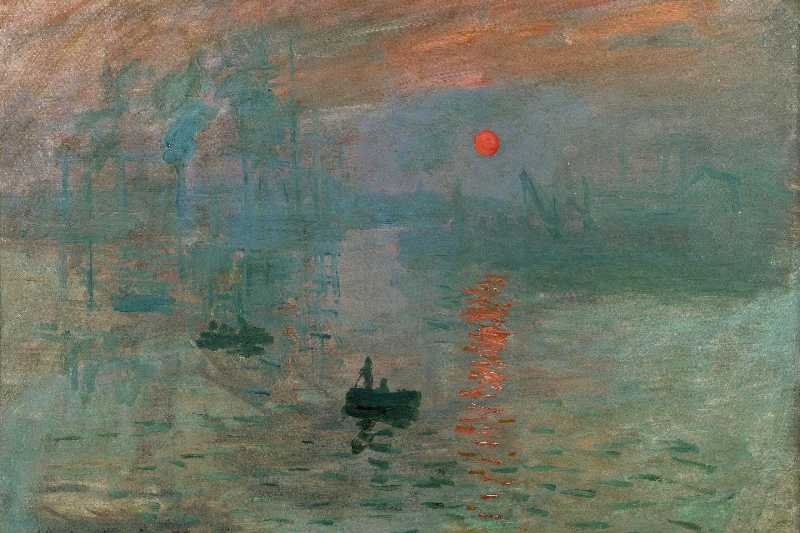
Claude Monet helped shape Impressionism by focusing less on detail and more on how light and color look in a specific moment. In "Impression, Sunrise" (1872), he paints a harbor at dawn using loose brushstrokes and soft outlines. The sun appears as a hazy orange circle, and its reflection breaks across the water in uneven streaks.
Instead of carefully defining every object, Monet shows how the scene feels at that moment, which became a defining feature of Impressionism.
2. Renaissance
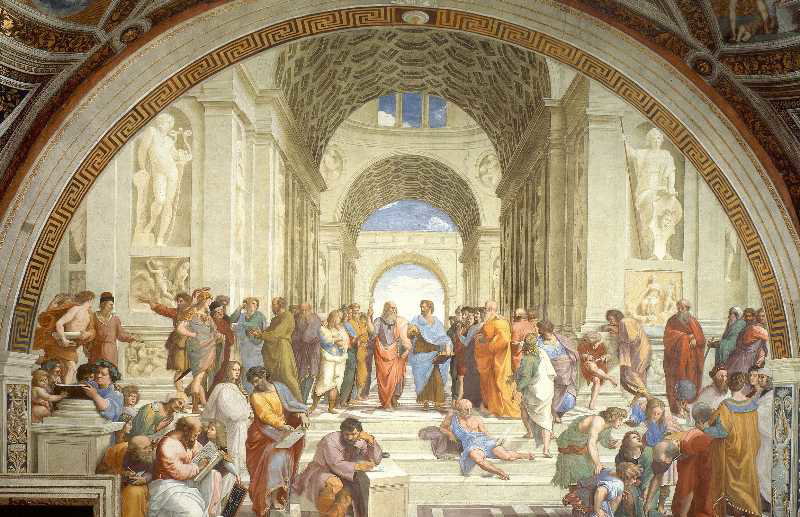
Raphael Sanzio, working during the High Renaissance, built his reputation on balance and clarity. His fresco "The School of Athens" (1509-1511), located in the Vatican Palace, gathers philosophers such as Plato and Aristotle inside a grand architectural space. The scene is framed by arches and vaults, and lines of perspective pull the eye toward the center. The composition reflects Renaissance priorities: order, proportion, and a carefully constructed sense of depth.
Fun fact: Raphael includes a self-portrait, placing himself at the far right edge of the scene, looking out toward the viewer.
3. Cubism
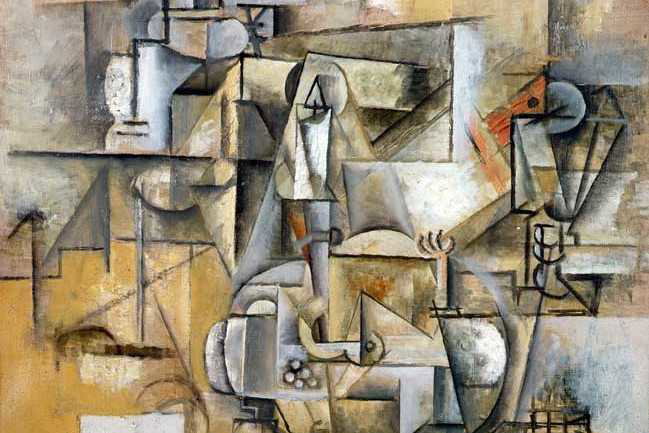
Pablo Picasso changes how objects are shown in "Pigeon with Peas" (1911). Instead of presenting the subject from one angle, he breaks it into pieces and rearranges it using sharp, overlapping shapes. The pigeon and plate are still there, but they appear fragmented, as if seen from multiple viewpoints at once. Traditional perspective is set aside, and muted colors keep the focus on structure.
This approach is central to Cubism, which questions how we usually see and represent objects.
4. Baroque
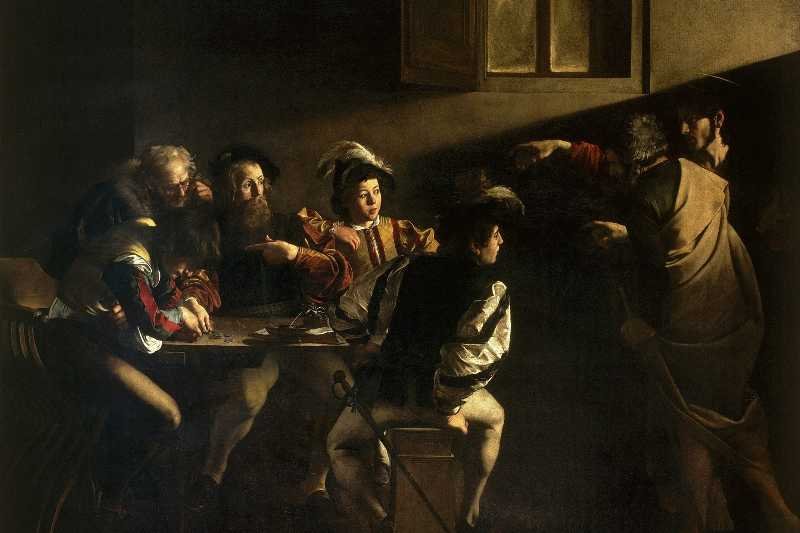
Caravaggio's "The Calling of Saint Matthew" (1599-1600) shows a religious scene in a direct, physical way, which fits the goals of Baroque art. A strong beam of light cuts across the room and lands on Matthew at the exact moment he realizes he is being called.
The sharp contrast between light and shadow, known as chiaroscuro, directs the viewer's attention. The figures wear everyday clothing instead of idealized robes, which places the scene in a familiar setting for those alive during his time. Baroque art aims to draw the viewer into the moment, and Caravaggio does that through lighting and realism.
5. Renaissance
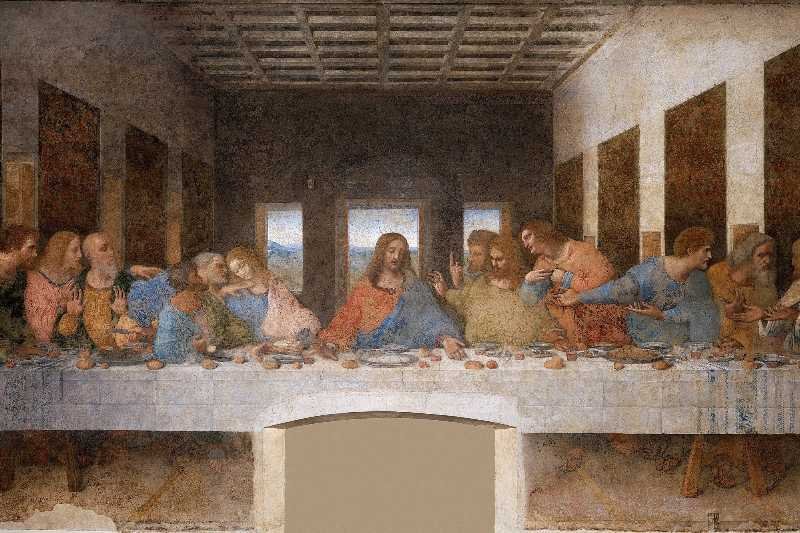
In "The Last Supper" (c. 1495-1498), Leonardo da Vinci organizes a complex scene with careful structure. Lines of perspective converge behind Christ's head, creating depth and fixing attention on him as the central figure. The apostles react in different ways, with distinct gestures and expressions that show their individual responses. Da Vinci combines close observation of human behavior with a clear composition, reflecting the Renaissance interest in both realism and design.
6. Realism
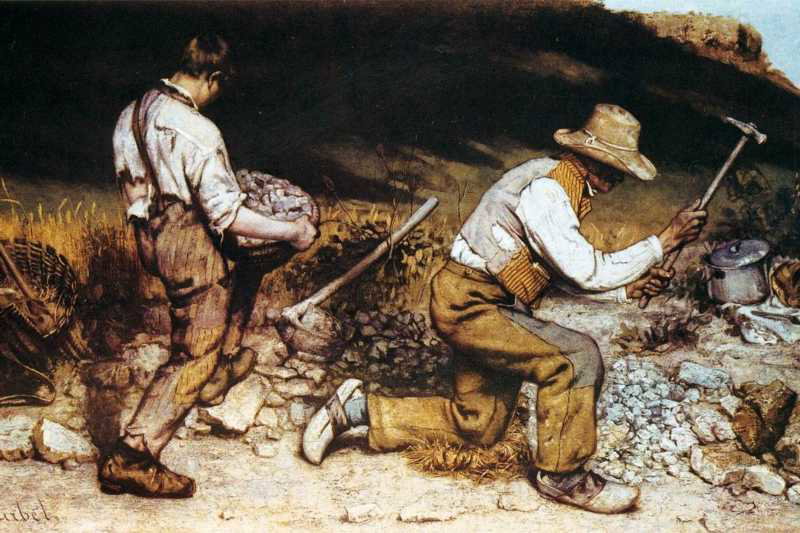
Gustave Courbet's "The Stone Breakers" (1849) focuses on ordinary labor rather than idealized subjects. Two workers break stones by the side of the road, their clothing worn and their posture heavy. The scene does not soften or romanticize their work. Muted colors and thick brushwork emphasize the physical effort involved. Courbet's choice to show this kind of subject helped define Realism, which centers on everyday life and rejects idealization.
7. Impressionism
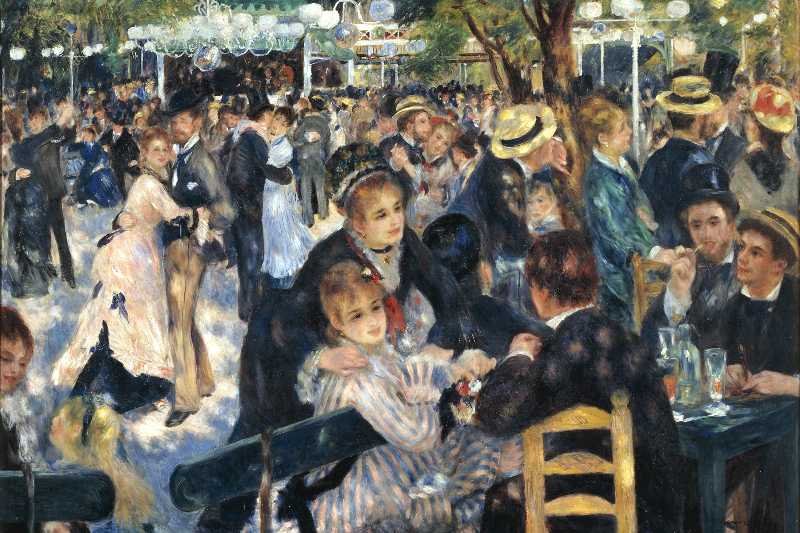
In "Bal du moulin de la Galette" (1876), Pierre-Auguste Renoir paints a busy outdoor dance hall in Paris. Sunlight filters through the trees, breaking into patches of light and shadow across the crowd. The brushwork is loose, which gives the scene a sense of movement. People are talking, dancing, and leaning toward one another. Renoir focuses on the experience of the moment rather than on precise detail.
8. Cubism
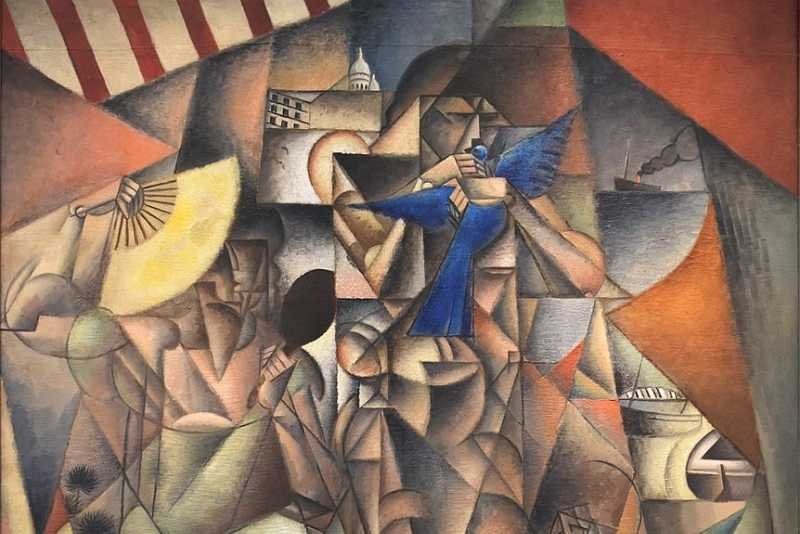
Jean Metzinger's "The Blue Bird" (1912-13) shows how Cubism can break down and rebuild a subject. The bird is divided into angular shapes that overlap and shift, which suggests motion without relying on realistic detail. Each part of the body appears from a slightly different angle.
The muted color palette keeps attention on the structure. Metzinger uses these techniques to show more than one viewpoint at the same time.
9. Impressionism
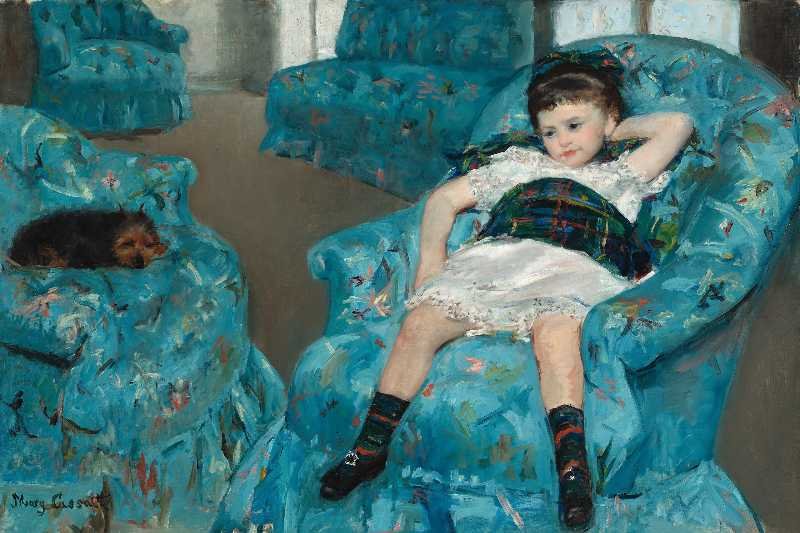
Mary Cassatt's "Little Girl in a Blue Armchair" (1878) focuses on a quiet, everyday scene. The child sits in a slouched position, not posed or formal, and light falls unevenly across the room. Cassatt uses loose brushwork applied to a domestic setting rather than a public scene.
10. Baroque
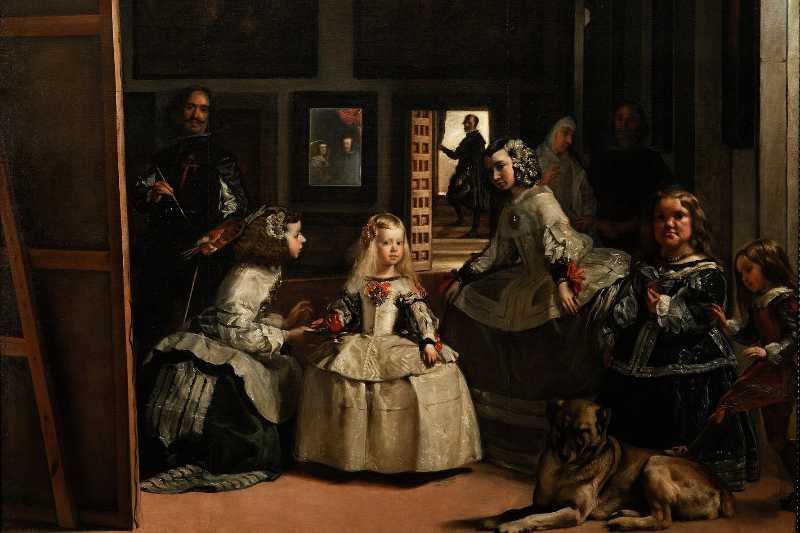
"Las Meninas" (1656) by Diego Velazquez presents a scene from the Spanish royal court with a layered structure. The young princess stands at the center, surrounded by attendants, while Velazquez includes himself painting in the background. A mirror reflects the king and queen, placing them just outside the visible space. The light highlights certain figures and leaves others in shadow.
The composition draws attention to who is looking at whom, with the mirror and the artist's position complicating the viewer's role, an effect that goes beyond typical Baroque concerns with depth and realism.
11. Realism
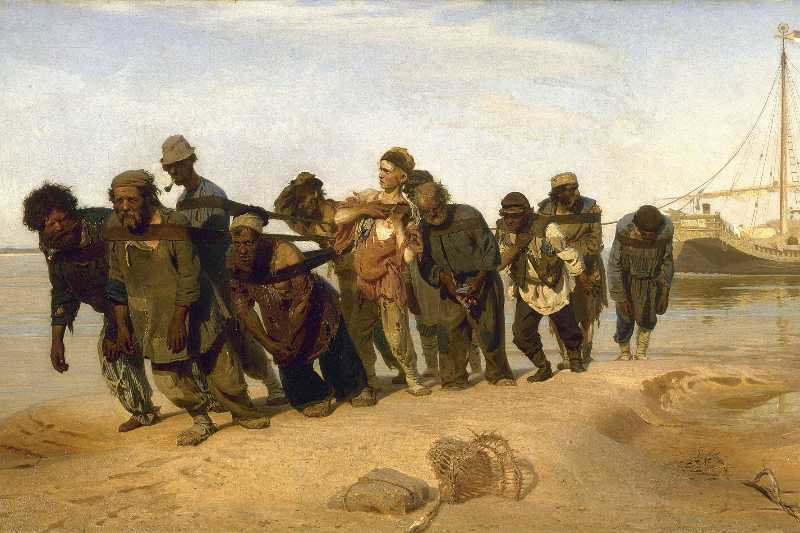
In "Barge Haulers on the Volga" (1870-1873), Ilya Repin shows a group of men pulling a heavy boat along a riverbank. Their bodies lean forward under the strain, and their expressions show fatigue and effort. Each figure is distinct, which adds to the sense of realism.
The long, horizontal composition emphasizes the slow, demanding nature of the work. Repin is presenting hard labor directly, so much so that the viewer empathizes with the subjects.
12. Baroque
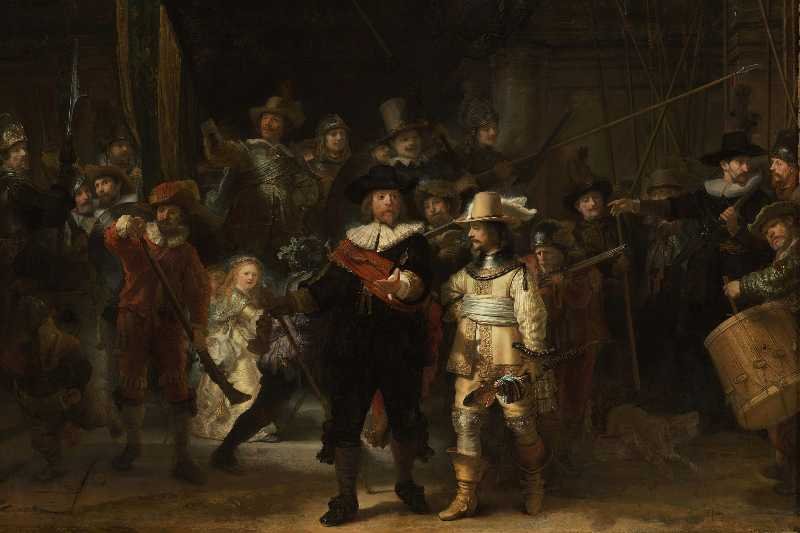
Rembrandt's "The Night Watch" (1642) turns a group portrait into an active scene. The figures are arranged in a way that suggests movement, as if they have just been called into action. Light falls unevenly, drawing attention to certain individuals while leaving others in shadow. This use of light creates depth and directs the viewer's focus.
All of this is to say that the painting reflects the Baroque interest in drama, motion, and realism by turning a traditional group portrait into a scene that feels active, with figures caught mid-action, uneven lighting that directs attention, and individual faces and gestures that avoid idealization.
13. Cubism
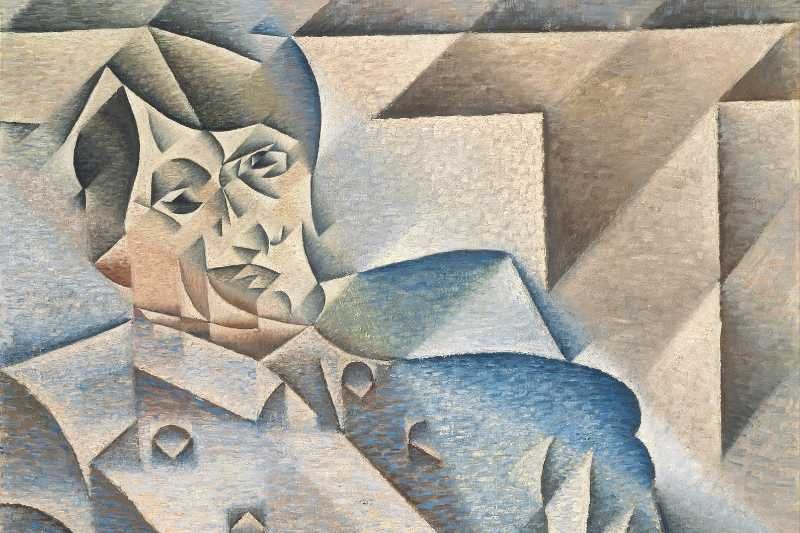
Juan Gris's "Portrait of Pablo Picasso" (1912) shows a more controlled version of Cubism. Picasso, who never actually sat for Gris, is broken into geometric shapes that fit together in a structured way. The lines are sharp, and the composition feels deliberate rather than chaotic. By rebuilding the figure through these shapes, Gris focuses on form and arrangement instead of direct likeness.
14. Renaissance
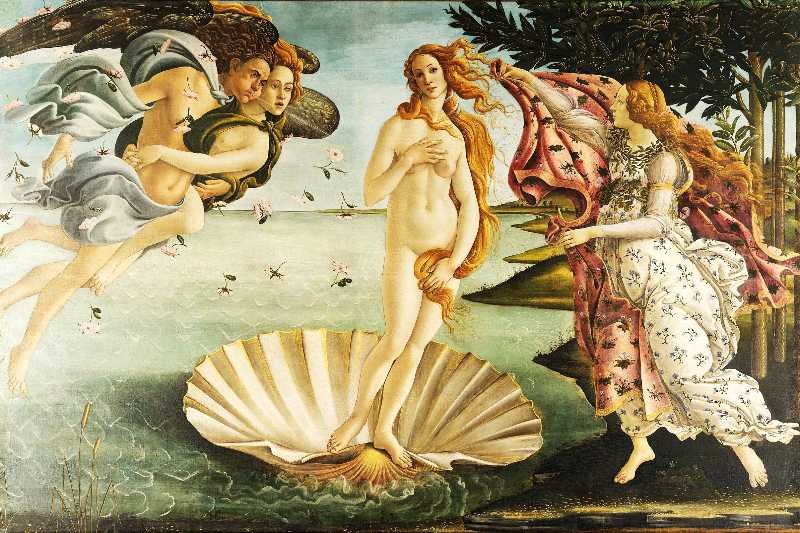
In "The Birth of Venus" (c. 1484-1486), Sandro Botticelli depicts the goddess Venus emerging from the sea on a shell, with smooth, idealized figures and flowing lines. Because Renaissance artists looked back to classical antiquity as a model for form and proportion, the painting draws on mythological subject matter and presents it through a carefully balanced composition.
15. Realism
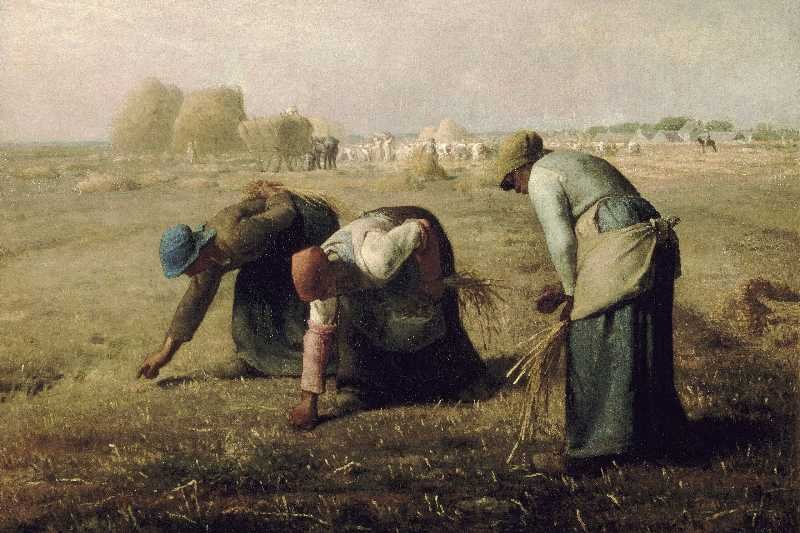
Jean-Francois Millet's "The Gleaners" (1857) shows three women collecting leftover grain after a harvest. They bend low to the ground, repeating the same motion as they work. In the background, a larger harvest suggests greater wealth that is out of their reach. Millet uses earthy colors and careful detail to show the reality of rural labor.
The painting highlights everyday work and social inequality, key concerns of Realism, by focusing on labor that is repetitive and physically demanding while placing it alongside a more prosperous harvest in the background.
This quiz was reviewed by FunTrivia editor looney_tunes before going online.
Any errors found in FunTrivia content are routinely corrected through our feedback system.
No need to be too short! This Quiz Commission from July 2024 contained titles with short words, none more than four letters long. The quizzes are a little less focused on brevity, fortunately!