FREE! Click here to Join FunTrivia. Thousands of games, quizzes, and lots more!
Mods, Rockers, and Chart-Toppers, #2 Quiz
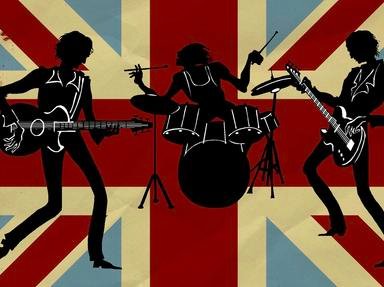
The 1960s British Invasion
Here are twenty British songs from the 1960s. Sort them into four categories by the band that released them: The Beatles, The Kinks, The Rollings Stones, or The Who. Enjoy!
A classification quiz
by JJHorner.
Estimated time: 3 mins.
'I'm a Boy''Magical Mystery Tour''Jumpin' Jack Flash''Village Green Preservation Society''The Last Time''Magic Bus''Set Me Free''No Reply''There's a Place''All You Need Is Love''Death of a Clown''Victoria''Dedicated Follower of Fashion''Substitute''The Acid Queen''She's a Rainbow''Tommy's Holiday Camp''Sympathy for the Devil''Gimme Shelter''Hold Me Tight'
* Drag / drop or click on the choices above to move them to the correct categories.
The Beatles released 'All You Need Is Love' in 1967 as part of the first-ever live global TV broadcast called 'Our World'. John Lennon wrote it, and while the lyrics are not exactly Shakespeare- "there's nothing you can do that can't be done" - one supposes that's kind of the whole point. "It's easy! All you need is love." The recording includes snippets of "La Marseillaise" and a wink and a nod to "She Loves You", so Paul McCartney didn't feel too left out.
2. 'Magical Mystery Tour'
Answer: The Beatles
'Magical Mystery Tour' is The Beatles embracing their weirdness. It was released in 1967 as both a soundtrack and a sort of maybe movie that left a lot of people wondering if they had taken drugs or if The Beatles had. (It was The Beatles.)
Paul McCartney championed the project, imagining a psychedelic bus trip where anything could happen. While the song captures the vibe perfectly, it's unfortunate that on the psychedelic bus trip where anything could happen, not much actually did. While critically the film was the equivalent of stepping on a garden rake and getting whapped in the forehead, the music was quite good, if a bit uneven. For every 'Blue Jay Way' there was an 'I Am the Walrus', for every 'Flying', there was a 'The Fool on the Hill'.
3. 'No Reply'
Answer: The Beatles
'No Reply' is The Beatles doing some early era romantic drama. It was released in the UK in 1964 on 'Beatles for Sale' and written mostly by John Lennon. It's basically a musical tale as old as time. Boy meets girl. Boy loves girl. Boy shows up. Boy knocks on door. Boy calls. Boy gets ghosted. Boy writes a catchy pop song. Lennon later said he was proud of it because it was one of his first attempts at a more narrative, almost short story style of songwriting.
Originally they planned to give it to Tommy Quickly, but his version never materialized.
4. 'There's a Place'
Answer: The Beatles
'There's a Place' was another creation led by John Lennon and released in 1963 on the UK album 'Please Please Me'. It's a surprisingly introspective song for this stage of the Beatles' career. Rather than the usual boy meets girl formula, the narrator is retreating into his own mental hiding place. Lennon later admitted he was inspired by Motown's emotional depth, particularly Smokey Robinson.
5. 'Hold Me Tight'
Answer: The Beatles
'Hold Me Tight' is all early Beatles bouncy pop. Released in the UK in 1963 on "With the Beatles", it was written primary by Paul McCartney, who later joked that it was never one of his favorites. According to him it was more of a "let's give this another try" kind of song, since they'd actually attempted (and abandoned) an earlier version during the "Please Please Me" sessions.
6. 'Set Me Free'
Answer: The Kinks
'Set Me Free' is The Kinks around their mid-1960s peak. It was released in 1965 and written by Ray Davies during a period when he was working on more emotional, introspective songs. The track has that classic Kinks feel of jangly guitar and low-key melancholy.
It became a modest hit in the U.S., helping them stay afloat during a time when they were reportedly banned from touring America due to a union dispute.
7. 'Death of a Clown'
Answer: The Kinks
Dave Davies stepped up on 'Death of a Clown', a mildly depressing Dylanesque song, released in 1967. It sounds a little like a performer who's still in costume but cranky and tired of everyone's crap. Often said to be written about the impending end of his bachelorhood, 'Death of a Clown' was originally intended as a Dave Davies solo single, and when it became a hit, the label wanted a whole Dave Davies solo career NOW NOW NOW... which Dave was not at all prepared for.
It ended up on 'Something Else by The Kinks'.
8. 'Dedicated Follower of Fashion'
Answer: The Kinks
'Dedicated Follower of Fashion' is such a quintessential Kinks song that it almost feels like self-parody. It features Ray Davies at his delightfully satirical best. In the mid-1960s, his target was largely the English class system, London culture, and as always, himself.
This particular song absolutely skewers the hyper trendy Carnaby Street scene and those impeccably dressed, painfully hip types who changed outfits more often than I changed my mind about the phrasing of this paragraph (i.e. a lot). Davies supposedly wrote it after watching just one too many fashion obsessed socialites strut around like runway royalty. I'm told you can hear his eyes rolling to the back of his head on the remastered version.
9. 'Village Green Preservation Society'
Answer: The Kinks
While Ray Davies was always there to target sacred institutions with biting satire, 'Village Green Preservation Society' shows the softer side of him that longs for the simplicity of childhood. This is The Kinks at their most nostalgic and unapologetically British.
It was released in 1968 as the opening track of 'The Kinks Are the Village Green Preservation Society'. The whole album is a love letter to the things that were being taken away in the name of progress. The song is a little dorky, a little overly sentimental, but quite catchy.
The album, which is now considered by many to be their best, was a complete and total flop at the time.
10. 'Victoria'
Answer: The Kinks
Satire with a smile, 'Victoria' was released by The Kinks in 1969 as the opening track of 'Arthur (Or the Decline and Fall of the British Empire)', which might be one of the most British albums ever. Ray Davies wrote it as a tongue in cheek celebration of the British Empire.
The joke is that it's a little too enthusiastic, poking fun at nostalgia for a world that never really existed. Despite being a commentary on imperialism, it became a hit, especially in the U.S., where listeners mostly just enjoyed the energy, without worrying too much about the context.
11. 'Substitute'
Answer: The Who
'Substitute' is by The Who and plays on identity, fakery, and the creepy feeling that you're just a stand in for someone else. A simple song with classic Townshend themes, it's wrapped in a cheerful and jangly package with a dark lyrical edge. The U.S. single had to swap out the line "I look all white but my dad was black" for a tamer lyric: "I try walking forward but my feet walk back".
12. 'I'm a Boy'
Answer: The Who
Another song by The Who, 'I'm a Boy' is just kinda weird. It was released in 1966 and written by Pete Townshend as an early example of his rock opera aspirations. Yup, 'I'm a Boy' was originally meant for a larger concept called 'Quads', set in a future where parents could choose their children's sex, a pretty cerebral topic for a band whose drummer was popping horse tranquilizers.
The song survived, but the opera (and the drummer) did not. It became a hit in the UK, climbing all the way to number two on the charts.
The story is simple: a boy forced to wear dresses while insisting, loudly at times, that he's, well, a boy.
13. 'Magic Bus'
Answer: The Who
'Magic Bus' is another song by who else but The Who, released in 1968 although Pete Townshend had actually written it years earlier during the 'My Generation' era. It didn't get recorded until later, but once it arrived, it became one of their signature tracks. What is it about? Well, I'll tell you. Roger Daltrey digs the bus he's riding and wants to buy it. Pete Townshend keeps saying no.
There's some haggling, and Roger finally gets his bus. Definitely a weird tale to set to music (he says while listening to Zappa's 'St. Alfonzo's Pancake Breakfast').
In ANY event, it somehow became a big crowd favorite in concert despite never exceeding the mid-20s on the charts in the US and UK.
14. 'The Acid Queen'
Answer: The Who
'The Acid Queen' is by The Who and appears on their um... adventurous 1969 rock-opera "Tommy". Pete Townshend wrote it and took the lead vocal. The song introduces us to the Acid Queen, a chaotic, drug fueled, sexually-charged woman that Tommy's parents turn to in a desperate attempt to cure him of his ills, because that's what concerned parents do. Tina Turner played the very disturbing Acid Queen in the 1975 film version of 'Tommy' and recorded her own fiercer version, which became a standout solo track for her.
15. 'Tommy's Holiday Camp'
Answer: The Who
Sure. 'Tommy's Holiday Camp' comes straight off The Who's 1969 rock opera 'Tommy'. It's probably the strangest little detour in 'Tommy', and there are quite a few to choose from. It was performed by Keith Moon, and we get to hear Uncle Ernie welcome everyone to Tommy's new spiritual theme park empire thing... or whatever.
It's short, fun, and yet deeply unsettling considering what we know about Uncle Ernie.
16. 'The Last Time'
Answer: The Rolling Stones
'The Last Time' was released by the Stones in early 1965, as they and a lot of other bands were transitioning away from straight rhythm and blues and into unfamiliar territory. It was also their first A side written entirely by Jagger and Richards, even if the central riff was loosely inspired by a Staple Singers gospel tune.
It was Jagger and Richards trying to figure out what a Stones song should sound like. The track shot up the charts in a prelude to what would follow.
17. 'Gimme Shelter'
Answer: The Rolling Stones
What an ominous little song by the Rolling Stones. 'Gimme Shelter' opens the 'Let It Bleed' album released in 1969. Keith Richards allegedly started writing it during a sudden London downpour. The track is a dark swirl of war and fear, if not outright apocalypse, made all the more unsettling by Merry Clayton's awesome guest vocal.
She was summoned to the studio around midnight, where she gave one of rock's most iconic performances while several months pregnant and still dressed in pajamas. Not bad. Critics adored it, and the song is on many a best-of list.
18. 'She's a Rainbow'
Answer: The Rolling Stones
'She's a Rainbow' by the Rolling Stones floated and flitted and fluttered onto the scene in late 1967, an odd and strangely pretty artifact of their psychedelic detour showcased on the album 'Their Satanic Majesties Request'. It features cotton-candy piano from Nicky Hopkins, trippy, melty Mellotron from Brian Jones, and even a groovy string arrangement by none other than John Paul Jones, later of Led Zeppelin.
The album has a mixed reputation, but this track lives on, all sunshine and bright colors.
19. 'Sympathy for the Devil'
Answer: The Rolling Stones
Another interesting song, this time by the Rolling Stones. It's the opening track of 1968's 'Beggars Banquet' and opens with a samba beat that somehow manages to sound creepy. Not an easy feat. Mick Jagger wrote most of it and of course played the title character, as he takes credit for some infamous moments in history.
It was inspired in large part by the classic novel 'The Master and Margarita' by Mikhail Bulgakov, which somehow manages to be stranger than the song.
20. 'Jumpin' Jack Flash'
Answer: The Rolling Stones
After a brief psychedelic journey, the Stones returned to their grittier rock, releasing 'Jumpin' Jack Flash' in 1968. Keith Richards said that the riff came to him while he was half-asleep, listening to the stomping footsteps of his gardener. Gardener's name? You got it. Jack. Mick Jagger took the riff and ran with it, turning the song into a kind of supernatural strut about surviving... whatever it may be that comes your way.
And you survived this quiz. Congratulations! Hope you enjoyed it.
This quiz was reviewed by FunTrivia editor agony before going online.
Any errors found in FunTrivia content are routinely corrected through our feedback system.