FREE! Click here to Join FunTrivia. Thousands of games, quizzes, and lots more!
Quiz about The Wonders of Sid Meiers Civilization

The Wonders of Sid Meier's "Civilization" Quiz

The Original 1991 Game

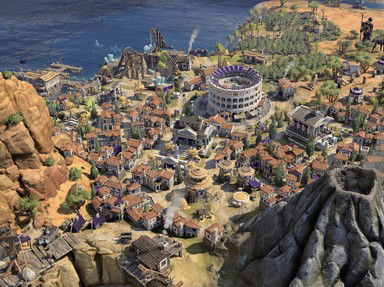
As different skills and technology were developed in the original "Civilization" (for PC), various Wonders could be established along the way to provide an advantage to your progress. Do you recall during which historical epochs they could be built?

A classification quiz by reedy. Estimated time: 3 mins.
  1. Home
  2. »
  3. Quizzes
  4. »
  5. Video Game Trivia
  6. »
  7. Video Games A-C
  8. »
  9. Civilization

Author
reedy
Time
3 mins
Type
Classify Quiz
Quiz #
424,159
Updated
May 11 26
# Qns
21
Difficulty
Very Easy
Avg Score
20 / 21
Plays
21
Last 3 plays: C30 (21/21), NickMc (21/21), gwendylyn14 (19/21).
Place each Wonder from the original 1991 "Civilization" computer game into its correct epoch - Antiquity, the Middle Ages, or the Industrial Age.
Antiquity
Middle Ages
Industrial Age

Apollo Program Lighthouse Hanging Gardens Hoover Dam Shakespeare's Theatre Isaac Newton's College SETI Program Darwin's Voyage Oracle Cure for Cancer Michelangelo's Chapel Great Wall Women's Suffrage Magellan's Expedition Colossus United Nations J.S. Bach's Cathedral Copernicus' Observatory Manhattan Project Pyramids Great Library

* Drag / drop or click on the choices above to move them to the correct categories.


Most Recent Scores
Today : C30: 21/21
Today : NickMc: 21/21
Today : gwendylyn14: 19/21
Today : Rizeeve: 19/21
Today : loooooza: 11/21
Today : Looking4IQ: 21/21
Today : Guest 174: 21/21
Today : bernie73: 21/21
Today : GBfan: 21/21

Quiz Answer Key and Fun Facts
1. Colossus

Answer: Antiquity

The Colossus required Bronze Working and cost 200 shields to construct in a city. Once built, it increased trade output by +1 per worked trade square in that city, making it a powerful early economic boost. Its effect remained active until it was made obsolete by the advent of Electricity, which represented the shift to modern energy and trade systems.
2. Great Library

Answer: Antiquity

Requiring the development of Literacy and costing 300 shields, the Great Library immediately granted your civilization any technology already known by at least two other civilizations, making it a powerful equalizer. However, it lost its function when the University advance was discovered, rendering it obsolete.
3. Great Wall

Answer: Antiquity

The Great Wall required Masonry and cost 300 shields. It ensured that other civilizations would always offer peace, greatly reducing early military pressure. This diplomatic advantage persisted until Gunpowder was discovered, at which point the Wonder became obsolete.
4. Hanging Gardens

Answer: Antiquity

Built after the advent of Pottery at a cost of 300 shields, the Hanging Gardens provided +1 happy citizen in every city, helping stabilize early empire growth. This benefit lasted until the discovery of Invention, which made it obsolete.
5. Lighthouse

Answer: Antiquity

The Lighthouse required Map Making and cost 200 shields, and had to be built in a coastal city. It increased naval movement by +1 movement point, which greatly enhanced exploration and trade. It became obsolete with Magnetism, when navigation advances superseded it.
6. Oracle

Answer: Antiquity

Requiring Mysticism and 300 shields, the Oracle doubled the effect of Temples, greatly improving happiness management for your population. This advantage ended when Religion was discovered, at which point the Wonder became obsolete.
7. Pyramids

Answer: Antiquity

The Pyramids required Masonry and cost 300 shields. They allowed instant government changes without the intervening period of Anarchy and unlocked all government types, providing immense political flexibility. Their effect lasted until Communism was discovered, making them obsolete.
8. J.S. Bach's Cathedral

Answer: Middle Ages

Requiring the development of Religion and costing 400 shields, J.S. Bach's Cathedral reduced unhappy citizens by two per city on the continent, making it extremely powerful for large empires. Its benefit never became obsolete, retaining its effect permanently.
9. Copernicus' Observatory

Answer: Middle Ages

Requiring the development of Astronomy and costing 300 shields, Copernicus' Observatory doubled knowledge (science) production in the city where it was built. It remained effective until the discovery of the Automobile, at which point it became obsolete.
10. Darwin's Voyage

Answer: Middle Ages

Darwin's Voyage required Railroad and cost 300 shields. Upon completion, it granted two immediate technological advances, giving a strong mid-game boost. It never became obsolete, as its benefit was tangible and instantaneous.
11. Magellan's Expedition

Answer: Middle Ages

With a requirement of Navigation and a cost of 400 shields, Magellan's Expedition increased all naval units' movement by +1 movement point. Unlike the Lighthouse, it never became obsolete, making it valuable throughout the game.
12. Michelangelo's Chapel

Answer: Middle Ages

Also requiring the development of Religion and costing 300 shields, Michelangelo's Chapel increased the effectiveness of Cathedrals, which improved happiness across your empire. Its effect continued until Communism was discovered, after which it became obsolete.
13. Isaac Newton's College

Answer: Middle Ages

Isaac Newton's College needed the advancement of the Theory of Gravity and cost 400 shields, and it had to be built in a city with scientific infrastructure. It enhanced the benefits of Libraries and Universities in that city, significantly boosting research. It became obsolete with the development of Nuclear Fission.
14. Shakespeare's Theatre

Answer: Middle Ages

With Medicine as a prerequisite and a cost of 400 shields, Shakespeare's Theatre immediately made all unhappy citizens in its city content, allowing it to grow very large. It became obsolete with the development of Electronics.
15. Apollo Program

Answer: Industrial Age

Requiring the development of Space Flight and costing 600 shields, the Apollo Program enabled the construction of Spaceships and revealed the entire world map. It never became obsolete, as it unlocked the endgame victory condition.
16. Cure for Cancer

Answer: Industrial Age

The Cure for Cancer required the development of Genetic Engineering and cost 600 shields. It provided +1 happy citizen in every city, improving empire-wide morale. It remained effective permanently without becoming obsolete.
17. Hoover Dam

Answer: Industrial Age

Requiring the technological advancement of Electronics and costing 600 shields, Hoover Dam provided hydroelectric power to all cities on the same continent, boosting production. It never became obsolete.
18. Manhattan Project

Answer: Industrial Age

With a requirement of Nuclear Fission and a cost of 600 shields, building the Manhattan Project enabled ALL civilizations to build nuclear weapons, fundamentally altering warfare. It remained active permanently and did not become obsolete.
19. SETI Program

Answer: Industrial Age

Requiring Computers and costing 600 shields, the SETI Program increased knowledge production by 50% in all cities, greatly accelerating late-game research. This advantage remained until the completion of the game.
20. United Nations

Answer: Industrial Age

The United Nations required the advent of Communism and cost 600 shields. It ensured that other civilizations always offered peace, reinforcing diplomatic dominance. Its effect did not become obsolete.
21. Women's Suffrage

Answer: Industrial Age

Requiring Industrialization and costing 600 shields, the Women's Suffrage Wonder reduced unhappiness caused by military units stationed away from their home city (if under Republic or Democracy governments). It remained effective permanently and did not become obsolete.
Source: Author reedy

This quiz was reviewed by FunTrivia editor kyleisalive before going online.
Any errors found in FunTrivia content are routinely corrected through our feedback system.
5/11/2026, Copyright 2026 FunTrivia, Inc. - Report an Error / Contact Us