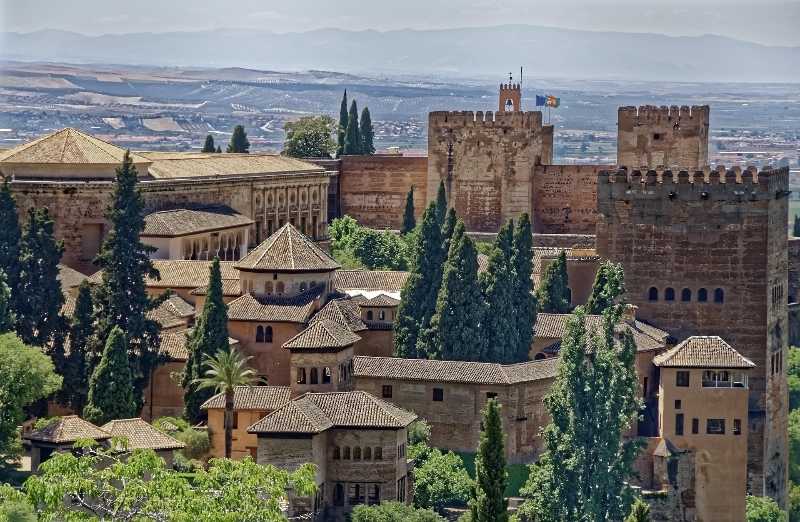
Located in southern Spain, Granada is the capital of the province of the same name. It was the last Muslim-ruled state in the Iberian Peninsula till it was annexed by Castille in 1492 and transformed into a Christian city. The Alhambra ("Red Fortress") of Granada is one of the most famous tourist attractions within Spain. First built as a citadel overlooking the city, it became the royal residence in the mid-13th century. Eventually it was expanded to encompass a self-sufficient city housing six separate palaces.
2. Segovia
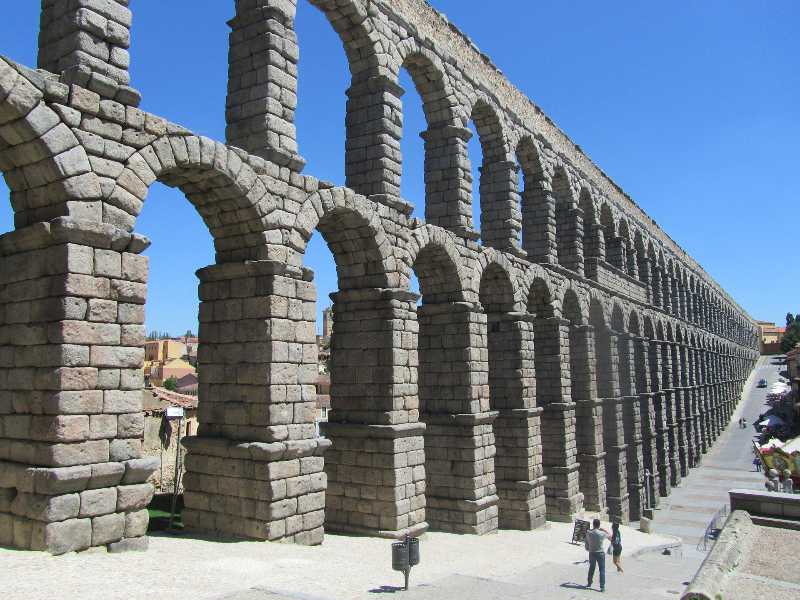
Segovia is a historic city in the autonomous community of Castile and León. It was declared a UNESCO World Heritage site in 1985. One of the main attractions in the city is the Roman aqueduct. Built in the 1st century AD, the structure traverses 17km to carry water from the mountain springs to the city. The aqueduct has 167 arches and is one of the best preserved structures of its kind.
3. Cádiz
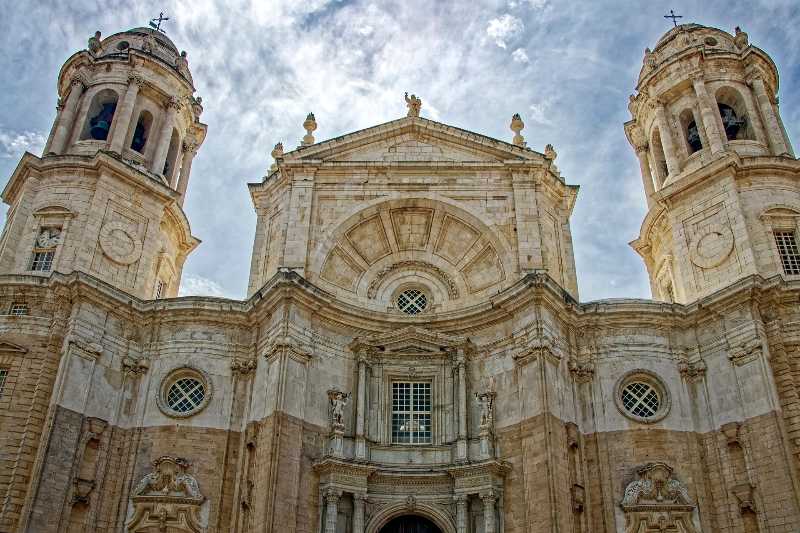
Founded as a trading post by the sea-faring Phoenicians, Cádiz is considered one of the oldest continuously inhabited cities of Western Europe. It was from here that Christopher Columbus set sail on his second and fourth voyages to the New World. Cádiz Cathedral, officially known as the Cathedral of the Holy Cross over the Waters, took over a hundred years to build from 1722 to 1838.
As the construction was funded by the money generated from trade between Spain and the Americas, the cathedral is also known as "The Cathedral of The Americas".
4. Seville
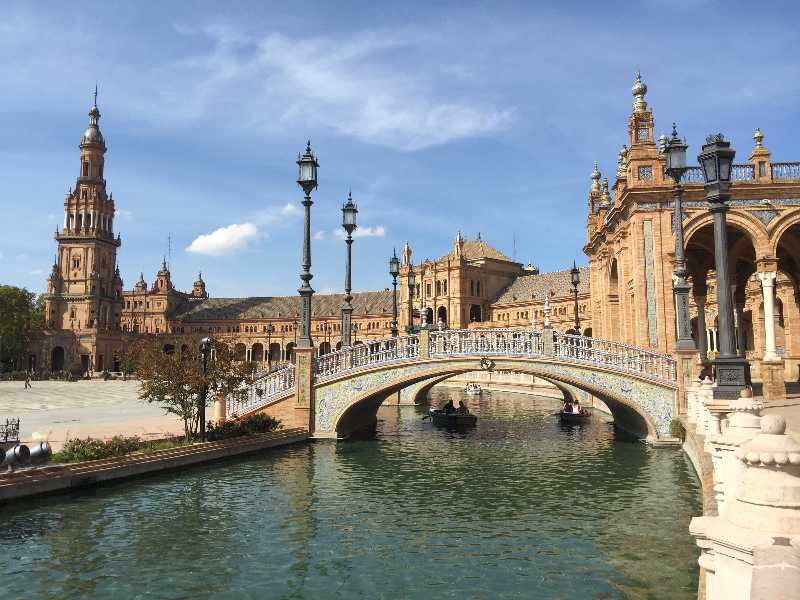
The city of Seville is located on the Guadalquivir river in the south western part of the Iberian peninsula. The Old Town of the city has been designated a UNESCO World Heritage site due to the presence of multiple historical sites. The photo shows the Plaza de España which was built in 1928 for the Ibero-American Exposition of 1929. Featuring different architectural styles like Renaissance, Baroque, and Moorish Revival, this square includes a canal, bridges, pavilions and fountains.
The semi-circular building has tiled alcoves with each alcove representing a different province of Spain.
5. Ronda
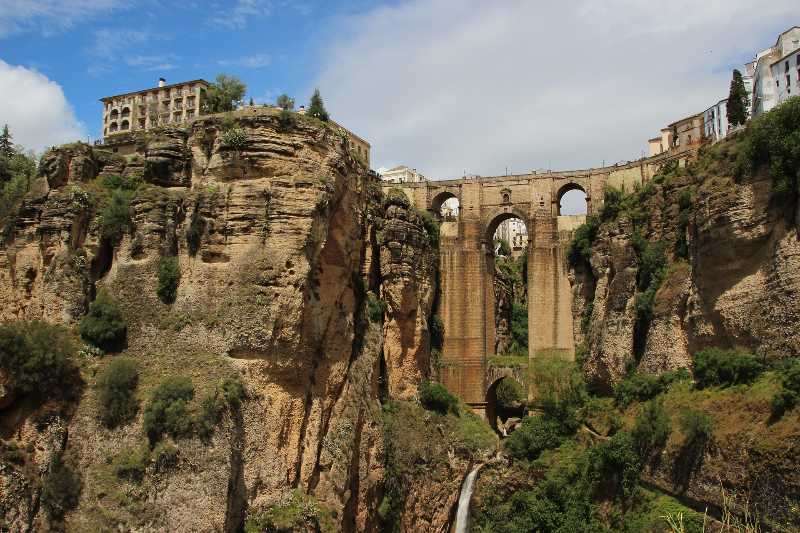
Ronda and its surroundings have had human settlements dating back to the Neolithic period. It is one of several towns that are located within the Sierra de las Nieves National Park. The city is perched over the El Tejo canyon and one of the main sights is the three bridges spanning the canyon.
The photo shows the Puente Nuevo, tallest of the three. Ronda is also home to one of the oldest bullrings in Spain.
6. Madrid
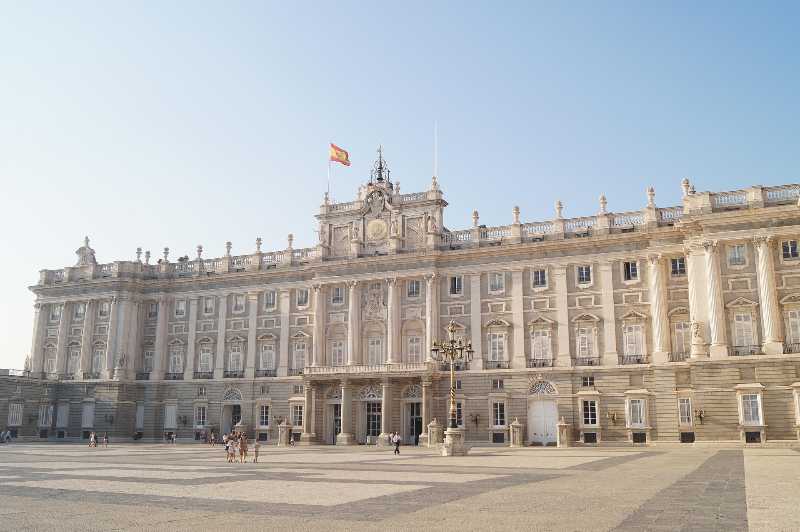
The capital and most populous city of Spain, Madrid is located in the central part of the Iberian Peninsula and lies along the Manzanares river. The photo depicts the Royal Palace of Madrid which is the official residence of the Spanish royal family. It is the largest royal palace in Europe. Apart from many historical paintings and art, the palace also houses the Royal Armoury and the world's only complete Stradivarius string quintet.
7. Toledo
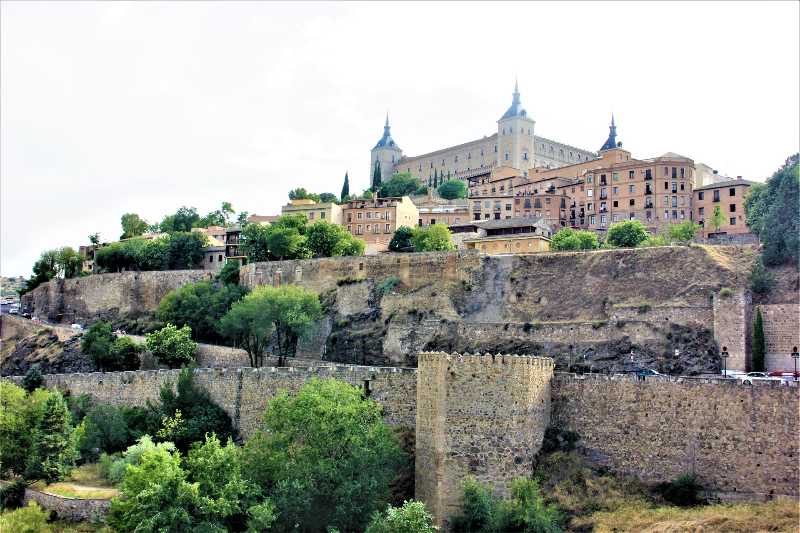
Declared a UNESCO World Heritage Site in 1986, Toledo is located on the River Tagus. It held an important position as both a cultural and political power centre for many years in its history. One of the main tourist attractions is the Toledo Cathedral which was built in the Gothic style in the 13th century.
The cathedral is renowned for its artwork including paintings by El Greco that frame the altar.
8. Zahara de la Sierra
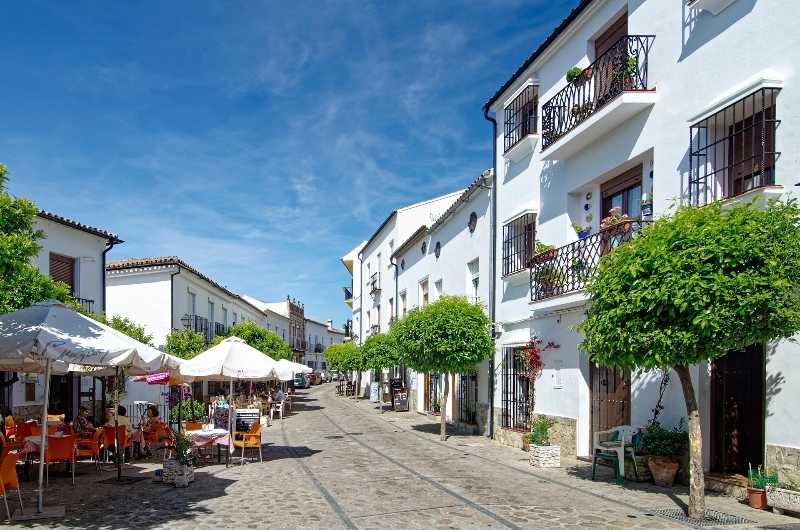
Zahara de la Sierra is one of the White Towns or Pueblos Blancos of the Andalusia region. The white towns are characterized by small houses with white walls and red or brown tiled roofs. Painting the exterior white became common during the plague as a means to keep the houses free from disease. Zahara de la Sierra is home to a Moorish castle.
The location was deemed suitable for an outpost or fortress given it lies between Ronda and Seville.
9. Córdoba
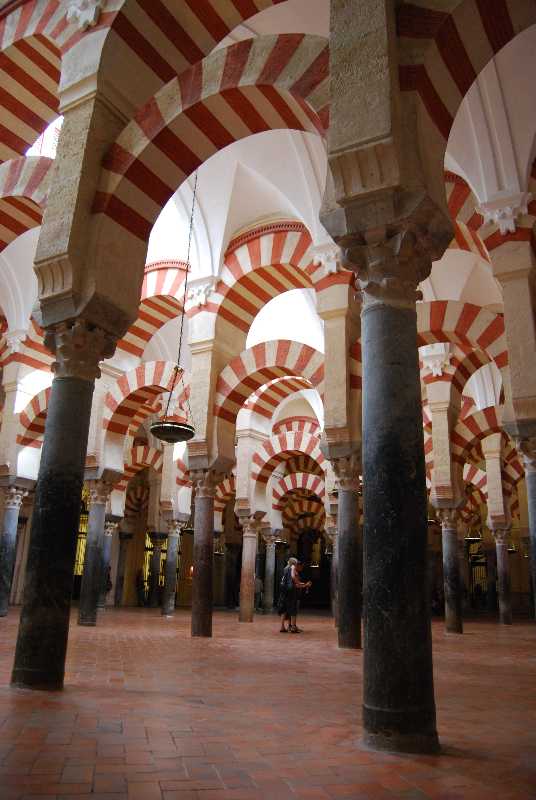
Córdoba is located in southern Spain and is famous for its Moorish architecture. The most notable example of this is the Mezquita-Catedral ("Mosque-Cathedral). Scholars are divided on this, but according to tradition, the site was originally a Visigoth church.
When the Moors conquered the region, the Great Mosque was built here in 785. When Córdoba once again came under Christian control through the Reconquista, the mosque was converted to a Roman Catholic Cathedral. Today visitors can see the influence of both on the final structure and it's no surprise that this landmark is a UNESCO World Heritage site.
10. Gibraltar
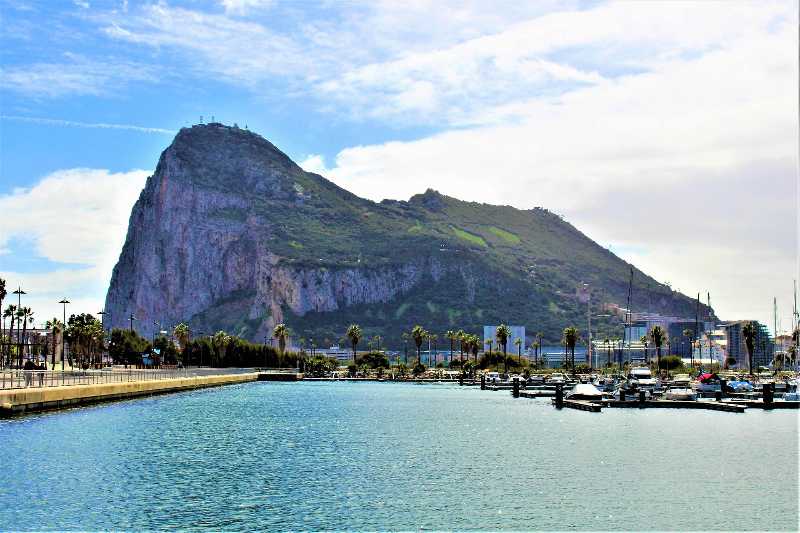
The Rock of Gibraltar is an iconic image with cultural, economic, and historical significance. Located on the southern tip of the Iberian Peninsula, Gibraltar is a British Overseas Territory. Gibraltar controls access to the Mediterranean Sea through the Strait of Gibraltar and was therefore of strategic importance to the British during World War II.
When entering from Spain, visitors must cross the territory's airstrip to enter the area. The place also gets a lot of tourists from cruise ships that stop here while sailing through the Mediterranean.
This quiz was reviewed by FunTrivia editor stedman before going online.
Any errors found in FunTrivia content are routinely corrected through our feedback system.