FREE! Click here to Join FunTrivia. Thousands of games, quizzes, and lots more!
Quiz about A Betta Fish Quiz

A Betta Fish Quiz


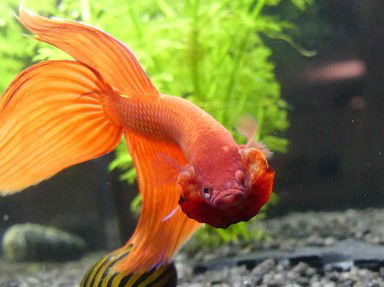
Bettas are far more than just "starter pets." They are architectural builders, fierce protectors, and evolutionary marvels. Test your knowledge on these "Jewels of the Orient" with these ten questions.
This is a renovated/adopted version of an old quiz by author uranium238

A photo quiz by LeoDaVinci. Estimated time: 3 mins.
  1. Home
  2. »
  3. Quizzes
  4. »
  5. Animal Trivia
  6. »
  7. Fish
  8. »
  9. Betta Fish

Author
LeoDaVinci
Time
3 mins
Type
Photo Quiz
Quiz #
48,901
Updated
Feb 15 26
# Qns
10
Difficulty
New Game
Avg Score
8 / 10
Plays
17
Last 3 plays: GoodwinPD (10/10), Kabdanis (7/10), Guest 18 (4/10).
-
Question 1 of 10
1. Bettas originate from which of these countries? Hint


photo quiz
Question 2 of 10
2. What do bettas use as a nest? Hint


photo quiz
Question 3 of 10
3. Bettas can jump from puddle to puddle if they see that theirs is drying up.


photo quiz
Question 4 of 10
4. Bettas live in the wild in muddy waters. They often have a difficult time looking for food, thus they developed a keen sense of taste. Where are their taste buds *not* located? Hint


photo quiz
Question 5 of 10
5. When bettas flare their fins, it means that they are intimidated.


photo quiz
Question 6 of 10
6. When betta females live together, it is known as a "sorority". What is the structure of this sorority? Hint


photo quiz
Question 7 of 10
7. The 'beard' of a betta (its opercular membrane) helps with which function? Hint


photo quiz
Question 8 of 10
8. Bettas have chromatophores which means that when they are stressed, which of the following can they do? Hint


photo quiz
Question 9 of 10
9. The name, betta, comes from the Malay word "bettah". Knowing the nature of bettas, what does the name refer to? Hint


photo quiz
Question 10 of 10
10. Amazingly, bettas are able to breathe air. The evolutionary path that they were on (as convoluted as it was) recognized the poor water that they live in to give them another organ to process air out of water. What is this organ called? Hint


photo quiz

(Optional) Create a Free FunTrivia ID to save the points you are about to earn:

arrow Select a User ID:
arrow Choose a Password:
arrow Your Email:


View Image Attributions for This Quiz

Most Recent Scores
Today : GoodwinPD: 10/10
Today : Kabdanis: 7/10
Today : Guest 18: 4/10
Today : Loiner47: 4/10
Today : xchasbox: 9/10
Today : lethisen250582: 9/10
Today : Guest 76: 6/10
Today : Maybeline5: 10/10
Today : Bowler413: 7/10

Quiz Answer Key and Fun Facts
1. Bettas originate from which of these countries?

Answer: Malaysia

Wild bettas are native to Southeast Asia, specifically the Mekong basin of Thailand, Cambodia, Vietnam, and Malaysia. While the fish in pet stores are flashy and colourful, wild specimens are usually a drab green or brown. This helps them camouflage and stay hidden in their natural habitats: shallow rice paddies, stagnant ponds, and slow-moving streams.
2. What do bettas use as a nest?

Answer: Bubbles

Bettas are "aphrophils", meaning they are bubble-nest builders, like gouramis and synbranchid eels. The male gulps air at the surface and blows bubbles coated in a special mucus to keep them from popping. After the female releases her eggs, the male carefully catches them in his mouth, places them into the bubbles, and stays to guard them from predators until the fry (baby fish) can swim on their own.
3. Bettas can jump from puddle to puddle if they see that theirs is drying up.

Answer: True

In their native habitats, the dry season can cause water levels to drop significantly. Since bettas can breathe actual air and also have powerful muscular bodies, they have been observed jumping, leaping, or even wriggling across damp land to find a deeper pool of water. This survival instinct is why betta owners must always keep a lid on their tanks!
4. Bettas live in the wild in muddy waters. They often have a difficult time looking for food, thus they developed a keen sense of taste. Where are their taste buds *not* located?

Answer: Eyes

Since visibility in a muddy rice paddy or a stagnant pool is often near zero, bettas rely on a highly developed sense of taste. They have chemoreceptors (taste buds) on their lips, in their mouths, and even on their fin-tips. This allows them to sample the water around them to detect prey or nearby rivals even when they cannot see them.
5. When bettas flare their fins, it means that they are intimidated.

Answer: False

Flaring, meaning the act of pushing out the gill covers and fully extending every fin, is often a display of dominance and territorial aggression. It is designed to make the fish look as large and intimidating as possible to a rival. If a betta were truly intimidated or scared, it would clamp its fins tight against its body to try and swim away quickly.

Male bettas will also flare their fins as a courtship ritual. Often, this flaring is accompanied by a dance of sorts. He will also show off the size of his "beard" (his opercular membrane, a body part, not a euphemism for anything). And if this doesn't impress a female betta, then nothing will.
6. When betta females live together, it is known as a "sorority". What is the structure of this sorority?

Answer: Hierarchical - the dominant female dictates the dynamics

Unlike many schooling fish, female bettas establish a strict pecking order. This hierarchy is maintained through subtle (and sometimes not-so-subtle) displays of dominance. There is always one dominant alpha female who dictates the dynamics of the tank; any new addition must find her place within that social ladder. If there is a betta that is seen as weaker, the more dominant females will "bully" her.

However, if she is able to break the alpha's focus by darting behind a piece of driftwood or a plant, the alpha will lose her concentration and go off to do something else.

Indeed, bettas seem to have a very short memory for aggression.
7. The 'beard' of a betta (its opercular membrane) helps with which function?

Answer: Respiration

The "beard" is actually the opercular membrane located just below the gill covers. When a betta flares, this membrane is pushed forward. Because flaring and fighting require a lot of energy, this action helps the fish maximize its oxygen intake through its gills during a high-stress confrontation.
8. Bettas have chromatophores which means that when they are stressed, which of the following can they do?

Answer: Go pale

Chromatophores are pigment-containing cells. When a betta feels threatened, ill, or extremely stressed, it can rapidly shift these pigments. This often results in the fish "washing out" or turning pale, and frequently reveals horizontal dark lines known as "stress stripes".

It is a biological (and visually obvious) signal that the fish does not feel safe. This is especially true if a betta sees itself in a mirror, as it does not self-recognize and will feel threatened by the image of themselves.
9. The name, betta, comes from the Malay word "bettah". Knowing the nature of bettas, what does the name refer to?

Answer: Warrior

The name was inspired by the "Bettah", an ancient clan of legendary Asian warriors. In the 1800s, the King of Siam (modern-day Thailand) became so fascinated by the fish's bravery and fighting spirit that he began collecting them, leading to the first officially recognized fish-fight matches.

This is why they are sometimes called "Siamese fighting fish". In Thailand, they are actually called "pla-kad", which literally means "biting fish", again, due to their aggressive nature.
10. Amazingly, bettas are able to breathe air. The evolutionary path that they were on (as convoluted as it was) recognized the poor water that they live in to give them another organ to process air out of water. What is this organ called?

Answer: Labyrinth organ

The labyrinth organ (which is technically called the suprabranchial organ) is a highly vascularized structure located above the gills. It allows bettas to gulp air at the surface and absorb oxygen directly into their bloodstream. This is a vital evolutionary adaptation for surviving in stagnant, tropical waters that are naturally very low in dissolved oxygen.
Source: Author LeoDaVinci

This quiz was reviewed by FunTrivia editor rossian before going online.
Any errors found in FunTrivia content are routinely corrected through our feedback system.
2/15/2026, Copyright 2026 FunTrivia, Inc. - Report an Error / Contact Us