FREE! Click here to Join FunTrivia. Thousands of games, quizzes, and lots more!
Quiz about Locating Lizards

Locating Lizards Trivia Quiz


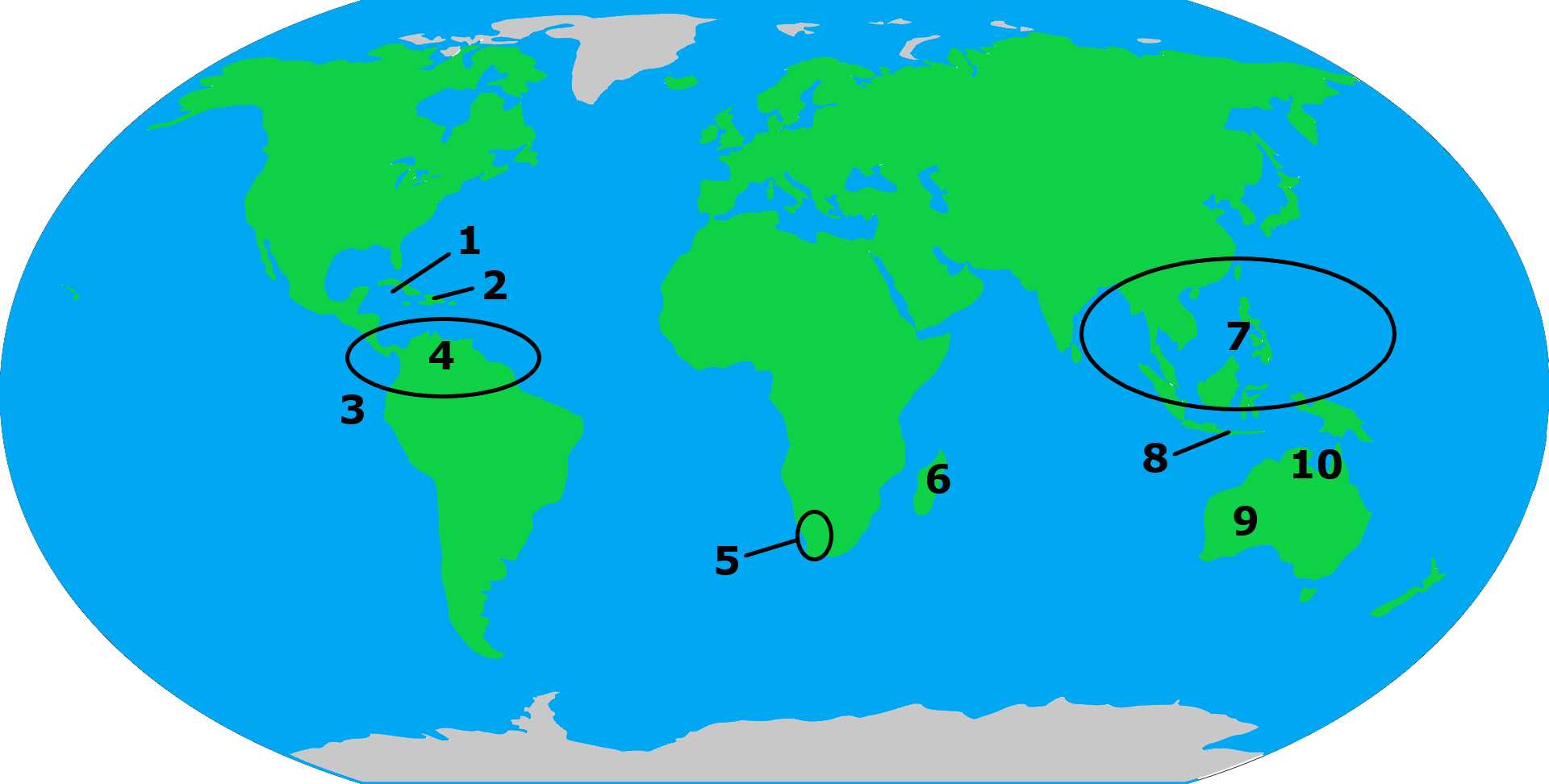
Where in the world can you find ten unique reptiles? I'll give you the spot on a map, but it's up to you to locate where each lizard lives. Good luck!

A label quiz by kyleisalive. Estimated time: 3 mins.
  1. Home
  2. »
  3. Quizzes
  4. »
  5. Animal Trivia
  6. »
  7. Reptiles and Amphibians
  8. »
  9. Lizards

Author
kyleisalive
Time
3 mins
Type
Label Quiz
Quiz #
417,662
Updated
Mar 22 26
# Qns
10
Difficulty
Average
Avg Score
7 / 10
Plays
23
Last 3 plays: cardsfan_027 (10/10), Guest 71 (7/10), Guest 74 (2/10).
Click on image to zoom
Marine iguana Rhinoceros iguana Armadillo girdled lizard Frilled neck lizard Common basilisk Tokay gecko Thorny devil Komodo dragon Parson's chameleon Blue iguana
* Drag / drop or click on the choices above to move them to the answer list.
View Image Attributions for This Quiz
1.   
2.   
3.   
4.   
5.   
6.   
7.   
8.   
9.   
10.   

Most Recent Scores
Today : cardsfan_027: 10/10
Today : Guest 71: 7/10
Today : Guest 74: 2/10
Today : Guest 100: 0/10
Today : CardoQ: 10/10
Today : etymonlego: 6/10
Today : Baldfroggie: 5/10
Today : rivenproctor: 10/10
Today : AmandaM: 10/10

Quiz Answer Key and Fun Facts
1. Blue iguana

An endangered lizard of the Caribbean, the natural habitat of the blue iguana is Grand Cayman, and as such it's also been known as the Grand Cayman ground iguana. A rather large lizard, it's actually one of the biggest such creature in the Americas and it's one of the longest-living lizards in the world, with its lifespan being on par with humans' if left to thrive.

The catch is that the blue iguana has been under threat of human encroachment since the Caymans were colonized, and in the 20th century they were nearly wiped out.
2. Rhinoceros iguana

Found on the island of Hispaniola in the Caribbean, the rhinoceros iguana is named as such due to a bony protrusion that emerges from its snout, not unlike a rhino (though clearly not as defined). Another endangered species, this lizard was, at one time, quite common but, again, human settlement and the proliferation of other predators in Haiti and the Dominican Republic caused numbers to plummet over time.

This said, it's a lizard with a moderate deal of historical success in conservation efforts and captive breeding programs.
3. Marine iguana

While the Galapagos Islands are much more known for their tortoises, they're also the only home of the marine iguana (also known as the sea iguana), which subsists entirely on algae consumed in the waters around this ecological hotspot. These are unique lizards, all said, because of their habits and diet, and interestingly, in their native habitats, they can be found (in good years) in quite massive numbers, filling the shores of certain islands with great density.

The catch is that their bad years are quite tough, generally due to much more nebulous causes like El Nino, which affects algae output in the region and diminishes their key food source.
4. Common basilisk

The only one of these lizard options to make its home on the Central and South American mainland, the common basilisk is quite plentiful, appearing in the forests of Costa Rica and along the coasts of Venezuela (and everywhere in between). And you've probably seen one before-- at least online-- as this is the type of lizard known for being able to run (or skip) along the surface of the water, creating enough surface area with their feet to escape prey via this unconventional method.

It's because of this that, in some places, it's also called the Jesus Christ lizard.
5. Armadillo girdled lizard

The armadillo girdled lizard is considered to make its home only in South Africa, but only in the western part of the country where it's endemic to the desert regions south of the Namibian border. This creature is so-named because of its appearance and behaviour since, like an armadillo, it rolls up into a ball when threatened, using its unique plating to protect it from dangerous prey.

In doing this, it brings its tail into its mouth, creating a hardened circle that avoids exposing its fleshier parts.
6. Parson's chameleon

One of the larger species of chameleon, the Parson's chameleon is found in a narrow, but long-running strip of forested lowlands that stretches through the north and eastern regions of Madagascar, making it somewhat hard for most to see in the wild (and that's discounting the obvious discussion of its camouflage capabilities).

Although kept, by some, as pets, these are on the big end for chameleons and are, as such, a bit higher-maintenance. You'd be more likely to get a veiled chameleon or a panther chameleon from a pet store.
7. Tokay gecko

Of all of the lizards in this quiz, the tokay gecko is perhaps the most plentiful, being found in most rainforested regions of Asia and not shying away from being around people. Additionally, unintentional introduction to regions in the United States and Central America, along with suitable climates and ecosystems, has widened their spread (though Asia is the big spot to see them). Popular pets in the modern day, the gecko is also considered a symbol of good luck, even if they may be known for being aggressive in protecting themselves and their territories in the wild.
8. Komodo dragon

The largest species of lizard in the world, the Komodo dragon is endemic to a handful of Indonesian islands (including the island of Komodo and the national park found there). Although quite well-known for their size, they're also an endangered species for a multitude of reasons including the volatile landscape and disasters that befall this part of the world and human interference (including poaching). Most people would need to go out of their way to find and see the Komodo dragon in the wild (they can be quite skittish).
9. Thorny devil

Bearing the scientific name of Moloch horridus, the thorny devil is a weird-looking lizard bearing a number of sharp spikes all over its head and body that are designed to prevent predators from taking a bite, and Australia is full of animals that might otherwise be interested.

These lizards thrive in the desert and scrublands, so their natural habitat is in the Australian Outback; they aren't found anywhere else in the world, which is pretty common with isolated species from this region. They don't get this spiky elsewhere!
10. Frilled neck lizard

While the thorny devil is a desert lizard, the frilled neck lizard appears in the trees of northern Australia (mostly in the far north of Queensland) and on the island of New Guinea. Distinctive for their neck frill, this lizard has the ability to retract the disc that it forms around its neck so as to look unthreatening when unprovoked, but can extend the bones there to make a more threatening (or convincing) presentation when it feels at risk.

Naturally, this is also used in mating rituals and shows of strength between others.
Source: Author kyleisalive

This quiz was reviewed by FunTrivia editor rossian before going online.
Any errors found in FunTrivia content are routinely corrected through our feedback system.
3/22/2026, Copyright 2026 FunTrivia, Inc. - Report an Error / Contact Us