FREE! Click here to Join FunTrivia. Thousands of games, quizzes, and lots more!
Quiz about Wordwise Fun

Wordwise Fun Trivia Quiz


"Just a little more wordwise fun!" is how ariadne54 originally described the quiz when it was first written in the early years of FunTrivia. It is one of many such quizzes here, and I hope you enjoy it.
This is a renovated/adopted version of an old quiz by author ariadne54

A photo quiz by Lottie1001. Estimated time: 5 mins.
  1. Home
  2. »
  3. Quizzes
  4. »
  5. Brain Teasers Trivia
  6. »
  7. Wordwise

Author
Lottie1001
Time
5 mins
Type
Photo Quiz
Quiz #
67,366
Updated
Jul 13 26
# Qns
10
Difficulty
Very Easy
Avg Score
9 / 10
Plays
30
Last 3 plays: Guest 170 (8/10), Guest 159 (8/10), Reamar42 (10/10).
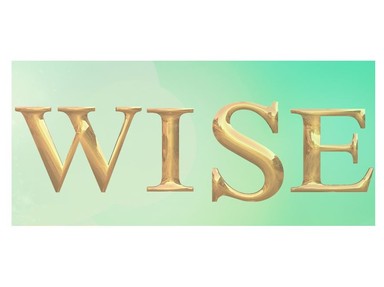
Author's Note: A wordwise quiz could be described as 'say what you see, and then listen to what you say'. It makes use of the position of the words relative to each other, the number of words, and also homophones of some of them. For example the title has a picture of the word 'wise'. If you say what you see you get 'word wise' or 'wordwise', which describes this type of quiz.
Question 1 of 10
1. Just say what you see here.

Answer: (Two words (panorama))
Question 2 of 10
2. What expression is this?

Answer: (Four words (playing cards))
Question 3 of 10
3. Look at the positioning of the words for a clue to this one.

Answer: (Three words (eternity))
Question 4 of 10
4. I hope you don't get an earworm from this.

Answer: (Six words (song))
Question 5 of 10
5. There are two possibilities here - either is acceptable.

Answer: (Two words or three words (sporting term))
Question 6 of 10
6. Listen as well as look for this one.

Answer: (Four words (on a clear day))
Question 7 of 10
7. What can you see here?

Answer: (One word (weather))
Question 8 of 10
8. What this quiz might get.

Answer: (Two words (anagram))
Question 9 of 10
9. Although Shakespeare didn't write it this way, it's very well known.

Answer: (Six words (Shakespeare))
Question 10 of 10
10. Can you see this idiomatic expression?

Answer: (Three words (idiom))

(Optional) Create a Free FunTrivia ID to save the points you are about to earn:

arrow Select a User ID:
arrow Choose a Password:
arrow Your Email:


View Image Attributions for This Quiz

Most Recent Scores
Today : Guest 170: 8/10
Today : Guest 159: 8/10
Today : Reamar42: 10/10
Today : Bowler413: 10/10
Today : kvanhoy: 5/10
Today : salami_swami: 10/10
Today : Lenny15: 9/10
Today : Peachie13: 9/10
Today : Guest 76: 8/10

Quiz Answer Key and Fun Facts
1. Just say what you see here.

Answer: scenic overlook

Since the word 'scenic' is above the word 'look' we have 'scenic over look', or 'scenic overlook'.

A scenic overlook could be defined as a lookout point or a viewpoint. It is a place where one can see a panorama - a picturesque view of a landscape or water feature or other physical feature. A lookout point could also be used in a less picturesque setting for a place where it is possible to keep an eye on activities in the area. A viewpoint also describes a person's opinions about a topic.
2. What expression is this?

Answer: Four of a kind

The words 'a kind' are repeated four times leading to four of 'a kind'.

Four of a kind is an expression used to describe a hand of five cards in the game of poker when the player has four cards with the same value, and just one of a different value. Four of a kind is also used as the name of a game of patience or solitaire, similar to clock patience, when the cards are laid in piles like a clock face, but in four of a kind they are laid in rows.
3. Look at the positioning of the words for a clue to this one.

Answer: Life after death

The word 'life' follows the word 'death' so we have 'life' after 'death'.

Life after death refers to a belief by some people that there is some form of life after the body has physically died. Reincarnation is an important concept in some eastern religions, where it is believed that when a person dies, their soul leaves their physical body and moves to another who has just been born. Christianity teaches that there will be everlasting life in heaven for those that believe in God, and, conversely, that those who reject God will have an everlasting life in hell.
4. I hope you don't get an earworm from this.

Answer: Stuck in the middle with you

The word 'stuck' is sitting in between the word 'middle' and the words 'with you', so we have 'stuck' in the 'middle with you'.

"Stuck in the Middle With You" is a song that was written in the early 1970s by Joe Egan and Gerry Rafferty. They sang it with their band, Stealer's Wheel, when it was recorded for their debut album in 1972. It was released as a single a year later, when they were also invited to sing it on the BBC show, "Top of the Pops".
5. There are two possibilities here - either is acceptable.

Answer: Double play

This combination of words could lead to two possible answers. One possibility is 'double play' because the word 'play' is repeated. The other option is 'play by play' since the words are next to each other.

Double play is a baseball or softball term. It refers to an occasion when two players are got out after one pitch of the ball. The players would probably be one player who was waiting on a base, and also the batter. Play by play is a term used to refer to a detailed commentary on an event, often a sporting fixture, when every move is described.
6. Listen as well as look for this one.

Answer: You can see forever

The letter U sounds like the word 'you'. The letter C sounds like the verb 'see'. The number 4 sounds like the word 'for'. Putting them all together with the words 'can' and 'ever', and inserting appropriate spacing between the words gives 'you can see forever'.

"On a Clear Day You Can See Forever" is the title of a musical by Burton Lane and Alan Jay Lerner, which was first performed on Broadway in 1965. One of the songs in the musical has the same title; it was first recorded by Robert Goulet, and later by both Johnny Mathis and Barbra Streisand. A film version of the musical, in 1970, also had the same title.
7. What can you see here?

Answer: Thunderstorm

The letters 'th' are below the word 'storm', so we have 'th under storm', or 'thunderstorm'.

A thunderstorm is a weather phenomenon with electrical activity producing lightning streaks and flashes, and, a bit later, loud rumbles and bursts of thunder. It is often, although not always, accompanied by very heavy rain, which can lead to flash flooding in places. The thunder is heard after the lightning because, although both are produced at the same time, the speed of light is much greater than the speed of sound, so we are able to see the lightning before we can hear the thunder.
8. What this quiz might get.

Answer: Mixed reviews

The letters of the word 'reviews' are all jumbled up or mixed, leading to 'mixed reviews'.

Mixed reviews are when someone's opinion of something, such as a book or film, is not all good or all bad. It might also refer to different people having different thoughts about something they have read or seen. I think that a classic mixed review is the description of the curate's egg, when he described an egg that was bad as 'good in parts'.
9. Although Shakespeare didn't write it this way, it's very well known.

Answer: To be or not to be

Here we have 2 letter Bs, or 'two b', which sounds like 'to be'. They are followed by the word 'or'. Then we have the same 2 Bs crossed out, so they not 'two b' or 'not to be'. Putting them together leads to 'to be or not to be'.

"To be or not to be" are the opening words of a monologue spoken by Prince Hamlet in the first scene of the third act of Shakespeare's play. Hamlet goes on to weigh the pros and cons of life, and death, which might be worse than his current unhappy existence. It is one of the best known lines of the bard's plays, possibly because it is short and simple. While many people can probably manage the next four words, "that is the question", few will go further than that. The words are often used completely differently, and out of context, including by me, as a homophone, for a maths quiz title.
10. Can you see this idiomatic expression?

Answer: Foot in mouth

The word 'foot' is inside the word 'mouth' leading to the expression 'foot in mouth'.

It is often used when someone is describes as putting their foot in their mouth or sticking their foot in their mouth when they say something very tactless or embarrassing. For instance, it might be better not to say that life is too short for something to someone suffering from a terminal illness.
Source: Author Lottie1001

This quiz was reviewed by FunTrivia editor Fifiona81 before going online.
Any errors found in FunTrivia content are routinely corrected through our feedback system.
7/13/2026, Copyright 2026 FunTrivia, Inc. - Report an Error / Contact Us