FREE! Click here to Join FunTrivia. Thousands of games, quizzes, and lots more!
Quiz about History of BosniaHerzegovina 18701918

History of Bosnia-Herzegovina (1870-1918) Quiz

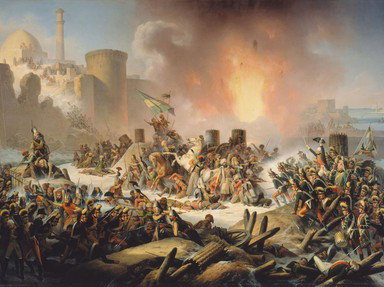
Occupations, Unrest, War, and Peace

The story of Bosnia-Herzegovina from 1870-1918 is one of foreign occupations, periods of unrest, uprisings, a great war, and finally membership in a new country. Enjoy!

A photo quiz by JJHorner. Estimated time: 3 mins.
  1. Home
  2. »
  3. Quizzes
  4. »
  5. History Trivia
  6. »
  7. European
  8. »
  9. Bosnia and Herzegovina

Author
JJHorner
Time
3 mins
Type
Photo Quiz
Quiz #
423,972
Updated
Apr 30 26
# Qns
10
Difficulty
Easy
Avg Score
9 / 10
Plays
19
Last 3 plays: Aph1976 (2/10), Kabdanis (7/10), klotzplate (10/10).
-
Question 1 of 10
1. Which empire ruled over Bosnia and Herzegovina in 1870? Hint


Question 2 of 10
2. What period of unrest, beginning in 1875, helped destabilize Ottoman control in the Balkans and indirectly affected Bosnia and Herzegovina? Hint


Question 3 of 10
3. Which 1878 treaty formally ended the Russo-Turkish War, setting the stage for a new era for Bosnia and Herzegovina? Hint


Question 4 of 10
4. Which empire took over administration of Bosnia and Herzegovina after 1878? Hint


Question 5 of 10
5. In 1908, Bosnia and Herzegovina was annexed by a Great Power, angering what neighboring country? Hint


Question 6 of 10
6. Which of the following political groups were based in Bosnia-Herzegovina and sought South Slavic unity? Hint


Question 7 of 10
7. Which provincial capital became the focal point of the 1914 assassination that escalated into a global war? Hint


Question 8 of 10
8. Following the outbreak of World War I in 1914, what neighboring kingdom launched an early military campaign into Bosnia-Herzegovina? Hint


Question 9 of 10
9. Which governor implemented very harsh anti-Serb measures during World War I in Bosnia-Herzegovina? Hint


Question 10 of 10
10. What was the name of the new state formed in 1918 that incorporated Bosnia and Herzegovina after the collapse of its former rulers? Hint


(Optional) Create a Free FunTrivia ID to save the points you are about to earn:

arrow Select a User ID:
arrow Choose a Password:
arrow Your Email:


View Image Attributions for This Quiz

Most Recent Scores
Today : Aph1976: 2/10
Today : Kabdanis: 7/10
Today : klotzplate: 10/10
Today : mazza47: 10/10
Today : bernie73: 8/10
Today : absrchamps: 5/10
Today : Rizeeve: 10/10
Today : Guest 104: 6/10
Today : Harmattan: 7/10

Quiz Answer Key and Fun Facts
1. Which empire ruled over Bosnia and Herzegovina in 1870?

Answer: Ottoman Empire

In 1870, Bosnia and Herzegovina had been under Ottoman rule for centuries, ever since the Ottomans completed their big conquest in 1463. So we're talking about a very long tenancy indeed. The region was organized into provinces called 'vilayets', and local governance mixed imperial oversight with a relatively high amount of day-to-day autonomy. Even so, it was a... well, restless relationship.

And things weren't exactly calm by 1870. The Ottoman hold on Europe was loosening, and nationalist movements were starting to bubble up across the Balkans like that pot of water that is taking forever to come to a boil. It would take five more years before the pasta could finally be dropped in the pot.
2. What period of unrest, beginning in 1875, helped destabilize Ottoman control in the Balkans and indirectly affected Bosnia and Herzegovina?

Answer: Herzegovina Uprising

The Herzegovina Uprising began in 1875 in the Nevesinje region of Herzegovina, when Christian peasants rose up against Ottoman tax collectors. It spread into Bosnia pretty quickly, because once a rebellion starts in the Balkans, things tend to get messy fast.

It lasted until 1878, with the unrest leading to the larger collapse of Ottoman control in the region. The revolt also helped trigger a chain reaction: Serbia and Montenegro soon moved against the Ottoman Empire, and the crisis escalated into war and then big diplomatic mess at the Congress of Berlin in 1878.
3. Which 1878 treaty formally ended the Russo-Turkish War, setting the stage for a new era for Bosnia and Herzegovina?

Answer: Treaty of San Stefano

The ink on the Treaty of San Stefano was barely dry before a restless Europe started arguing about it. Signed in March 1878, it brought the Russo-Turkish War to an end and handed Russia a major diplomatic win. Go Russia!

The Ottoman Empire was forced to recognize the independence or autonomy of several Balkan territories, and a large Bulgarian state suddenly appeared on the map, stretching farther than many European powers were happy about. Bosnia and Herzegovina did not gain independence in this treaty, but the shifting balance of power made their future a trending topic. That nervous energy led directly to the Congress of Berlin just a few months later, where the great powers decided to rewrite parts of the deal.
4. Which empire took over administration of Bosnia and Herzegovina after 1878?

Answer: Austro-Hungarian Empire

The year 1878 didn't hand Bosnia and Herzegovina its independence, but it did swap out who was running the show. After the Congress of Berlin, the Austro-Hungarian Empire was given the right to occupy and administer the provinces, even though they technically still belonged to the Ottoman Empire on paper. It's a weird arrangement, but I guess if you imagine renting a house while pretending you own it, you're halfway there.

So, yeah. Vienna moved in, redecorated, and started making long-term plans. Railways were built, bureaucracies tightened, and the region was drawn more firmly into Central European political and economic life. Of course, it's the Balkans, and this arrangement didn't go down smoothly. Many locals had mixed feelings, and neighboring powers watched closely. By 1908, things would start heating up.
5. In 1908, Bosnia and Herzegovina was annexed by a Great Power, angering what neighboring country?

Answer: Serbia

The 1908 annexation of Bosnia and Herzegovina by Austria-Hungary did not go over well in the Balkans. Serbia took it personally. Very personally. Serbia had long hoped to expand its influence over the southern Slavic population, and Bosnia and Herzegovina seemed like a natural piece of that puzzle. When Vienna finally decided to stop just pretending it owned the place, Serbia saw a lost opportunity. What's more, Serbia saw a direct challenge to its own ambitions and identity. The outrage was immediate. And loud.

Serbia called on its ally Russia for support, while Austria-Hungary dug in its heels, backed by Germany. In 1909, the Treaty of Berlin was modified to codify this action and end the crisis. No war broke out in 1908, but the resentment didn't go away. Otto von Bismarck, when asked what would cause the next great European war, responded that it would probably be "some damn fool thing in the Balkans". He was right.

This wasn't quite it.

By the way, this is a fun photograph. It shows people standing around a sign posted on the walls outside Schiller's Delicatessen reading about the annexation. Six years later a student named Gavrilo Princip would stand on the same corner.
6. Which of the following political groups were based in Bosnia-Herzegovina and sought South Slavic unity?

Answer: Young Bosnia

They called themselves Young Bosnia. It sounds kinda sweet and optimistic, doesn't it? Aw, look at the college students getting involved in politics! This loose, youthful movement of students and activists in Bosnia and Herzegovina pushed for the unification of South Slavic peoples and an end to Austro-Hungarian rule.

They were not a tightly organized party so much as a cluster of restless young men, swapping ideas in cafes, reading radical literature, and dreaming of a future that looked very different from imperial administration. Nationalism, idealism, frustration, and anger all got tangled together.

In 1911, a student named Gavrilo Princip joined the group. The more the merrier!
7. Which provincial capital became the focal point of the 1914 assassination that escalated into a global war?

Answer: Sarajevo

The story of Young Bosnia takes a bit of a turn on June 28, 1914, when one of their members, Gavrilo Princip, stepped out of a crowd in Sarajevo and fired the shots that killed Archduke Franz Ferdinand and his wife Sophie. Training, planning, and supplies were all provided by a Serbian secret organization called The Black Hand. Sarajevo wasn't really TRYING to become the center of world history that summer day in 1914, but nothing in the Balkans was predictable at that time. One wrong turn, two gunshots, and the world moaned.

Thus began the July Crisis. Austria-Hungary blamed Serbia, alliances kicked in, and within weeks much of Europe was mobilizing for war. Sarajevo became shorthand for the moment everything fell apart. The assassination may have sparked World War I, but it also revealed just how fragile the political balance had been in the first place.
8. Following the outbreak of World War I in 1914, what neighboring kingdom launched an early military campaign into Bosnia-Herzegovina?

Answer: Serbia

When World War I broke out in the summer of 1914, Serbia didn't waste time. Why should it? They certainly had their own ambitions in the area. Unfortunately for Serbia... reality eventually got in the way. Serbian forces launched attacks across the Drina River into Bosnia and Herzegovina, making the region an early battleground. It was not easy going. Fighting was intense, terrain was rough, and control shifted back and forth in the opening months.

The campaigns in 1914 included clashes like the Battle of Cer and the Battle of Kolubara, where Serbian forces managed to score surprising victories against Austro-Hungarian troops. For a minute or two, it looked like the tiny kingdom might hold its ground against a much larger empire. But by 1915, a renewed offensive by Austria-Hungary, joined by Germany, Bulgaria and more than a few recruits from Bosnia-Herzegovina, overwhelmed Serbia. That would eventually change, but the Serbian troops would not see home again for a couple years.
9. Which governor implemented very harsh anti-Serb measures during World War I in Bosnia-Herzegovina?

Answer: Oskar Potiorek

Oskar Potiorek was the Austro-Hungarian governor of Bosnia and Herzegovina right when tensions snapped in 1914. No points for timing, Oskar. He was in the same car as Franz Ferdinand in Sarajevo, and the bullet meant for him killed the archduke's wife Sophie Chotek instead.

After Sarajevo, Potiorek wasted no time cracking down on the local Serb population. Authorities carried out arrests, internments, and reprisals, often sweeping up people with only the slightest connections to nationalist groups. It was not about justice. It was a very loud message to the Serbs in Bosnia. (The image here shows the aftermath of the looting of Serb-owned businesses in 1914.)

Potiorek also played a military role, leading Austro-Hungarian forces in the early campaigns against Serbia. That did not go particularly well with him at the helm, and he was removed from command. Meanwhile, the policies he oversaw deepened divisions and added more layers of bitterness to the region.
10. What was the name of the new state formed in 1918 that incorporated Bosnia and Herzegovina after the collapse of its former rulers?

Answer: Kingdom of Serbs, Croats and Slovenes

To say that the end of World War I changed the map of Europe is an understatement. It marked the end of four empires and the birth of many new countries. As Austria-Hungary collapsed in 1918, Bosnia and Herzegovina found itself folded into a brand-new country: the Kingdom of Serbs, Croats and Slovenes. It was an attempt to unite the South Slavic peoples under one crown, bringing together regions that had been ruled by different empires, spoke related languages, and carried a good amount of historical baggage.

It wasn't always a happy marriage.

By 1929, the state renamed itself as Yugoslavia, but the underlying tensions did not disappear. Different groups had competing visions of how the country should be run, and those disagreements would continue for decades. There would be more unrest, more wars, and a bitter genocide before Bosnia-Herzegovina would finally have its own country.
Source: Author JJHorner

This quiz was reviewed by FunTrivia editor gtho4 before going online.
Any errors found in FunTrivia content are routinely corrected through our feedback system.
5/1/2026, Copyright 2026 FunTrivia, Inc. - Report an Error / Contact Us