FREE! Click here to Join FunTrivia. Thousands of games, quizzes, and lots more!
Quiz about Rice Wheat Corn

Rice, Wheat, Corn Trivia Quiz

(And How They Fed The World)

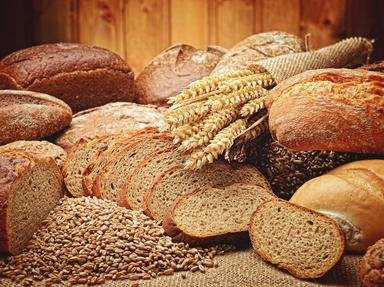
Rice, wheat, and corn ended the hunter-gatherer era as people settled in one place to grow cereals as the souce of their main part of the human diet. The three grains fed the world. Here is their collective story...

A classification quiz by 1nn1. Estimated time: 3 mins.
  1. Home
  2. »
  3. Quizzes
  4. »
  5. Hobbies Trivia
  6. »
  7. Food & Drink
  8. »
  9. Breads and Grains

Author
1nn1
Time
3 mins
Type
Classify Quiz
Quiz #
421,813
Updated
Nov 15 26
# Qns
12
Difficulty
New Game
Avg Score
4 / 12
Plays
11
Last 3 plays: mjgrimsey (4/12), Guest 97 (5/12), cbushman (5/12).
Assign each of the attributes to the correct cereal type. Good Luck!
Rice
Wheat
Corn

First domesticated: Middle East Main European growing areas: France, Romania, Hungary Early food preparation: Nixtamalization Early food preparation: Gruel Introduced into Europe: 8th Century First domesticated: Central America Early food preparation: Boiled Main European growing areas: Northern Italy and Spain Main European growing areas: Ukraine and Southern Russia Introduced into Europe: 15th Century Introduced into Europe: 15th Century First domesticated: China

* Drag / drop or click on the choices above to move them to the correct categories.


Most Recent Scores
Today : mjgrimsey: 4/12
Today : Guest 97: 5/12
Today : cbushman: 5/12
Today : masfon: 2/12
Today : bernie73: 5/12
Today : xchasbox: 1/12
Today : FlicksBuff: 6/12
Today : CardoQ: 7/12
Today : Taltarzac: 5/12

Quiz Answer Key and Fun Facts
1. First domesticated: China

Answer: Rice

Archaeological evidence suggests that the domestication of Asian rice (Oryza sativa) began in the Yangtze River Valley of eastern China between 8000 and 13000 years ago. Oryza glaberrima (African rice) was domesticated independently in the Inland Niger Delta region of present-day Mali, along the Niger River, about 3,000 years ago.

Rice is grown by planting seeds or seedlings in flooded fields (paddies), where the plants mature before being harvested. The rice is threshed, dried (to stop mould infestation), and milled to remove the outer husk and produce the edible grain. Edible rice ranges from long-, medium-, and short-grain varieties to specialty types such as jasmine, basmati, arborio, black, red, and wild rice, each with distinct flavours, textures, and cooking properties. These are different varieties (cultivars) of the same species, usually Asian rice,
2. First domesticated: Middle East

Answer: Wheat

Hunter-gatherers were using wild wheats in west Asia for at least 20 000 years before they were domesticated around 8800BC (earliest archaeological evidence). Wheat is a tall grass, a Triticum species. Two species were domesticated: einkorn wheat (T. monococcum subsp. boeoticum) and emmer wheat (T. turgidum subsp. dicoccoides).

Initially, wheat was harvested with stone sickles and threshed to remove the chaff. The grain was then stored year-round until needed. The grain was then made into flour with ground stone mortars. The first bread-like food made with ground einkorn wheat dates back to 12400 years ago in what is now Jordan.

Today, the most common form of wheat is common or bread wheat (Triticum aestivum), which is a hybrid of emmer wheat and Aegilops tauschii (a wild diploid goatgrass). Around 95% of the worldwide wheat production uses this cultivar.
3. First domesticated: Central America

Answer: Corn

Corn or maize (Zea mays) was domesticated from a wild grass called teosinte in the Balsas River Valley of southwestern Mexico about 8,700 years ago based on archaeological evidence of millstones and similar tools found in this region. Early farmers selectively planted seeds from plants with larger, softer kernels and bigger ears, which gradually transformed teosinte into the corn we recognise in contemporary times.

After domestication, corn spread through trade routes, migration, and farming connections. Circa 3000 BC, it had moved south into South America. Within a thousand years, it had reached present-day southwest USA. Here it adapted to different climates and became a staple crop for many Indigenous societies. It reached the east coast woodlands of North America by 1000 AD, probably earlier. By 1500 AD, corn had become the most important food crop in the Americas, supporting large civilisations such as the Maya, Aztec, and Inca.
4. Introduced into Europe: 15th Century

Answer: Wheat

The domestic wheat of the Middle East spread quickly to Europe, where its wild ancestors did not grow naturally. Emmer wheat reached Cyprus by 8600 BC and einkorn around 7500 BC: Emmer spread to Greece by 6500 BC, then Egypt soon after, and Germany and Spain by 5000 BC.

The Egyptians were the first to make bread. By 4000 BC, wheat had reached the British Isles and Scandinavia. Wheat was also proven to have been grown in India around 3500 BC. Wheat likely appeared in China's lower Yellow River valleys around 2600 BC.
5. Introduced into Europe: 15th Century

Answer: Corn

Corn was introduced to Europe in 1492, after Columbus' first voyage to the Americas. Other Spanish explorers besides Columbus 'discovered' corn in the Caribbean and brought its seeds and plants back to Spain as part of the Columbian Exchange. It soon spread.

By 1600 AD, it had reached all of southern Europe, including Italy, Greece and the Balkans. Throughout the 1700s, it reached nearly all parts of the European continent, at least those parts where the conditions for its growth were favourable.
6. Introduced into Europe: 8th Century

Answer: Rice

Europe first encountered rice when Alexander the Great's armies encountered it in India around 320 BCE and brought knowledge of the crop back to Greece. However, it is not known if rice was attempted to be grown at this time

What is more certain is that rice became widely cultivated in Europe around the 8th century CE, when Arab and Moorish settlers introduced rice-growing techniques into the Iberian Peninsula and Sicily, where suitable irrigation systems were able to be developed to allow the crop to be grown in suitable quantities.
7. Early food preparation: Gruel

Answer: Wheat

The earliest consumption of wheat, around 17000 BC consisted of chewing the hard grains for sustenance. This evolved into soaking whole or cracked wheat in water to soften it and allowing it to swell, making a gruel- or porridge-like dish of sorts. Pastes made from ground flour and water or milk were highly likely to be one of the first staples of the early human diet.

The earliest recipe for a type of flatbread occurred around 10,000 BC, which consisted of pounding wheat into flour, adding water and baking. Flatbreads are still made today in India (chapati), Mexico (wheat tortillas), and in the Middle East (pita bread).
8. Early food preparation: Boiled

Answer: Rice

Before rice could be cooked, the outer husk (hull) had to be removed from the harvested grain. Drying of the grain was important for storing the grain to stop mould infestation. The irony of this was that the rice then had to have moisture added to make it edible. Boiling the grain was the first method used. Steaming in clay pots over open fires came later.

Many years later (it is not known exactly when), the bran layer was also removed through milling to produce white rice (Brown rice retains this layer, which adds nutrition, mainly fibre, B vitamins, plus trace elements and antioxidants).
9. Early food preparation: Nixtamalization

Answer: Corn

The earliest maize, probably teosinte variants, were probably roasted over a fire or chewed (including the stalks), though there is very little archaeological evidence for this. Whilst corn in some form has been known for nearly 9000 years, the earliest evidence of nixtamalization appeared only 3000 years ago.

This process consisted of cooking corn with an alkaline component such as lime (a source of calcium hydroxide) or wood ash. This made kernels softer and easier to grind, which in turn improved flavour and produced better dough for what would become tortillas and tamales. It also increased nutritional value by making niacin or vitamin B3, available. Once the cornmeal had been ground, this formed the basis of all corn products as without nixtamalization, untreated corn could not form an effective dough.
10. Main European growing areas: Ukraine and Southern Russia

Answer: Wheat

Wheat became Europe's foundational crop and was a major driver for the transition from nomadic lifestyles to settled or fixed agrarian societies.
Wheat changed the way Europe farmed and became the single driving factor behind the three-field crop rotation system in the Middle Ages. Fields were rotated between wheat or rye planted in autumn, Barley and oats sown in the spring, and a fallow period which replenished soil nutrients. This farming schedule was maintained in Europe for over 500 years

Major wheat-producing nations of the world 2025 (millions of tonnes): China 137.7M; India 107.7M; Russia 104.2M; USA 44.9M; Australia 36.2M

Major wheat exporting nations 2025 (millions of tonnes): Australia 28.8M; United States 20.9M; France 20.2M; Canada 18.5M; Russia 17.8M

In Europe, the main producing regions are the vast, fertile plains of Ukraine and Southern Russia, as well as the northern plains of France and Germany.
11. Main European growing areas: Northern Italy and Spain

Answer: Rice

While wheat could be grown with simple farming methods, rice could not: It required specialised growing environments and intense labour, which initially restricted its growth to specific geographic pockets.

When introduced into Europe, significant hydraulic engineering was necessary: Farmers had to construct canal systems, sluice gates, and terrace irrigation to be able to control water levels in wetlands and river deltas. As such, rice production is not high in Europe and remains highly concentrated in Southern European river valleys such as the Po Valley in northern Italy (Europe's largest producer), and the Guadalquivir and Ebro deltas in Spain, and the Rhone delta (Camargue) in France

The main rice-producing countries (2025, in millions of tons): include India 206.7 M; China .206.6 M; Bangladesh 58.6 M; Indonesia 54.0 M; and Vietnam 44.5 M.
Unlike Wheat, only a small proportion (11%) is exported. India exports over half of this total, which represents 10% of India's production. This is because rice is the staple crop of most Asian countries, and these countries strive to be self-sufficient. Malaysia and the Philippines are big importers and, to a lesser extent, so are Bangladesh and island/peninsula nations such as Japan, South Korea and Sri Lanka, where there is insufficient farmland. Bangladesh is interesting, as while it is one of the world's largest producers, with a very high population (175M+), it is not self-sufficient.
12. Main European growing areas: France, Romania, Hungary

Answer: Corn

Corn changed traditional European farming because it produced significantly more calories per acre than native grains. When it 'arrived' in the16th century, it was easily integrated into the existing fallow fields of the crop rotation system, thereby obviating the need to leave land empty. Because it grew best in warm, wet summers, it allowed smaller farmers to feed both their families and their livestock with less land. In Europe, a population boom in the 17th and 18th centuries was attributed to the addition of corn to staple crop status
The main producing regions are France, Romania, Hungary, Ukraine, and Italy's Po Valley. This is because corn requires warmth and consistent moisture, making Southern and Eastern Europe ideal growing regions.

Corn is the most widely grown crop in the world, as 60- 65% (2025) of the crop is made into animal feed. The USA (378 M), China (295 M), Brazil (155 M), Argentina (57.5 M), and India (40.2M) are by far the major producers. With the exception of China and India, which consume all of their crop domestically and need to import corn for animal feed, the major exporters are the US, Brazil and Argentina.
Source: Author 1nn1

This quiz was reviewed by FunTrivia editor Bruyere before going online.
Any errors found in FunTrivia content are routinely corrected through our feedback system.
11/15/2026, Copyright 2026 FunTrivia, Inc. - Report an Error / Contact Us