FREE! Click here to Join FunTrivia. Thousands of games, quizzes, and lots more!
Quiz about The Sum of Their Parts

The Sum of Their Parts Trivia Quiz

Greek Mythological Beasts

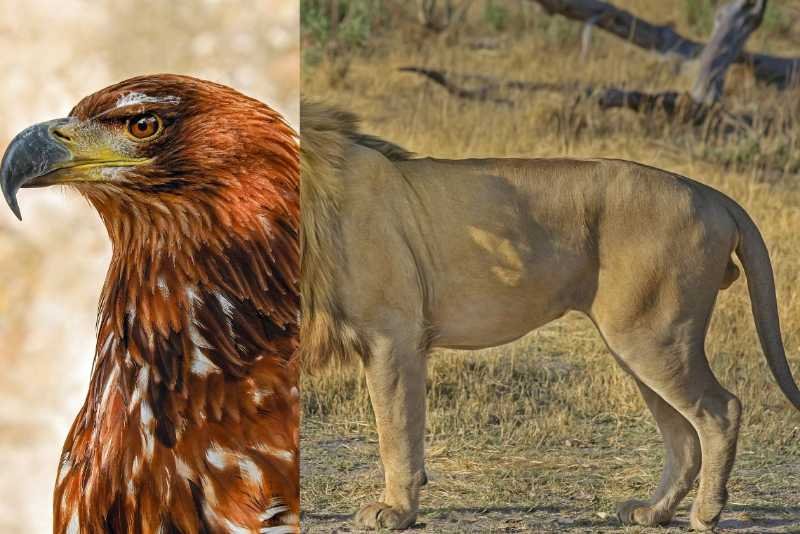
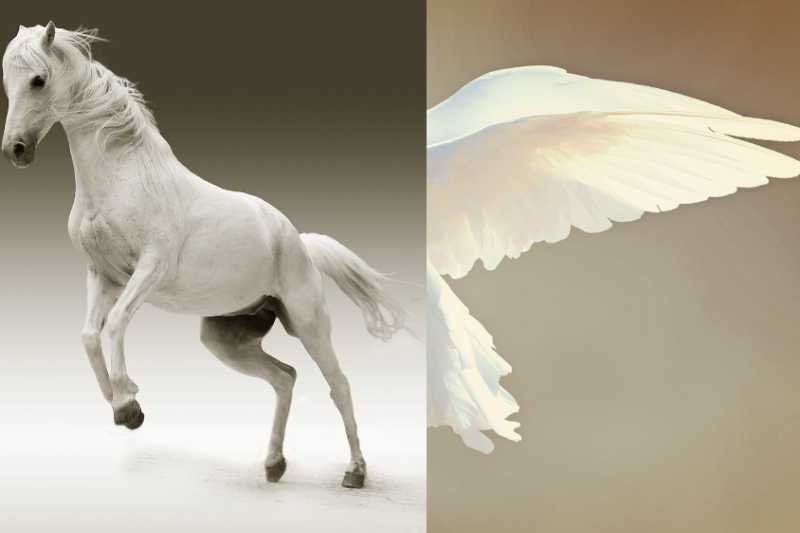
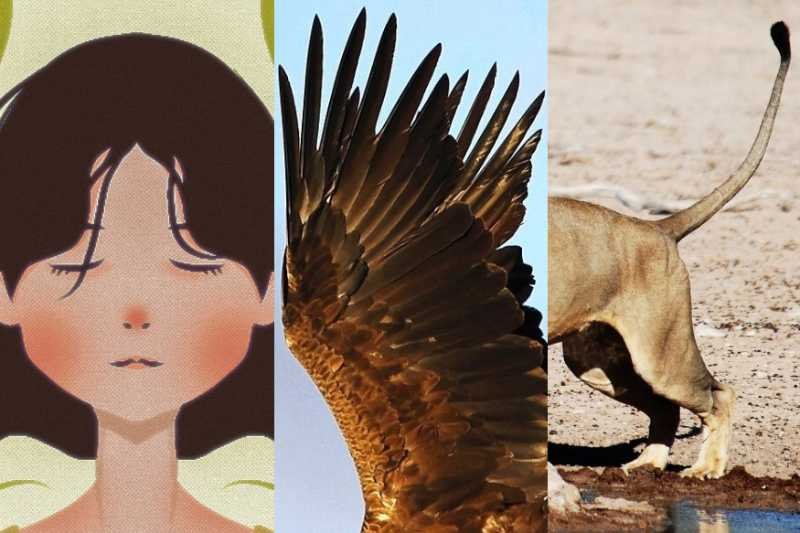
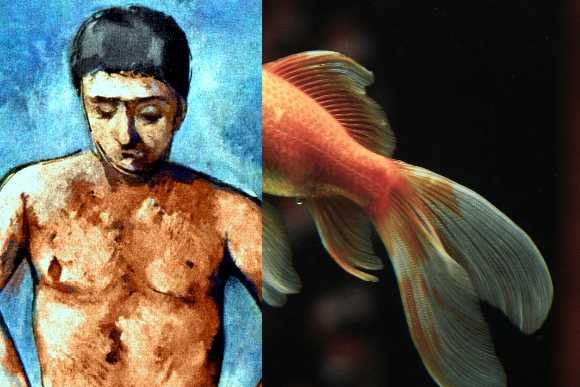
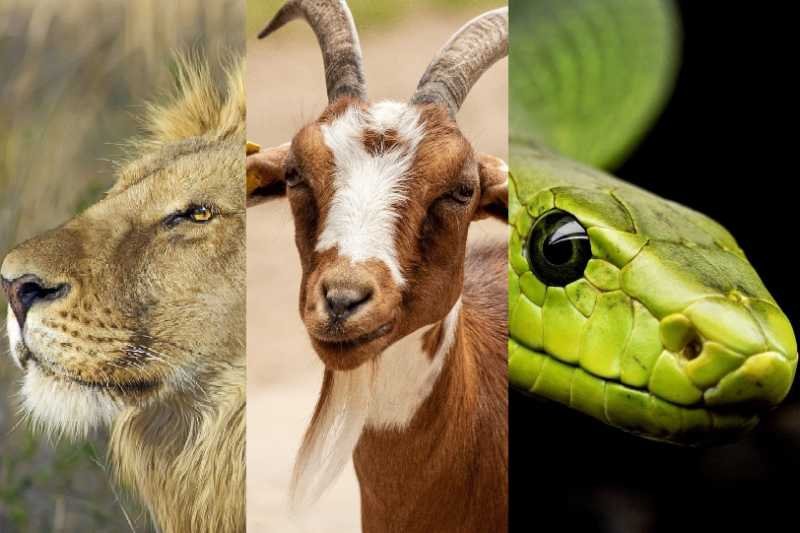
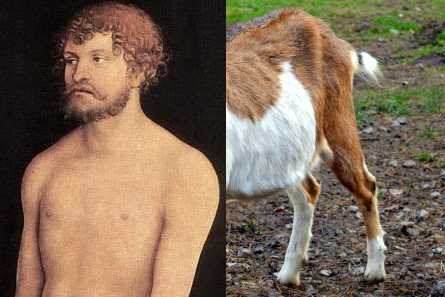
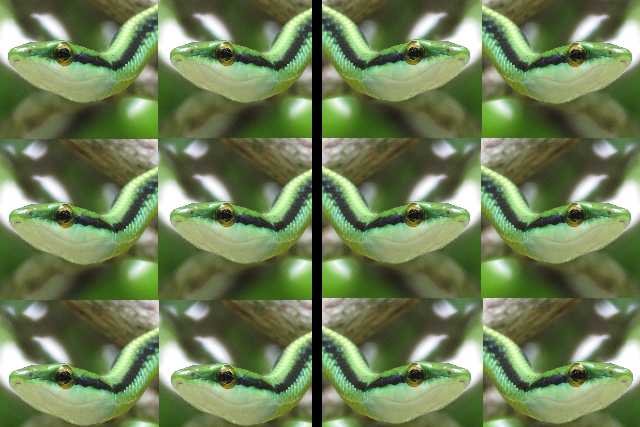
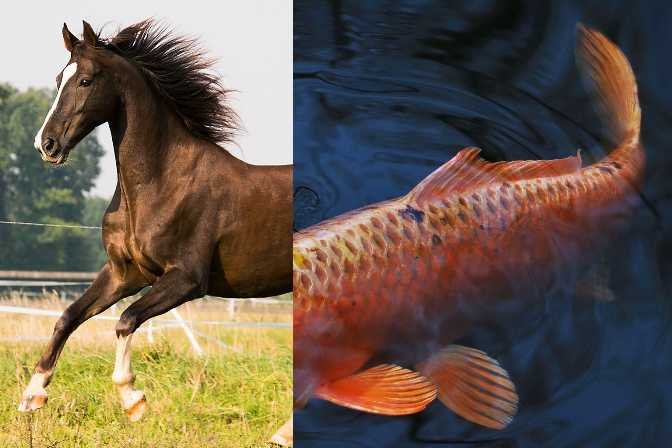
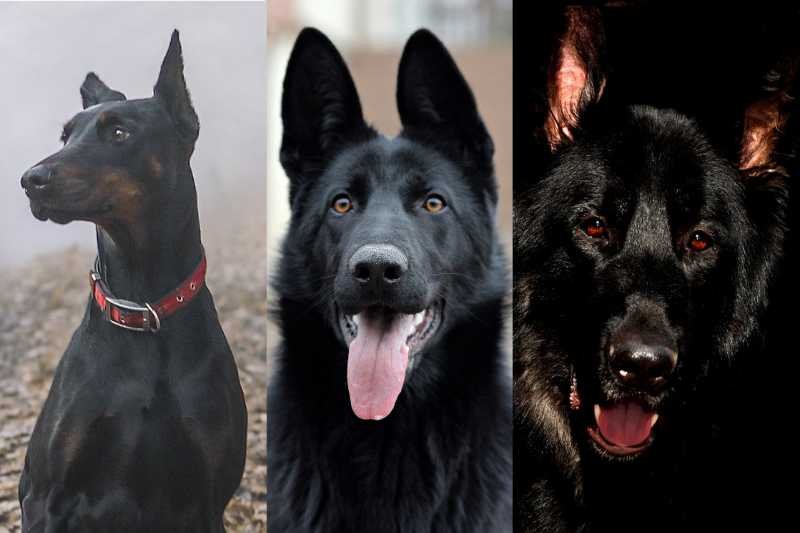
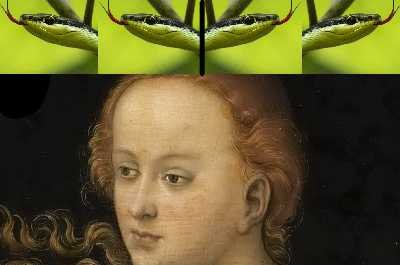
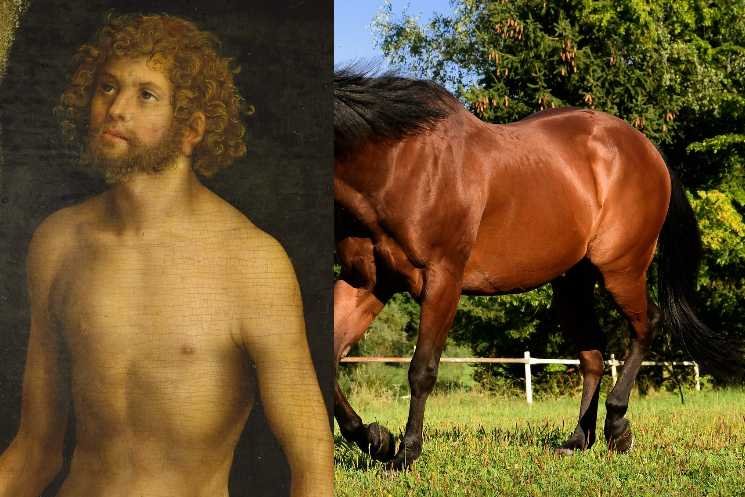
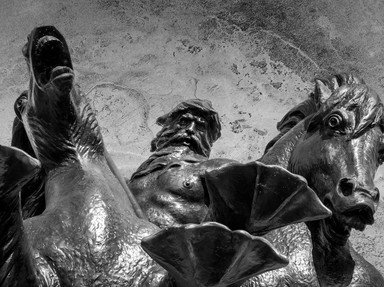
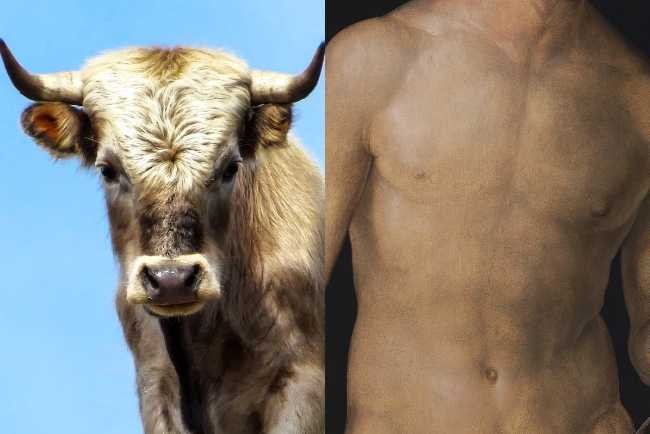
The ancient Greeks sure loved to smash together the disparate body parts of various creatures to make new ones. Each photo in this quiz contains the various body parts that equate to one of these creatures. (Click the images for a closer look!)

by trident. Estimated time: 3 mins.
  1. Home
  2. »
  3. Quizzes
  4. »
  5. Humanities Trivia
  6. »
  7. Mythology Mixture
  8. »
  9. Beasts of Myth

Author
trident
Time
3 mins
Type
Quiz #
415,513
Updated
May 01 26
# Qns
12
Difficulty
Easy
Avg Score
10 / 12
Plays
581
Awards
Top 5% quiz!
Last 3 plays: Guest 125 (12/12), treardon (12/12), Guest 92 (12/12).
Drag-Drop or Click from Right
Options
hippocampus griffin Chimera Cerberus Minotaur sphinx Hydra Triton Pegasus Gorgon centaur satyr


 View Image Attributions for This Quiz

Most Recent Scores
May 04 2026 : Guest 125: 12/12
Apr 26 2026 : treardon: 12/12
Apr 21 2026 : Guest 92: 12/12
Apr 12 2026 : Guest 107: 12/12
Mar 25 2026 : Fifiscot: 8/12
Mar 24 2026 : TriviaFan22: 10/12
Mar 20 2026 : Guest 68: 12/12
Mar 19 2026 : Guest 165: 12/12
Mar 18 2026 : Guest 151: 12/12

Quiz Answer Key and Fun Facts
1. Minotaur

Half man and half bull, the Minotaur occupies one of the more unsettling corners of Greek mythology. Its story begins with King Minos of Crete, who failed to honor a promise to Poseidon by refusing to sacrifice a prized bull. In response, the god cursed Minos' wife, Pasiphae, compelling her to fall in love with the animal; the Minotaur was the result of that unnatural union.

To contain the creature, Minos had a labyrinth constructed beneath his palace, an elaborate maze designed to prevent escape. Into this structure, victims, including Athenian youths, were periodically sent. Eventually, the hero Theseus killed the Minotaur, relying on a thread given by Ariadne to navigate back out. The creature has since been read symbolically, often representing the tension between order and untamed instinct.
2. griffin

Part lion, part eagle, the griffin (or gryphon) combines two apex animals into a single imposing form. It appears across several ancient cultures, including Greek, Persian, and Egyptian traditions, which all emphasize its role as a guardian. Usually placed in remote or mountainous settings, the creature is said to protect treasures and sacred objects.

In Greek mythology, it is linked to Apollo and associated with divine authority. Later, in medieval Europe, the griffin became a common feature in heraldry and art.
3. Pegasus

From the blood of Medusa, once she was slain by Perseus, sprang Pegasus, a winged horse whose origins are as dramatic as his abilities. Typically shown as white and capable of swift flight, Pegasus later became the companion of Bellerophon, who rode him into battle against the Chimera. Beyond combat, the figure took on more abstract associations, especially with poetry and artistic inspiration. Zeus, according to some accounts, ultimately placed Pegasus among the stars as a constellation.
4. sphinx

A creature of riddles and thresholds, the sphinx merges human intelligence with animal strength. In Greek mythology, it is usually depicted with a woman's head, a lion's body, and wings, stationed as a kind of deadly gatekeeper. Its most famous role occurs outside Thebes, where it challenges travelers with a riddle and kills those who fail. Oedipus, however, solves the puzzle, prompting the sphinx to destroy itself. Earlier Egyptian versions of the figure differ somewhat, presenting a more stable guardian positioned at temple entrances. Over time, the image spread, but the association with protection and mystery remained consistent.
5. Triton

Triton, a figure tied closely to the sea, is usually shown as a merman, with a human torso and a fish's tail. As the son of Poseidon and Amphitrite, he occupies a secondary but still influential role in Greek mythology. One of his defining attributes is the conch shell he carries, which he uses to control the movement of the waves, either calming or stirring them.

In artistic representations, he appears as both powerful and benevolent, connected to the safety of sailors. Comparable sea figures appear in other traditions, including Roman and Babylonian myths.
6. Chimera

Few mythological creatures are as visually chaotic as the Chimera. Its body combines multiple animals: a lion at the front, a goat emerging from its back, and a serpent forming the tail. Fire-breathing and destructive, it terrorized the region of Lycia until Bellerophon, mounted on Pegasus, managed to kill it. According to myth, the Chimera was the offspring of Typhon and Echidna, both monstrous figures in their own right.

The creature's composite form has often been interpreted as a symbol of disorder and unnatural fusion.
7. satyr

In forested landscapes and mountain regions, satyrs appear as embodiments of excess and instinct. With human upper bodies and goat-like lower halves, complete with horns and tails, they are closely tied to Dionysus, the god of wine. Their behavior reflects that connection: dancing, drinking, and pursuing pleasure without restraint. Greek mythology frames them as both mischievous and unruly, though similar figures show up elsewhere. Roman fauns, for example, and even certain creatures in Norse and Celtic traditions share elements of that same wild, nature-bound identity.
8. Hydra

Lurking in the swamps near Lerna, the Hydra presents a different kind of challenge, one that multiplies when attacked. This multi-headed serpent, sometimes said to have nine heads or more, regenerates two heads for each one cut off. Its breath is poisonous, and its presence alone contaminates the surrounding land.

Heracles faced it as part of his Twelve Labors, eventually defeating it with assistance from his nephew Iolaus, who cauterized the necks after each strike to stop regeneration. The creature appears in later traditions as well, usually retaining its identity as a near-indestructible adversary.
9. hippocampus

The hippocampus blends land and sea into a single form: a horse at the front, a fish or serpent at the rear. In Greek mythology, it is associated with Poseidon, depicted pulling the god's chariot across the ocean. Some accounts even describe it as his creation, intended to serve the sea gods. Similar hybrid creatures appear in other cultures, including Roman mythology and even Scottish and Japanese folklore.
10. Cerberus

Guarding the boundary between life and death, Cerberus is portrayed as a massive dog with three heads, a serpent's tail, and, in some versions, snakes woven into its mane. As the offspring of Typhon and Echidna, it belongs to a lineage of monstrous beings.

Its role is straightforward but absolute: prevent the dead from escaping and the living from entering the Underworld without permission. Heracles, during his final labor, was tasked with capturing the creature alive, an assignment that required both strength and restraint.
11. Gorgon

Among the most feared figures in Greek mythology, the Gorgons are defined by their lethal gaze and serpentine hair. Medusa, the most famous of the three sisters, differs in that she is mortal, unlike Stheno and Euryale. Originally human, she was transformed by Athena as punishment, her appearance altered into something monstrous. Anyone who looked directly at her would turn to stone.

The Gorgons are usually described as the daughters of Phorcys and Ceto, and their imagery, both grotesque and symbolic, appears frequently in ancient art.
12. centaur

Centaurs, with human torsos and horse bodies, occupy an ambiguous space between civilization and instinct. Some, like Chiron, stand apart for their wisdom and mentorship, teaching heroes and practicing medicine. Others, however, are portrayed as violent and impulsive, often associated with drunkenness and disorder.

Their origin story ties them to Ixion and Nephele, linking them to divine punishment and deception. In literature and art, they are rarely neutral figures; instead, they tend to highlight the tension between rational control and untamed behavior.
Source: Author trident

This quiz was reviewed by FunTrivia editor looney_tunes before going online.
Any errors found in FunTrivia content are routinely corrected through our feedback system.
5/6/2026, Copyright 2026 FunTrivia, Inc. - Report an Error / Contact Us