FREE! Click here to Join FunTrivia. Thousands of games, quizzes, and lots more!
Quiz about Shakespearean Insults

Shakespearean Insults Trivia Quiz


Shakespeare may have had a way with words but his characters can be downright vulgar...in their own poetic way. See if you know which play or character these insulting verses are from.
This is a renovated/adopted version of an old quiz by author Leviathan

A multiple-choice quiz by Kankurette. Estimated time: 3 mins.
  1. Home
  2. »
  3. Quizzes
  4. »
  5. Literature Trivia
  6. »
  7. Shakespeare
  8. »
  9. Shakespeare Lines and Quotes

Author
Kankurette
Time
3 mins
Type
Multiple Choice
Quiz #
89,325
Updated
Jan 10 26
# Qns
10
Difficulty
Average
Avg Score
7 / 10
Plays
64
Last 3 plays: Guest 174 (10/10), FlicksBuff (6/10), danson1949 (3/10).
- -
Question 1 of 10
1. "It is like a barber's chair that fits all buttocks: the pin-buttock, the quatch-buttock, the brawn-buttock or any buttock." A clown says this in which comedy, set in France? Hint


Question 2 of 10
2. "The gold I give thee will I melt and pour down thy ill-uttering throat". Who says this in 'Antony and Cleopatra'? Hint


Question 3 of 10
3. In which play, set in the Forest of Arden, does Jaques say, "And in his brain, which is as dry as the remainder biscuit after a voyage, he hath strange places crammed with observation, the which he vents in mangled forms"? Hint


Question 4 of 10
4. Who calls Goneril's steward Oswald a "lily-livered, action-taking knave; a whoreson, glass-gazing, super-serviceable, finical rogue; one trunk-inheriting slave" in 'King Lear'? Hint


Question 5 of 10
5. In 'Henry IV, Part 1', who says that "a coward is worse than a cup of sack with lime in it"? Hint


Question 6 of 10
6. "There's many a man hath more hair than wit." From which play, featuring shenanigans involving two pairs of twins, does this line come? Hint


Question 7 of 10
7. Which tragedy contains the line "thou liest, thou shag-eared villain"? (I'd say the name, but it might be unlucky.) Hint


Question 8 of 10
8. Which notoriously gruesome tragedy, set in Ancient Rome and featuring the characters Tamora and Aaron, contains the line "Villain, I have done thy mother"?

Answer: (two words)
Question 9 of 10
9. "His few bad words are matched with as few good deeds, for her never broke any man's head but his own, and that was against a post when he was drunk." This was said by a mere boy about whom in 'Henry V'? Hint


Question 10 of 10
10. "He's a tried and valiant soldier."
"So is my horse."
From which play, which features a man getting stabbed a lot, does this dialogue come?
Hint


(Optional) Create a Free FunTrivia ID to save the points you are about to earn:

arrow Select a User ID:
arrow Choose a Password:
arrow Your Email:


Most Recent Scores
Today : Guest 174: 10/10
Today : FlicksBuff: 6/10
Today : danson1949: 3/10
Today : Guest 97: 8/10
Today : mjgrimsey: 5/10
Today : Guest 81: 7/10
Today : demurechicky: 10/10
Today : Guest 86: 3/10
Today : james1947: 10/10

Quiz Answer Key and Fun Facts
1. "It is like a barber's chair that fits all buttocks: the pin-buttock, the quatch-buttock, the brawn-buttock or any buttock." A clown says this in which comedy, set in France?

Answer: All's Well That Ends Well

The Clown says this to the Countess of Roussilon in Act 2, Scene 2. 'It' is referring to the Clown's answer, which he claims will respond to all men and all questions. 'Quatch' means 'squat' or 'fat', while 'pin-buttock' means 'narrow' or 'thin', so the answer is broad enough to fit even the biggest of bums.
2. "The gold I give thee will I melt and pour down thy ill-uttering throat". Who says this in 'Antony and Cleopatra'?

Answer: Cleopatra

This is in Act 2, Scene 5, and Cleopatra says this to a messenger who tells her that Antony is well. She had originally offered him gold if he told her that Antony was well and free, but she also points out that 'well' can be used to describe the dead. If Antony is indeed dead, then Cleopatra will 'shoot the messenger' and force molten gold down his throat as punishment for bringing her bad news.
3. In which play, set in the Forest of Arden, does Jaques say, "And in his brain, which is as dry as the remainder biscuit after a voyage, he hath strange places crammed with observation, the which he vents in mangled forms"?

Answer: As You Like It

Jaques says this to Duke Senior in Act 2, Scene 7. He is talking about a fool, or court jester who wears 'motley' clothing, that he met in the forest. According to the Shakescleare 'translation', it means that the fool remembers multiple observations that he has made, and makes them in a roundabout way. Jaques goes on to say that he wishes he were a fool, and Duke Senior offers to make him a fool's coat.
4. Who calls Goneril's steward Oswald a "lily-livered, action-taking knave; a whoreson, glass-gazing, super-serviceable, finical rogue; one trunk-inheriting slave" in 'King Lear'?

Answer: Earl of Kent

This is in Act 2, Scene 2 of 'King Lear'. Kent does not mince his words, and also calls Oswald a "knave, a rascal, an eater of broken meats; a base, proud, shallow, beggarly, three-suited, hundred-pound, filthy, worsted-stocking knave" (so I'm guessing he thinks Oswald is a knave then). 'Broken meats' are kitchen scraps; 'glass-gazing' means that Oswald is vain; and 'one trunk-inheriting' means that Oswald has so few possessions, he can only fit them in a trunk. Regan and her husband the Duke of Cornwall then put Kent in the stocks.
5. In 'Henry IV, Part 1', who says that "a coward is worse than a cup of sack with lime in it"?

Answer: Falstaff

The fat knight John Falstaff is a comic character who appears in both halves of 'Henry IV' and 'The Merry Wives of Windsor'. This quote comes from Act 2, Scene 4. For context, Falstaff has been given sack, a type of fortified white wine. Calcium oxide, also known as lime, was added to wines to give them extra sparkle, and given that Falstaff is displeased about his sack having lime in it, he clearly does not like cowards. 'Henry IV, Part 1' has some pretty awesome insults, such as 'you bull's pizzle' and 'that roasted Manningtree ox with pudding in his belly'.
6. "There's many a man hath more hair than wit." From which play, featuring shenanigans involving two pairs of twins, does this line come?

Answer: The Comedy of Errors

This quote comes from Act 2, Scene 2 and is spoken by Antipholus (the one from Syracuse) to his manservant, Dromio (also of Syracuse). Dromio replies, "Not a man of those but he hath the wit to lose his hair." The two of them are having a discussion about baldness and why men lose hair so easily.
7. Which tragedy contains the line "thou liest, thou shag-eared villain"? (I'd say the name, but it might be unlucky.)

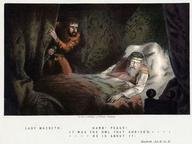
Answer: Macbeth

This is from Act 4, Scene 2 of 'Macbeth' and is spoken by Macduff's son when a trio of murderers come to kill his family. The murderer replies, "What, you egg!" 'Shag-eared' is either a reference to shaggy hair, or to the murderer having a mutilated ear, as criminals in medieval Britain would have their ears or noses slit as punishment. 'Macbeth' also contains the wonderful insult 'cream-faced loon'. (According to theatre superstition, saying the name of 'Macbeth' is considered bad luck.)
8. Which notoriously gruesome tragedy, set in Ancient Rome and featuring the characters Tamora and Aaron, contains the line "Villain, I have done thy mother"?

Answer: Titus Andronicus

Yes, even Shakespeare made 'your mum' jokes! This line comes from Act 4, Scene 2, and is spoken by Aaron, a Moor and the lover of Tamora, Queen of the Goths, who has been taken as a prize by Titus Andronicus. Tamora has given birth to a Black baby, much to the disgust of the nurse, and both her sons, Demetrius and Chiron, are horrified. Chiron says, "Thou hast undone our mother", and Aaron replies accordingly.
9. "His few bad words are matched with as few good deeds, for her never broke any man's head but his own, and that was against a post when he was drunk." This was said by a mere boy about whom in 'Henry V'?

Answer: Nym

This quote is from Act 3, Scene 2. If you've read Noel Streatfield's 'Ballet Shoes', you might know this one, because Petrova Fossil learns the boy's speech that begins 'as young as I am, I have observed these three swashers' for her audition for 'A Midsummer Night's Dream'.

The three 'swashers' are Nym, Pistol and Bardolph, who also appear in 'The Merry Wives of Windsor' as Falstaff's followers. The boy is also pretty scathing about Pistol ("he hath a killing tongue and a quiet sword") and Bardolph ("he is white-livered and red-faced").
10. "He's a tried and valiant soldier." "So is my horse." From which play, which features a man getting stabbed a lot, does this dialogue come?

Answer: Julius Caesar

This is from Act 4, Scene 1. Octavius says the first line, while Antony says the second. They are talking about Lepidus, the third member of the Second Triumvirate. Antony compares Lepidus to his horse and makes it clear that he sees him as nothing more than a means to an end.

As an aside, I used the Shakescleare 'translations' on the Litchart website to decipher what the characters are saying, as the only play in this quiz I have studied is 'Macbeth' (for GCSE English). It's worth looking at if you want more context, or if you're having trouble with the language.
Source: Author Kankurette

This quiz was reviewed by FunTrivia editor MotherGoose before going online.
Any errors found in FunTrivia content are routinely corrected through our feedback system.
1/10/2026, Copyright 2026 FunTrivia, Inc. - Report an Error / Contact Us