FREE! Click here to Join FunTrivia. Thousands of games, quizzes, and lots more!
Quiz about Tragedy
Quiz about Tragedy

Tragedy! Trivia Quiz

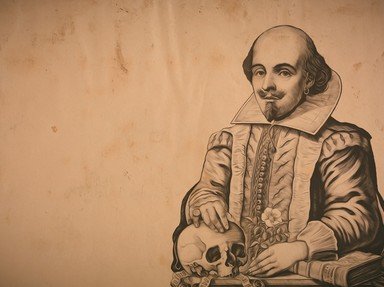
The Tragedies of William Shakespeare

Some of William Shakespeare's best known plays are his tragedies--those with ultimately unhappy endings. In this quiz, see if you can identify those titles that are described in other words.

by bernie73. Estimated time: 4 mins.
  1. Home
  2. »
  3. Quizzes
  4. »
  5. Literature Trivia
  6. »
  7. Shakespeare
  8. »
  9. Name the Play

Author
bernie73
Time
4 mins
Type
Quiz #
426,182
Updated
Nov 13 26
# Qns
11
Difficulty
New Game
Avg Score
11 / 11
Plays
18
Last 3 plays: Guest 67 (9/11), Guest 74 (9/11), cardsfan_027 (11/11).
Some of William Shakespeare's best plays were his tragedies (including his plays that were originally classed as tragedies). See if you can identify his tragedies when described "in other words".

The first play is " ". It could simply be called "Revenge". Or it could be called "The Roman General Who Seeks Revenge".

The second play is " ". This could be called "Two Children from noble families of Verona, Italy". Not exactly an "in other words", but I've heard this play described as why teenagers shouldn't date.

The third play is " ". This play could be described as "A Famous Member of the First Triumvirate". Surprisingly, the title character is not the main character of the story.

The fourth play is " " This play could go under several titles including "Small Village" and "Member of a Scandinavian Royal Family". Many people consider this one of the greatest plays of all time by any author.

The fifth play is " ". It could also be called "A Young Trojan Man and a Maid of Greece". Moving away from the direct title, it could refer to a love story that is part of an international war.

The sixth play is " ". It could be called "A General of Venice" or "The General With a Treacherous Subordinate". It is considered one of Shakespeare's great tragedies.

The seventh play is " ". It could be considered "A Story of a Monarch of Antiquity". The story looks at the relationship between the monarch and several of his children.

The eighth play is " ". This could be called "The Scottish Play" or perhaps "Out, Out, Damned Spot". The play studies the dangers and limits of ambition.

The ninth play is " ". This play could also be called "Generous Man Becomes Misanthropic". Later adoptions of the storyline have actually called it "The Man-Hater".

The tenth play is " ". This story could be called "A Roman and an Egyptian". It could also be considered the failure of the Second Triumvirate or the Rise of the Roman Empire.

The eleventh play is " ". The play could also be called "A Roman General and the Voscians" or "In the Time of the Roman Republic".
Your Options
[Romeo and Juliet] [Troilus and Cressida] [Timon of Athens] [Othello] [Hamlet] [Julius Caesar] [Antony and Cleopatra] [Coriolanus] [King Lear] [Titus Andronicus] [Macbeth]

Click or drag the options above to the spaces in the text.


Most Recent Scores
Today : Guest 67: 9/11
Today : Guest 74: 9/11
Today : cardsfan_027: 11/11
Today : blackavar72: 11/11
Today : xchasbox: 11/11
Today : cranky99: 4/11
Today : Guest 174: 11/11
Today : lomalynn2: 6/11
Today : zorba_scank: 11/11

Quiz Answer Key and Fun Facts
Answer:

"The Lamentable Tragedie of Titus Andronicus" (c. 1588-1593) is considered a "revenge" play. It is thought that Shakespeare was trying to emulate the often-violent "revenge" plays that were popular at the time. The plot centers on a Roman general, Titus Andronicus, and how he seeks revenge and is the target of revenge multiple times.

"The Tragedie of Romeo and Juliet" (c. 1591-1595) is arguably the best known of all of Shakespeare's plays of any type. Young Romeo Montague and Juliet Capulet meet and immediately fall in love. The problem is that their families are engaged in a long-standing feud in Verona, Italy. Though popular opinion considers the story to be a romance, the deaths of the title characters aren't even the majority of deaths in the story.

In "The Tragedie of Iulius Caesar (c. 1599), Julius Caesar is the last surviving member of Rome's First Triumvirate. Though Julius Caesar is the title character, he is killed with two acts plus of the play to go. The story really focuses on the seemingly-reluctant conspirator, Marcus Junius Brutus, highlighting his thought processes and actions. Quite a number of well-known and lesser-known Romans also appear in this story.

"The Tragedy of Hamlet, Prince of Denmark" (c. 1599-1601) is our next play. First of all, another word for a small village is a hamlet. Hamlet's Uncle Claudius has killed Hamlet's father and married Hamlet's mother and claimed the throne. Hijinks ensue. Well, not really hijinks, but some great drama and soaring language including "To be or not to be..."

"The Tragedy (or History) of Troilus and Cressida" (c. 1602) is set in Troy during the Trojan War. Of course the two come from different sides--Troilus for the Trojans and Cressida for the Greeks. Their story veers from bawdy comedy to pathetic tragedy. The story doesn't just focus on the two ill-fated lovers but encompasses the Trojan War as a whole.

The story of "The Tragedy of Othello, the Moor of Venice" (c. 1603), which centers around the Moorish general Othello, his wife Desdemona, and his treacherous lieutenant, Iago, is a story of deception and betrayal. The story also grants a rare look at how Shakespeare handles the issue of race. A popular play, the story has been adapted numerous times for stage and screen.

In "The Tragedy of King Lear" (c. 1605-1606), King Lear of ancient Britain has decided to retire and divide his kingdom between several of his children. How the children respond to Lear and how Lear responds to the children does much to describe the plot forward. Along the way, the story explores madness and human nature.

In "The Tragedy of Macbeth" (c. 1606), Macbeth, the Thane of Glamis--pushed by the ambition of his wife--kills Duncan, King of Scotland, and claims the throne. In the play, Macbeth's rule lasts a number of months. In real life, he ruled for nearly twenty years and was briefly survived by his stepson. Among the theatrical crowd, it is considered bad luck to directly state the play's title and it is often described as "The Scottish Play".

In "The Life of Timon of Athens" (c. 1606), Timon, a wealthy lord of Greece, gains a reputation for giving and generosity. The generosity, however, is not truly thoughtful, but almost excessive and unnecessary. After he dissipates his wealth, Timon finds his "friends" are not nearly so generous. Timon ends his life as a poor and bitter misanthrope.

"The Tragedy of Anthonie, and Cleopatra" (c. 1607) focuses on Marc Antony, a former lieutenant of Julius Caesar, and Cleopatra Selene, the last Pharaoh of Egypt. In addition, the story tells of the conflict between Antony and Octavian Caesar and the beginnings of the Roman Empire. Rome and Egypt are the two primary settings of the storyline.

"Coriolanius" (c.1605-1608) focuses on a Roman general who first defeats the Voscians then finds himself allying with them, before being double crossed. The story is set during the early days of the Roman Republic. This play is considered one of the final works of Shakespeare.

Please note that the word "tragedy" changes in the titles of the plays over the years.
Source: Author bernie73

This quiz was reviewed by FunTrivia editor looney_tunes before going online.
Any errors found in FunTrivia content are routinely corrected through our feedback system.
11/13/2026, Copyright 2026 FunTrivia, Inc. - Report an Error / Contact Us