FREE! Click here to Join FunTrivia. Thousands of games, quizzes, and lots more!
Quiz about Chorditis

Chorditis? Trivia Quiz


Got Chorditis? A musical "illness" where the only cure is identifying chords on sight (or sound)? Take this quiz and find out just how serious your condition is.

by reedy. Estimated time: 3 mins.
  1. Home
  2. »
  3. Quizzes
  4. »
  5. Music Trivia
  6. »
  7. Other Music
  8. »
  9. Music Theory

Author
reedy
Time
3 mins
Type
Quiz #
423,139
Updated
Feb 24 26
# Qns
10
Difficulty
New Game
Plays
6
Last 3 plays: DavidD13 (6/10), xchasbox (4/10), ertrum (10/10).
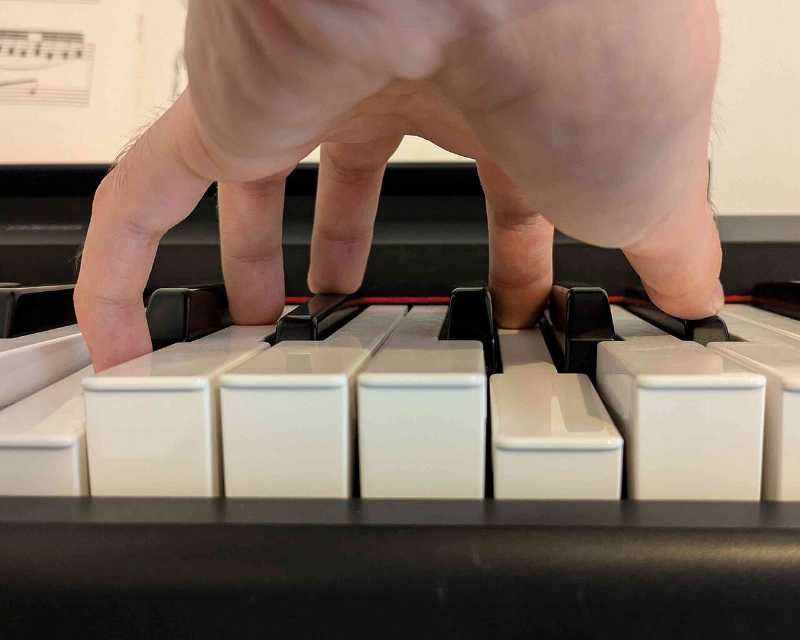
Identify the pictured chord.
Drag-Drop or Click from Right
Options
C Major G Major C# Diminished B-flat Major F Minor C Minor 7 E-flat Dominant 7 E-flat Minor A Major D Augmented


 View Image Attributions for This Quiz

Most Recent Scores
Today : DavidD13: 6/10
Today : xchasbox: 4/10
Today : ertrum: 10/10
Today : klotzplate: 10/10
Today : mandy2: 4/10
Today : fado72: 10/10

Quiz Answer Key and Fun Facts
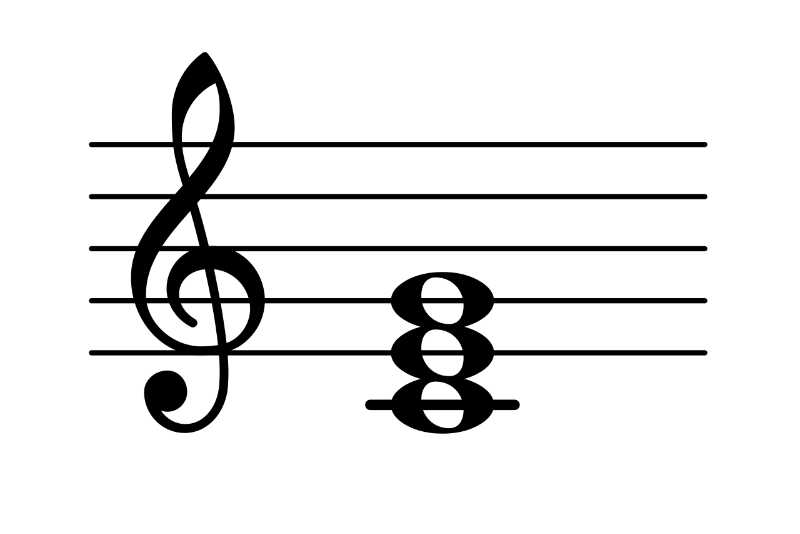
1. C Major

A triad in root position is composed of the 1st, 3rd, and 5th notes of a given scale. It is the relationship between those intervals that determine the quality of the chord.

In the key of C Major, the scale is comprised of all natural notes (the white keys on a piano keyboard): C - D - E - F - G - A - B - C.

The C Major chord is C - E - G, with C up to E a major 3rd (4 semitones), and the E to G interval a minor 3rd (3 semitones). That stacking of intervals (major 3rd, minor 3rd) makes a major chord.

The photograph shows the notes as they would appear in the treble clef staff.

Music in C Major is known for its bright, clean, and uncomplicated sound, often associated with openness, simplicity, and emotional clarity. Well‑known songs in this key include John Lennon's "Imagine," Lady Gaga's "Bad Romance," and Billy Joel's "Piano Man."
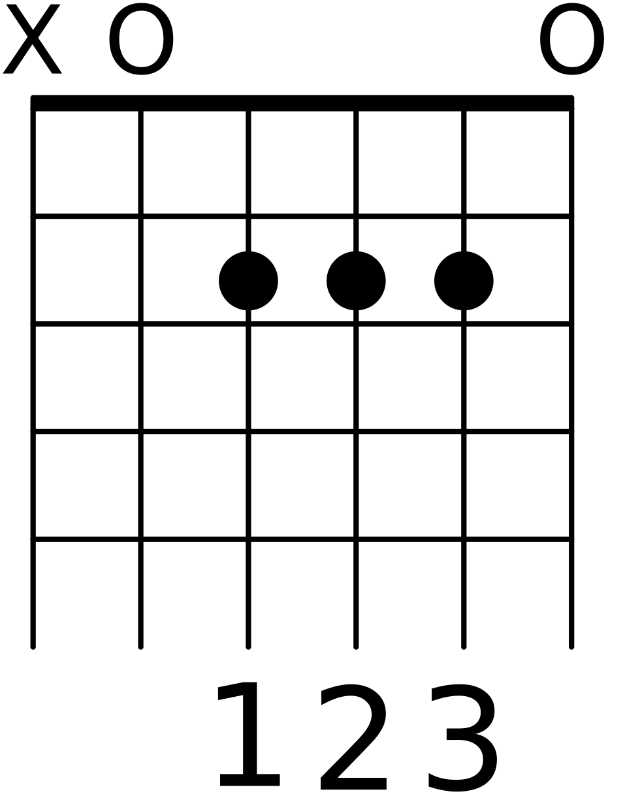
2. G Major

Semitones are adjacent keys on a piano (e.g. white key to black key) or neighbouring frets on a guitar. Most natural notes (e.g. A to B) are made up of two semitones, or 'half-steps,' although there are two pairs of natural notes that are only a semitone apart (no black key between them on the piano): B to C and E to F. An interval of two semitones is a full 'tone.'

All major scales (and major chords) have the same pattern of intervals as you ascend the scale (or chord). Tone = T, Semitone = S

Major scale: T-T-S-T-T-T-S

Thus a G Major scale must follow the same pattern as the C Major scale (all natural notes) seen in the first question: G - A - B - C - D - E - F# - G

And also the G Major triad: G - B - D.

The photograph shows the fret-board fingering for a G Major chord on the guitar. Each open string would have the pitches of (low) E, A, D, G, B, E (high). With the different frets being pressed the notes played become (low) G, B, D, G, D, G (high), which all fit the G Major triad shown above.

Music in G Major is often associated with a bright, natural, and open sound. It conveys warmth, optimism, and clarity, making it a favourite key for folk tunes, acoustic pop, and sing‑along classics. Well‑known songs in this key include Pink Floyd's "Wish You Were Here," John Mayer's "Gravity," and Radiohead's "Creep."
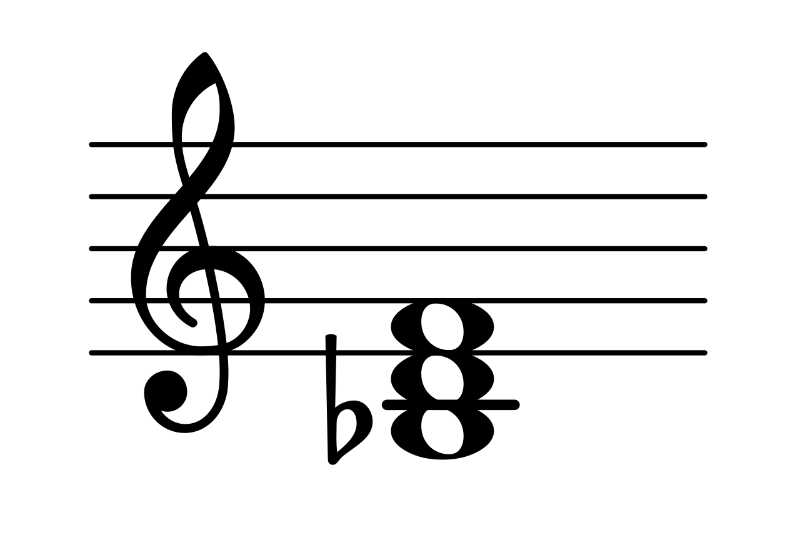
3. B-flat Major

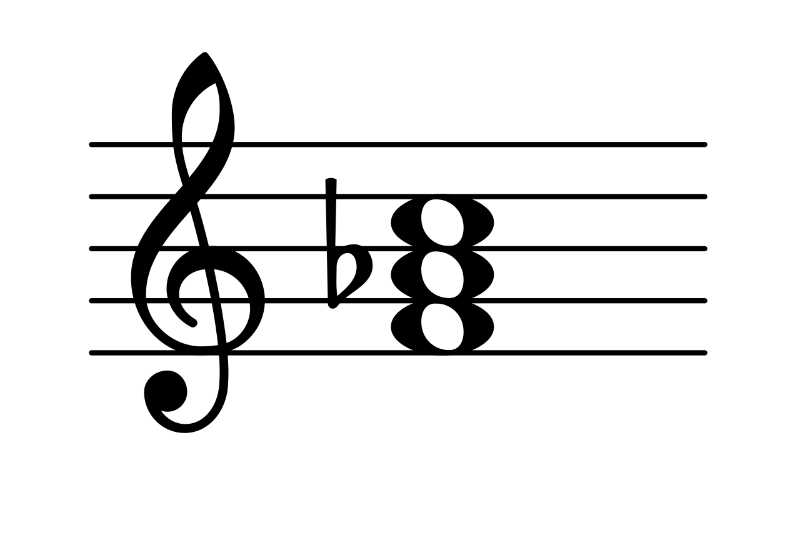
Another major chord presented to you, this time part of the key of B-flat. Following the same pattern of tone and semitone to create a major scale, the key of B-flat has both B-flat and E-flat, with the rest of the notes being naturals: B-flat - C - D - E-flat - F - G - A - B-flat.

The photograph shows the notes as they would appear in the treble clef staff.

Music in B‑flat Major is known for its warm, full, and reassuring character - often used for expressive, heartfelt, or uplifting songs. Well‑known examples include "Sweater Weather" by The Neighbourhood, "Love the Way You Lie" by Eminem and Rihanna, and "Rocket Man" by Elton John.
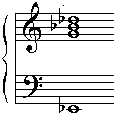
4. E-flat Dominant 7

There are different types of 7 chords, where a fourth note is stacked above the triad (1st, 3rd, 5th, 7th).

A 'dominant 7' chord is so named as it is based on the dominant (the 5th note) of a specific key. In this case, E-flat is the dominant (5th) of the key of A-flat (either major or minor). Using the major key as the example, the scale has four flats: A-flat - B-flat - C - D-flat - E-flat - F - G - A-flat.

The Dominant 7 chord of A-flat begins with the 5th note of that scale, becoming an E-flat Dominant 7 chord: E-flat - G - B-flat - D-flat.

A dominant 7 chord is also known as a 'major-minor 7' as it is built on a major chord with a minor 7th, so while it has the root of an E-flat Major chord, the D-flat (7th) doesn't fit the key of E-flat Major - which is how you can recognize it as a dominant 7 chord.
5. A Major

The key of A Major, following the T-T-S-T-T-T-S interval pattern, is A - B - C# - D - E - F# - G# - A. The notes in the major triad, therefore, are A - C# - E.

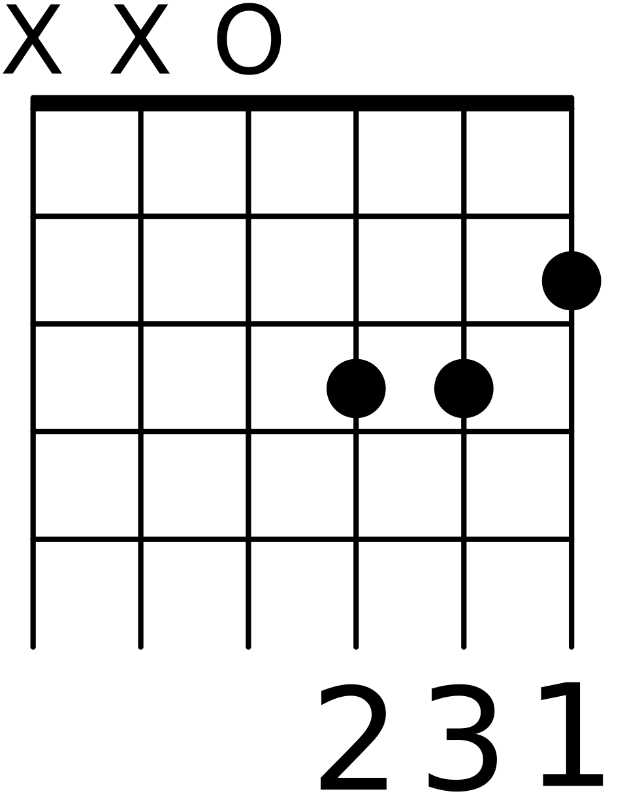
In the guitar-fingering graphic, we can see that the first (low E) string is not played, allowing the open A string (and root of the chord) to be the lowest sounding note. With the two open strings and the different frets being pressed the notes played become (low) A, E, A, C#, E (high), which all fit the A Major triad shown above.

Music in the key of A Major is often associated with a bright, open, and uplifting character. It tends to evoke feelings of confidence, clarity, and optimism, making it a popular choice across genres - from rock and pop to classical and folk. Several well‑known songs showcase the energetic and expansive sound of A Major, including Oasis's "Wonderwall," Adele's "Someone Like You," and Toto's "Africa."
6. C# Diminished

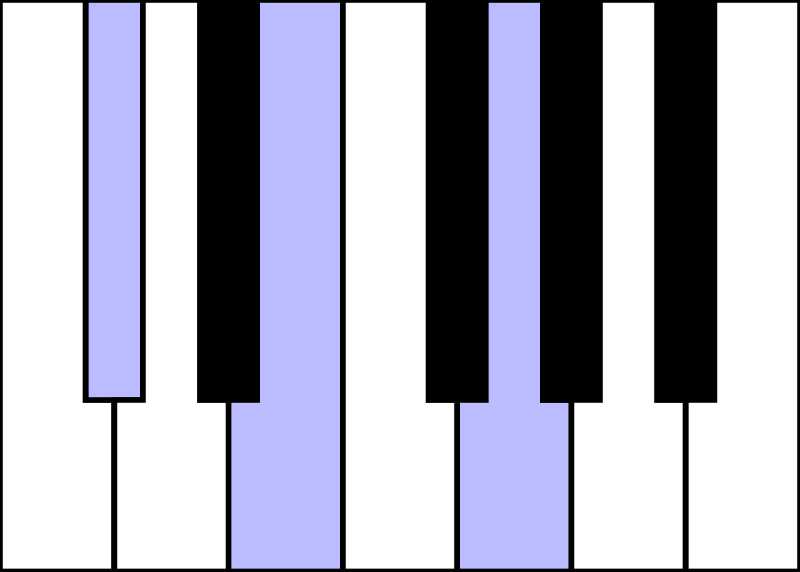
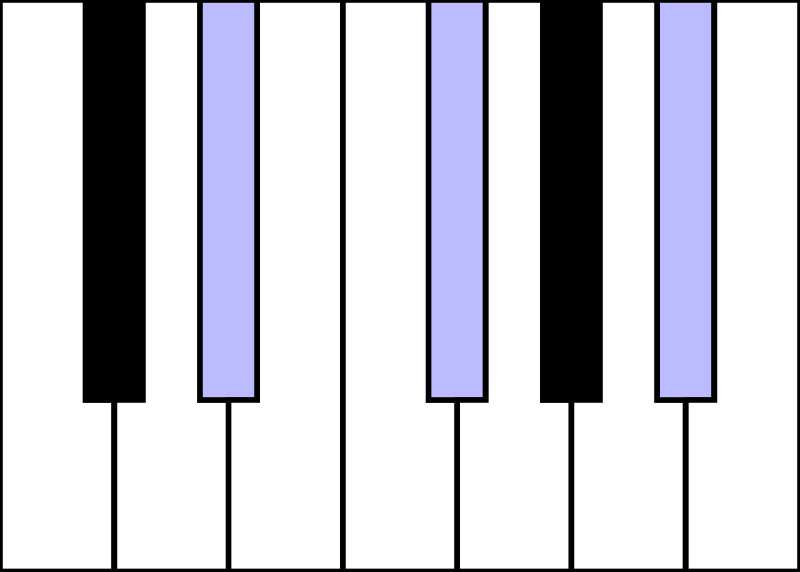
The piano visual makes it very easy to see the interval between each pair of notes. With only three steps (semitones) between the notes, each interval is revealed to be a minor 3rd, meaning that the triad shown is neither a major triad (major 3rd + minor 3rd) nor a minor triad (minor 3rd + major 3rd), but is actually a diminished triad (minor 3rd + minor 3rd).

Remembering that a triad is the 1st, 3rd, and 5th notes of a scale, the letters must not be alphabetically 'adjacent,' which means that the notes shown on the keyboard photo are C# - E - G (even though the C# could be viewed as a D-flat).

Diminished chords are primarily used to create tension, dramatic passing movement, and suspense that resolves to a more stable chord.
7. E-flat Minor

A minor scale begins on the sixth note of its relative major key, which changes the order of intervals from the major (T-T-S-T-T-T-S) to the minor (T-S-T-T-S-T-T). This is a 'natural' minor scale without any of the alterations that can happen.

The key of E-flat Minor is relative to the key of G-flat Major, with both having six flats in the key signature (everything but F). Thus, for the E-flat Minor, the 1st, 3rd, and 5th notes are E-flat, G-flat, and B-flat, which are the three piano keys highlighted in the photo. Visually, you can see the relation between the intervals, with the E-flat to G-flat (a minor 3rd) comprised of three semitones, with the G-flat to B-flat (a major 3rd) having four semitones.

Music in the key of E-flat Minor is often characterized by deep emotion, melancholy, or a dark mood. Some famous songs written in this key include Michael Jackson's "Thriller" and Stevie Wonder's "Superstition."
8. D Augmented

Where a diminished chord is comprised of two minor 3rd intervals, an augmented chord is the opposite, with two major 3rds (4 semitones each) stacked on one another. In this case, the first interval is D - F# (which would begin a D Major scale), with the next interval going F# - A#, one semitone further than what you would expect for a D Major chord (D - F# - A).

The guitar fingering image has the (low) E and A strings not being played, which leaves the open string D as the lowest note of the chord. With the remaining fret positions, the strings sound D - A# - D - F#.

In a similar way to diminished chords, augmented chords produce the sound of tension and instability in music, making the listener anxious for whatever sound comes next.
9. F Minor

The key of F Minor is related to the key of A-flat Major, both of which have four flats in the key signature. With the 1st, 3rd, and 5th notes, the F Minor chord is (as shown in the picture) F - A-flat - C.

Music in F minor is often associated with intensity, emotional weight, and a sense of brooding depth. Its darker tonal colour makes it a powerful key for songs that explore longing, tension, or dramatic emotional arcs. Well‑known examples of songs in F minor include "Smells Like Teen Spirit" by Nirvana, "Hello" by Adele, and "Song 2" by Blur.
10. C Minor 7

A minor 7 chord is constructed by adding the diatonic 7th note (the note that fits the scale) above a minor triad. In the example shown, the pianist is playing C - E-flat - G - B-flat, which fits with the notes of the unaltered natural C minor scale (C - D - E-flat - F - G - A-flat - B-flat - C).

Minor 7 chords are often used as 'predominant' chords in tonicizing a key, and are commonly used in jazz to spice up a regular minor chord.
Source: Author reedy

This quiz was reviewed by FunTrivia editor agony before going online.
Any errors found in FunTrivia content are routinely corrected through our feedback system.
2/24/2026, Copyright 2026 FunTrivia, Inc. - Report an Error / Contact Us