FREE! Click here to Join FunTrivia. Thousands of games, quizzes, and lots more!
GameCube 101 Trivia Quiz
I adopted this quiz and decided to make it more of an introductory quiz about this fascinating console. Fill in the blanks and learn a bit more (like me) about the GameCube. This is a renovated/adopted version of an old quiz by author JMeister
Last 3 plays: maninmidohio (16/18), allboys6 (8/18), xchasbox (12/18).
The GameCube has an interesting history. It was officially released by Nintendo in and was their sixth-generation entry into the home console market. Developed under the codename "Project ," the system was designed by Nintendo as a direct successor to the . It was, however, facing stiff compeition. It was up against Sony's dominant and Microsoft's new . Despite its unique design and powerful hardware, the console could not live up to expectations and was succeeded by the Wii in .
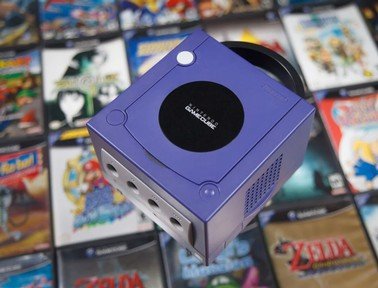
The physical design of the GameCube remains one of the most distinct in gaming history. It had a compact, literal cube shape -often associated with its signature indigo color-and a built-in carrying handle for portability. The system was powered by the IBM processor that was made just for that unit. Perhaps its most enduring legacy is its , which featured an asymmetrical layout, a massive "A" , and a pressure-sensitive for top quality ergonomics. The GameCube was also unique in the fact it used small optical , unlike its precursor's ROM for its games.
As far as software, Nintendo was banking on the popularity of its long-running exclusive franchises. "Super Smash Bros. " became a cultural phenomenon.The console also served as a home for darker, more mature experiences such as the groundbreaking "Resident 4" game. Furthermore, the system expanded the horizons of the Pokémon franchise with "Pokémon ". These titles, along with hits like "The of Zelda: The Wind Waker" and "Metroid ", ensured that while the GameCube may have been third in sales, it remained a first-class destination for high-quality gaming.
The Nintendo GameCube made its debut in 2001, launching in Japan on September 14 and in North America on November 18. It was positioned as a powerful and affordable alternative to its rivals, hitting the market with a starting price of $199. "Project Dolphin" was the codename Nintendo used during the console's development phase. They chose this moniker to represent the speed, intelligence, and agility they wanted the hardware to possess.
The company was putting the GameCube, the successor to their legendary Nintendo 64, up against some stiff competition. Sony's PlayStation 2 (PS2) had been out for about a year and already had a massive, and growing, fan base. It had the ability to play DVD movies, full backward compatibility, a long list of exclusive games, and a "vibe" of being for adults. Microsoft's XBox, also introduced in 2001, gave the world the game "Halo", an 8GB hard drive, and that ability to play movies.
Nintendo, making the unit cube shaped, wanted the console to feel compact, friendly, and non-intimidating. By stacking the internal components vertically they could keep the console's footprint very small. While the indigo (purple) is the most iconic, the GameCube actually came in several official colors including black, orange, silver, and gold. It also had a built in handle that gave it the appearance of something a child would carry. It was soon dubbed the "Lunchbox". The Gekko processor was the custom-designed "brain" of the Nintendo GameCube that was known for its high efficiency and low heat.
The GameCube controller is celebrated for its ergonomic "handlebar" design, featuring an oversized green "A" button and a unique yellow "C-stick" for camera control. Its most innovative feature was the pressure-sensitive L and R analog triggers that allowed for dual levels of input in a single button.The console used 8cm miniDVD-based discs that held roughly 1.5GB of data, a choice made by Nintendo to combat piracy and avoid licensing fees. While these smaller discs allowed for significantly faster loading times than the competition, their limited capacity often required larger games to be split across two separate discs.
"Super Smash Bros. Melee" became the GameCube's best-selling title because it perfected the "all-star" crossover concept with a massive group of Nintendo icons and a fluid, high-speed physics engine that felt incredibly responsive. It also offered four-player multiplayer mode, which turned the console into a key part of social gaming and competitive tournaments for decades. "Resident Evil 4", which saw many re-releases on the PlayStation 2, Wii, and an eventual HD remake, got its start on the GameCube. Also for horror fans, and unique to the GameCube, was "Eternal Darkness," the first ever game published by Nintendo to be rated M for Mature by the ESRB.
"Pokemon Colosseum" was a hit on the GameCube because it finally brought the franchise into full 3D with a unique, grittier storyline centered on "snagging" and purifying Shadow Pokémon. It further succeeded by allowing fans to link their handheld games to the GameCube, letting them see their personal teams battle in high-def on the big screen. "The Legend of Zelda: The Wind Waker" offered vibrant, cinematic visuals while "Metroid Prime" gave gamers a highly detailed and immersive alien world.
The Nintendo GameCube reached the end of its lifecycle in 2007, when Nintendo officially discontinued worldwide production. Despite a popular library of games, it finished the "console war" in third place with approximately 22 million units sold. The GameCube's successor was the Nintendo Wii, which launched in November 2006.
This quiz was reviewed by FunTrivia editor kyleisalive before going online.
Any errors found in FunTrivia content are routinely corrected through our feedback system.