FREE! Click here to Join FunTrivia. Thousands of games, quizzes, and lots more!
Quiz about Cosmic Rays

Cosmic Rays Trivia Quiz


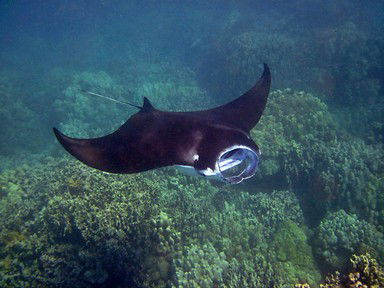
The word "manta" comes from the word "mantle," a type of cloak. Like living shadows, designed for the void, they drape over the seas with an otherworldly grace. If any creatures of this Earth can be called cosmic, it's them. Let's learn about them.

A photo quiz by etymonlego. Estimated time: 3 mins.
  1. Home
  2. »
  3. Quizzes
  4. »
  5. Animal Trivia
  6. »
  7. Fish

Author
etymonlego
Time
3 mins
Type
Photo Quiz
Quiz #
423,358
Updated
Mar 07 26
# Qns
10
Difficulty
Average
Avg Score
8 / 10
Plays
20
Last 3 plays: Guest 84 (6/10), Guest 174 (10/10), debbitts (7/10).
-
Question 1 of 10
1. Tip to tip, the Atlantic manta ray has a massive "fin-span." Which of these sea creatures is about as long (nose to tail) as a manta is wide? Hint


photo quiz
Question 2 of 10
2. Like many of the largest creatures in the ocean, what sort of prey do manta rays take? Hint


photo quiz
Question 3 of 10
3. Mantas are some of the most efficient swimmers in the ocean. To improve that efficiency, what adaptation do manta rays share with their close cousins, the sharks? Hint


photo quiz
Question 4 of 10
4. Unlike all other fish, manta rays have three pairs of appendages.


photo quiz
Question 5 of 10
5. A mouth like that deserves an exceptional set of teeth. What exactly is so special about the teeth of manta rays? Hint


photo quiz
Question 6 of 10
6. Among ocean divers, what reputation do manta rays have? Hint


photo quiz
Question 7 of 10
7. Manta rays have quite a few things in common in whales. What whale behavior might you see in mantas as well? Hint


photo quiz
Question 8 of 10
8. Mantas lay large clutches of tiny eggs, as many as 200 at a time.


photo quiz
Question 9 of 10
9. Though they spend most of their time in the open ocean, mantas do visit coral reefs. In fact, they're known to frequent their favorite "spas" for gentle cleaning by some tiny fish. Which of these fish keeps a standing appointment for a manta's fini-pedi? Hint


photo quiz
Question 10 of 10
10. Because of their buoyancy, manta rays can't dive below 30 feet (9 m).


photo quiz

(Optional) Create a Free FunTrivia ID to save the points you are about to earn:

arrow Select a User ID:
arrow Choose a Password:
arrow Your Email:


View Image Attributions for This Quiz

Most Recent Scores
Today : Guest 84: 6/10
Today : Guest 174: 10/10
Today : debbitts: 7/10
Today : jackslade: 9/10
Today : xchasbox: 10/10
Today : zurddog01: 6/10
Today : Reamar42: 6/10
Today : Guest 172: 3/10
Today : BarkeyBoy: 10/10

Quiz Answer Key and Fun Facts
1. Tip to tip, the Atlantic manta ray has a massive "fin-span." Which of these sea creatures is about as long (nose to tail) as a manta is wide?

Answer: A great white shark

Your average Mobula yorae, the largest manta species, is about 20 feet (6 m) across, equal to the biggest great whites. That works out to roughly three barracudas, two ocean sunfish, or 1.8 wandering albatrosses. And those are just average-sized mantas - the largest reach up to 30 feet (9 m) across!

Sharing a genus with the giants are the various species of devil ray, which grow to a "mere" 10 feet (3m) across. The similar eagle rays can differentiated by spotting (mantas never have spots, many eagle rays do) or by their mouths. If it's wide open in front, it's a manta ray, and if it's closed under their body, it's an eagle ray.
2. Like many of the largest creatures in the ocean, what sort of prey do manta rays take?

Answer: Plankton

"Plankton" isn't one species, or even one kingdom. The plankton includes all animals, plants, and protists that don't bother propelling themselves, letting the ocean currents do what they will. The manta's diet includes anything small and slow-moving enough to go down the hatch - planktonic crabs, krill, shrimp, and the very occasional fish with zero survival instincts. If that gaping maw doesn't give it away, mantas aren't too picky with what they eat.

Other plankton-eating "megafauna" (i.e., big animals) include ocean sunfish, whale and basking sharks, and baleen whales.

And by the way, it was an ordinary sting ray that killed poor Steve Irwin, not a manta ray. They're innocent I tell you - their tails don't even have barbs! That little wisp of a tail is only for directing their movement.
3. Mantas are some of the most efficient swimmers in the ocean. To improve that efficiency, what adaptation do manta rays share with their close cousins, the sharks?

Answer: A skeleton made of cartilage

The structural framework of mantas and rays are made of toughened cartilage - their "skeletons" contain no marrow and no bones. That makes them incredibly flexible and lightweight, but strong enough to reach relatively high speeds. The type specimen of M. yorae was successfully preserved by the Smithsonian Institute, and its cartilage skeleton is a permanent display.

There have even been several designs for one-man submarines that deliberately try to mimic manta rays, allowing for total maneuverability over the diving-bells and bathyscaphes of yore.

Mantas can even hover in place - pretty impressive, since they never stop swimming!
4. Unlike all other fish, manta rays have three pairs of appendages.

Answer: True

It's true. Besides their wings and their pelvic fins, the "cephalic lobes" - or "devil horns" - of these rays are a set of mobile, functional, paired appendages. Mantas occasionally feed at the ocean floor, and their extra lobes let them settle sediment on the seabed while they pass.

Having three sets of paired appendages makes them unique among all vertebrate animals, not just fish. Since they are six-limbed creatures with no skeletons, I contend that they meet all the qualifications of insects, but I've yet to convince any entomologists of my discovery.
5. A mouth like that deserves an exceptional set of teeth. What exactly is so special about the teeth of manta rays?

Answer: They are only used during mating

Mantas actually pass their food through "gill rakers," which function similarly to a blue whale's baleen. What remains of their teeth are used during mating so that males can hang on. They haven't even got a full set - the teeth are only found on the bottom jaw. You can tell a female has recently mated because the teeth leave scars on the surface of their wingtips (usually the left side).

Mating involves a "courtship train." One male lands on top of a female and attempts to follow along with her motions. Then another follows the train, and another, and another. The female locomotes fast, then slow, high and low, to see if the males can match her flow. The train, too, may breach the water's surface - if breaching is for fun, then this ritualized fun has all the fun and copulatory subtext of a dance hall. Breeding frenzies can break out if multiple females are around, but each will choose just one male at a time.
6. Among ocean divers, what reputation do manta rays have?

Answer: Inquisitive and friendly

Every report I've read describes mantas as coming right up to divers to get a good look at them. Some will let you pet them. Given their lifestyle, that makes a lot of sense. Mantas gather together when feeding, and will follow each other single-file or form little stacks of manta ray on top of one another. Over one hundred devil rays at a time may form a cyclone, which helps circulate the plankton throughout. Curiously, they always cyclone anticlockwise (regardless of hemisphere).

This social lifestyle has imbued mantas with large brains - for their size, they have the largest brains of all fish. They seem capable of passing the "mirror test": mirrors are used as evidence of whether an animal has self-awareness. A silverback gorilla, for instance, will see its own reflection as an enemy and attack. Mantas, however, seem uninterested - suggesting they recognize the reflections as their own.
7. Manta rays have quite a few things in common in whales. What whale behavior might you see in mantas as well?

Answer: Both jump out of the water

Writing this quiz, I routinely had to correct myself from writing about mantas "flying" instead of swimming! But they do "fly" - they regularly breach the water's surface to kiss the open air. Why do this? There are several hypotheses, including that it may dislodge parasites. But consider that these are highly intelligent, curious animals, and when they jump they perform aerial maneuvers, somersaults, and belly-flops. The prevailing belief, in other words, is that they do this for fun!

A manta ray's top speed is about 22 mph (35 kph), which they achieve to get maximum lift-off. I find it extremely suggestive that blue whales, which also breach for reasons we don't understand, also happen to be large, intelligent, sociable creatures.
8. Mantas lay large clutches of tiny eggs, as many as 200 at a time.

Answer: False

Manta ray pups are live births, and don't spend any time with mom. There isn't much mom could do to protect them - they're already more than 6 feet (just under 2m) across! Devil rays rear an offspring every two to seven years, while giant mantas take an average of about four.

It's wishful to think mantas are so prolific. Their long gestation means that populations struggle to recuperate. A famous manta scientist, Dr. Andrea Marshall, reports that the population in the region she studies, coastal Mozambique, has crashed by 98% in the last 15 years. "We don't even have a very aggressive fishery [...] We're starting to lose them before we can study them."

Not only are mantas casualties of fishing, their gills are sought for use in Chinese folk medicine.
9. Though they spend most of their time in the open ocean, mantas do visit coral reefs. In fact, they're known to frequent their favorite "spas" for gentle cleaning by some tiny fish. Which of these fish keeps a standing appointment for a manta's fini-pedi?

Answer: Wrasses

When mantas show up to the reef, they get the VIP treatment. A plethora of cleaner fish, lyretail wrasses, angelfish, and cleaner shrimp eagerly gobble the parasites clinging to the mantas. And there's no question the mantas love it - not only do they wait patiently, they deliberately cough up a cloud of krill for the other fish to eat. Yes, they actually leave a tip!

Unlike sharks, mantas don't seem to like their remora hitchhikres. The remoras' suckers can damage a manta's fragile gills and skin.
10. Because of their buoyancy, manta rays can't dive below 30 feet (9 m).

Answer: False

Mantas are little-understood animals. Researchers only recently realized that mantas actually do drive deep into the dark of the ocean - depths as far down as 1400 meters (4600 ft) - a fact we missed because they do this at night. They seem to do much of their feeding down there, rising to the surface to socialize and warm up.

Based on observations, it was also believed that mantas travel large distances - up to a thousand kilometers (over 600 miles) - in search of preferable temperatures and food supplies. But modern trackers have found that, while they will make those trips occasionally, they'd rather keep relatively small territories, sticking to patches of sea less than 150 km (under 100 miles) across.

To cap off this quiz, one last manta mystery. Of the three currently known species of giant manta rays, two were only discovered to be different species since 2009. These cosmic rays never cease to surprise!
Source: Author etymonlego

This quiz was reviewed by FunTrivia editor rossian before going online.
Any errors found in FunTrivia content are routinely corrected through our feedback system.
3/7/2026, Copyright 2026 FunTrivia, Inc. - Report an Error / Contact Us