FREE! Click here to Join FunTrivia. Thousands of games, quizzes, and lots more!
Quiz about The Conglobation Station Armadillidium vulgare

The Conglobation Station (Armadillidium vulgare) Quiz

Pill Bug, Roly-Poly, Pill Woodlouse, etc.

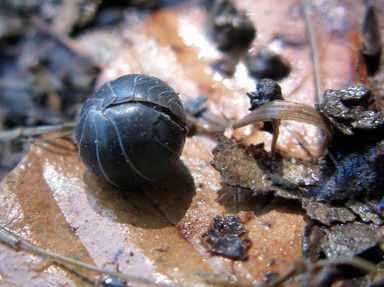
This quiz is about pill bugs: what they are, what they eat, why they roll up into balls (conglobulation), how they breathe, and why they're crawling around under your outdoor flower pots. Enjoy!

A multiple-choice quiz by JJHorner. Estimated time: 3 mins.
  1. Home
  2. »
  3. Quizzes
  4. »
  5. Animal Trivia
  6. »
  7. Invertebrates
  8. »
  9. Crustaceans

Author
JJHorner
Time
3 mins
Type
Multiple Choice
Quiz #
422,202
Updated
Jan 12 26
# Qns
10
Difficulty
Average
Avg Score
8 / 10
Plays
82
Awards
Top 20% Quiz
Last 3 plays: MargW (7/10), rossian (10/10), Piperkenzie (10/10).
- -
Question 1 of 10
1. Pill bugs belong to which larger animal group? Hint


Question 2 of 10
2. Where are you most likely to find pill bugs during the day? Hint


Question 3 of 10
3. Pill bugs breathe using specialized structures that require moist environments. What are these structures? Hint


Question 4 of 10
4. Why do pill bugs roll into a tight ball, a process called conglobation? Hint


Question 5 of 10
5. Pill bugs show a unique behavior called positive thigmokinesis. In pill bugs, how does this behavior manifest itself? Hint


Question 6 of 10
6. Female pill bugs carry their developing young in a special pouch similar in concept to that of kangaroos and other marsupials. What is this pouch called? Hint


Question 7 of 10
7. Pill bugs obtain most of the water they need not by drinking, but through what process? Hint


Question 8 of 10
8. If a pill bug is unable to roll into a ball, it is most likely not a true pill bug at all but which closely related creature? Hint


Question 9 of 10
9. What is a typical lifespan for many pill bug species in the wild? Hint


Question 10 of 10
10. Pill bugs primarily subsist on what type of food? Hint


(Optional) Create a Free FunTrivia ID to save the points you are about to earn:

arrow Select a User ID:
arrow Choose a Password:
arrow Your Email:


Most Recent Scores
Jan 12 2026 : MargW: 7/10
Jan 12 2026 : rossian: 10/10
Jan 09 2026 : Piperkenzie: 10/10
Jan 08 2026 : piet: 10/10
Jan 06 2026 : stephedm: 10/10
Dec 28 2025 : looney_tunes: 5/10
Dec 26 2025 : moonraker2: 6/10
Dec 25 2025 : Poppet18: 9/10
Dec 25 2025 : S4a4m4: 10/10

Quiz Answer Key and Fun Facts
1. Pill bugs belong to which larger animal group?

Answer: Crustaceans

Pill bugs, sometimes called roly-polies or, more broadly, woodlice, are card-carrying members of the crustacean club. They are terrestrial isopods, which makes them distant land-walking cousins of shrimp and crabs rather than anything insectoid. The giveaway is their seven pairs of legs and the gill-like structures hidden on their undersides, which they still need to keep moist.

Their lifestyle is a delightful oddity in the crustacean world. Most crustaceans stick with oceans, rivers, and other watery hangouts to chill in, but pill bugs marched onto land and never looked back. They turn damp leaf piles into their personal condo and evolved a defensive roll-up maneuver that seems designed to amuse kids everywhere.
2. Where are you most likely to find pill bugs during the day?

Answer: Under damp logs, stones, leaf litter, or mulch

Pill bugs are most often found hiding in damp, dark habitats such as under logs, stones, leaf litter, mulch, or other things my wife wants me to clean up in the back yard. These places provide moisture (very important for our crustacean friends), protection from drying out, and decaying organic matter for them to feed on.

They are mostly nocturnal and tend to stay hidden during the day to avoid dry air and direct sunlight. They rely on humidity to keep their gill-like breathing structures in good working order.
3. Pill bugs breathe using specialized structures that require moist environments. What are these structures?

Answer: Gills

Pill bugs respire through gills, which, to get technical, are modified pleopods sometimes called pleopodal lungs or pseudotracheae. They're located on the underside of the abdomen. These organs are evolutionarily derived from the gills of aquatic crustacean ancestors, so they must stay moist to exchange gases effectively. Dry air interferes with their ability to breathe.

Because those breathing structures need humidity, pill bugs stick to damp microhabitats (under logs, leaf litter, mulch, etc.) rather than sun-baked surfaces. Their "land crustacean" lifestyle is an evolutionary compromise. They live on dry land but still carry a little aquatic equipment that demands moisture.
4. Why do pill bugs roll into a tight ball, a process called conglobation?

Answer: To protect soft undersides from predators and reduce water loss

Pill bugs roll into a ball as a clever and absolutely adorable defense maneuver, tucking in their vulnerable underside and legs so a predator gets nothing but a hard, armored sphere. It is surprisingly effective. Many would-be attackers simply lose interest when their snack turns into a tiny gray marble.

As an added bonus, conglobation also helps pill bugs conserve moisture. Their breathing structures require humidity, so sealing up tightly slows water loss when conditions get too dry. Curling up into a ball keeps those pseudotracheae moist, and we all know there's nothing worse than dry pseudotracheae.
5. Pill bugs show a unique behavior called positive thigmokinesis. In pill bugs, how does this behavior manifest itself?

Answer: Seeking tight, enclosed spaces to feel surfaces on all sides

Positive thigmokinesis is a touch-response behavior in which contact with surfaces alters an animal's movement, causing it to slow down or stop when it encounters a snug surface. For pill bugs this means they tend to settle into crevices, under litter, or in tight spaces where they are in contact with surfaces on multiple sides. That tendency keeps them in protected, humid refuges (again useful for guarding soft parts and keeping their gills moist) rather than wandering out into risky open ground.

Negative thigmokinesis is speeding up when in contact with certain surfaces. This occurs in pill bugs when in open areas. Scientists really do have a name for everything.
6. Female pill bugs carry their developing young in a special pouch similar in concept to that of kangaroos and other marsupials. What is this pouch called?

Answer: Marsupium

The pouch that female pill bugs use to carry and protect their young is called the marsupium. Although the name sounds like it was borrowed from kangaroos, pill bugs build theirs quite differently, although it functions in much the same way. The pouch is formed by overlapping plates called oostegites, which extend from the underside of the thoracic segments. Once assembled, they create a sealed, fluid-filled chamber where embryos develop in safety and humidity. It's essentially a tiny, portable nursery.

A female can carry dozens of eggs in her marsupium, and the young stay inside until they have completed their early development and resemble miniature adults. When they finally emerge, they are surprisingly independent. Pill bugs do not provide any additional parental care. It's all "Beat it. You're two weeks old, and that's old enough to get a job." Still, that early boost inside the marsupium gives them a fighting chance in a world full of predators, dryness, and the occasional gardener turning over rocks or logs.
7. Pill bugs obtain most of the water they need not by drinking, but through what process?

Answer: Absorbing moisture from the environment

Pill bugs rely on passive absorption of moisture directly from their environment. Instead of sipping from puddles like a tiny crustacean sippy cup, they take in water through specialized structures on their underside called uropods, as well as through thin areas of their exoskeleton. This keeps them hydrated even when they cannot access free-standing water, which, to be fair, they rarely if ever set out to do. (Despite 14 little legs paddling like mad, they can't swim and will drown in standing water.)

Because their bodies are adapted for life on land but still require moisture for their gill-like breathing structures, this absorption strategy is key to their survival. As long as their surroundings remain damp, they can maintain their internal water balance without ever lifting a glass. This is one reason they're attracted to mulch, leaf litter, and other humid hideouts. These places keep them alive.
8. If a pill bug is unable to roll into a ball, it is most likely not a true pill bug at all but which closely related creature?

Answer: Sow bug

Sow bugs are close relatives of pill bugs, but they lack the ability to roll into a tight defensive ball. True pill bugs, such as species in the genus Armadillidium, can perform full conglobation, neatly tucking their legs and antennae inside to get to their safe space. Sow bugs, on the other hand, remain somewhat flattened and have small projecting tail appendages, which also prevent that perfect roly-poly curl many of us remember as kids.

These two creatures look similar enough that they are often confused, but their behaviors make the distinction clear. Sow bugs tend to scuttle away when disturbed rather than roll up, and they prefer very damp environments where their inability to conglobate is less of a vulnerability. Despite their differences, both are harmless decomposers doing the unglamorous work of recycling organic matter back into the soil, little sanitation crews at work.
9. What is a typical lifespan for many pill bug species in the wild?

Answer: About two to five years

Many pill bug species live surprisingly long lives for such small creatures. In the wild, a typical lifespan ranges from about two to five years, with some individuals reported to reach even older ages under stable, protected conditions in the pill bug laboratory. Their slow, steady lifestyle, (eating decaying plant matter, avoiding predators by rolling up or hiding, and generally minding their own business) helps them stick around far longer than one might expect from something often found under a flowerpot.

Their longevity is also tied to their unusually slow molting cycle. Pill bugs molt in two phases, first shedding the back half and later the front half of their exoskeleton, a process that takes energy and places them at temporary risk. Because they molt less frequently than many insects, they don't burn through their lifespan quite as quickly. Throw in their habit of clustering in moist, sheltered environments, and they live a pretty peaceful existence, at least until my wife makes me rake the leaves.
10. Pill bugs primarily subsist on what type of food?

Answer: Decaying plant matter

Pill bugs are detritivores, which is a fancy way of saying they thrive on decaying plant material. They help break down dead leaves, rotting wood, and other organic debris, turning it into nutrient-rich soil. This makes them tiny but important contributors to natural composting.

While they may nibble on other materials occasionally, their digestive system is specialized for handling decomposing vegetation, and they are most active in places where this kind of material is abundant. Their preference for damp, decayed matter also keeps them safely tucked away in the kinds of microhabitats where moisture is reliable and predators are easier to avoid.

Because they feed on what is already dead, pill bugs rarely trouble live plants and certainly don't hunt insects. If you ever catch one in the act of "eating," it's probably just working its way through yesterday's leaf litter, doing its small but important part in the chain of life, death, and decomposition.
Source: Author JJHorner

This quiz was reviewed by FunTrivia editor rossian before going online.
Any errors found in FunTrivia content are routinely corrected through our feedback system.
1/23/2026, Copyright 2026 FunTrivia, Inc. - Report an Error / Contact Us