FREE! Click here to Join FunTrivia. Thousands of games, quizzes, and lots more!
Quiz about Disposable Heroes

Disposable Heroes Trivia Quiz

Iconic Superhero Deaths

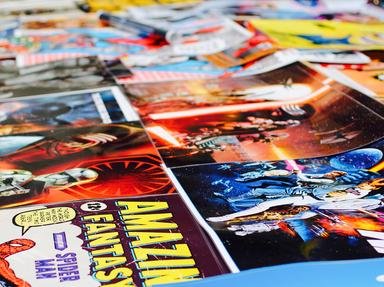
In comic books it is rare for a character to be killed off permanently. In fact, some have died and returned multiple times! But the deaths in this quiz were iconic for their impact at the time. Do you remember them all?

A matching quiz by reedy. Estimated time: 4 mins.
  1. Home
  2. »
  3. Quizzes
  4. »
  5. Entertainment Trivia
  6. »
  7. Comics
  8. »
  9. Comic Characters Mixed A-Z

Author
reedy
Time
4 mins
Type
Match Quiz
Quiz #
422,232
Updated
Dec 16 25
# Qns
15
Difficulty
Tough
Avg Score
8 / 15
Plays
35
Last 3 plays: GoodVibe (2/15), Kabdanis (0/15), angelofmine197 (15/15).
(a) Drag-and-drop from the right to the left, or (b) click on a right side answer box and then on a left side box to move it.
QuestionsChoices
1. Sacrificed herself to prevent the cosmic Phoenix Force from wreaking further chaos and death  
  Robin (Jason Todd)
2. Died from lung cancer after exposure to a toxic nerve gas  
  Captain America (Steve Rogers)
3. Killed in battle with the Anti-Monitor, saving her cousin's life  
  The Flash (Barry Allen)
4. Sacrificed himself to destroy Anti-Monitor's antimatter cannon (and save the multiverse)  
  The Comedian (Edward Blake)
5. Murdered by Ozymandias  
  Captain Marvel
6. Was brutally beaten and left to die in a warehouse explosion  
  Hawkman
7. Killed in battle with Doomsday  
  Spider-Man (Peter Parker)
8. Sacrificed himself to defeat the Legacy Virus  
  Colossus
9. Killed in explosion by living bomb Jack of Hearts  
  Wolverine
10. Killed by an alternate version of himself  
  Jean Grey
11. Assassinated by Crossbones  
  Superman
12. Trapped in the Cancerverse, stopping Mar-Vell.  
  Ant-Man (Scott Lang)
13. Died protecting his loved ones from the Sinister Six  
  Supergirl
14. Lost his healing ability, then was encased in adamantium and suffocated  
  Superboy
15. Sacrificed himself to defeat Despero  
  Star-Lord (Peter Quill)


Select each answer

1. Sacrificed herself to prevent the cosmic Phoenix Force from wreaking further chaos and death
2. Died from lung cancer after exposure to a toxic nerve gas
3. Killed in battle with the Anti-Monitor, saving her cousin's life
4. Sacrificed himself to destroy Anti-Monitor's antimatter cannon (and save the multiverse)
5. Murdered by Ozymandias
6. Was brutally beaten and left to die in a warehouse explosion
7. Killed in battle with Doomsday
8. Sacrificed himself to defeat the Legacy Virus
9. Killed in explosion by living bomb Jack of Hearts
10. Killed by an alternate version of himself
11. Assassinated by Crossbones
12. Trapped in the Cancerverse, stopping Mar-Vell.
13. Died protecting his loved ones from the Sinister Six
14. Lost his healing ability, then was encased in adamantium and suffocated
15. Sacrificed himself to defeat Despero

Most Recent Scores
Today : GoodVibe: 2/15
Today : Kabdanis: 0/15
Today : angelofmine197: 15/15
Today : Guest 63: 10/15
Today : Strike121: 1/15
Today : ChristineSierra: 6/15
Today : CardoQ: 10/15
Today : maripp2002: 13/15
Today : Guest 174: 3/15

Quiz Answer Key and Fun Facts
1. Sacrificed herself to prevent the cosmic Phoenix Force from wreaking further chaos and death

Answer: Jean Grey

Jean Grey began her journey as Marvel Girl - a founding member of the X-Men with telepathic and telekinetic abilities - first seen in "X-Men" #1 (September, 1963). Her transformation into Phoenix came ten years later in "X-Men" #101. occurring during a critical mission in space when she piloted a damaged shuttle through a solar flare to save her team, pushing her powers beyond their natural limits. After crashing, she emerged reborn in a striking green-and-gold costume, now wielding near-limitless cosmic power as Phoenix. Initially a force for good, her abilities grew to godlike levels through subsequent storylines, but subtle manipulation by the Hellfire Club eventually set her on a darker path.

The 'Dark Phoenix Saga' was told over multiple issues ("Uncanny X-Men" #129 to #138) in 1980, eventually culminating in Jean Grey's self-sacrifice. Her descent into darkness began when the Phoenix Force amplified her powers and the Hellfire Club manipulated her fragile psyche, transforming her into the Dark Phoenix. Overwhelmed by cosmic hunger and rage, she annihilated an entire star system, erasing billions of lives and drawing the attention of the Shi'ar Empire. Their intervention led to a desperate battle on the Moon, where Jean briefly regained her true self and realized the catastrophic threat she posed. Choosing love and responsibility over survival, she activated a Kree weapon to end her life, ensuring the Phoenix could not rise again. Her final act of sacrifice, witnessed by Cyclops in "Uncanny X-Men" #137, was one of the most poignant and defining moments in X-Men history.

However, Jean Grey's death was eventually retconned in "Fantastic Four" #286 in 1985, which revealed that the 'real' Jean Grey had been in a healing cocoon beneath the Moon's surface, and that the Phoenix who died was a duplicate. She would make her official return in "X-Factor" #1 (January, 1986), which reassembled the original X-Men team.
2. Died from lung cancer after exposure to a toxic nerve gas

Answer: Captain Marvel

First appearing in "Marvel Super-Heroes" #12 (December, 1967), Captain Marvel (Mar-Vell) was a Kree warrior who became one of Marvel Comics' most noble heroes. Originally sent to Earth as a spy, he grew to admire humanity and ultimately rebelled against his own people, becoming a protector of Earth and a key figure in Marvel's cosmic sagas. Over the years, Mar-Vell fought alongside the Avengers and faced threats like Thanos, earning a reputation for courage and honour. His story took a profound turn in "Marvel Graphic Novel" #1: "The Death of Captain Marvel" (1982), which broke away from the usual superhero tropes of dying in battle and instead explored mortality in a deeply human way.

Rather than falling to a villain's attack, Mar-Vell succumbed to cancer caused by exposure to a toxic compound during his heroic exploits. As his condition worsened, he spent his final days surrounded by friends and allies, reflecting on his life and legacy. In his last moments, Mar-Vell experienced a vision where he confronted Thanos one final time - not in combat, but in acceptance of his fate. With dignity and peace, he passed away quietly, a stark contrast to the explosive deaths common in superhero stories.

Captain Marvel has largely remained at peace in Marvel Comics, with his socially significant death being honoured over time. While the character has resurfaced, these situations were largely innocuous (impersonation / alternate timeline), but there was one storyline in 2010 - the 'Chaos War' - where Mar-Vell was briefly resurrected by the Chaos King.
3. Killed in battle with the Anti-Monitor, saving her cousin's life

Answer: Supergirl

Supergirl (Kara Zor-El) made her first appearance in "Action Comics" #252 (May, 1959), as her cousin Superman (Kal-El) discovers that he is not the only survivor of Krypton.

In the mid-1980s, DC launched the 'Crisis on Infinite Earths' crossover storyline, designed to collapse the sprawling DC multiverse into a single, unified continuity. The Anti-Monitor, a cosmic entity born from anti-matter, sought to annihilate all positive-matter universes, triggering a war that spanned countless worlds. Supergirl entered the fray as the multiverse teetered on the brink of destruction, joining the greatest heroes in a desperate stand against the Anti-Monitor's forces. Her role was pivotal - she embodied hope and courage at a time when reality itself was unraveling.

Supergirl's final moments occurred in "Crisis on Infinite Earths #7" (October, 1985). During the climactic battle in the Anti-Monitor's fortress within the anti-matter universe, Superman is ambushed and nearly killed. Hearing his cries, Supergirl charges into the fight, shattering the Anti-Monitor's solar collector and cracking his armor, forcing him to retreat - something no other hero had managed. But her victory came at a terrible cost: the Anti-Monitor unleashed a devastating blast of anti-matter energy into her back, fatally wounding her. Her sacrifice bought the other heroes precious time to regroup and ultimately defeat the Anti-Monitor, but Kara died in Superman's arms, leaving him heartbroken.

DC's post-"Crisis" continuity deliberately removed Kara Zor-El from existence to make Superman the sole survivor of Krypton, and for years, there was no Supergirl in the traditional sense. But comic book deaths are rarely permanent, and in 2004, Kara Zor-El was reintroduced to DC Comics in "Superman/Batman" #8 (May, 2004).
4. Sacrificed himself to destroy Anti-Monitor's antimatter cannon (and save the multiverse)

Answer: The Flash (Barry Allen)

Barry Allen, a forensic scientist in Central City, first gained his extraordinary speed in "Showcase" #4 (October, 1956). A freak accident occurred when lightning struck his lab, splashing him with chemicals and imbuing him with the Speed Force - granting super-speed and the mantle of the Flash.

Decades later, in the 1985 crossover event 'Crisis on Infinite Earths,' cosmic threats converged as the Anti-Monitor began obliterating entire universes with antimatter waves. The Anti-Monitor constructed a massive antimatter cannon aimed at the last five remaining positive-matter Earths. Captured and imprisoned in the antimatter universe, Barry saw the cannon's devastating power and realized its destruction could save the multiverse - but only at the cost of his life.

In "Crisis on Infinite Earths" #8 ("A Flash of the Lightning!"), Barry Allen made his ultimate sacrifice. Harnessing every ounce of his connection to the Speed Force, he raced around the antimatter cannon at unparalleled velocity, destabilizing and collapsing the weapon. As he channeled this impossible speed, his body disintegrated until only his iconic costume and ring remained behind.

DC Comics eventually brought Barry Allen back with a short appearance in "Final Crisis" #2 (2008), when he briefly emerged from the Speed Force to assist Wally West and other heroes during the crisis event. This was soon followed by his full comeback in the six issue mini-series "The Flash: Rebirth" (2009).
5. Murdered by Ozymandias

Answer: The Comedian (Edward Blake)

In "Watchmen" #1 (September, 1986), Edward Morgan "Eddie" Blake - known as the Comedian - makes his debut in a gritty, complex take on superheroes. By 1985, he's a government operative and a morally broken man. While returning from a covert mission, he accidentally uncovers former vigilante hero Ozymandias (Adrian Veidt)'s secret project - a genetically engineered psychic squid meant to unite humanity by staging an alien invasion. Unbeknownst to him, Veidt has been surveilling Blake and realizes he must silence him to preserve his cataclysmic plan.

Shortly thereafter, the Comedian is lured into his New York apartment by a voicemail from Veidt. There, Ozymandias confronts him - fully aware Eddie knows too much - and murders him by throwing him out the window, killing him instantly. This brutal act, depicted dramatically on the opening pages of "Watchmen" #1, serves as the catalyst for the entire series.
6. Was brutally beaten and left to die in a warehouse explosion

Answer: Robin (Jason Todd)

Jason Todd debuted in "Batman" #357 (March, 1983), introduced as a homeless orphan who crossed paths with Batman after attempting to steal the tires off the Batmobile. His origin mirrored that of the first Robin (Dick Grayson) initially - goods stolen, family tragedy, and the pathway to becoming Robin - but he quickly evolved into a more complex, streetwise character.

In the 1988 storyline 'A Death in the Family,' which spanned "Batman" #426 to 429, Jason's impulsive and defiant personality led him on a quest to find his biological mother in the Middle East where he was captured and tortured by the Joker. In "Batman" #427, the Joker strapped Jason to a bomb inside a warehouse and detonated it.

As a notable meta twist, DC set up a phone-in poll, allowing readers to choose whether Jason should live or die. The vote narrowly favoured his death (5,343 vs. 5,271), and in "Batman" #428, the emotional fallout of Jason's death was revealed when Batman discovered his body in the rubble.

Jason Todd later returned in the 'Under the Hood' storyline (2004-2006), resurrected by R'as al Ghul and assuming the mantle of the Red Hood. His first post-resurrection appearance was in Batman #635 (2005), marking his emergence as a more morally ambiguous antihero.
7. Killed in battle with Doomsday

Answer: Superman

Superman first appeared in "Action Comics" #1 (June, 1938) and quickly became the archetype of superhero fiction, embodying the ideals of truth, justice, and hope. Born as Kal‑El on the doomed planet Krypton, his parents, Jor‑El and Lara, sent him to Earth in a small spacecraft just before the planet's destruction. He landed in Smallville, Kansas, where he was discovered and raised by Jonathan and Martha Kent. As he grew, Kal‑El, taking the name Clark Kent, began to manifest incredible powers under Earth's yellow sun-such as super strength, flight, heat vision, and invulnerability.

By late 1992, DC Comics faced waning interest in Superman stories. To reenergize the franchise, the writing team devised a plan to kill the character temporarily. This sprawling event spanned all of the "Superman" titles and a few others, beginning with "Superman: The Man of Steel" #18 (December, 1992) with Superman's death coming quickly in "Superman" vol. 2, #75 (January, 1993). The aftermath storylines would continue for nearly a year.

A monstrous being named Doomsday emerged from underground, leaving devastation in its wake. Superman confronted Doomsday in a brutal showdown that swept across various cities and even involved the Justice League. Their clash culminated in Metropolis, where Superman and Doomsday delivered fatal blows to each other. What followed was a period of mourning and uncertainty across the DC Universe in the 'Funeral for a Friend' storyline. Multiple titles chronicled the impact on superheroes and ordinary citizens alike, and even his adoptive father, Jonathan Kent, was shown suffering a heart attack. This was followed by the 'Reign of the Supermen' storyline as four different characters claimed Superman's mantle.

Ultimately, Superman was revived in the Fortress of Solitude, first reappearing in "Superman: The Man of Steel" #25 (September, 1993) in a weakened state. He was rebuilt from a 'regeneration matrix' technology, rediscovering his memories and humanity. Once fully restored, he reclaimed his identity and powers, decisively reclaiming the role of the Man of Steel in "Adventures of Superman" #505 (October, 1993).
8. Sacrificed himself to defeat the Legacy Virus

Answer: Colossus

Colossus (Piotr "Peter" Nikolayevich Rasputin) made his first appearance in "Giant-Size X-Men" #1 (May, 1975). His mutant ability lets him transform into metallic organic steel, giving him immense strength and invulnerability. Discovered living on a farm in Russia, he was recruited by Professor X to join the X-Men.

In the mid-1990s, the Legacy Virus, a deadly plague targeting mutants (and later humans), killed many - including Piotr's sister Illyana - before scientists like Beast and Moira MacTaggert developed a cure that required a selfless act. To deploy it instantly, the cure had to be bio-amplified inside a living mutant. Colossus, devastated by his sister's death and determined to save mutantkind from further suffering, secretly administered the cure to himself. He then transformed into his steel form, triggering a massive biological reaction that halted the virus - but at the cost of his own life. His death, chronicled in "Uncanny X-Men" #390 (March, 2001), transmitted the cure globally, ending the epidemic.

"Astonishing X-Men" vol. 3, #6 (December, 2004) saw the return of Colossus after Kavita Rao, with help from the alien Ord of the Breakworld, used advanced technology and Colossus's genetic material to revive him.
9. Killed in explosion by living bomb Jack of Hearts

Answer: Ant-Man (Scott Lang)

Scott Lang was introduced in "Avengers" #181 (March, 1979) as a civilian, and "Marvel Premiere" #47 (April, 1979) as the second Ant-Man (after stealing Hank Pym's shrinking suit to save his daughter Cassie from a life-threatening heart condition). Pym recognized his heroic intentions and allowed him to continue using the Ant‑Man identity. As a former electronics engineer and reformed thief, Scott served with the Avengers and Fantastic Four, often handling stealth and technical infiltration missions.

During the 2004 'Avengers Disassembled' storyline, the Scarlet Witch's reality-altering breakdown led to the return of Jack of Hearts - an Avenger who had previously sacrificed himself. Reanimated and unstable, Jack infiltrated the Avengers Mansion. When Scott Lang answered the door, Jack explosively detonated, obliterating part of the mansion and killing Ant‑Man instantly. This pivotal event occurs in "The Avengers" vol. 3, #500 (July, 2004) and served as the opening crisis of 'Avengers Disassembled.'

Scott Lang's death did not remain permanent. The Young Avengers, using time-travel technology, rescued Scott by pulling him from the moment right before his explosion. This clever intervention rescued him from the blast and restored him to life in the present timeline ("Avengers: The Children's Crusade" #5 (June, 2011)).
10. Killed by an alternate version of himself

Answer: Superboy

Conner Kent (AKA Kon‑El) is a unique clone combining the DNA of Superman and Lex Luthor. He debuted in "The Adventures of Superman" #500 (June, 1993) as a potential successor to Superman following Clark Kent's temporary death. Though initially impulsive and eager for attention, Conner grew under Superman's mentorship and matured into a steadfast hero, joining the Teen Titans, Young Justice, and later the Justice League.

In 2005-2006's "Infinite Crisis, " Superboy confronts a reality-warped villain named Superboy‑Prime (an alternate version of himself from Earth-Prime). In "Infinite Crisis" #6 (May, 2006), during a colossal battle in Blüdhaven and Metropolis, Conner stands against Superboy‑Prime's destructive rampage. In order to stop Prime from breaking the dimensional barriers with reality-shattering punches, Conner sacrificed himself by grabbing onto Superboy‑Prime mid-punch. The result was catastrophic - Conner was torn apart by Prime's power, killing him instantly. Conner's death held a fittingly dramatic aftermath, as it inspired and galvanized the heroes of the DC Universe. His body and legacy motivated the final push against Superboy‑Prime.

Following the 'Crisis,' Superboy's return was hinted at in various comic titles before reemerging as an active character in "Teen Titans" vol. 3, Annual #1 (2006).
11. Assassinated by Crossbones

Answer: Captain America (Steve Rogers)

Steve Rogers debuted as Captain America in "Captain America Comics" #1 (March, 1941). A frail young man from Brooklyn became a super‑soldier after undergoing an experimental procedure during WWII. He fought the Axis powers, famously smashing a swastika‐shielded Hitler on the cover - a lasting symbol of patriotism and heroism. He became a core member of the Avengers, often in a leadership role, and occasionally worked with S.H.I.E.L.D., acting as a liaison and field leader.

In the aftermath of the 'Civil War' event (2006-2007), Steve Rogers surrendered and was heading to face trial under the Superhuman Registration Act. On the steps of the Manhattan Federal Courthouse, he was assassinated by the villain Crossbones (Brock Rumlow) in "Captain America" vol. 5, #25 (March, 2007). The assassination was orchestrated by the Red Skull, who manipulated events from behind the scenes.

Steve Rogers was resurrected in the six‑issue limited series "Captain America: Reborn," which ran from July, 2009 to January, 2010. The story revealed that Steve was frozen in a moment of temporal stasis by the fatal shot, manipulated by Red Skull's allies. Using modified technology, Sharon Carter was crucial in restoring him to the present.
12. Trapped in the Cancerverse, stopping Mar-Vell.

Answer: Star-Lord (Peter Quill)

Peter Quill first appeared in "Marvel Preview" #4 (January, 1976), introduced as an interplanetary policeman known as Star‑Lord (half-human/half-Spartoi), determined to seek justice across the cosmos. With the relaunch of "Guardians of the Galaxy" in 2008, he became the founding leader of the modern cosmic team in the series - the heart and strategist of the group.

The 'Cancerverse' storyline unfolded when a reality where Death has been eliminated begins to invade the main Marvel universe through a rift called the Fault. In this realm, life became corrupted and immortal, twisting heroes into monstrous, undead versions of themselves under the control of the Many-Angled Ones and a resurrected Lord Mar-Vell. Peter Quill, as leader of the Guardians of the Galaxy, played a pivotal role by joining forces with Nova and even Thanos to enter the Cancerverse, confronting Mar-Vell and his forces in a desperate bid to restore balance and prevent the spread of the deathless plague across the cosmos.

Thanos' presence in the Cancerverse was crucial because he is the living embodiment of death's will in the Marvel Universe. When Thanos entered that realm during 'The Thanos Imperative' storyline, his very nature reintroduced the concept of mortality, allowing Death herself to manifest and reclaim the Cancerverse, wiping out its undying inhabitants. In their effort to keep Thanos in that universe, Star-Lord (along with Nova and Drax) apparently die in the process ("The Thanos Imperative" #6 (November, 2010)).

In "Guardians of the Galaxy" vol. 3, #18 to #20, Star-Lord's return to the Earth-616 universe was chronicled as he and Drax managed to slip through a portal created by Nova using the Cosmic Cube and the Nova Force.
13. Died protecting his loved ones from the Sinister Six

Answer: Spider-Man (Peter Parker)

Peter Parker (Spider-Man) made his first appearance in "Amazing Fantasy" #15, published August of 1962. He was a shy high school student bitten by a radioactive spider that granted him spider-like abilities - which he initially used for personal gain. After his Uncle Ben was tragically killed due to Peter's inaction, he learned that "with great power comes great responsibility," setting him on the path to becoming Spider‑Man.

Peter Parker met his demise as part of the 'Death of Spider-Man' storyline in the Ultimate Universe (Earth‑1610). This arc began in "Ultimate Spider‑Man" #156, with the pivotal moment in issue #160 (June, 2011). During this climactic issue, Peter confronted the Green Goblin and the Sinister Six invading his home. Despite being severely wounded from earlier battles and a bullet he took protecting Captain America, Peter fought to defend his family. In the intense final moments, he slammed a truck into Norman Osborn, triggering an explosion. Mortally wounded, he died in Aunt May's arms, having saved his loved ones.

Peter's reappearance in the Ultimate Universe was hinted at before his confirmed return, which eventually happened in "Spider-Men II" #5 (December, 2017). The OZ formula - which was instrumental in giving Peter his powers - also (apparently) enabled him to return after his apparent death.
14. Lost his healing ability, then was encased in adamantium and suffocated

Answer: Wolverine

Logan (Wolverine) first appeared in "The Incredible Hulk" #180 (October, 1974), with his full introduction in #181 - a mutant possessing an accelerated healing factor, enhanced senses, retractable claws, and a gruff demeanor rooted in a mysterious past.

In 2014, the 'Death of Wolverine' storyline ran across several titles with the four-issue core series "Death of Wolverine" #1 to #4 published from September to October of 2014. In issue #4, after having lost his healing factor to a virus originating from the Microverse, Wolverine confronted Abraham Cornelius, the original Weapon X scientist, and was ultimately killed, encased in molten adamantium.

His return was detailed in the miniseries "Return of Wolverine" #1 to #5, released from November 2018 through April 2019. This arc unveiled how Logan, presumed dead and buried in adamantium, was resurrected (his healing factor mysteriously revived), embarking on a path to reclaim his place in the world.
15. Sacrificed himself to defeat Despero

Answer: Hawkman

Carter Hall, the original Hawkman, first appeared in "Flash Comics" #1 (January, 1940). A reincarnated ancient Egyptian prince endowed with Nth Metal, this winged warrior fought alongside Hawkgirl and later joining teams like the Justice Society and Justice League.

In the 2017 "Death of Hawkman" miniseries, Hawkman and Adam Strange faced off against the cosmic villain Despero, who had fused with Nth Metal and seized control of Thanagar and Rannorian forces. In "Death of Hawkman" #6 (March, 2017), Hawkman engaged in a brutal showdown with Despero atop an alien battlefield, ultimately dying in the effort. Hawkman sacrificed himself to thwart the invasion, using his own life force and the Nth Metal within him to overload Despero's control over the technology.
Source: Author reedy

This quiz was reviewed by FunTrivia editor kyleisalive before going online.
Any errors found in FunTrivia content are routinely corrected through our feedback system.
12/17/2025, Copyright 2025 FunTrivia, Inc. - Report an Error / Contact Us