FREE! Click here to Join FunTrivia. Thousands of games, quizzes, and lots more!
Quiz about Why Did We Rename This Place

Why Did We Rename This Place? Trivia Quiz


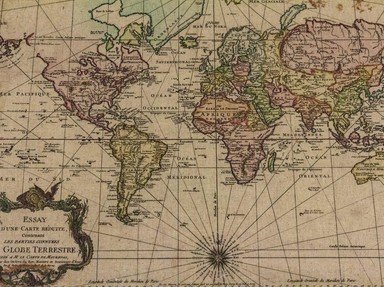
Places on maps have changed names many times over the centuries and for many reasons. At times it is to honor a monarch, at times to recognize the explorer who claimed it, and at other times to go back to its roots.

by stephgm67. Estimated time: 4 mins.
  1. Home
  2. »
  3. Quizzes
  4. »
  5. Geography Trivia
  6. »
  7. Historical Geography
  8. »
  9. Old Names/New Names

Author
stephgm67
Time
4 mins
Type
Quiz #
424,709
Updated
Jul 06 26
# Qns
20
Difficulty
Very Easy
Avg Score
19 / 20
Plays
46
Last 3 plays: Guest 174 (12/20), Kalibre (20/20), Twotallgnome (16/20).
For centuries, global mapmakers named places to flatter monarchs. In 1664, the bustling Dutch colonial settlement of was captured by the British and promptly renamed in honor of the King's brother who was a duke. Across the Atlantic, European empires applied the same practice to African territories. In 1843, when the took formal control of the strategic port town of on Bioko Island, they discarded that British name to christen it in honor of the reigning Queen Isabella II. Even major European capitals fell into this trend; for nearly three hundred years, the capital of Norway was called after the king of Denmark and Norway, before finally reverting to its original name of in 1925.

Lands and islands were frequently charted and named after the European explorers who came upon them. In 1778, Captain James Cook became the first European to visit the Hawaiian islands, naming the archipelago the to honor an earl who was the First Lord of the Admiralty who funded his voyage. Further south, the navigator Abel Tasman mapped a massive island off the coast of in 1642, which was originally called after the governor who sponsored the expedition. Centuries later, the island was officially renamed Tasmania to honor the explorer himself. Meanwhile, off the coast of Chile, a volcanic island originally charted as by a Spanish navigator was completely renamed in 1966 to honor the real stranded explorer, Alexander Selkirk, whose dramatic survival story on the island inspired a classical book.

In the 20th and 21st centuries, the global map frequently changed as nations threw off colonial rule and reclaimed their original, native heritage. In 1980, the newly independent nation of Zimbabwe shed its colonial past by changing its capital city's name from to , honoring a historic Shona chief. In North America, similar efforts took hold to restore ancestral names to the landscape. In 2010, a famous archipelago off the coast of British Columbia officially dropped its colonial name of the to return to its traditional indigenous name, , which translates to "Islands of the People". Farther north in the Canadian Arctic, the territory of Nunavut took a major step when the community of , originally named after an Elizabethan privateer, officially changed its name to , an Inuktitut word meaning "place of many fish".
Your Options
[New Amsterdam] [Van Diemen's Land] [Iqaluit] [Sandwich Islands] [New York] [Haida Gwaii] [Mas a Tierra] [Christiania] [Port Clarence] [Frobisher Bay] [Dutch] [Australia] [Salisbury] [Santa Isabel] [Spanish] [Robinson Crusoe Island] [Oslo] [Queen Charlotte Islands] [African] [Harare]

Click or drag the options above to the spaces in the text.


Most Recent Scores
Today : Guest 174: 12/20
Today : Kalibre: 20/20
Today : Twotallgnome: 16/20
Today : japh: 20/20
Today : Guest 24: 10/20
Today : Guest 47: 15/20
Today : Catreona: 20/20
Today : Guest 208: 18/20
Today : Guest 147: 20/20

Quiz Answer Key and Fun Facts
Answer:

- New Amsterdam was located on what is now Manhattan Island in New York City. It was named that because the settlement originally belonged to the Dutch. However, the British wanted control of the valuable Atlantic shipping port. In September of 1664, King Charles II of England sent a fleet of warships to seize it. The Dutch governor was forced to surrender the territory without a fight. King Charles then gave the land to his brother, James, the Duke of York, and renamed the area New York in his honor.

- Malabo, formerly Santa Isabel, is located on the northern coast of Bioko Island of Equatorial Guinea. This town, on the western coast of Africa, was originally founded by the British in 1827 as a naval base called Port Clarence. When Spain took over the island in 1843, they completely rebranded the settlement and named it Santa Isabel to honor Queen Isabella II of Spain. More than a century later, after the country gained independence, the government renamed the capital Malabo to honor a Bubi king.

- Oslo is the capital city of Norway and is on the northernmost tip of the Oslo Fjord in the southeastern part of the country. In 1624, a devastating three day fire completely destroyed the original medieval city of Oslo. King Christian IV of Denmark and Norway decided to rebuild the entire city a few miles away, making it safer by using stone instead of wood. To secure his legacy and honor himself, he renamed the city Christiania. Three centuries later, the government of Norway officially abolished the royal name and returned to the city's ancient roots, Oslo.

- The Hawaiian Islands, in the central Pacific Ocean, were originally named the Sandwich Islands. When British explorer Captain James Cook became the first European to locate the archipelago in 1778, he claimed them for Great Britain. He named them the Sandwich Islands to honor John Montagu, the 4th Earl of Sandwich, who was the First Lord of the Admiralty and Cook's primary financial sponsor for the voyage. (Yes, this is the same Earl of Sandwich who popularized the famous lunch item) As the local islands unified under King Kamehameha I into a single sovereign kingdom, the native name Hawaii became the official internationally recognized name, completely replacing Cook's title.

- Tasmania is an island state located off the southeastern coast of Australia. In 1642, Dutch explorer Abel Tasman became the first European to map the island. He chose to name it Van Diemen's Land to honor Anthony van Diemen, the Governor General of the Dutch East Indies who had funded and sponsored his expedition. Centuries later, the island became a notorious British penal colony associated with harsh convict life and the near destruction of the local Indigenous population. When the colony gained self governance in 1856, the local citizens wanted to shed the dark reputation attached to the name Van Diemen's Land, so they officially renamed the island Tasmania to honor the original explorer instead.

- Robinson Crusoe Island was originally named, in 1574, Mas a Tierra (which means "Closer to Land") and is a remote volcanic island in the South Pacific Ocean, located off the coast of Chile. In 1704, a Scottish sailor and privateer named Alexander Selkirk was intentionally marooned on this uninhabited island after a bitter argument with his ship's captain. He survived completely alone in the wilderness for over four years before being rescued. His incredible survival story directly inspired Daniel Defoe to write the famous 1719 novel "Robinson Crusoe". In 1966, the Chilean government officially changed the island's name to pay tribute to the famous literary explorer who put the island on the world map.

- Harare is the capital of Zimbabwe, located in southern Africa. In 1890, a British military volunteer force organized by Cecil Rhodes invaded the region and established a fortified settlement. They named it Fort Salisbury to honor Robert Gascoyne-Cecil, the 3rd Marquess of Salisbury, who was the Prime Minister of the United Kingdom at the time. The city later became the capital of the white minority ruled state of Rhodesia. In 1980, the country achieved recognized independence and black majority rule, renaming the nation Zimbabwe. Exactly two years later, on the second anniversary of independence, the government replaced the British prime minister's name with Harare, honoring Chief Neharawa, a Shona leader.

- Haida Gwaii is a knife shaped archipelago located off the northern coast of British Columbia, Canada (just south of Alaska). In 1787, British Captain George Dixon sailed into the region and named the islands after his ship, the "Queen Charlotte", which itself was named after the wife of King George III. However, the Haida nation had already inhabited the islands for over 10,000 years. As part of a historic 2010 land use agreement between the government and the Haida Nation, the colonial royal title was formally dissolved. The islands legally reclaimed their ancestral name, Haida Gwaii, which means "Islands of the People" in the Haida language.

- Iqaluit is the capital city of Nunavut, Canada which is located on the south coast of Baffin Island in the Canadian Arctic. In 1576, English explorer and privateer Sir Martin Frobisher sailed into the waterway while hunting for the Northwest Passage. Believing he had found a route to Asia, he claimed the body of water for England, and it was named Frobisher Bay. Centuries later, during World War II, the United States built an airbase on the shores of the bay, and a permanent settlement grew around it, adopting the explorer's name. By 1987, the local community, overwhelmingly Inuit, voted to shed the name of the English privateer. They officially changed the town's name to Iqaluit, an Inuktitut word meaning "place of many fish" which had been the traditional indigenous name for that fishing spot for generations.
Source: Author stephgm67

This quiz was reviewed by FunTrivia editor agony before going online.
Any errors found in FunTrivia content are routinely corrected through our feedback system.
7/6/2026, Copyright 2026 FunTrivia, Inc. - Report an Error / Contact Us