FREE! Click here to Join FunTrivia. Thousands of games, quizzes, and lots more!
Quiz about Roman Empire By the Numbers

Roman Empire: By the Numbers Trivia Quiz


From the rise of Augustus to the fall of the Western Empire, these ten dates mark some of the most important moments in Roman history. Match each event to its correct year and see how well you know the Empire's timeline.
This is a renovated/adopted version of an old quiz by author Aarchemon

An ordering quiz by reedy. Estimated time: 3 mins.
  1. Home
  2. »
  3. Quizzes
  4. »
  5. History Trivia
  6. »
  7. Ancient History
  8. »
  9. Roman History

Author
reedy
Time
3 mins
Type
Order Quiz
Quiz #
351,350
Updated
Aug 16 26
# Qns
10
Difficulty
New Game
Avg Score
8 / 10
Plays
16
Last 3 plays: thomas1975 (10/10), james1947 (10/10), Guest 99 (7/10).
Mobile instructions: Press on an answer on the right. Then, press on the question it matches on the left.
(a) Drag-and-drop from the right to the left, or (b) click on a right side answer, and then click on its destination box to move it.
Place each historical event in the correct order from earliest (27 BC) to latest (AD 476).
What's the Correct Order?Choices
1.   
(27 BC)
End of the Pax Romana
2.   
(AD 9)
Roman Empire is established
3.   
(AD 14)
Great Fire of Rome takes place
4.   
(AD 64)
Battle of Teutoburg Forest is a Roman defeat
5.   
(AD 69)
Trajan's Dacian Wars begin
6.   
(AD 101)
Edict of Milan is issued
7.   
(AD 180)
Caesar Augustus dies
8.   
(AD 313)
Flavius Orestes is defeated and executed
9.   
(AD 410)
Sack of Rome by the Visigoths
10.   
(AD 476)
Year of the Four Emperors


Most Recent Scores
Today : thomas1975: 10/10
Today : james1947: 10/10
Today : Guest 99: 7/10
Today : Guest 69: 8/10
Today : bradez: 7/10
Today : Ampelos: 8/10
Today : Alcoholic63: 5/10
Today : Guest 192: 7/10
Today : NASAGreg: 10/10

Quiz Answer Key and Fun Facts
1. Roman Empire is established

The Roman Empire is traditionally considered to have begun in 27 BC, when Octavian, the adopted heir of Julius Caesar, received the title Augustus from the Senate. Although republican institutions continued to exist in name, real power was now concentrated in the hands of a single ruler. Augustus carefully presented himself as the first citizen rather than a king, but his settlement created the framework of imperial government that would shape Rome for centuries.
2. Battle of Teutoburg Forest is a Roman defeat

One of Rome's greatest military disasters occurred in AD 9, when three legions under Publius Quinctilius Varus were annihilated in the Teutoburg Forest. Arminius, a Germanic leader who had previously served alongside the Romans, lured Varus into an ambush and destroyed the army.

The defeat effectively ended Rome's hopes of expanding deep into Germany and helped establish the Rhine as the Empire's long-term northern frontier.
3. Caesar Augustus dies

After more than four decades in power, Augustus died in AD 14 at the age of 75. His reign brought stability after years of civil war and laid the foundations of imperial administration, taxation, and frontier defence. Perhaps his greatest achievement was ensuring a peaceful transfer of power to his successor, Tiberius, showing that the Empire could survive the death of its first ruler.
4. Great Fire of Rome takes place

A devastating fire swept through Rome in AD 64, destroying large sections of the city and leaving thousands homeless. Ancient sources disagree about Nero's role in the disaster, but the event became forever linked to his reign. In its aftermath, Rome was extensively rebuilt, and Christians became the target of some of the earliest state-sponsored persecutions in imperial history.
5. Year of the Four Emperors

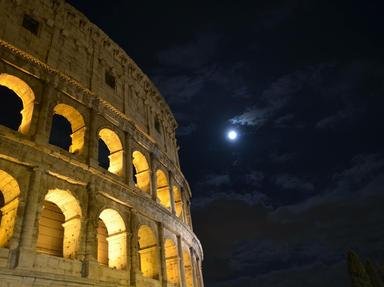
The turmoil that followed Nero's death erupted into civil war in AD 69, remembered as the Year of the Four Emperors. Galba, Otho, Vitellius, and finally Vespasian each claimed the throne within a single year. Vespasian ultimately emerged victorious, restoring stability and founding the Flavian Dynasty, which would oversee projects including the construction of the Colosseum.
6. Trajan's Dacian Wars begin

The first of Trajan's Dacian Wars began in AD 101, launching a campaign that would lead to one of the Roman army's most celebrated victories. Dacia, located in much of present-day Romania, had long challenged Roman authority north of the Danube. By the war's conclusion in AD 106, the region had been conquered, bringing valuable gold mines into imperial hands and helping finance many of Trajan's ambitious building projects and military campaigns.
7. End of the Pax Romana

Many historians consider AD 180 to mark the end of the Pax Romana, the long period of relative peace and stability that had begun under Augustus. The death of the philosopher-emperor Marcus Aurelius and the accession of his son Commodus signaled a turning point.

While the Empire remained powerful, the generally effective leadership that had characterized much of the previous two centuries gradually began to erode.
8. Edict of Milan is issued

In AD 313, Constantine and Licinius issued the Edict of Milan, granting legal toleration to Christianity and other religions throughout the Empire. This did not make Christianity the official faith, but it ended centuries of intermittent persecution and allowed Christians to worship openly.

The measure marked a major turning point in Roman history, paving the way for Christianity to become the Empire's dominant religion.
9. Sack of Rome by the Visigoths

When Alaric and his Visigoths entered and sacked Rome in AD 410, the shock felt throughout the Roman world was immense. The city had not fallen to a foreign enemy for nearly eight centuries, and many contemporaries viewed the event as a sign that the old world order was collapsing.

Although the Western Empire survived for several more decades, its authority and prestige were badly shaken.
10. Flavius Orestes is defeated and executed

The year AD 476 is traditionally regarded as the end of the Western Roman Empire. After the defeat and execution of Flavius Orestes by the Germanic leader Odoacer, the young emperor Romulus Augustulus was removed from the throne. Rather than appointing a new Western emperor, Odoacer ruled Italy in his own name, marking a symbolic end to imperial rule in the West.

The Eastern Roman Empire, centered on Constantinople, would continue for nearly another thousand years.
Source: Author reedy

This quiz was reviewed by FunTrivia editor ponycargirl before going online.
Any errors found in FunTrivia content are routinely corrected through our feedback system.
8/16/2026, Copyright 2026 FunTrivia, Inc. - Report an Error / Contact Us