FREE! Click here to Join FunTrivia. Thousands of games, quizzes, and lots more!
Quiz about Locating Laos

Locating Laos Trivia Quiz


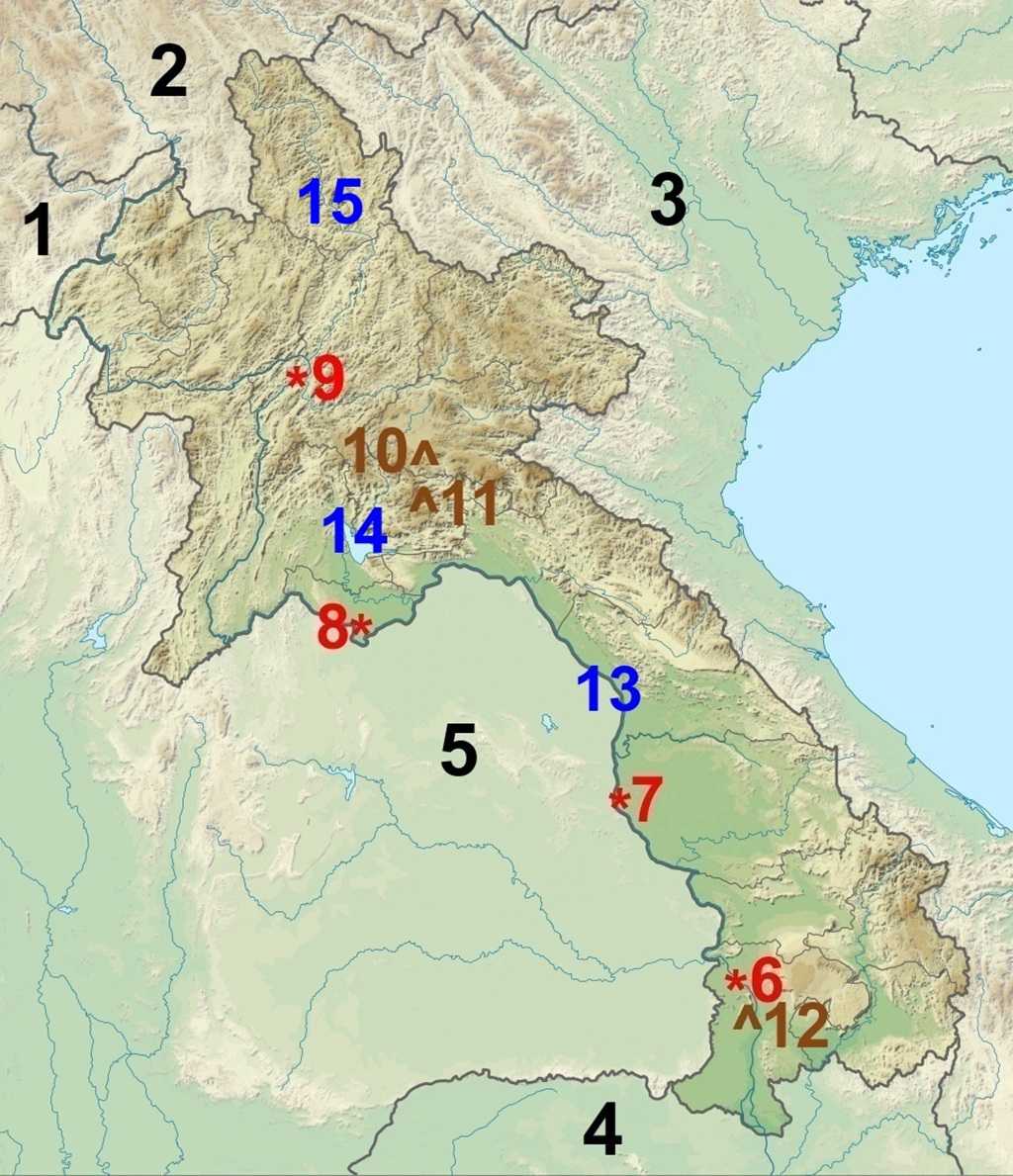
Known as the "Land of a Million Elephants," Laos is the only landlocked country in Southeast Asia. Do you know where it is located, and can you identify its neighbouring countries, major cities, and geographical features?

A label quiz by reedy. Estimated time: 3 mins.
  1. Home
  2. »
  3. Quizzes
  4. »
  5. Geography Trivia
  6. »
  7. Asia
  8. »
  9. Laos

Author
reedy
Time
3 mins
Type
Label Quiz
Quiz #
425,809
Updated
Oct 08 26
# Qns
15
Difficulty
New Game
Avg Score
11 / 15
Plays
8
Last 3 plays: looney_tunes (15/15), dmaxst (5/15), masfon (15/15).
Click on image to zoom
Thailand Nam Ou River Cambodia Nam Ngum Lake Vientiane Phou Bia Plain of Jars Luang Prabang Wat Phou China Myanmar Savannakhet (Kaysone Phomvihane) Pakse (Pakxe) Mekong River Vietnam
* Drag / drop or click on the choices above to move them to the answer list.
View Image Attributions for This Quiz
1. Formerly Burma  
2. Middle Kingdom  
3. Land of the Blue Dragon  
4. Kingdom of Wonder  
5. Land of Smiles  
6.   
7.   
8. Capital city  
9. Former royal capital  
10. Laos' greatest mystery?  
11. Highest point  
12. Temple complex  
13. River of Nine Dragons  
14. Artificial  
15. Rice Bowl River  

Most Recent Scores
Today : looney_tunes: 15/15
Today : dmaxst: 5/15
Today : masfon: 15/15
Today : Reamar42: 15/15
Today : elgecko44: 15/15
Today : mjgrimsey: 0/15
Today : 1nn1: 15/15
Today : kstyle53: 15/15

Quiz Answer Key and Fun Facts
1. Myanmar

Myanmar borders Laos to the northwest for approximately 238 km (148 mi), forming Laos' shortest international border.

The boundary follows portions of the Mekong River and lies within the famed Golden Triangle region, where Laos, Myanmar, and Thailand meet. Historically, the area was known for its mountainous terrain, ethnic diversity, and opium production, though in recent decades it has increasingly turned toward tourism and cross-border trade.

The country was officially known in English as Burma until 1989, when the military government changed the name to Myanmar, although some governments and organizations continued using "Burma" for many years afterward.
2. China

China borders Laos to the north, sharing a relatively short frontier of 505 km (314 mi). Although shorter than Laos' borders with Thailand, Vietnam, or Cambodia, it has become one of the country's most important trade corridors.

The clue "Middle Kingdom" comes from the Chinese name for China, Zhōngguó, which translates roughly as "Central State" or "Middle Kingdom."

The modern border was established largely during the French colonial period. Economic cooperation between the two countries has increased significantly during the 21st century, particularly through transportation infrastructure projects.

One of the most significant developments has been the Laos-China Railway, opened in 2021, connecting Vientiane with Kunming in China's Yunnan Province, dramatically reducing travel times and increasing regional trade.
3. Vietnam

The dragon has long been an important symbol in Vietnamese culture and mythology, representing strength, prosperity, and imperial authority. The phrase "Land of the Blue Dragon" is one of several poetic names sometimes associated with Vietnam.

Vietnam lies to the east of Laos, and the two countries share a border of approximately 2,161 km (1,343 mi), making it Laos' longest international boundary. The border largely follows the rugged Annamite Mountains.

Relations between the two countries extend back centuries, but became especially significant during the French colonial era when both were incorporated into French Indochina. During the conflicts of the 20th century, Vietnam and Laos maintained close political and military cooperation.

Vietnam remains one of Laos' closest political and economic partners. Numerous mountain passes and road links connect the landlocked country to Vietnamese ports on the South China Sea.
4. Cambodia

"Kingdom of Wonder" is Cambodia's official tourism slogan, reflecting the country's rich cultural heritage and famous landmarks such as Angkor Wat.

Cambodia borders Laos in the south, sharing a comparatively short border of 555 km (345 mi).

Both countries were components of French Indochina from the late 19th century until the mid-20th century. Following their independence, Laos and Cambodia experienced periods of conflict and instability but have generally enjoyed friendly relations in modern times.

The Mekong River flows through both countries and has long served as an important route for trade, transportation, and fisheries. Near the border lies Khone Phapheng Falls, the largest waterfall by volume in Southeast Asia and one of the principal natural barriers to navigation along the Mekong River.
5. Thailand

Thailand is often called the "Land of Smiles," a nickname reflecting the country's reputation for hospitality and the importance of friendliness in Thai culture.

Thailand lies to the west and southwest of Laos, and the two countries share a border of approximately 1,845 km (1,146 mi), making it Laos' second-longest international boundary. Much of this border follows the Mekong River, which serves as a natural dividing line between the two nations.

The history of Laos and Thailand is closely intertwined. For centuries, Lao kingdoms such as Lan Xang exerted influence over much of the region, while later Siamese kingdoms expanded eastward. During the 18th and 19th centuries, much of present-day Laos fell under Siamese influence before France incorporated Laos into French Indochina.

Thailand remains one of Laos' most important trading partners, with several bridges across the Mekong, including the First Thai-Lao Friendship Bridge linking Vientiane and Nong Khai.
6. Pakse (Pakxe)

Pakse is the capital of Champasak Province and the largest city in southern Laos. Located at the confluence of the Mekong and Xe Don Rivers, it serves as the principal economic and transportation hub for the region.

The city was established by the French colonial administration in 1905 and developed into an important commercial centre because of its strategic river location. Pakse is also the main starting point for visitors travelling to Wat Phou, the Bolaven Plateau, and the Four Thousand Islands region.
7. Savannakhet (Kaysone Phomvihane)

Originally known simply as Savannakhet, the city was officially renamed Kaysone Phomvihane in 2005 in honour of the first leader of the Lao People's Democratic Republic.

Located on the Mekong River opposite Mukdahan, Thailand, the city is an important commercial and transportation centre and is linked to Thailand by the Second Thai-Lao Friendship Bridge.

Savannakhet was an important administrative centre during the French colonial period and is generally considered the country's second-largest city after Vientiane.
8. Vientiane

Vientiane is the capital and largest city of Laos, situated on a broad bend of the Mekong River near the Thai border.

The city became the capital of the Kingdom of Lan Xang during the 16th century under King Setthathirath. Although it suffered destruction during Siamese invasions in the nineteenth century, it was rebuilt during the French colonial era.

Vientiane is the political, cultural, and economic centre of Laos. Famous landmarks include Pha That Luang, Patuxai Monument, and the Presidential Palace.
9. Luang Prabang

Situated at the junction of the Mekong and Nam Khan Rivers, Luang Prabang was the royal capital of Laos for centuries. It remained the residence of the Lao monarchy until the abolition of the kingdom in 1975.

The city is known for its blend of traditional Lao architecture and French colonial influences. Because of this unique cultural landscape, Luang Prabang was designated a UNESCO World Heritage Site in 1995.

Among its notable attractions are Mount Phou Si, the Royal Palace Museum, and dozens of Buddhist temples, including the famous Wat Xieng Thong.
10. Plain of Jars

The Plain of Jars is one of Southeast Asia's most important archaeological sites. Located on the Xiangkhouang Plateau, it contains thousands of massive stone jars scattered across the landscape.

Many of the jars are believed to be between 1,500 and 2,000 years old, although their exact purpose remains uncertain. Archaeologists generally believe they were associated with ancient burial practices, but the origins and use of the jars remain one of the greatest archaeological mysteries in Laos.

In 2019, the Plain of Jars was inscribed as a UNESCO World Heritage Site due to its cultural and archaeological significance.
11. Phou Bia

Phou Bia is the highest mountain in Laos, rising to an elevation of 2,819 m (9,249 ft) above sea level.

Located within the Annamite Range in Xiangkhouang Province, the mountain experiences a cooler climate than much of Laos and is one of the few places in the country where frost can occur during winter.

Owing to its remote location and military significance during the Indochina conflicts, access to the mountain was restricted for many years.
12. Wat Phou

Wat Phou is an ancient Hindu temple complex located near the Mekong River in Champasak Province.

Constructed primarily between the 11th and 13th centuries by the Khmer Empire, the site predates Cambodia's Angkor Wat and was dedicated to the Hindu god Shiva. Its design incorporates the surrounding landscape, particularly the sacred mountain Phou Kao.

The temple complex and its associated cultural landscape were designated a UNESCO World Heritage Site in 2001.
13. Mekong River

The Mekong River is the most important waterway in Laos, flowing for approximately 1,898 km (1,179 mi) along or through the country.

Originating on the Tibetan Plateau, the river extends about 4,350 km (2,700 mi) before emptying into the South China Sea in Vietnam. Along its route it passes through or borders six countries: China, Myanmar, Laos, Thailand, Cambodia, and Vietnam.

The Mekong provides transportation, irrigation, fisheries, and hydroelectric power, making it central to the economy and daily life of millions throughout Southeast Asia. In Vietnam, the Mekong is known as the "River of Nine Dragons" because the river traditionally divided into nine major distributaries before entering the South China Sea.
14. Nam Ngum Lake

Nam Ngum Lake is the largest artificial lake in Laos, created by the construction of the Nam Ngum Dam on the Nam Ngum River in the early 1970s.

Located roughly 90 km (56 mi) north of Vientiane, the reservoir covers approximately 370 km^2 (143 sq mi), though its size can vary with seasonal water levels.

The lake plays a major role in hydroelectric generation and fisheries, and its reservoir contains hundreds of islands and peninsulas formed by the surrounding mountains.
15. Nam Ou River

The Nam Ou River is one of the Mekong's most significant tributaries in Laos. Rising near the Chinese border, it flows southward for approximately 448 km (278 mi) before joining the Mekong at Luang Prabang.

For generations, the river served as a crucial transportation route through northern Laos, connecting remote mountain communities that were otherwise difficult to access. The river's fertile floodplain has long supported rice cultivation, contributing to its nickname, the "Rice Bowl River," among communities along its banks.

In recent decades, extensive hydroelectric development has transformed the river, with a series of dams constructed along much of its length. Despite these changes, the river continues to be an important transportation route and cultural feature of northern Laos.
Source: Author reedy

This quiz was reviewed by FunTrivia editor agony before going online.
Any errors found in FunTrivia content are routinely corrected through our feedback system.
10/8/2026, Copyright 2026 FunTrivia, Inc. - Report an Error / Contact Us