FREE! Click here to Join FunTrivia. Thousands of games, quizzes, and lots more!
Quiz about The Kingdom of Serbia 18821918

The Kingdom of Serbia (1882-1918) Quiz

Blink and You Miss It

The modern Kingdom of Serbia lasted only 36 years, but those were eventful years. This quiz will take you through independence, power struggles, international tensions, nefarious organizations, three wars, and the formation of a new country. Enjoy!

A photo quiz by JJHorner. Estimated time: 3 mins.
  1. Home
  2. »
  3. Quizzes
  4. »
  5. History Trivia
  6. »
  7. European
  8. »
  9. Serbia

Author
JJHorner
Time
3 mins
Type
Photo Quiz
Quiz #
423,758
Updated
Apr 15 26
# Qns
10
Difficulty
Average
Avg Score
7 / 10
Plays
22
Last 3 plays: JanIQ (5/10), Guest 72 (4/10), mazza47 (10/10).
-
Question 1 of 10
1. What empire ruled over Serbia before its gradual independence in the 19th century? Hint


Question 2 of 10
2. At which 1878 international meeting did the Great Powers of Europe recognize Serbian Independence? Hint


Question 3 of 10
3. Which ruler was assassinated in 1903 during a coup that ended a Serbian royal dynasty? Hint


Question 4 of 10
4. Which neighboring empire annexed Bosnia and Herzegovina in 1908, heightening tensions with Serbia? Hint


Question 5 of 10
5. Which secret nationalist organization, formed in 1911, sought to unite South Slavic territories and wasn't above causing major international incidents? Hint


Question 6 of 10
6. Which war in 1912 saw Serbia expand its territory at the expense of the Ottoman Empire? Hint


Question 7 of 10
7. Which former Serbian ally launched attacks against Greek and Serbian forces in Macedonia on June 29, 1913? Hint


Question 8 of 10
8. Which Serbian leader served as prime minister throughout most of World War I? Hint


Question 9 of 10
9. Which Allied-front breakthrough in 1918 helped lead to Serbia's liberation? Hint


Question 10 of 10
10. Which new country was formed in 1918 that included Serbia after the war? Hint


(Optional) Create a Free FunTrivia ID to save the points you are about to earn:

arrow Select a User ID:
arrow Choose a Password:
arrow Your Email:


View Image Attributions for This Quiz

Most Recent Scores
Today : JanIQ: 5/10
Today : Guest 72: 4/10
Today : mazza47: 10/10
Today : quizzer74: 8/10
Today : Guest 128: 3/10
Today : Guest 99: 3/10
Today : misstified: 10/10
Today : etymonlego: 6/10
Today : bernie73: 7/10

Quiz Answer Key and Fun Facts
1. What empire ruled over Serbia before its gradual independence in the 19th century?

Answer: Ottoman Empire

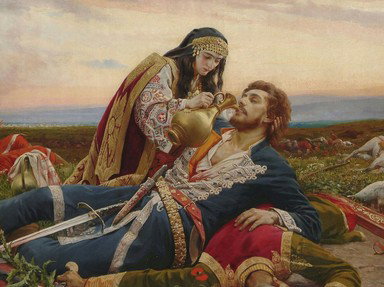
For a long stretch of history, Serbia sat under the rule of the Ottoman Empire, which rolled into the Balkans in the 14th and 15th centuries. After the much-ballyhooed Battle of Kosovo, things started tipping in favor of the Ottomans. Not overnight, but by the mid-1400s, Serbia's medieval states had all pretty much been absorbed.

Life under Ottoman rule wasn't horrific by any means, but it did come with hefty taxes, military obligations, and a funny feeling that your local ruler answered to someone very far away indeed.

Resistance bubbled up again and again, sometimes with great drama, sometimes more like an annoying eczema flare-up. By the early 1800s, things got loud. The First Serbian Uprising kicked things off in a big way, led by Karađorđe Petrović, whose name at least LOOKS dramatic. That uprising didn't permanently kick out the Ottomans, but it cracked the door open.

And through that open door came Milos Obrenović and the Second Serbian Uprising, which was a bit more successful in negotiating autonomy. Obrenović was all about political maneuvering. Still risky. Still messy. Much more effective. Go Milos!

By the mid-19th century, Serbia had become an autonomous principality, technically under Ottoman suzerainty but with an increasingly long leash. Full independence would come in 1878, which brings us to the next question.
2. At which 1878 international meeting did the Great Powers of Europe recognize Serbian Independence?

Answer: Congress of Berlin

By the late 1800s, Serbia had been inching toward independence for so long it probably felt like a half-dead snail moving backwards on a three-legged tortoise struggling forward. The big turning point came at the Congress of Berlin, where the so-called Great Powers of Europe, the usual suspects, officially recognized Serbia as an independent state in 1878. Not partially independent, but actually sovereign. After centuries of Ottoman rule, Serbia was free again. Go Serbia!

Now what? Good question, and one it asked itself for a few years until everyone decided to purchase the upgrade. In 1882, it became the Kingdom of Serbia (hey, that's what the quiz is about!), with Milan I of Serbia taking on the title of King.
3. Which ruler was assassinated in 1903 during a coup that ended a Serbian royal dynasty?

Answer: Alexander Obrenović

Things took a sharp and very messy turn in 1903. Alexander Obrenović, the last ruler of the Obrenović dynasty, didn't go out peacefully. He and his wife, Queen Draga, were assassinated during what's now known as the May Coup.

A group of army officers stormed the royal palace in Belgrade in the middle of the night, and long story short, the royal couple would not be attending breakfast the next morning.

The whole situation had been building for quite a while. Alexander wasn't winning any popularity contests, especially after his controversial marriage to Draga, who didn't have the right kind of background for Serbia's political elite. Add in concerns about his increasingly authoritarian style and his perceived closeness to Austria-Hungary, and you get a political climate ripe for something unpleasant to happen. And, well, it did. There were murders and mutilations involved. It was a whole thing.

With Alexander (and Draga) gone, the Obrenović dynasty was finished, and power shifted to the rival Karađorđević dynasty, bringing Peter I of Serbia to the throne.
4. Which neighboring empire annexed Bosnia and Herzegovina in 1908, heightening tensions with Serbia?

Answer: Austria-Hungary

In 1908, Austria-Hungary formally annexed Bosnia and Herzegovina. Now, technically, it had already been administering the region since 1878 (thanks, Congress of Berlin), but this was different. This was ownership, on paper and in practice. And if you're Serbia, sitting right next door and eyeing those same lands as part of a future South Slavic state, you're... not thrilled.

And Serbia's reaction was indeed... not thrilled. It had strong national and cultural ties to the Slavic population in Bosnia, and the annexation basically slammed the door on its ambitions there.

The Bosnian Crisis, as it was called, saw the Great Powers of Europe complain loudly. But Austria-Hungary didn't budge. In the end, Serbia had to back down, mostly because it wasn't quite dumb enough to take on a major empire head-on.

Not yet, anyway.
5. Which secret nationalist organization, formed in 1911, sought to unite South Slavic territories and wasn't above causing major international incidents?

Answer: Black Hand

By 1911, Serbia had independence and a monarchy. Things seemed pretty chill, at least since 1903, when the king and queen were mutilated.

However, one thing that it lacked was a really good secret society with nefarious aims. Enter the Black Hand. With the usual Serbian subtly, it was officially called 'Unification or Death', and it was formed by a group of Serbian army officers who thought that national unification should be... well, a bit higher up on everyone's list of priorities.

Their main goal was to bring all Serbs, especially those still living under Austria-Hungary, into one state. A greater Serbia. They weren't thinking so much about polite diplomacy, mind you. They were very comfortable with espionage, sabotage, and the occasional assassination. You know. Whatever works.

At the center of it all was Dragutin Dimitrijević, better known by his nickname 'Apis,' which already sounds like someone you shouldn't trust with sharp objects. He'd been involved in the earlier May Coup, and by 1911 he was a powerful man in Serbian military intelligence.

We'll meet the Black Hand again.
6. Which war in 1912 saw Serbia expand its territory at the expense of the Ottoman Empire?

Answer: First Balkan War

In 1912, the First Balkan War kicked off, and Serbia was all for it! It joined forces with its neighbors in the Balkan League and went up against the grizzled but still-kicking Ottoman Empire. The Ottomans had been losing their grip on European territory for a while, and Serbia saw an opportunity. It happened fast.

The results? Serbia expanded southward, gaining territory. A lot of it. Areas like Kosovo and parts of Macedonia came under Serbian control. This was a country that had spent centuries under Ottoman rule. You don't think there were high-fives all over for turning things around and taking land from their former conquerors?

Bulgaria came out as the big man on campus in the Balkans after the war, and they weren't happy with their share of the spoils. That led to the second Balkan War, this time between Bulgaria and its former allies Serbia and Greece. Not cool, Bulgaria.

On the bright side, who doesn't enjoy a good sequel?
7. Which former Serbian ally launched attacks against Greek and Serbian forces in Macedonia on June 29, 1913?

Answer: Bulgaria

So, about that alliance from the First Balkan War. Yeah, it didn't age well. On June 29, 1913, Bulgaria decided it was done negotiating and launched attacks on both Serbian and Greek forces in Macedonia, which left Serbia asking itself, "Weren't we just allies literally five minutes ago?"

Bulgaria had expected a larger share of the spoils from the first war, especially in Macedonia, and when that didn't pan out, it went straight to Plan B. Plan B was the Second Balkan War.

Bulgaria had a decidedly bad time in this very brief war. Serbia and Greece didn't just hold their ground. They pushed back... hard. Then Romania joined in against Bulgaria, and even the Ottoman Empire took the opportunity to grab back some territory, which left Serbia asking itself, "weren't we just killing each other last month?"

So, Bulgaria was essentially surrounded, which must've made the Bulgarians think that maybe they should have thought things over a bit more. The fighting was relatively short but intense, and by the time it all wrapped up, Bulgaria had lost more than it gained. A lot more.

Whoops.

The Treaty of Bucharest left Serbia even larger than it had been after the First Balkan War just months earlier. Austria-Hungary was starting to twitch looking at its neighbor to the south. Things just got a lot less stable in the Balkans.
8. Which Serbian leader served as prime minister throughout most of World War I?

Answer: Nikola Pasić

Nikola Pasić was the guy who served as prime minister of Serbia through most of World War I. So if you're looking for someone to drive you somewhere safely while the entire vehicle is on fire, he's the one you want.

Now, this isn't a quiz on the July Crisis or World War I. So, if you're new to the topic, the Black Hand sent a bunch of guys to Bosnia and Herzegovina to assassinate the heir-apparent to the throne of Austria-Hungary. It was kind of their whole deal.

That led to the July Crisis, which is briefly summed up below:

Austria-Hungary: Serbia sucks. This is a great excuse to invade them.
Serbia: Who me? What did I do? (cough cough)
Germany: Sure, Austria, I got your back. (They're not really going to invade Serbia, are they?)
Russia: What's all this? You better leave the Balkans alone.
France: I'm with you, Russia. French élan is unstoppable.
Britain: I say, chaps. What's with all the troops on the Belgian border?
Ottoman Empire: If I don't conquer some territory soon, I'm going to disappear.

So, Austria-Hungary declared war, the dominos fell-yada yada yada-The Great War.

Anyway, back to Pasić. He had already been a major political figure before the war, leading the Radical Party and shaping Serbian policy for years, so when things escalated in 1914, he wasn't exactly new to this whole high-stakes decision-making thing.

When the war broke out, Pasić found himself in a pickle. Serbia faced invasion by Austria-Hungary, followed by the involvement of other Central Powers, and things got dire. There were military victories early on. However, by 1915 Serbia was overwhelmed, leading to a brutal retreat across Albania. Through all of this, Pasić remained a key political leader, working with the government-in-exile and trying to keep Serbia's cause alive among the Allies.

Pasić would play a central role in diplomatic efforts, including the Corfu Declaration, which laid the groundwork for the postwar creation of a South Slavic state.
9. Which Allied-front breakthrough in 1918 helped lead to Serbia's liberation?

Answer: Vardar Offensive

Serbia was in a bad way by 1918, the last year of the Great War. Occupied, overrun, government in exile. Check, check, and check.

Then came the Vardar Offensive, and suddenly things shifted. Entente forces, including Serbian troops who had regrouped after that brutal retreat a few years earlier, launched a major push against the Central Powers along the Macedonian front. This wasn't a minor skirmish.

It hit hard, fast, and right where it mattered.

The breakthrough came in September, when Serbian forces and friends smashed through enemy lines. Bulgaria, already worn down and probably rethinking a lot of its life choices, collapsed quickly and signed an armistice. That was the first shoe to drop.

Serbian forces advanced rapidly back into their homeland, liberating cities and territories that had been under occupation since 1915. That was the other shoe. By the time the dust settled, Serbia was effectively free again, and the collapse of the Balkan front helped accelerate the end of World War I as a whole. Nice turnaround, guys!
10. Which new country was formed in 1918 that included Serbia after the war?

Answer: Kingdom of Serbs, Croats and Slovenes

After the war, Serbia didn't go back to business as usual. Instead, it helped to create something bigger: the Kingdom of Serbs, Croats and Slovenes. This new state brought together several South Slavic peoples into one political unit. If that sounds an awful lot like everyone holding hands and singing songs, it wasn't that.

In reality, it was more like merging a bunch of households mid-argument and hoping everyone agrees on dinner. Still, the idea had been building for a while, especially among those leaders who thought unity might be the best way to survive in a neighborhood full of overly... invadey neighbors.

For Serbia, this was kind of a weird win. Yes, it came out of the war on the victorious side and played a major role in shaping the new state. However, it meant the end of the Kingdom of Serbia as a separate entity. Not a huge loss if you've read everything I've been writing for you (or at least skimmed it), but definitely a transformation. The Serbian monarchy made itself known though. Peter I of Serbia, King of Serbia since 1903, became the first king of the new Kingdom of Serbs, Croats and Slovenes.
Source: Author JJHorner

This quiz was reviewed by FunTrivia editor ponycargirl before going online.
Any errors found in FunTrivia content are routinely corrected through our feedback system.
4/15/2026, Copyright 2026 FunTrivia, Inc. - Report an Error / Contact Us