FREE! Click here to Join FunTrivia. Thousands of games, quizzes, and lots more!
Quiz about An Animal Lovers Bookshelf

An Animal Lover's Bookshelf Trivia Quiz


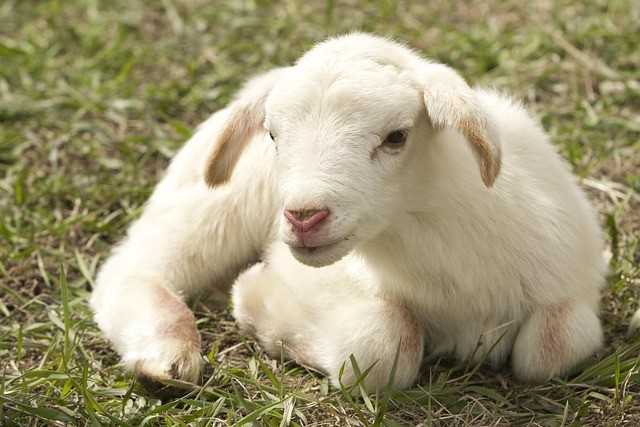
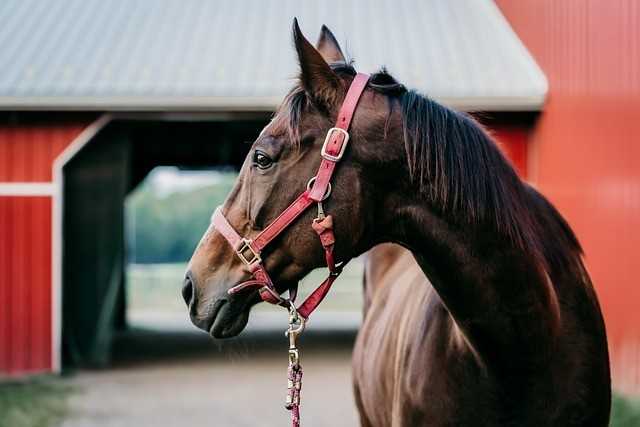
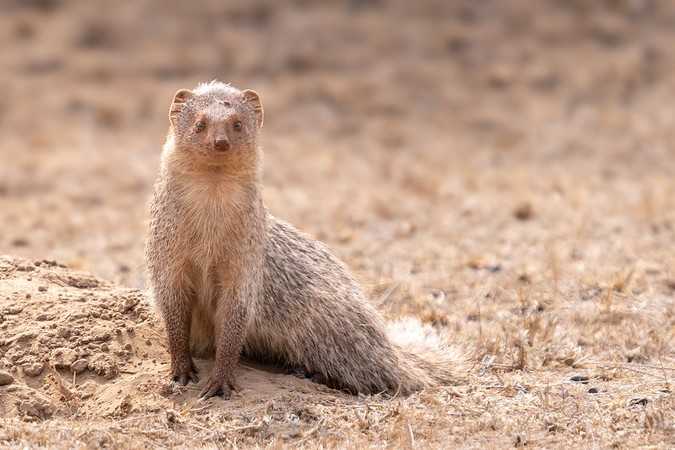
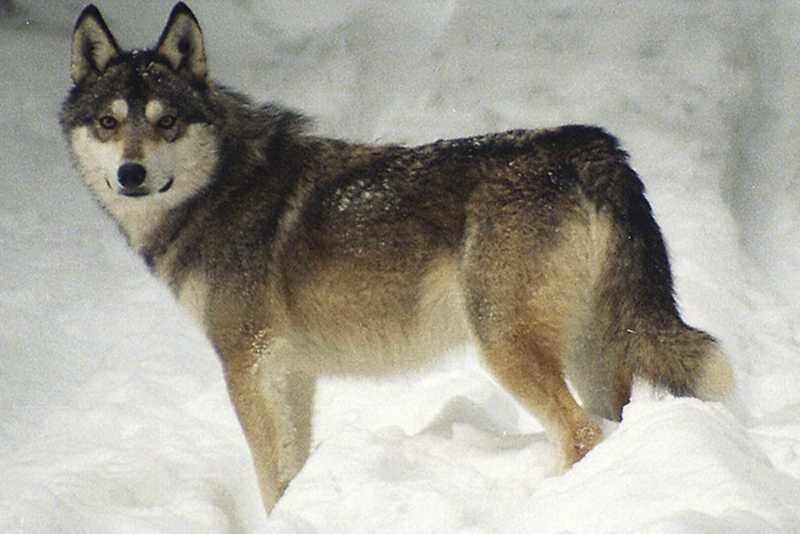
This quiz is dedicated to literary works (novels, short stories and poems) in which animals appear either as characters or as significant plot elements. Can you match each photo with the author who wrote about the animal in question?

by LadyNym. Estimated time: 3 mins.
  1. Home
  2. »
  3. Quizzes
  4. »
  5. Literature Trivia
  6. »
  7. Specific Subjects & Themes
  8. »
  9. Animal Themes

Author
LadyNym
Time
3 mins
Type
Quiz #
422,153
Updated
Dec 06 25
# Qns
12
Difficulty
Easy
Avg Score
10 / 12
Plays
62
Last 3 plays: dinipie (4/12), pixiecat (12/12), CardoQ (12/12).
Drag-Drop or Click from Right
Options
William Blake C.S. Lewis Edgar Allan Poe Hans Christian Andersen Jack London Richard Adams Ernest Hemingway John Keats Rudyard Kipling Anna Sewell Robert Burns Kenneth Grahame


 View Image Attributions for This Quiz

Most Recent Scores
Today : dinipie: 4/12
Today : pixiecat: 12/12
Today : CardoQ: 12/12
Today : Guest 35: 9/12
Today : Inquizition: 12/12
Today : JGal321: 12/12
Today : mulder100: 12/12
Today : Aph1976: 6/12
Today : Guest 71: 2/12

Quiz Answer Key and Fun Facts
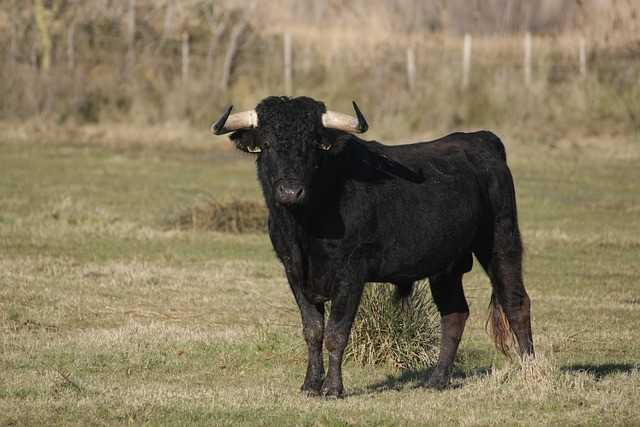
1. Ernest Hemingway

A bullfighting aficionado, American author Ernest Hemingway frequently wrote about this activity - regarded as a blood sport in many countries, but a time-honoured tradition in the Iberian Peninsula. The novel "The Sun Also Rises" (1926), set in Paris and Spain, contains accounts of Pamplona's famed Running of the Bulls and the bullfights ("corrida") occurring during the week-long Festival of San Fermín. Such was Hemingway's passion for bullfighting that he also wrote a treatise about its history and traditions - "Death in the Afternoon" (1932), based on his own experiences in Spain, and complemented by photos and a glossary of terms. His third work related to bullfighting, "The Dangerous Summer", is also a non-fiction book, written shortly before his death in 1961, and published posthumously in 1985. It focuses on the rivalry between two prominent Spanish bullfighters in the summer of 1959.

A keen hunter and lover of nature, Hemingway wrote about animals in a number of other works, often employing them as symbols. This is the case of the novella "The Old Man and the Sea" (1952), where the marlin is as much as a character as the titular old man, and the short story "The Snows of Kilimanjaro" (1936), inspired by a legend about a frozen leopard carcass lying near the summit of Africa's highest peak.
2. William Blake

English poet and artist William Blake's "The Lamb" was published in 1789 as part of the collection "Songs of Innocence"; its counterpart, "The Tyger", appeared five years later in "Songs of Experience". These two poems are among Blake's best known and most frequently anthologized works. A short, lullaby-like poem consisting of two 10-line stanzas with a simple rhyme scheme and plenty of repetition, "The Lamb" features a child's speaking voice, first asking the lamb about its creator, and then answering his own question. The lamb's creator is Jesus Christ, the Lamb of God, who was born as a little child. Blake's own illustration for the poem shows a young boy surrounded by a flock of sheep in front of a house with a thatched roof.

The endearingly childlike tone of "The Lamb" contrasts with the powerful, visionary language of "The Tyger", illustrating the dichotomy between innocence and experience that is a natural component of human life. Blake summed up his view in a famous quote from "The Marriage of Heaven and Hell": "Without contraries there is no progression. Attraction and repulsion, reason and energy, love and hate, are necessary to human existence."
3. Anna Sewell

British novelist Anna Sewell wrote her only published work, "Black Beauty", between 1871 and 1877, when her health was already declining. The novel was published in November 1877, only five months before the author's death at 58 years of age. Sewell, who managed to live long enough to witness the successful reception of her work, wrote the novel - now regarded as a classic of children's literature - for people who worked with horses in order to encourage kind, humane treatment of these animals. The story is narrated in the first person by its animal protagonist, a black horse who begins his life drawing the carriage of his wealthy owners, but falls on hard times after an injury to his forelegs. He goes through various owners, some of whom cruelly mistreat him and other horses, before a well-deserved happy ending.

The plight of working horses is described vividly and sympathetically by Sewell, who is credited with having raised awareness of the pain often suffered by horses in Victorian England. In particular, her depiction of the use of a strap (known as a bearing rein) to keep a horse's head high, which caused constant pain and damage to the animal's neck, is believed to have been instrumental in the abolition of the practice.
4. Rudyard Kipling

Nobel Prize-winning author Rudyard Kipling is well known for his animal stories - in particular those contained in the two "Jungle Books" and "Just So Stories for Little Children". In fact, natural science was one of the Indian-born writer's keenest interests, and his knowledge of animals - especially those of the Indian subcontinent - comes clearly through in his writings. One of Kipling's most familiar short stories, often included in anthologies of animal-themed literature, is "Rikki-Tikki-Tavi", published in "The Jungle Book" (1894), and inspired by one of the fables contained in the ancient Indian collection known as the "Panchatantra". The story's main character is a young Indian grey mongoose rescued from drowning by an English family, who adopt it and name it after its chattering vocalizations. With the help of other animals (a tailorbird and a muskrat), Rikki-Tikki-Tavi protects the family from the cobras Nag and Nagaina, and emerges victorious from the struggle against the malevolent creatures.

Many of the tales in "The Jungle Book" and "The Second Jungle Book" (1895) revolve around the character of Mowgli, the "man-cub" raised by a wolf pack in the Indian jungle, and his interaction with various animals - Baloo the sloth bear, Bagheera the black panther, Kaa the rock python, and his arch-enemy, Shere Khan the tiger. On the other hand, "Just So Stories" - illustrated by Kipling himself - are about how some animals acquired their distinctive characteristics.
5. Jack London

American novelist and journalist Jack London owes much of his fame to his two novels set during the Klondike Gold Rush of the late 1890s, both of which have dogs as their protagonists. While Buck, the main character of "The Call of the Wild" (1903), is a large St. Bernard-Scotch shepherd mix, the titular character of "White Fang" (1906) is a wolfdog (much like the one in the photo, a grey wolf-Siberian Laika hybrid). The two novels are mirror images of each other: if "The Call of the Wild" tells the story of a domestic dog that eventually reverts to wildness to survive, "White Fang" depicts a wild creature's journey to domestication. Both novels are narrated from their canine characters' points of view.

Besides these two famous novels, London wrote a number of other works that feature animals - often dogs or wolves - and their struggle for survival in the wilderness, contrasted with the civilized world of human society. He was also an animal activist, campaigning in particular against cruelty to circus animals, which he had witnessed firsthand.
6. John Keats

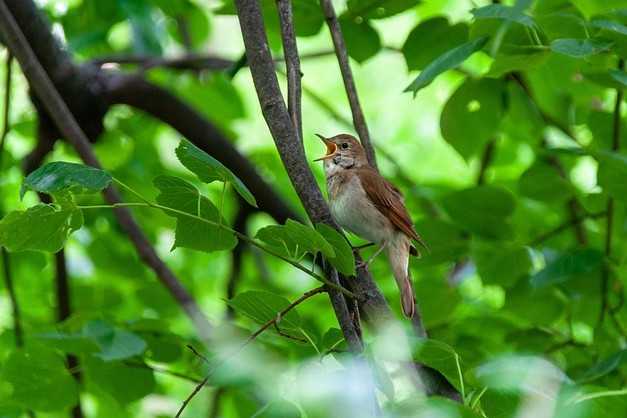
One of the most renowned poetic works produced by English Romantic poet John Keats in his short life, "Ode to a Nightingale" is one of the six major odes written in 1819, less than two years before Keats' untimely death at the age of 25. The poem was composed in the spring of that year, when the poet was living in Wentworth House, in the London suburb of Hampstead. A nightingale had made its nest near the house, and Keats was inspired by the bird's melodious song. According to the poet's friend Charles Armitage Brown, who shared the house with him, Keats wrote the poem in just one morning while sitting under a plum tree. The poem's elaborate sound patterns create a dreamy musicality that reinforces its sensuous imagery, treading a fine line between the languor of sleep and the attraction of "easeful" death. The nightingale, however, transcends its physical nature, and is described as immortal.

In 1820, another great Romantic poet, Percy Bysshe Shelley, wrote "To a Skylark", another masterpiece of English Romantic poetry. The poem was inspired by a walk in the pine woods near Leghorn, Italy, where the poet and his wife Mary (the author of "Frankenstein") heard a skylark singing. In Shelley's poem, the bird symbolizes nature. The theme of death is also present, foreshadowing the poet's death by drowning in 1822.
7. Kenneth Grahame

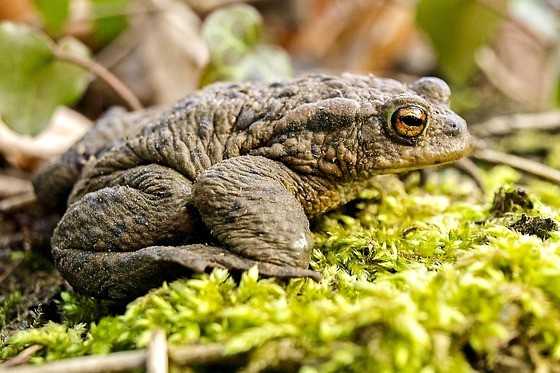
Scottish-born writer Kenneth Grahame is mostly known for his fourth and final book, the novel "The Wind in the Willows", published in 1908 - four months after the author's retirement from his job at the Bank of England. Now widely regarded as a classic of children's literature, the novel - inspired by the bedtime stories Grahame told his son Alastair (who died tragically a few days before his 20th birthday) - was well received by the public, though not by critics. "The Wind in the Willows", whose characters are all anthropomorphized animals, tells the story of Mole, Ratty (a water vole) and Badger and their attempts to help Mr Toad of Toad Hall, a wealthy country squire that keeps getting into trouble because of his obsession with motorcars.

According to a friend of the Grahame family, the character of Mr Toad - whose madcap exploits in pursuit of the latest fad are central to the novel's plot - was inspired by young Alastair's tendency to boast about his own exploits. This wayward but endearing character is also the protagonist of a play written by A.A. Milne (the creator of another anthropomorphic literary animal, Winnie-the-Pooh) in the late 1920s, titled "Toad of Toad Hall". "The Wind in the Willows" also contains a number of short stories that feature the novel's characters, but are not connected to the main story. In one of those stories (the book's Chapter 7), titled "The Piper at the Gates of Dawn", the Greek god Pan makes an appearance. Iconic English rock band Pink Floyd named their 1967 debut album after this chapter.
8. Hans Christian Andersen

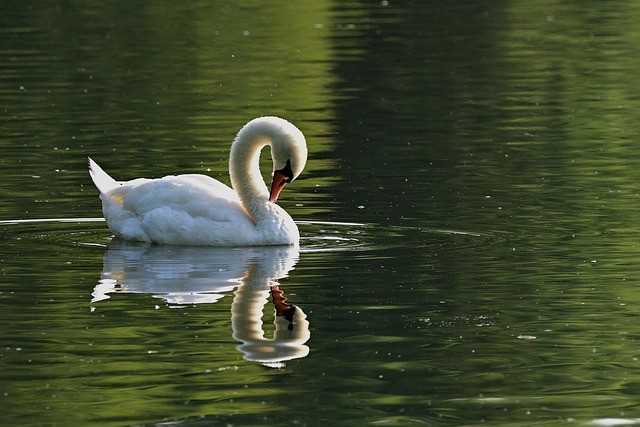
While not many of Danish author Hans Christian Andersen's literary fairy tales feature animals as characters, one of the few that do, "The Ugly Duckling", is unquestionably among his most popular works. First published in 1843 as part of the collection "New Fairy Tales. First Volume. First Collection" ("Nye Eventyr. Første Bind. Første Samling"), the story reflects some of its author's unpleasant experiences as a child, when he was bullied by other children for his less than comely appearance. The ugly duckling's metamorphosis into a beautiful swan has been interpreted as a metaphor for Andersen's artistic talent and his eventual success as a writer. Another animal-themed story contained in the same collection, "The Nightingale", was probably inspired by Swedish opera singer Jenny Lind (nicknamed "the Swedish Nightingale"), who was Andersen's friend.

Swans feature prominently in another Andersen story, "The Wild Swans", which appeared in his 1838 collection, "Fairy Tales Told for Children. New Collection. First Booklet" ("Eventyr, fortalte for Børn. Ny Samling. Første Hefte"). The tale of a princess who rescues her eleven brothers - turned into swans by the spell of their evil stepmother - is based on a widespread folktale type.
9. Edgar Allan Poe

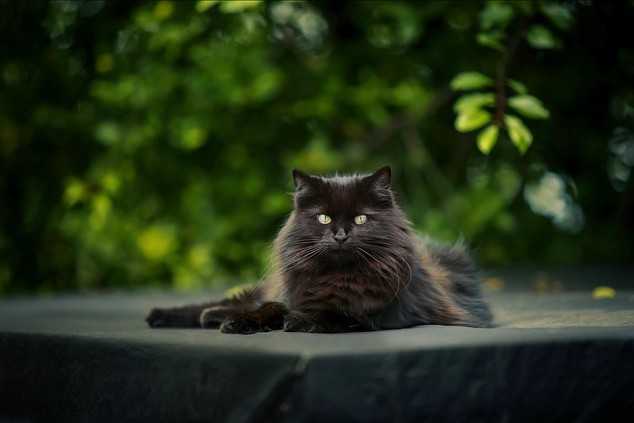
Published in 1843 in "The Saturday Evening Post", "The Black Cat" is not only a harrowing read for any animal lover, but also a cautionary tale against the dangers of alcoholism - which the American author knew all too well. It is his alcohol addiction that leads the narrator - who describes himself as a lifelong animal lover - to gratuitous violence against his cat, and eventually to murder. Like "The Tell-Tale Heart" (often regarded as its companion piece), "The Black Cat" employs supernatural elements to explore the psychology of guilt. As in many of Poe's stories, the narrator is an unreliable one on account of his questionable sanity and substance abuse. The black cat, on the other hand - even if named Pluto for the Roman god of the underworld, and associated with witchcraft because of its colour - is portrayed as an affectionate creature who is the innocent victim of his owner's alcohol-fuelled violence.

The most famous of Poe's animal-related works is, of course, the poem "The Raven" - another quintessentially black creature with a sinister reputation. In addition, the short story "The Murders in the Rue Morgue", widely regarded as the first modern detective story, features an orangutan in the rather unusual role of the villain.
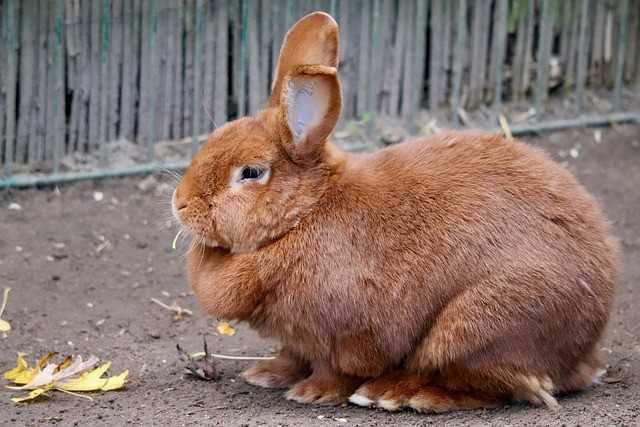
10. Richard Adams

Published in 1972, "Watership Down" is English novelist Richard Adams' debut, to which he owes most of his fame. The novel, which was initially rejected by a number of publishers, was based on a story he told his two young daughters during a car trip, and is dedicated to them. Like other well-known classics of children's literature, its main characters are anthropomorphized animals - in this case, a group of rabbits that escape the destruction of their warren. "Watership Down" follows the rabbits' adventurous (and often frightening) journey to the titular hill, where they seek to establish a new home. The story is narrated in almost epic tones, and the rabbits are described as having their own complex culture - including a language (Lapine) and various mythical characters.

In 1996. Adams published a volume of short stories, "Tales of Watership Down", as a follow-up to the novel, which was a critical and commercial success. A keen advocate of animal welfare, he also wrote other books with animals as characters - such as "Shardik" (1974), whose titular character is a huge bear, and "The Plague Dogs" (1977), about the friendship between two dogs that escape from an animal testing facility.
11. Robert Burns

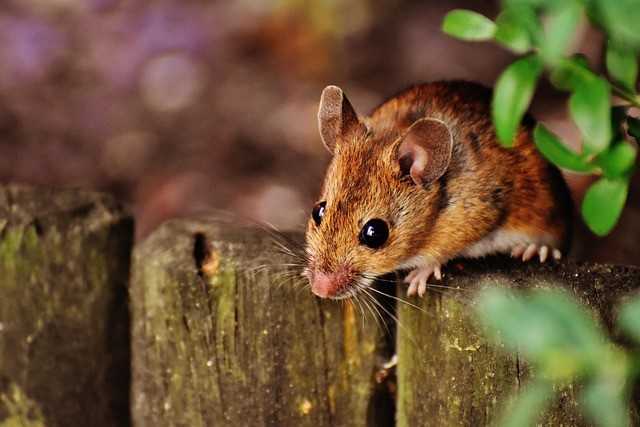
"To a Mouse, On Turning Up in Her Nest With the Plough" is the best known of Scottish poet Robert Burns's animal-themed poems. Written in 1785 in the Scots language, the eight-stanza poem was allegedly inspired by an incident that happened when Burns, while ploughing the fields at East Mossgiel Farm in East Ayrshire (his home at the time), accidentally destroyed a mouse's nest. In the poem, Burns apologizes to the mouse for his unwitting act, which he knows to be catastrophic for a small animal when winter is approaching. The poem's penultimate stanza reflects on how planning for the future may prove useless even to human beings - as pointed out by the often-cited lines "The best laid plans o' mice and men/Gang aft agley". The title of John Steinbeck's 1937 novel "Of Mice and Men" was taken from there.

Among Burns' other poems dedicated to animals there is the satirical "To a Louse, On Seeing One on a Lady's Bonnet at Church" (1786), also written in the poet's favourite metre, the Burns stanza or standard Habbie; "The Twa Dogs" (1786), in which two dogs compare the lives of their masters; and the poignant "The Wounded Hare" (1788), a somber reflection on the cruelty of man.
12. C.S. Lewis

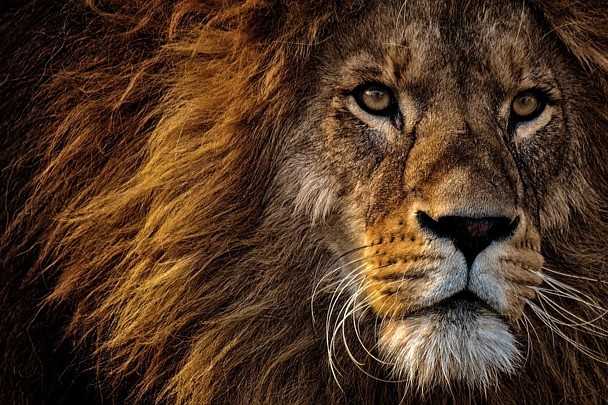
Various animals appear in C.S. Lewis' portal fantasy series "The Chronicles of Narnia" (published between 1950 and 1956) alongside humans and mythical creatures. The most prominent of these characters, appearing in all seven books, is Aslan, the Great Lion, a powerful but benevolent being that acts as the guardian and saviour of the magical realm of Narnia. Aslan (whose name means "lion" in Turkish) is described as a talking lion, the son of the mysterious Emperor-over-the-Sea. Lewis stated that he was meant to be a parallel of Jesus, called the "Lion of Judah" in the Book of Revelations. In the first book of the series, "The Lion, the Witch and the Wardrobe", Aslan sacrifices himself to save Edmund Pevensie from the White Witch's clutches, but is brought back to life. In "The Magician's Nephew", Aslan is revealed to be Narnia's creator.

Other significant animal characters in the Narnia cycle are Repicheep, the leader of the Talking Mice, the talking horse Bree, and the villainous ape Shift, the main antagonist in "The Last Battle", the final book in the series. Many animals in Narnia have been granted the power of speech by Aslan: these talking animals are also larger in size than their non-talking counterparts.
Source: Author LadyNym

This quiz was reviewed by FunTrivia editor looney_tunes before going online.
Any errors found in FunTrivia content are routinely corrected through our feedback system.
12/7/2025, Copyright 2025 FunTrivia, Inc. - Report an Error / Contact Us