FREE! Click here to Join FunTrivia. Thousands of games, quizzes, and lots more!
Quiz about A Sort of Homecoming

A Sort of Homecoming Trivia Quiz

Ordering the British Invasion

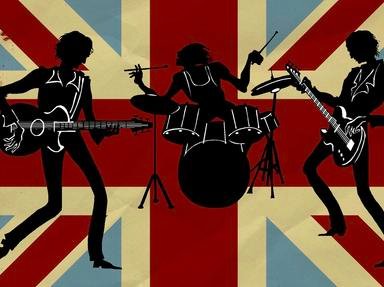
From their iconic 1964 arrival to 1966 and beyond, British bands completely reshaped North American radio. Place these legendary UK acts in the exact order they landed their very first Billboard Hot 100 No. 1. Right then, let's head off.

An ordering quiz by LeoDaVinci. Estimated time: 3 mins.
  1. Home
  2. »
  3. Quizzes
  4. »
  5. Music Trivia
  6. »
  7. UK Music
  8. »
  9. British Invasion

Author
LeoDaVinci
Time
3 mins
Type
Order Quiz
Quiz #
424,292
Updated
May 30 26
# Qns
10
Difficulty
Average
Avg Score
8 / 10
Plays
23
Last 3 plays: pixiecat (9/10), RJOhio (7/10), Guest 70 (5/10).
Mobile instructions: Press on an answer on the right. Then, press on the question it matches on the left.
(a) Drag-and-drop from the right to the left, or (b) click on a right side answer, and then click on its destination box to move it.
Order these bands from when they got their first Billboard Hot 100 No. 1 hit.
What's the Correct Order?Choices
1.   
(February 1, 1964 - The Fab Four)
The Animals
2.   
(June 27, 1964 - Secret McCartney song)
The Troggs
3.   
(September 5, 1964 - Gritty New Orleans ballad)
Manfred Mann
4.   
(October 17, 1964 - Nonsensical radio chorus)
The Beatles
5.   
(April 10, 1965 - Merseybeat dance kick)
The Rolling Stones
6.   
(April 24, 1965 - Purposefully offset guitar riff)
Herman's Hermits
7.   
(May 1, 1965 - Never released in the UK!)
Wayne Fontana and the Mindbenders
8.   
(July 10, 1965 - Mick and Keith forever)
The Dave Clark Five
9.   
(December 25, 1965 - Tottenham, Tottenham)
The Peter and Gordon Duo
10.   
(July 30, 1966 - Ocarina solo)
Freddie and the Dreamers


Most Recent Scores
Today : pixiecat: 9/10
Today : RJOhio: 7/10
Today : Guest 70: 5/10
Today : Guest 97: 3/10
Today : GoodwinPD: 10/10
Today : martin_cube: 10/10
Today : Lenny15: 6/10
Today : Lord_Digby: 10/10
Today : tag11: 6/10

Quiz Answer Key and Fun Facts
1. The Beatles

Traditional homecoming? No, the British Invasion didn't just trickle into North America, it exploded overnight because of "I Want to Hold Your Hand". Released in late 1963, the Beatles captured an unparalleled cultural frenzy that went supersonic due to the band's now-historic appearance on the "Ed Sullivan Show" in February 1964.

The song shattered standard radio formats with its exuberant vocal harmonies and unvarnished energy. It held the number one spot for seven consecutive weeks. It broke down the barriers of the American music industry, proving that overseas acts could completely dominate domestic charts. Transforming pop music from a localized commodity into a global youth phenomenon allowed The Beatles to establish an entry point for every single UK artist that followed them across the Atlantic.

During the 1960s alone, the Beatles racked up an astonishing 18 number one hits on the North American Billboard Hot 100 charts. They would add two more in the 70s to bring their total up to an incredible 20. In April of 1964, they accomplished an astounding feat: they held all top five of the Billboard charts at the same time! So, as far as the British Invasion goes, this was more than just a beachhead, this was the total blitz.
2. The Peter and Gordon Duo

As the very first British act to conquer the North American charts after The Beatles, Peter and Gordon proved that the British Invasion was not a fluke; they were right at home in the US and success was theirs. The duo possessed a massive unfair advantage: Peter Asher's sister, Jane, was dating Paul McCartney. He gifted the duo an unreleased, rejected Lennon-McCartney composition. "A World Without Love" became a solid hit for the duo, and Peter and Gordon became the first UK act to follow the Beatles to the number one spot.

The track's lush vocal harmonies and signature melodic hooks offered a softer, folk-pop alternative to the aggressive rock acts of the era. Topping the charts in June 1964, "A World Without Love" demonstrated that the American appetite for British talent extended beyond Liverpool's Merseyside sound (after all, the Fab Four had held the top of the charts for weeks at this point), opening the door for a sophisticated London pop duo to capture a slice of the market.
3. The Animals

The polite, matching suits of the early invasion vanished in September 1964 when Newcastle's The Animals took home North American radio into the blues underground. "The House of the Rising Sun" changed a traditional, sorrowful American folk lament by electrifying it and anchoring the track with a haunting, cyclical organ riff.

On the track of "The House of the Rising Sun", Eric Burdon's raw, roaring vocals stripped away the polite image that had prevailed up to that point. They offered a gritty authenticity that directly challenged American blues artists on their own turf. They took an American sound and raised the bar by transforming a sorrowful acoustic lament into an aggressive, haunting rock masterpiece. In fact, many point to this song as being the first popular folk-rock song.
4. Manfred Mann

Manfred Mann took it home by proving that the British Invasion excelled at identifying overlooked American rhythm and blues tracks. The British weaponized their own music against them and made local songs into global pop hits. Manfred Mann's song, "Do Wah Diddy Diddy", was actually originally recorded by the American group, the Exciters. However, our London-based group added a driving beat, a distinctive bluesy organ, and an undeniable British charm to the track. This propelled the song to the top of the charts.

Reaching the peak of Billboard in October 1964, its simple, nonsensical chorus became an instant playground chant across the North American continent. The track showcased the incredible versatility of the British Invasion, while Manfred Mann successfully bridged the gap between avant-garde London jazz roots and mainstream (and highly commercial) pop.
5. Freddie and the Dreamers

Hailing from Manchester, Freddie and the Dreamers brought a dose of theatrical comedy and pure novelty to American audiences during the British Invasion. Frontman Freddie Garrity captivated their television audiences by bouncing wildly across stages doing "The Freddie": a chaotic, high-kicking dance craze that became a brief cultural obsession.

When their 1963 UK hit, "I'm Telling You Now", finally climbed to the top of the American charts in April 1965, it proved that the visual medium of television was just as critical to the British Invasion's success as much as the audio tracks. The band offered a joyful, unpretentious escape and a departure from the straight-up clean music that the rest of the overseas music brought with them.
6. Wayne Fontana and the Mindbenders

Another group representing the vibrant Manchester music scene, Wayne Fontana and the Mindbenders took it home in the mid-60s as a part of the British Invasion as a very beat-driven group. Driven by a highly distinctive, syncopated guitar riff and a bouncing bassline, "Game of Love" grabbed the number one spot just two weeks after their hometown rivals, Freddie and the Dreamers.

Their song perfectly encapsulated the energetic, danceable rhythm that North American teenagers craved from their new overseas imports. Their rapid ascent to the top spot showed how much the Invasion influenced American music preferences and how overseas music was at its peak. Fresh British bands, just like Wayne Fontana, could cross the ocean and instantly conquer the charts with tight musicianship, a clean-cut image, sharp tailoring, and irresistible hooks, not to mention charming British accents.
7. Herman's Hermits

Herman's Hermits became a pop phenomenon by leaning heavily into a quaint yet unapologetically English identity. Fronted by the clean-cut Peter Noone, the band offered a wholesome, radio-friendly alternative to the darker rock bands crossing the Atlantic. For a brief window, Herman's Hermits stood as the only British band capable of rivaling the absolute chart dominance of The Beatles, proving that standard pop appeal was an incredibly potent weapon.

Interestingly, "Mrs. Brown, You've Got a Lovely Daughter" was never released as a single in the United Kingdom. Its muted rhythm guitar and Noone's thick, conversational Lancashire accent completely enchanted North American audiences. It debuted at number 12 and quickly shot up to number one in May 1965. Their other number one single, "I'm Henry VIII, I Am", was also never released as a single in the UK.
8. The Rolling Stones

If The Beatles opened the door to the British Invasion, The Rolling Stones blew the hinges off with "(I Can't Get No) Satisfaction", a definitive rock anthem. Released in the summer of 1965, the track was propelled to the top of the charts by Keith Richards' legendary, fuzz-distorted guitar riff, considered by many to be one of the best hooks in music of all time. Mick Jagger's snarling vocals gave voice to a generation's growing disillusionment with consumerism and sexual frustration. The Stones, well, they really took it home and reached super-stardom.

Landing their first US number one, the Stones completely shifted the tone of the Invasion away from matching suits and polite pop toward a raw, rebellious counterculture. This song is said to have marked the exact moment the British Invasion evolved from a clean-cut musical trend into a loud, lasting cultural revolution.
9. The Dave Clark Five

Often billed as the primary commercial rivals to The Beatles during the earliest wave of the Invasion (for commercial purposes, primarily), London's The Dave Clark Five were renowned for their thunderous, heavy-hitting rhythm section. They actually made more appearances on "The Ed Sullivan Show" than any other British act, something which cemented their status as household names across North America.

Despite a massive string of top-ten hits, it actually took until Christmas Day of 1965 for them to finally secure their lone number one spot with "Over and Over", an energetic, horn-infused rock track. Their triumph demonstrated the incredible staying power of the original 1964 wave, ensuring that Americans would keep popularizing British music and giving it commercial success.
10. The Troggs

By 1966, the British Invasion was beginning to transition, and Andover's The Troggs pushed the music into entirely new, primal, and shall we say wild, territory. Built around a simplistic three-chord progression (I-IV-V) and featuring a bizarre, haunting ocarina solo, the song "Wild Thing" captured the top chart position in July 1966.

Its raw, unpolished, and controversially overt sexual energy laid the groundwork for the garage rock and proto-punk movements that would soon follow. The Troggs proved that the ongoing British influence over American music didn't rely on complex studio production or sophisticated arrangements. Instead, it thrived on pure, visceral energy, keeping the spirit of rock and roll completely, wildly, untamed.
Source: Author LeoDaVinci

This quiz was reviewed by FunTrivia editor agony before going online.
Any errors found in FunTrivia content are routinely corrected through our feedback system.
5/30/2026, Copyright 2026 FunTrivia, Inc. - Report an Error / Contact Us