FREE! Click here to Join FunTrivia. Thousands of games, quizzes, and lots more!
Quiz about More Than You Ever Wanted to Know About DNA

More Than You Ever Wanted to Know About DNA Quiz


Who are you trying to fool? You don't really want to know this much about DNA! There are definitely some tougher ones to challenge you, but you'll also find quite a few questions for those who remember at least a little from high school biology. Enjoy!
This is a renovated/adopted version of an old quiz by author faerie2003

A multiple-choice quiz by JJHorner. Estimated time: 3 mins.
  1. Home
  2. »
  3. Quizzes
  4. »
  5. Science Trivia
  6. »
  7. Biology
  8. »
  9. DNA and RNA

Author
JJHorner
Time
3 mins
Type
Multiple Choice
Quiz #
30,001
Updated
Mar 17 26
# Qns
10
Difficulty
Average
Avg Score
8 / 10
Plays
37
Last 3 plays: Guest 141 (6/10), thomas1975 (7/10), Cinderella62 (7/10).
- -
Question 1 of 10
1. You have somewhere around three quadrillion strands of DNA in your body, give or take a few. So, surely you know what it stands for. What does DNA stand for? Hint


Question 2 of 10
2. DNA and RNA belong to one of the four major classes of biological macromolecules that make life possible. That class is nucleic acids. Which of the following is NOT one of the other three major macromolecule classes found in living organisms? Hint


Question 3 of 10
3. Where in a typical human cell will you find most of its DNA located? Hint


Question 4 of 10
4. Cells have a neat way of moving genetic instructions from DNA to the place where proteins are built. Which molecule carries all those instructions from DNA to the ribosomes for protein production? Hint


Question 5 of 10
5. Unlike your ex, DNA base pairs are famously loyal partners. In the DNA double helix, each base only pairs with one specific counterpart across the strand. With that informational nugget in mind, what does cytosine pair up with in DNA? Hint


Question 6 of 10
6. Genes do not just switch on randomly. Certain DNA regions help control when a gene starts being used and how strongly it is expressed. What do we lovingly call the region of DNA that performs this job? Hint


Question 7 of 10
7. RNA uses four nitrogenous bases to store and transmit genetic information, but they are not exactly the same as the ones used in DNA. Which of the following is NOT a nitrogen base found in RNA? Hint


Question 8 of 10
8. The handsome double helix structure of DNA relies on specific chemical interactions between paired bases. What type of chemical bond holds those complementary base pairs together in the DNA double helix? Hint


Question 9 of 10
9. DNA replication is a process with several specialized enzymes doing specific jobs. What is the function of helicase during DNA replication? Hint


Question 10 of 10
10. The structure of DNA depends on a repeating backbone made of sugar and phosphate molecules. What is the sugar that forms the backbone of all your DNA? Hint


(Optional) Create a Free FunTrivia ID to save the points you are about to earn:

arrow Select a User ID:
arrow Choose a Password:
arrow Your Email:


Most Recent Scores
Today : Guest 141: 6/10
Today : thomas1975: 7/10
Today : Cinderella62: 7/10
Today : mjgrimsey: 2/10
Today : Guest 80: 7/10
Today : Guest 147: 5/10
Today : bernie73: 4/10
Today : Guest 76: 8/10
Today : sciencenerd05: 5/10

Quiz Answer Key and Fun Facts
1. You have somewhere around three quadrillion strands of DNA in your body, give or take a few. So, surely you know what it stands for. What does DNA stand for?

Answer: Deoxyribonucleic acid

DNA stands for 'deoxyribonucleic acid', clearly a term invented by chemists who dislike the English language.

Break it apart and it gets less scary:

'Nucleic' means it was first found in the nucleus of cells.
'Acid' refers to the chemical properties of the molecule.
And 'deoxyribo' comes from the sugar that forms part of DNA's backbone, deoxyribose.

So, if you put it all together, the name is basically chemists carefully describing what the molecule is made of, piece by piece, like someone coming up with a term that includes every ingredient to describe a very complicated sandwich. For example, to unnecessarily belabor the point, a chemist might describe a bacon cheeseburger on a sesame seed bun as a porcocaseobubulactuca-sesamopan.

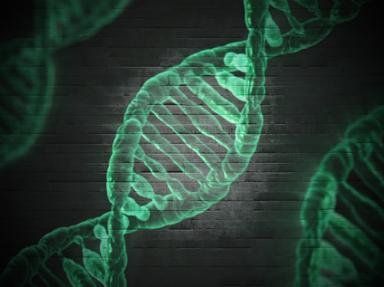
The molecule itself is the famous double helix, discovered in 1953 by James Watson and Francis Crick, with crucial work from Rosalind Franklin and Maurice Wilkins. Make a flexible ladder. Twist it. That's a double helix.

The 'vertical' rails of the ladder are made of repeating sugar and phosphate units, and the rungs are pairs of nitrogen bases that store genetic information. Your body has about 37 trillion cells, and almost every one of them contains a full copy of your DNA.

If you stretched all the DNA in your body end to end, you'd die. BUT to finish the point, those who survived you would be able to run that stretched-out DNA from your estate to the Sun and back many times. Okay, fine, there are many flaws in that plan, but you get the idea.
2. DNA and RNA belong to one of the four major classes of biological macromolecules that make life possible. That class is nucleic acids. Which of the following is NOT one of the other three major macromolecule classes found in living organisms?

Answer: Sugars

Biology likes to sort the molecules of life into four big categories: nucleic acids, proteins, carbohydrates, and lipids.

DNA and RNA fall under nucleic acids, the information storage specialists of the cell.

Proteins are the tireless laborers that build structures, speed up chemical reactions, and generally keep the cellular factory humming.

Carbohydrates handle energy storage and structure, while lipids cover fats, oils, membranes, and other greasy and gooey (but essential) substances.

Sugars, however, are not their own macromolecule category. They are actually a type of carbohydrate. Calling sugars a separate class would be the equivalent of listing apples as a different food group from fruit.

Sugars themselves are still pretty important though. Glucose, to name an example we've all heard of, is the small but powerful fuel molecule that cells burn to make energy. String a bunch of sugars together, and you get larger carbohydrates like starch or cellulose.

Plants stash energy as starch, while cellulose forms the sturdy cell walls that help trees stand tall and lettuce stay crunchy, unless you're ordering takeout. So sugars do show up everywhere in biology. They just don't get their own VIP macromolecule category. It's all about who you know.
3. Where in a typical human cell will you find most of its DNA located?

Answer: In the nucleus

Most of the DNA in a human cell lives inside the nucleus, a little compartment bound by a membrane. This compartment acts like the cell's filing cabinet, for want of a better analogy. The nucleus keeps the genetic instructions neatly packaged into chromosome files so the cell can find the right one when it needs to build a protein or to copy itself. It sounds messy, but it works. Imagine stuffing several miles of thread into a tennis ball and still being able to pull out exactly the strand you want. Neat trick.

A single human cell contains about two meters of DNA if you stretched it out and, yet being a yoga master, it all fits inside a nucleus only a few micrometers across. Amazon engineers could learn a thing or two about efficient packaging by looking at their own cells.

Now, 'most' DNA is in the nucleus, but biology doesn't like strict rules, which is why physics is far superior in every possible way.

A small amount of DNA lives inside mitochondria, the tiny energy factories in your cells. This mitochondrial DNA is inherited almost entirely from your mother. That's made mitochondrial DNA incredibly useful for studying ancestry and patterns of human migration. Scientists have traced maternal lineages across thousands of years using it.
4. Cells have a neat way of moving genetic instructions from DNA to the place where proteins are built. Which molecule carries all those instructions from DNA to the ribosomes for protein production?

Answer: Messenger RNA

Messenger RNA, usually shortened to mRNA, and the villain of social media conspiracy circles, is the molecular courier that carries genetic instructions from DNA to the ribosomes. The process starts in the nucleus, where a segment of DNA is copied into an RNA message in a step called transcription.

That mRNA strand then goes a-bobbing out into the cytoplasm, where ribosomes read the sequence three letters at a time to assemble amino acids into a protein.

If that's too messy for you, you can try to think of mRNA as a temporary photocopy of a recipe you swiped from a master chef. The original DNA stays safely in the nucleus, while the working copy gets taken to the kitchen.

This system keeps things efficient and tidy. Imagine if cells had to drag the original DNA to every ribosome. It would be madness, I say! Instead, cells make lots of mRNA copies of whichever gene they need at the moment. Some messages are used a lot and copied many times. Others are rarely used and collect dust.

And mRNA doesn't stick around forever. Most strands get broken down after they've been used, which lets the cell adjust protein production as conditions change.

Perhaps the recipe was a bad metaphor. It's more like a sticky note on your computer monitor that you actually do something about instead of ignoring... and that you then quietly throw in the trash. Job done.
5. Unlike your ex, DNA base pairs are famously loyal partners. In the DNA double helix, each base only pairs with one specific counterpart across the strand. With that informational nugget in mind, what does cytosine pair up with in DNA?

Answer: Guanine

Cytosine pairs with guanine in DNA, forming one of the two classic base-pair combinations that hold our beloved double helix together. The other pair is adenine with thymine. (You'll see these abbreviated as A, T, C, and G quite often. Apparently, chemists don't even like the terminology they've conceived.)

These matches aren't random. The shapes of the molecules and their hydrogen bonding patterns fit together in a very particular way, a little like puzzle pieces that refuse to snap together unless they're the correct match. This excludes angry children working on sky pieces hammering mismatched pieces together with their fists. (I really must cease my confessionals in the Interesting Information section of quizzes.)

So anyway, cytosine and guanine form three hydrogen bonds, which makes their partnership slightly stronger than the two bonds between adenine and thymine. C'est l'amour.

These base-pair rules were a key clue that helped scientists figure out the structure of DNA in the early 1950s. Once researchers figured out that the amount of cytosine in DNA tended to match the amount of guanine, and adenine matched thymine, everything started to fall into place. In 1953, James Watson and Francis Crick used this pattern, along with X-ray diffraction data from Rosalind Franklin, to model the now famous double helix structure we all know and love.

Every time a cell copies its DNA, those pairing rules make sure a single strand can serve as a template for building a new partner. Each base can only match with one other.
6. Genes do not just switch on randomly. Certain DNA regions help control when a gene starts being used and how strongly it is expressed. What do we lovingly call the region of DNA that performs this job?

Answer: Promoter

A promoter is a region of DNA located just before the start of a gene that helps control when that gene is turned on.

The promoter acts like a docking station for proteins called transcription factors and for the enzyme RNA polymerase, which begins the process of copying DNA into messenger RNA. If the promoter is active and the right proteins attach, the gene gets transcribed. If those factors are missing or blocked, the gene stays quiet.

Ugh. You hated reading that paragraph. I didn't much like writing it. In practical terms, the promoter works a bit like the 'start here' label on a recipe card that also suggests how often the recipe should be used. Better? A little?

Promoters are one piece of a much larger gene regulation system. Cells constantly adjust which genes are active depending on conditions, cell type, and stage of development.

A liver cell and a brain cell carry the same DNA, but they behave very differently because different promoters and regulatory sequences are active in each one.
7. RNA uses four nitrogenous bases to store and transmit genetic information, but they are not exactly the same as the ones used in DNA. Which of the following is NOT a nitrogen base found in RNA?

Answer: Thymine

Thymine is not used in RNA. Instead, RNA swaps it out for a base called uracil. So while DNA uses the four bases adenine, thymine, cytosine, and guanine, RNA uses adenine, uracil, cytosine, and guanine. Remember what I said about biology vs. physics? Physics may be mathier, but a brick made of DNA and brick made of RNA will still accelerate at 9.8 m/sē at sea level.

So, in RNA molecules, adenine pairs with uracil rather than thymine, because of course it does. Chemically speaking, uracil is very similar to thymine but lacks a small chemical gang called a methyl group. That tiny difference is enough for biology to treat the two molecules as two different toys.

Scientists don't exactly know why DNA and RNA use slightly different base sets. One major reason appears to be stability. Thymine helps DNA remain chemically stable over longer periods, which makes sense for a molecule meant to store genetic information for the life of a cell and beyond.

RNA, on the other hand, is usually temporary. Messenger RNA may exist for only minutes or hours before being broken down. Using uracil works just dandily for a short-term molecular message in a bottle. The sticky note on your monitor doesn't need to be written on fine paper stock.
8. The handsome double helix structure of DNA relies on specific chemical interactions between paired bases. What type of chemical bond holds those complementary base pairs together in the DNA double helix?

Answer: Hydrogen bonds

Hydrogen bonds are what hold matched base pairs together in DNA. You can call it 'love' if you want, but you'll get the question wrong. These hydrogen bonds are relatively weak attractions that occur when a hydrogen atom sits between two electronegative atoms, such as nitrogen or oxygen. I told you this would be more than you wanted to know.

In DNA, adenine pairs with thymine using two hydrogen bonds, while show-off cytosine pairs with guanine using three. Individually these bonds are fairly weak, but when thousands or millions of them line up along a DNA molecule, the cumulative effect is strong enough to stabilize the entire twisted-up ladder.

If I've just given you a complex about the strength of your hydrogen bonds, let me assure you that the fact that they're not extremely strong is actually a good thing. No need to fit in a hydrogen-bond day at the gym. Cells constantly need to unzip DNA during processes like replication and transcription. If the base pairs were held together by tough bonds, the molecular gadgetry that copies DNA would have a much harder time pulling the strands apart.
9. DNA replication is a process with several specialized enzymes doing specific jobs. What is the function of helicase during DNA replication?

Answer: It separates the two strands of DNA

Replication involves an entire entourage of enzymes, each handling a different part of the job. Helicase is the enzyme that unwinds and separates the two strands of the DNA double helix during replication. No beer needed.

It works by breaking through those hydrogen bonds between base pairs from earlier in the quiz and which you've probably already forgotten about, allowing the two strands to pull apart and form a separation point that scientists call a 'replication fork'. If you're pulling two strands of tangled spaghetti apart, the point where they're still touching before spreading into two separate pieces is the 'fork'.

Once the spaghetti-er, DNA strands-are separated, other enzymes can step in and begin building new complementary strands. A complementary strand is one where the bases pair perfectly with their counterparts. Without helicase, the tightly wound DNA strand would remain zipped up, and um... well, nothing happens. No soup for you.
10. The structure of DNA depends on a repeating backbone made of sugar and phosphate molecules. What is the sugar that forms the backbone of all your DNA?

Answer: Deoxyribose

The sugar in DNA is deoxyribose (it's in the name). Each unit of DNA, called a nucleotide, contains three parts: a phosphate group, a nitrogenous base, and this five-carbon sugar, which you probably wouldn't want to bake with*. The deoxyribose sugars link together with phosphate groups to form the long structural backbone of the DNA strand.

The nitrogen bases stick off the side of that backbone like rungs on a twisted ladder. Put two strands together with base pairing, twist the ladder a bit, and you get yourself a DNA double helix. Congratulations!

The name 'deoxyribose' is a reference to its relationship to the sugar in RNA, which is simply called ribose. The difference is small but kind of a big deal. Deoxyribose is missing one oxygen atom compared to ribose, which is where the 'deoxy' part of the name comes from. That tiny chemical change helps make DNA more stable over long periods.

Since DNA acts as the long-term storage system for genetic information, stability is a good thing. RNA is usually more temporary, so its slightly less stable ribose backbone works just fine for the job. Sticky notes, cheap paper, we covered that.


*It wouldn't be good, because deoxyribose lacks the hydroxyl arrangement that makes other sugars taste sweet to us. See the extra mile I go for you?
Source: Author JJHorner

This quiz was reviewed by FunTrivia editor rossian before going online.
Any errors found in FunTrivia content are routinely corrected through our feedback system.
3/17/2026, Copyright 2026 FunTrivia, Inc. - Report an Error / Contact Us