FREE! Click here to Join FunTrivia. Thousands of games, quizzes, and lots more!
Halloweens Around the World Trivia Quiz
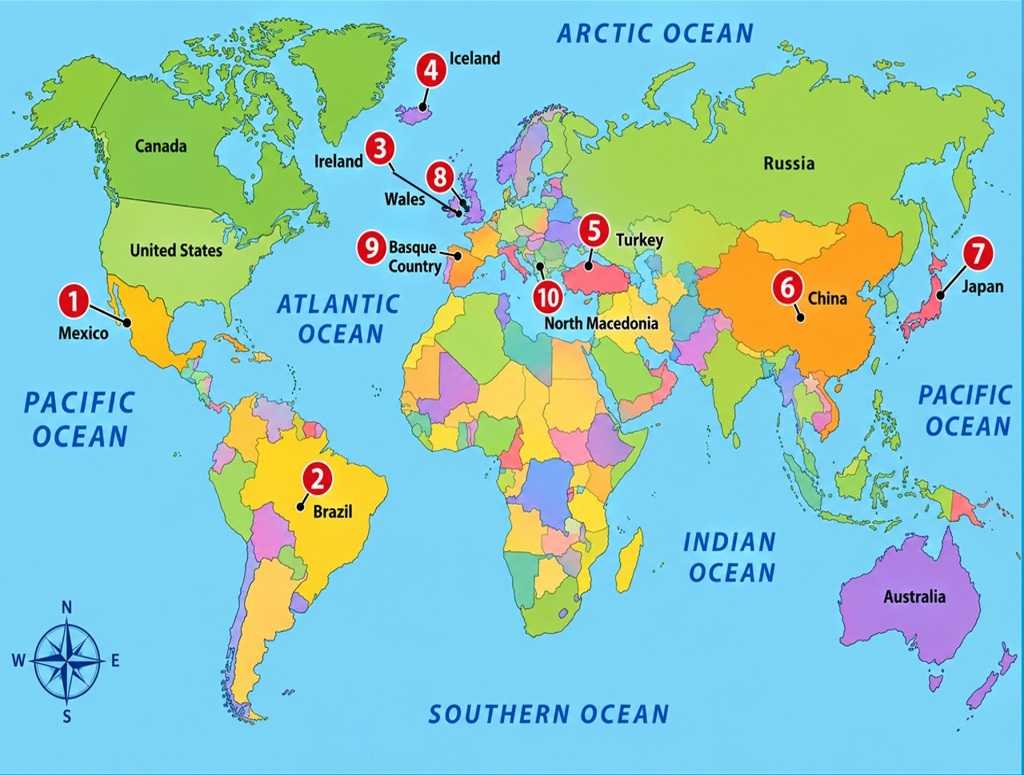
A Map of Halloweens
What do they call Halloween in other places? While having its origins in North-western Europe, Halloween has spread around the world and is strongly celebrated in well over 40 countries.
A label quiz
by misdiaslocos.
Estimated time: 3 mins.
Mach the local name for the Halloween celebration to its country.
Click on image to zoom
Noche de BrujasWànshèngjié qiánxīHrekkjavakaNos Galan GaeafOíche ShamhnaHarowinNoḱ na vesterkiteCadılar BayramiDia das BruxasGau Beltza* Drag / drop or click on the choices above to move them to the answer list. View Image Attributions for This Quiz
Noche de Brujas translates to "Night of the Witches", and it is the Spanish-language version of Halloween. Communities celebrate this holiday on October 31 across Spain and Latin America, very much including Mexico. Children participate by dressing up in costumes to go trick-or-treating for candy. Adults join the fun by going to public festivals and large costume parties.
The modern event blends local folklore about spirits with popular customs from the United States. It also kicks off a three-day celebration period that leads directly into the Day of the Dead.
2. Dia das Bruxas
Dia das Bruxas translates to "Day of the Witches", and it is the Portuguese-language version of Halloween. People celebrate this holiday on October 31 in Portuguese-speaking countries like Brazil and Portugal. The name comes from old European folklore and myths that linked this specific night to supernatural magic and wandering spirits.
While this is quite similar to the Latin American version, the Portuguese version in Brazil places a heavy focus on local folklore and myths like the Saci-pererê, a one-legged black boy, who smokes a pipe and wears a magical red cap that lets him teleport anywhere.
3. Oíche Shamhna
Oíche Shamhna translates to Samhain ("Summer's End") Eve, and it is the traditional Irish version of Halloween. This holiday marks the official end of the harvest season and the start of the dark winter. Ancient Celtic communities believed that the boundary between the living and the dead became thin on this night. People wore masks and lit large bonfires to scare away wandering spirits. Families historically carved scary faces into turnips rather than pumpkins to create lanterns. Irish people still celebrate the night today by playing traditional games and eating a fruit bread called barmbrack.
4. Hrekkjavaka
Hrekkjavaka is the Icelandic word for Halloween, and it translates literally to "Prank Wake" or "Mischief Evening". The holiday is a very new addition to the country and has only gained popular traction since around the early 1980s. Icelanders did not historically celebrate this event because they already had a spring holiday called Öskudagur, where children dress in costumes for candy. Today, stores in Iceland sell pumpkins and spooky decorations to families preparing for October 31.
5. Cadılar Bayrami
Cadılar Bayramı translates to "Festival of the Witches", and it is the Turkish name for Halloween. Most people in Turkey do not historically observe this holiday because it is a foreign Western tradition. However, awareness of the event has grown significantly due to American movies and television shows.
A small portion of people living in big cities now celebrate by hosting costume parties or decorating shop windows. Some private kindergartens and schools also organize autumn events to teach children about different global cultures.
Interestingly, Thrace has its own ancient, unrelated winter festival in January called Bocuk Gecesi that shares a similar spooky theme. Spirits of the dead roam the villages and knock on doors questioning the living.
6. Wànshèngjié qiánxī
Wànshèngjié qiánxī is the Mandarin Chinese term for Halloween Eve, and it literally translates to "All Saints' Festival Eve". People living in major Chinese cities mostly view this event as a fun, commercial import rather than a religious holiday. Young adults and children enjoy celebrating by dressing up in creative costumes and attending lively themed parties.
Many local participants blend classic Western monsters with popular Chinese internet memes and television characters.
7. Harowin
Harowin is the katakana transliteration of the English word Halloween, and it represents Japan's unique take on the spooky holiday. Theme parks and department stores first introduced the concept to Japanese shoppers during the late 1990s and early 2000s. Unlike Western countries, communities in Japan treat this event as a commercial festival for adults rather than a holiday for kids. Traditional trick-or-treating does not happen because knocking on strangers' doors violates local rules regarding privacy and public manners.
Instead, young people celebrate by dressing up in elaborate anime or pop culture costumes to gather at massive street parties in major city centers.
8. Nos Galan Gaeaf
Nos Galan Gaeaf translates to the Night of the Winter Calends, and it is the traditional Welsh version of Halloween. The unique name combines a Latin loanword for the first day of a month with the Welsh word for winter. People traditionally observed this night on October 31 as a spooky boundary between the warm harvest and the dark winter.
Historic folklore says that spirits and scary monsters like a tailless black sow roamed the earth on this evening. Communities built large communal bonfires and carved scary faces into turnips to protect themselves from evil. Today, modern American customs like trick-or-treating have largely replaced these ancient Welsh rituals.
9. Gau Beltza
Gau Beltza translates to Black Night, and it is the traditional autumn festival of the Basque Country. People celebrate this event on October 31 to mark the arrival of winter and honor their dead ancestors. Historic customs involve children hollowing out pumpkins or turnips to create glowing lanterns for dark roads. Local youth traditionally wrap themselves in old bedsheets and rags to playfully scare their neighbors.
The celebration faded during the mid-20th century, but many towns are actively reviving the ritual today to protect their unique cultural identity.
10. Noḱ na vesterkite
Noḱ na vesterkite translates to Night of the Witches, and it is the Macedonian name for Halloween. This holiday is not a native Balkan tradition, but it has gained notable popularity among younger generations over recent years. People mostly view the event as a fun, commercial celebration rather than a serious cultural ritual. Children and teenagers love to dress up in scary masks or creative pop culture costumes.
Many local cafes, bars, and shopping malls also host special themed parties with orange and black decorations.
This quiz was reviewed by FunTrivia editor Bruyere before going online.
Any errors found in FunTrivia content are routinely corrected through our feedback system.